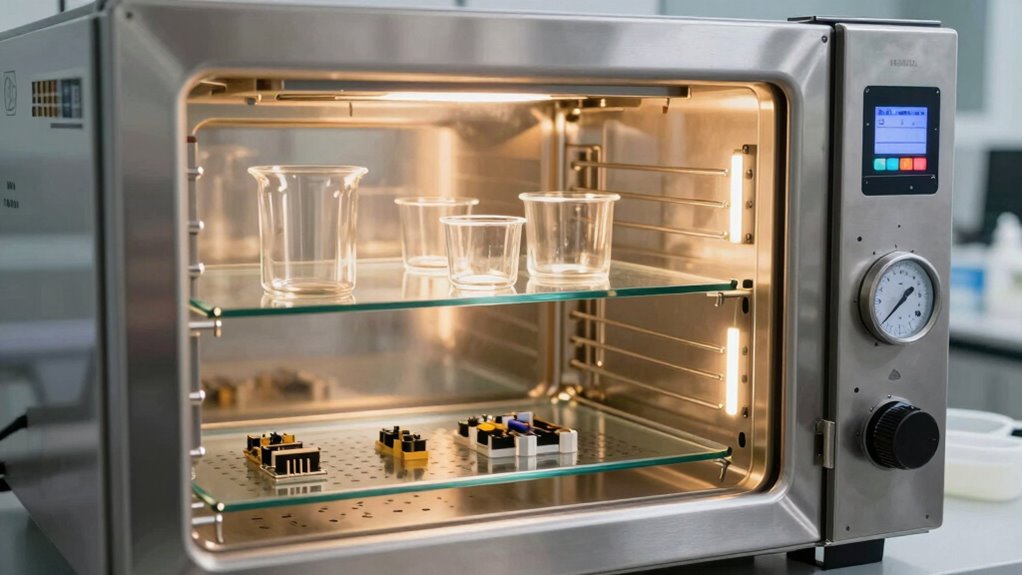

Drying ovens are used for much more than just removing moisture. They help you achieve precise temperature and humidity control for processes like sterilization, curing coatings, and preparing food products. Advanced features like even heat distribution, programmable controls, and insulation make them reliable and efficient across various industries. These ovens guarantee consistent results while saving energy and costs. If you want to discover how they can enhance specialized applications, there’s plenty more to explore.

Prime made for students and young adults
- Fast, free delivery for dorm and study essentials
- Prime Video and Amazon Music included
- Member-only deals
Key Takeaways
- Used for sterilizing laboratory tools and medical instruments to ensure pathogen elimination.
- Employed in curing coatings, paints, and adhesives to achieve uniform drying and adhesion.
- Applied in food processing for dehydration, pasteurization, and moisture removal.
- Utilized in material testing and quality control to simulate high-temperature environments.
- Used in electronics manufacturing for drying components and curing solder masks.
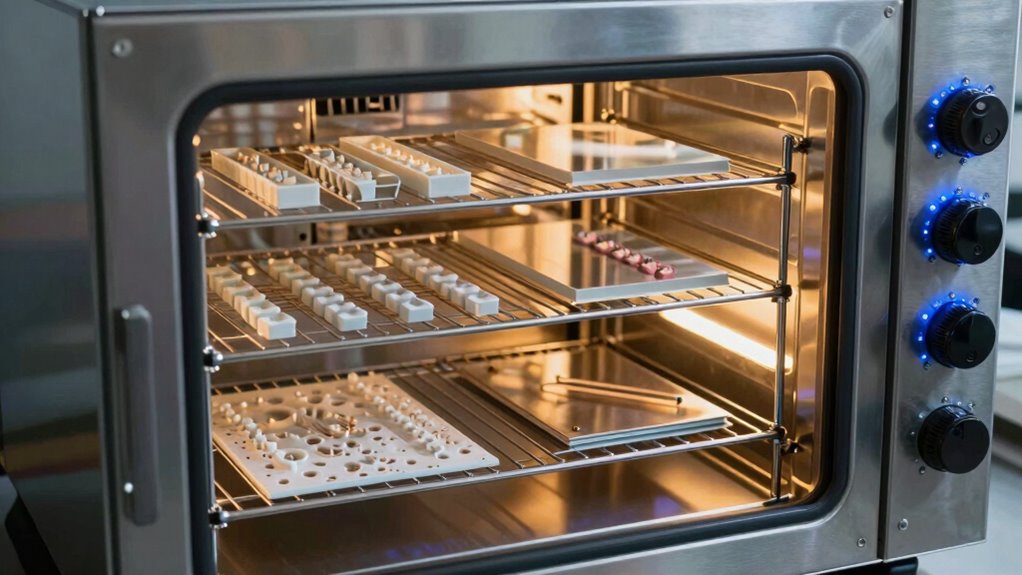
Have you ever wondered how drying ovens serve purposes beyond just removing moisture? These versatile machines do much more than dry objects—they’re vital in processes that demand precise heat control and energy management. One of the key factors in their effectiveness is heat distribution. When you operate a drying oven, you want the heat to spread evenly across the entire chamber. Uneven heat can cause inconsistent results, whether you’re sterilizing medical instruments or curing paint. Advanced drying ovens incorporate features like fans, convection systems, or specialized heating elements to guarantee uniform heat distribution. This way, every corner of the chamber reaches the same temperature, preventing hot spots or cold zones that could compromise the process. This precise control over heat distribution isn’t just about quality; it also minimizes energy wastage. When heat is evenly distributed, you don’t need to run the oven at higher temperatures or for longer periods, which helps you save energy. Energy efficiency becomes a central consideration, especially in settings where large volumes of objects require frequent drying or sterilization. By enhancing heat flow and reducing unnecessary energy consumption, modern drying ovens help you cut costs and lessen environmental impact. This focus on energy efficiency also means that you can operate these ovens with less strain on your power resources, which is particularly valuable in large-scale industrial or laboratory environments. Furthermore, many advanced drying ovens include programmable controls and sensors that monitor temperature and humidity levels in real-time, further boosting energy efficiency. These features allow you to set precise parameters and automatically adjust the operation to maintain ideal conditions, avoiding overuse of energy. Additionally, improved heat distribution techniques enable faster processing times and more reliable results, making these ovens even more versatile. Proper temperature regulation is crucial in ensuring the consistency of outcomes across various applications. When processes require specific conditions, such as in sterilization or curing, precise heat control becomes even more critical. Modern drying ovens also utilize advanced insulation to minimize heat loss and improve overall efficiency, further supporting sustainable practices. When you need to guarantee that each item is treated uniformly, the combination of good heat distribution and energy efficiency becomes essential. It is also important to note that heat transfer methods play a significant role in achieving these efficiencies, impacting how quickly and evenly heat is spread throughout the chamber. It guarantees that your processes are not only effective but also sustainable and cost-effective over time. So, whether you’re sterilizing lab tools, curing coatings, or even preparing food products, understanding how drying ovens optimize heat distribution and energy use helps you appreciate their broader role. They’re designed to provide reliable, uniform results while keeping energy consumption in check, making them indispensable tools across various industries.
As an affiliate, we earn on qualifying purchases.
Frequently Asked Questions
Can Drying Ovens Be Used for Sterilization Purposes?
Yes, drying ovens can be used for sterilization purposes if they are compatible with sterilization techniques like high-temperature sterilization. You need to guarantee oven sterilizer compatibility, meaning the oven can reach and maintain the required temperatures for effective sterilization without damaging items. Proper calibration and validation are essential to achieve reliable sterilization results. Always check the oven’s specifications and follow safety protocols for sterilization to ensure effectiveness.
What Materials Are Unsuitable for Drying in Ovens?
Materials like plastics, rubber, and certain electronics are unsuitable for drying in ovens, as they can melt, deform, or release harmful fumes. Think of the oven temperature as a delicate dance—it must be just right, not too hot or cold. Material compatibility is key; if a substance isn’t designed to withstand high heat, it’s best to avoid using the oven. Always check manufacturer guidelines before proceeding.
How Do Drying Ovens Control Humidity Levels?
Drying ovens control humidity levels through humidity regulation and moisture control systems. You can adjust temperature and airflow to remove excess moisture effectively. Many ovens have built-in humidistats or sensors that monitor humidity, allowing you to set precise levels. This helps maintain ideal conditions for specific materials, preventing over-drying or moisture retention. Proper humidity regulation ensures consistent, high-quality results for various applications beyond simple drying tasks.
Are There Specialized Drying Ovens for Pharmaceutical Use?
You’ll find specialized drying ovens in pharmaceutical settings, essential for sterilization and maintaining product integrity. These ovens, often called sterilizers or autoclaves, use advanced technology for pharmaceutical sterilization. They employ specialized drying techniques to eliminate moisture without compromising sensitive materials. Notably, over 70% of pharmaceutical companies rely on these advanced ovens to guarantee safety and efficacy, highlighting their critical role in modern medicine manufacturing.
What Safety Precautions Are Necessary When Operating Drying Ovens?
When operating drying ovens, you need to follow strict safety protocols to prevent accidents. Always wear appropriate protective gear, such as gloves and goggles, and guarantee proper ventilation. Regular equipment maintenance is vital to avoid malfunctions or hazards. Keep the oven clean, check for any damage, and verify that safety features like alarms and shutoffs are working correctly before use. Staying vigilant helps make certain safe, effective operation.
As an affiliate, we earn on qualifying purchases.
Conclusion
Think of drying ovens as the quiet guardians of transformation, not just removing moisture but revealing potential. They symbolize the journey from raw to refined, a silent partner in your craft. Every heat cycle is like a sunrise, awakening new possibilities within your materials. So, next time you use a drying oven, remember it’s more than just drying — it’s a catalyst for growth, a symbol of progress waiting to be realized.
convection drying oven for coatings
As an affiliate, we earn on qualifying purchases.
As an affiliate, we earn on qualifying purchases.
As an affiliate, we earn on qualifying purchases.
Halloween Picks
halloween
As an affiliate, we earn on qualifying purchases.