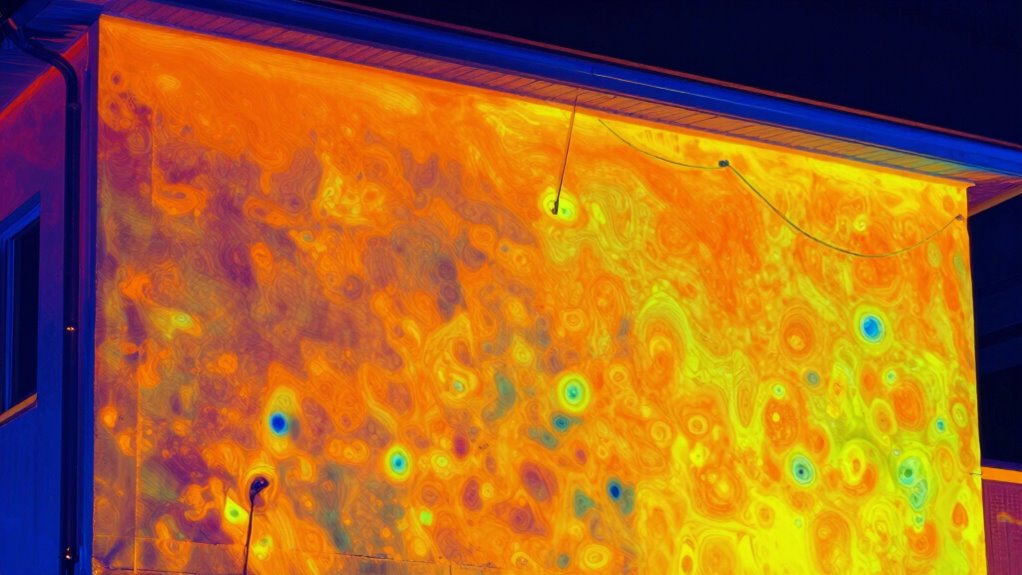

Thermal imaging cameras help you identify hidden issues by revealing heat patterns that are invisible to the naked eye. They detect overheating equipment, electrical problems, and insulation leaks early, reducing risks before failures happen. You can also spot moisture intrusion and structural flaws without invasive tests. This technology allows you to catch problems sooner, save money, and improve safety. Keep exploring to discover how this innovative tool can further assist you in detecting unseen issues.

Get school and study supplies delivered free — and shop member deals
- Fast, free delivery on millions of items
- Access to Prime Big Deal Days deals on October 6–7
- Prime Video, Amazon Music and more included
Key Takeaways
- Detects heat anomalies indicating insulation leaks, water intrusion, or structural problems without invasive testing.
- Reveals hidden electrical faults like loose connections and worn components through abnormal heat patterns.
- Identifies overheating machinery early, preventing equipment failure and reducing maintenance costs.
- Exposes concealed hazards such as fire risks or malfunctioning systems before visible damage occurs.
- Provides detailed thermal images that uncover issues beneath surfaces, enabling proactive repairs.

Have you ever wondered how thermal imaging cameras can detect heat differences that are invisible to the naked eye? It all comes down to infrared technology, which allows these devices to visualize thermal patterns by capturing the infrared radiation emitted by objects. It’s this infrared technology that enables thermal imaging cameras to produce detailed images based on heat signatures, rather than visible light. Unlike traditional cameras, thermal imaging cameras don’t rely on visible light; instead, they translate heat signatures into detailed images, revealing hidden issues that might otherwise go unnoticed. This capability makes them invaluable in various fields, especially when it comes to diagnosing problems that are not immediately obvious.
Thermal imaging cameras detect invisible heat differences using infrared technology, revealing hidden issues and enhancing safety.
When you use thermal imaging cameras for safety applications, you benefit from their ability to spot hazards early. For instance, in industrial settings, they can identify overheating machinery or electrical components before they fail, reducing the risk of fires or accidents. Similarly, in firefighting, these cameras enable responders to see through smoke and darkness, locating people or hot spots that could ignite or cause injuries. Their capacity to detect minute temperature variations ensures you can act swiftly to prevent potential disasters, making safety a top priority.
In building inspections, thermal imaging cameras help you find insulation leaks or water intrusion issues that could lead to structural damage or mold growth. Instead of tearing down walls or conducting invasive tests, you simply scan the surface to see temperature anomalies. This non-invasive approach saves time and money while providing accurate diagnostics. Furthermore, in the electrical domain, they help you identify loose connections or worn-out components, preventing equipment failure and ensuring operational safety. The diagnostic capabilities of thermal imaging cameras are enhanced by their ability to visualize heat patterns that are otherwise hidden. Recognizing the infrared radiation emitted by objects is fundamental to understanding how these cameras work and why they are so effective. Additionally, advancements in infrared sensors have significantly improved the resolution and sensitivity of these devices, making them even more reliable for detailed inspections.
Using infrared technology, these cameras give you a clear advantage in diagnosing problems that are hidden beneath surfaces. They reveal heat patterns that indicate malfunction or deterioration, even when everything appears normal to the naked eye. Whether you’re in maintenance, safety, or troubleshooting, thermal imaging cameras allow you to detect issues early—before they escalate into costly repairs or dangerous situations. This proactive approach helps you maintain safety standards, extend equipment lifespan, and reduce downtime.
In essence, thermal imaging cameras serve as an essential tool for anyone who needs to see what’s hidden behind walls, beneath floors, or inside machinery. Their ability to visualize heat differences makes them a powerful asset in diagnosing problems swiftly and accurately. With infrared technology at their core, these devices empower you to enhance safety, prevent accidents, and ensure the integrity of systems and structures. When used effectively, thermal imaging cameras become your eyes in the dark, uncovering problems that might otherwise remain invisible until it’s too late.
thermal imaging camera for electrical inspection
As an affiliate, we earn on qualifying purchases.
As an affiliate, we earn on qualifying purchases.
Frequently Asked Questions
What Is the Cost Range of Thermal Imaging Cameras?
The cost of thermal imaging cameras varies widely, ranging from around $200 for basic models to over $10,000 for professional-grade equipment. You should do a cost comparison to find options that fit your budget. Budget options are suitable for casual or beginner use, while higher-end models offer advanced features for professional diagnostics. Consider your needs and budget carefully to choose the right thermal camera for your purposes.
Are Thermal Cameras Safe for All Environments?
You wonder if thermal cameras are safe for all environments—generally, yes, but with exceptions. They’re designed for environmental safety and are usually durable enough for tough conditions. However, in extreme environments like high radiation or explosive atmospheres, special precautions are necessary. Always check the camera’s specifications to confirm it suits your environment. Proper use and maintenance guarantee both safety and durability, making thermal imaging a reliable diagnostic tool across many settings.
How Accurate Are Thermal Images in Diagnosing Issues?
Thermal images are quite accurate in diagnosing issues, especially when considering infrared accuracy. However, imaging limitations can affect the results, such as weather conditions, surface emissivity, or camera calibration. You should interpret thermal images carefully, knowing that environmental factors may cause slight deviations. When used correctly, thermal imaging provides reliable insights into hidden problems, but always combine it with other diagnostic methods for the best results.
Can Thermal Imaging Detect Issues Behind Walls?
You can detect issues behind walls with thermal imaging cameras, especially problems like poor wall insulation or hidden leaks. The camera pinpoints temperature differences on the surface, revealing areas where heat escapes or moisture accumulates. While it provides valuable clues, you might still need to confirm findings with invasive inspections. Overall, thermal imaging offers a non-invasive way to identify potential problems lurking inside your walls.
What Training Is Needed to Interpret Thermal Images Effectively?
To interpret thermal images effectively, you need proper training and certification. Focus on understanding color calibration to accurately assess temperature variations and identify hidden issues. Look for courses that cover thermal imaging basics, troubleshooting, and advanced analysis techniques. Certification not only boosts your skills but also guarantees you’re up-to-date with industry standards, making you more confident in diagnosing problems accurately and efficiently.
infrared thermal camera for home inspection
As an affiliate, we earn on qualifying purchases.
As an affiliate, we earn on qualifying purchases.
Conclusion
Thermal imaging cameras are invaluable tools for uncovering hidden issues before they turn into costly repairs. They give you a clear picture of what’s going on behind the scenes, saving you time and money. Remember, “A stitch in time saves nine,” so don’t wait until small problems become big ones. Embrace this technology to keep your home or business running smoothly and confidently detect issues early, making your life easier and safer.
handheld thermal imaging camera for machinery
As an affiliate, we earn on qualifying purchases.
As an affiliate, we earn on qualifying purchases.
thermal camera for water leak detection
As an affiliate, we earn on qualifying purchases.
As an affiliate, we earn on qualifying purchases.
Fall Picks
fall essentials
As an affiliate, we earn on qualifying purchases.