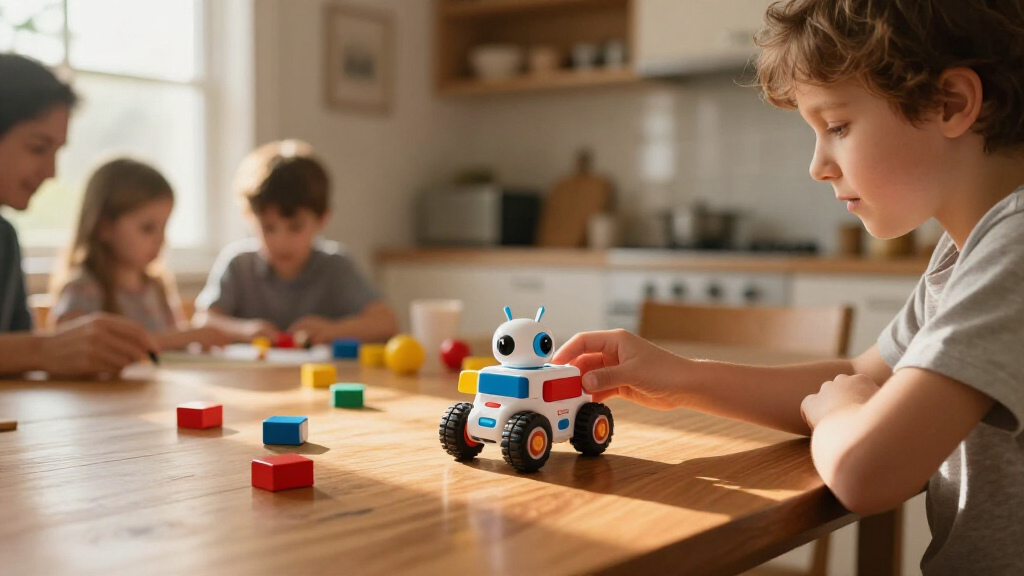

For parents and educators searching for engaging ways to introduce kids to coding through robotics, the right toy can make a big difference. The Makeblock mBot2 stands out as the best overall choice, combining ease of use with versatile features. The Learning Resources Code & Go Robot Mouse offers a simple, beginner-friendly experience, ideal for younger children. Meanwhile, the Apitor Robot J 6-in-1 Kit provides extensive building options for more advanced users. Choosing the right robotic coding toy involves balancing complexity, durability, and price. Keep reading to explore the full lineup and find the perfect fit for your child’s needs.

Prime made for students and young adults
- Fast, free delivery for dorm and study essentials
- Prime Video and Amazon Music included
- Member-only deals
Key Takeaways
- Versatility varies: some kits focus on simple coding, others on complex building and programming.
- Ease of use is crucial for younger kids, while older children benefit from more advanced features.
- Durability and build quality influence long-term value, especially for active kids.
- Price often correlates with complexity and expandability, but the most expensive isn’t always the best fit.
- Compatibility with different coding platforms can impact learning continuity and future skill development.
| Makeblock mBot2 Coding Robot Kit for Kids |  | Best for Growing Coding Skills | Recommended age: 8 years and up | Programming languages: Scratch and Python | Playtime: Up to 5 hours per charge | VIEW LATEST PRICE | See Our Full Breakdown |
| Learning Resources Code & Go Robot Mouse Activity Set | 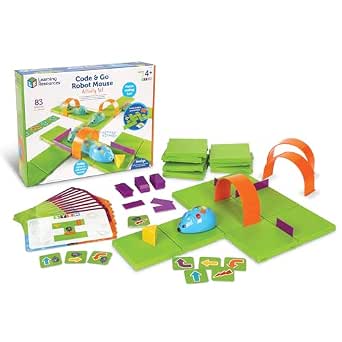 | Best Screen-Free Beginner Set | Recommended age: 4 years and up | Maze board size: 20 x 20 inches | Maze grids: 16 | VIEW LATEST PRICE | See Our Full Breakdown |
| Kyanio 3-in-1 STEM Remote-Controlled Robotics Kit for Kids |  | Best for Rebuild-and-Play Variety | Age range: 8–14 years | Piece count: 560 | Models: Machine-gun robot, tracked vehicle, and mechanical cannon tank | VIEW LATEST PRICE | See Our Full Breakdown |
| ACEBOTT 4-in-1 Programmable Robot Arm and Tank Car Kit |  | Best for Advanced Builders | Age range: 12 years and up | Controller: ESP32 | Robotic arm: 5DOF | VIEW LATEST PRICE | See Our Full Breakdown |
| Makeblock mBot STEM Coding Robot Kit for Kids Ages 8–12 | 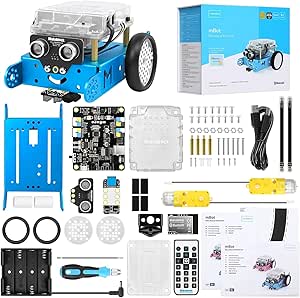 | Best for a Straightforward First Build | Recommended age: 8 years and up | Programming platforms: Scratch, Arduino, and mBlock | Build time: About 15 minutes | VIEW LATEST PRICE | See Our Full Breakdown |
| Kids First Coding & Robotics Kit for Ages 4–8 |  | Best for Early Screen-Free Learning | Brand: Thames & Kosmos | Age range: 4–8 years | Recommended grade level: K–2 | VIEW LATEST PRICE | See Our Full Breakdown |
| Thames & Kosmos My Robotic Pet: Coding Chameleon STEM Kit |  | Best for Interactive Robotic-Pet Play | Brand: Thames & Kosmos | Model number: 620507 | Recommended age: 8–12 years | VIEW LATEST PRICE | See Our Full Breakdown |
| Teach Tech Mech-5 STEM Coding Robot Building Kit for Kids Ages 10+ |  | Best for Mechanical Coding | Brand: Teach Tech | Model: TTC-895 | Age range: 10 years and up | VIEW LATEST PRICE | See Our Full Breakdown |
| ACEBOTT QD106 Programmable Robot Car Kit for Kids and Teens |  | Best for Advancing to Text-Based Coding | Brand: ACEBOTT | Model: QD106 | Controller: ESP32 | VIEW LATEST PRICE | See Our Full Breakdown |
| Learning Resources Botley the Coding Robot |  | Best for Obstacle-Course Coding | Brand: Learning Resources | Model number: LER2936 | Recommended age: 5–8 years | VIEW LATEST PRICE | See Our Full Breakdown |
| Apitor Robot J 6-in-1 STEM Coding Robot Building Kit, 480 Pieces |  | Best for Multi-Model Building | Brand: Apitor | Model: Robot J | Pieces: 480 | VIEW LATEST PRICE | See Our Full Breakdown |
| robotic coding toys for kid | Recommended age | Included components | Brand |
|---|---|---|---|
| Makeblock mBot2 Coding Robot K | 8 years and up | Robot pack, 4 coding project cards, USB cable, screwdriver, and line-following track map | — |
| Learning Resources Code & Go R | 4 years and up | — | — |
| Kyanio 3-in-1 STEM Remote-Cont | — | — | — |
| ACEBOTT 4-in-1 Programmable Ro | — | — | — |
| Makeblock mBot STEM Coding Rob | 8 years and up | Robot kit | — |
| Kids First Coding & Robotics K | — | Robot, code cards, story cards, building pieces, and full-color experiment manual | Thames & Kosmos |
| Thames & Kosmos My Robotic Pet | 8–12 years | Plastic building parts and manual | Thames & Kosmos |
| Teach Tech Mech-5 STEM Coding | — | Assembly parts and English instruction manual | Teach Tech |
| ACEBOTT QD106 Programmable Rob | 12 years and up | — | ACEBOTT |
| Learning Resources Botley the | 5–8 years | Botley robot, remote programmer, detachable arms, coding cards, tiles, and obstacles | Learning Resources |
| Apitor Robot J 6-in-1 STEM Cod | 7–12 years | — | Apitor |
More Details on Our Top Picks
Makeblock mBot2 Coding Robot Kit for Kids
The mBot2 is the strongest fit here for children ready to move from guided coding into more advanced projects. Its Scratch and Python support gives kids a path from visual commands to text-based programming, while 10+ sensors and Bluetooth, USB, and Wi-Fi offer more ways to experiment than the simpler button-programmed Code & Go Robot Mouse. Guided projects and coding courses help give that flexibility a starting point, and the stated playtime of up to five hours reduces interruptions during a session. The tradeoff is a more involved setup: kids need to assemble it, and some features depend on app or Wi-Fi configuration. Compared with the original Makeblock mBot, this model adds Python and broader connectivity, making it the better choice for a child who wants room to advance.
Pros:- Supports both Scratch and Python for a longer learning path.
- More than 10 sensors encourage varied interactive coding projects.
- Bluetooth, USB, and Wi-Fi provide several connection options.
- Guided projects and courses help children get started.
Cons:- Assembly is required before play.
- Some advanced features may need app or Wi-Fi setup.
Best for: Families with children ages 8 and up who want one robot that can support a move from Scratch to Python and sensor-based projects.
Not ideal for: Buyers seeking a ready-to-play, screen-free first coding toy or children who are not ready for assembly and app setup.
- Recommended age:8 years and up
- Programming languages:Scratch and Python
- Playtime:Up to 5 hours per charge
- Connectivity:Bluetooth, USB, and Wi-Fi
- Sensors:10+
- Included components:Robot pack, 4 coding project cards, USB cable, screwdriver, and line-following track map
- Model number:P1010132
Our verdict“Choose the mBot2 for a child ready to progress from visual coding toward Python and sensor-driven robot projects.”
Learning Resources Code & Go Robot Mouse Activity Set
For a young child’s first encounter with coding, the Code & Go Robot Mouse makes sequencing physical and easy to grasp. Children arrange maze pieces, plan a route with coding cards, then enter commands using the mouse’s buttons; the result is immediate feedback without an app or screen. Its 16-grid maze, tunnels, and activity cards provide more structured play than a basic toy robot, while lights, sounds, and two speeds keep the activity accessible. Compared with the Makeblock mBot2, it teaches a narrower set of ideas and does not offer Scratch, Python, or sensor projects. That simplicity is the point for preschool-age beginners, but older children may outgrow the button-based challenges. It also requires three AAA batteries, which are not included.
Pros:- Teaches basic sequencing without a screen or app.
- Maze pieces and coding cards support repeatable challenges.
- Lights, sounds, and two speeds make the robot’s responses easy to follow.
- Activity guide and cards provide ready-made ways to play.
Cons:- Three AAA batteries are required and are not included.
- Button-based programming offers less room to advance than the Makeblock mBot2.
Best for: Parents and teachers introducing children ages 4 and up to sequencing and logic through hands-on, screen-free maze challenges.
Not ideal for: Older children seeking app-based coding, programmable sensors, or a robot that can grow into Scratch and Python projects.
- Recommended age:4 years and up
- Maze board size:20 x 20 inches
- Maze grids:16
- Maze walls:22
- Tunnels:3
- Coding cards:30 double-sided
- Activity cards:10 double-sided
- Battery requirement:3 AAA batteries, not included
- Model number:LER2831
Our verdict“Choose this set for a young beginner who will benefit from hands-on coding fundamentals without screen time.”
Kyanio 3-in-1 STEM Remote-Controlled Robotics Kit for Kids
The Kyanio kit puts building variety ahead of a clearly defined coding curriculum. Its 560 pieces can form three different models, and the remote and app controls add interactive play after assembly. Color-coded blocks and step-by-step instructions support children as they work through the builds, while gears and moving mechanisms introduce basic engineering alongside the programming features. Compared with the ACEBOTT 4-in-1 kit, Kyanio offers more model options but the product details provide less clarity about the programming experience: they do not specify app compatibility or battery runtime. Its machine-gun robot and cannon-themed vehicles may also be a poor match for families who prefer non-combat play. This is best treated as a construction-focused robotics kit with coding elements, rather than a straightforward first coding robot.
Pros:- 560-piece kit offers three different build configurations.
- Remote and app control add ways to operate the completed models.
- Color-coded blocks and step-by-step instructions support the building process.
- USB Type-C charging is specified.
Cons:- Machine-gun and cannon-themed models may not suit every child.
- Battery runtime and app compatibility are not specified.
- Coding features are less clearly explained than the guided programming on the Makeblock mBot2.
Best for: Families with builders ages 8–14 who want multiple robot and vehicle configurations, remote play, and an introduction to basic engineering.
Not ideal for: Buyers prioritizing a clearly documented coding curriculum, known battery runtime, or non-combat-themed models.
- Age range:8–14 years
- Piece count:560
- Models:Machine-gun robot, tracked vehicle, and mechanical cannon tank
- Control:Remote control and app
- Connectivity:2.4 GHz
- Charging:USB Type-C
- Material:ABS
- Model number:FC9016
Our verdict“Pick Kyanio for a child who values rebuilding and operating different models more than a clearly laid-out coding progression.”
ACEBOTT 4-in-1 Programmable Robot Arm and Tank Car Kit
The ACEBOTT kit is aimed at older kids who want to build and program a mechanism, not just steer a robot around. Its 5DOF robotic arm and four vehicle configurations give projects a more mechanical focus than the simpler Makeblock mBot, while Arduino and Scratch support let learners choose between text-oriented and visual programming. Sixteen tutorials provide a route into assembly and coding, and app or IR remote control offers a way to operate the builds without writing a program every time. The compromise is that this is the most demanding option in this group: it is recommended for ages 12 and up, and younger users may need adult help. Battery details are not supplied, so buyers have less information about power setup than with kits that specify their runtime or battery requirements.
Pros:- Four configurations create several distinct building and play options.
- The 5DOF arm adds mechanical movement beyond a basic mobile robot.
- Arduino and Scratch support different coding entry points.
- Sixteen tutorials and assembly videos support guided learning.
Cons:- Assembly and programming may call for adult help, especially for younger users.
- Battery details are not specified.
- Its age recommendation and build complexity make it a poor first coding toy for preschoolers.
Best for: Older children ages 12 and up who want to explore Arduino or Scratch while building a robot with a programmable arm.
Not ideal for: Younger beginners or families who want a low-setup coding toy with clearly stated battery requirements.
- Age range:12 years and up
- Controller:ESP32
- Robotic arm:5DOF
- Build options:Robot car, tank robot, robotic arm car, and robotic arm tank
- Programming compatibility:Arduino and Scratch
- Control options:iOS and Android app, and IR remote
- Tutorials:16
- Manufacturer part number:QD043
Our verdict“Choose ACEBOTT for an older learner ready to combine coding with a more involved robotic-arm build.”
Makeblock mBot STEM Coding Robot Kit for Kids Ages 8–12
The original Makeblock mBot is a practical starting point for children who want a buildable coding robot without the mBot2’s broader sensor and connectivity focus. Assembly takes about 15 minutes, and Scratch, mBlock, and Arduino give learners several ways to explore coding as their skills grow. Remote control, line-following, and obstacle avoidance turn those programs into visible movement, while compatibility with more than 100 electronic modules and 500 platform parts leaves room for later experiments. Compared with the mBot2, this kit is simpler to get into but does not list Python support or a playtime per charge. It also needs four AA batteries for the robot and a CR2025 for the remote, neither included. I’d choose it for accessible building and core robot behaviors, not for the most advanced coding path.
Pros:- About 15 minutes of build time lowers the barrier to a first robot project.
- Scratch, mBlock, and Arduino support coding at different levels.
- Line-following and obstacle avoidance make robot behavior visible.
- Compatible with a wide range of Makeblock modules and platform parts.
Cons:- Four AA batteries and a CR2025 remote battery are not included.
- Compared with the mBot2, it does not list Python support or a specified playtime per charge.
Best for: Families with children ages 8–12 who want a relatively quick first robot build, with Scratch-based coding and options to expand later.
Not ideal for: Buyers who want Python support, stated rechargeable playtime, or a kit that includes its required batteries.
- Recommended age:8 years and up
- Programming platforms:Scratch, Arduino, and mBlock
- Build time:About 15 minutes
- Robot batteries:4 AA batteries, not included
- Remote controller battery:CR2025, not included
- Compatibility:100+ electronic modules and 500+ Makeblock platform parts
- Model:90053
- Included components:Robot kit
Our verdict“Choose the original mBot for a child who wants an accessible first build and core coding behaviors, rather than the mBot2’s expanded learning path.”
Kids First Coding & Robotics Kit for Ages 4–8
For young beginners, this kit teaches coding through physical cards and story-led challenges rather than an app or computer. Its 30 illustrated lessons introduce sequencing, loops, events, conditionals, functions, and variables, giving children a structured path beyond simply directing a robot around a room. The building challenges add a hands-on construction element that Botley the Coding Robot does not emphasize in the same way. That makes this a better fit for families who want coding paired with model-building, while Botley may suit children who are ready to focus on obstacle courses and longer programs of up to 80 steps.
The tradeoff is its early-learning focus: older children may outgrow the lessons, and younger builders may need adult help. Choose it for guided, device-free introductions, not open-ended programming on a computer.
Pros:- Physical code cards introduce programming without a screen or smart device.
- Thirty lessons provide a clear progression through several coding concepts.
- Story-based building challenges combine coding with construction and problem solving.
Cons:- Younger children may need adult help with lessons and building.
- The age range and lesson structure may feel basic to older or more experienced learners.
Best for: Families with children in kindergarten through second grade who want guided, screen-free coding lessons combined with building challenges.
Not ideal for: Older children seeking computer-based programming or substantial room to advance beyond early coding concepts.
- Brand:Thames & Kosmos
- Age range:4–8 years
- Recommended grade level:K–2
- Lessons:30
- Coding concepts:Sequencing, loops, events, conditionals, functions, and variables
- Robot features:OID optical scanner, LED, speaker, and output gear
- Included components:Robot, code cards, story cards, building pieces, and full-color experiment manual
- Manual length:64 pages
- Warranty:1 year against manufacturer defects
Our verdict“Choose this kit for a young child who benefits from guided, screen-free lessons and hands-on building rather than app-based programming.”
Thames & Kosmos My Robotic Pet: Coding Chameleon STEM Kit
This chameleon makes coding feel like directing a character: it responds to touch and gestures, changes color, and extends and retracts its tongue. Its Coding, Wild, and Pet modes give children different ways to interact, while physical action cards keep programming screen-free. Compared with the Kids First Coding & Robotics Kit, which centers on guided lessons and story-based construction for younger learners, this model is geared to ages 8–12 and puts more emphasis on a responsive robotic creature. A 48-page guide also introduces robotics and biomimicry, connecting the animal-inspired behavior to the build.
The distinctive pet-like play comes with a build-time tradeoff. Assembly may call for adult help, and its animal form is less suited to children seeking a general-purpose robot car or computer-based coding. It fits best when interaction and character are the draw.
Pros:- Three modes offer coding activities alongside pet-like and wild behaviors.
- Color and infrared sensors support interactive responses to touch and gestures.
- Screen-free action cards provide a hands-on way to direct the robot.
- The guide connects the build to robotics and biomimicry.
Cons:- Assembly may require adult help.
- Its chameleon-specific play is less flexible than a programmable car or general coding robot.
Best for: Children ages 8–12 who enjoy animal-themed builds, physical coding cards, and a robot that responds to touch and gestures.
Not ideal for: Children who want a quick-start coding toy, a general-purpose programmable vehicle, or computer-based coding.
- Brand:Thames & Kosmos
- Model number:620507
- Recommended age:8–12 years
- Length:15 inches
- Play modes:Coding, Wild, and Pet
- Sensors:Color sensor and infrared sensor
- Lighting:RGB LEDs
- Manual:48 pages
- Included components:Plastic building parts and manual
Our verdict“Pick this for an older child who would rather program and interact with a robotic animal than build a coding car.”
Teach Tech Mech-5 STEM Coding Robot Building Kit for Kids Ages 10+
Mech-5 teaches programming through a physical mechanism: children assemble a robot, then snap coding buttons onto a wheel to set its actions. It can move, rotate, throw, lift, kick, and draw, so a sequence becomes a visible chain of mechanical tasks rather than a command entered on a screen. That sets it apart from Botley, which is aimed at younger children and focuses on remote-programmed routes, loops, and obstacle courses. Mech-5 is a stronger match for older kids curious about how programming and mechanical design work together.
That hands-on approach requires patience. Assembly takes multiple hours, and the fixed coding wheel is less flexible than the ACEBOTT QD106’s Scratch, Arduino, and Python options. It needs no batteries, but it is best for a child who enjoys building and can stick with a longer project.
Pros:- The mechanical coding wheel makes programmed sequences tangible.
- Multiple actions, including lifting, throwing, kicking, and drawing, create varied build-and-code challenges.
- Assembly introduces mechanical engineering alongside coding basics.
- No batteries are required.
Cons:- Assembly takes multiple hours before the robot is ready to program.
- The mechanical coding method offers less flexibility than computer-based programming.
Best for: Children ages 10 and up who like mechanical builds and want to see how a sequence of physical commands produces different robot actions.
Not ideal for: Children seeking a quick-play toy, younger beginners, or learners ready for computer-based languages such as Scratch or Python.
- Brand:Teach Tech
- Model:TTC-895
- Age range:10 years and up
- Programming method:Mechanical coding wheel with snap-on coding buttons
- Actions:Throwing, lifting, kicking, drawing, and movement
- Included components:Assembly parts and English instruction manual
- Power:No batteries required
- Manufacturer:Elenco Electronics LLC
- Warranty:1 year against manufacturer defects
Our verdict“Choose Mech-5 for an older child who enjoys extended building projects and wants coding connected to mechanical movement.”
ACEBOTT QD106 Programmable Robot Car Kit for Kids and Teens
The QD106 offers the clearest step from introductory coding toys to programming on devices. Its ESP32-based car supports Scratch, Arduino, and Python, letting a learner start with a visual language and move toward text-based work without changing to a different kit. Sixteen story-based tutorials provide a guided starting point, while app and IR remote control give children more than one way to operate the car. Compared with the screen-free Teach Tech Mech-5, this is the better option for learners who want software tools and room to advance; Mech-5 instead makes coding visible through a mechanical wheel.
That extra flexibility brings setup demands: the recommended age is 12 and up, and batteries are not included. No-solder assembly lowers one barrier, but it is still a build-and-program project, not the simplest first robot for a young child.
Pros:- Scratch, Arduino, and Python support different stages of programming experience.
- Computer and mobile-device compatibility gives learners multiple ways to work.
- App and IR remote control offer both device-based and direct operation.
- Story-based tutorials and no-solder assembly help structure the build.
Cons:- Batteries are not included.
- The recommended age of 12 and up makes it a poor fit for many younger coding beginners.
- Device-based programming is less suitable for families seeking screen-free play.
Best for: Teens or older children ready to build a robot car and progress from Scratch toward Arduino or Python using a computer or mobile device.
Not ideal for: Younger beginners who need a screen-free activity or families who want a kit ready to run without sourcing batteries.
- Brand:ACEBOTT
- Model:QD106
- Controller:ESP32
- Programming languages:Scratch, Arduino, and Python
- Tutorials:16 story-based tutorials
- Control options:iOS and Android app, and IR remote
- Assembly:No soldering required
- Recommended age:12 years and up
- Batteries:Not included
Our verdict“Pick the QD106 for an older learner who wants one robot car to support a progression from Scratch to Arduino or Python.”
Learning Resources Botley the Coding Robot
Botley is a practical first step for children who learn by directing a robot through a physical course. The included remote programmer, tiles, obstacles, and coding cards turn sequencing and logic into immediate trial and adjustment. Support for loops and if/then logic gives children more to explore than basic movement commands, and programs can reach up to 80 steps. Compared with the Kids First Coding & Robotics Kit, Botley puts less emphasis on illustrated lessons and model-building, but its course accessories make it a more direct choice for experimenting with routes and obstacles.
Its screen-free simplicity is also its limit: this is aimed at ages 5–8, not children ready for computer-based languages like those supported by the ACEBOTT QD106. The product data also lists no manufacturer warranty. Choose Botley for hands-on course play, not a long-term path into software programming.
Pros:- Screen-free programming makes it accessible to young learners.
- Loops and if/then logic extend activities beyond simple sequencing.
- Programs can run up to 80 steps.
- Included tiles, obstacles, coding cards, and detachable arms support varied hands-on play.
Cons:- The age range may be limiting for older or more experienced coders.
- Manufacturer warranty is not included.
- Compared with the Kids First kit, it offers less emphasis on guided lessons and building challenges.
Best for: Children ages 5–8 who want a screen-free coding robot to program through routes, obstacles, and repeatable course challenges.
Not ideal for: Older children seeking computer-based programming or families who prioritize an included manufacturer warranty.
- Brand:Learning Resources
- Model number:LER2936
- Recommended age:5–8 years
- Programmable steps:Up to 80
- Included components:Botley robot, remote programmer, detachable arms, coding cards, tiles, and obstacles
- Coding concepts:Sequencing, loops, and if/then logic
- Play features:Black-line following and obstacle-course navigation
- Unit count:1
Our verdict“Choose Botley for a young child who wants to learn sequencing and logic by sending a robot through hands-on obstacle courses.”
Apitor Robot J 6-in-1 STEM Coding Robot Building Kit, 480 Pieces
The Apitor Robot J suits kids who want coding to follow hands-on construction rather than start with a ready-made robot. Its 480 snap-together pieces can form six models, giving builders a reason to revisit the kit and explore how changing a design affects movement. The app offers four control modes, including path and gyro control, so children can move beyond basic remote steering into more varied programming activities. Compared with the Learning Resources Code & Go Robot Mouse, Robot J offers more open-ended building and model variety, while the Mouse is a simpler choice for younger children learning basic sequencing. The tradeoff is setup: Robot J depends on a phone or tablet app and Bluetooth for smart play, and its three AA batteries are not included. Its 7–12 age range also makes it a better fit for school-age builders than preschool beginners.
Pros:- Six build options give children more ways to reuse the 480-piece set.
- App-based coding connects construction choices with robot movement.
- Four control modes include path and gyro options alongside motor controls.
- Sorting tray, instructions, control module, and building blocks are included.
Cons:- Requires three AA batteries, which are not included.
- App and Bluetooth are needed for smart play, so it is not a screen-free option.
- Building and programming involve more setup than simpler beginner choices such as the Code & Go Robot Mouse.
Best for: Ages 7–12 builders who want to assemble multiple robot designs and use an app to explore movement and coding.
Not ideal for: Families seeking screen-free coding or a simple first sequencing toy; app and Bluetooth control are required for smart play, and the kit needs separately supplied AA batteries.
- Brand:Apitor
- Model:Robot J
- Pieces:480
- Build options:6 models
- Control:Bluetooth app control
- Control modes:Dual-motor, single-motor, gyro, and path
- Motors and lights:2 built-in high-speed motors; 2 multicolor LED lights
- Recommended age:7–12 years
- Power:3 AA batteries required; not included
Our verdict“Choose Robot J for a school-age child who wants repeatable robot builds and app-based coding, not for a screen-free or very simple first coding toy.”

How We Picked
To evaluate these robotic coding toys, I considered multiple factors that matter most to buyers: ease of setup and use, build quality, programming versatility, age appropriateness, and value for money. I also looked at how well each product balances educational content with entertainment, ensuring kids stay engaged while learning. Products were ranked based on their overall performance in these areas, with a focus on how they serve different age groups and skill levels. The goal was to identify options that offer both immediate fun and long-term educational benefits, helping parents and educators make informed decisions.| robotic coding toys for kid | Included components | Brand |
|---|---|---|
| Makeblock mBot2 Coding Robot K | Robot pack, 4 coding project cards, USB cable, screwdriver, and line-following track map | — |
| Learning Resources Code & Go R | — | — |
| Kyanio 3-in-1 STEM Remote-Cont | — | — |
| ACEBOTT 4-in-1 Programmable Ro | — | — |
| Makeblock mBot STEM Coding Rob | Robot kit | — |
| Kids First Coding & Robotics K | Robot, code cards, story cards, building pieces, and full-color experiment manual | Thames & Kosmos |
| Thames & Kosmos My Robotic Pet | Plastic building parts and manual | Thames & Kosmos |
| Teach Tech Mech-5 STEM Coding | Assembly parts and English instruction manual | Teach Tech |
| ACEBOTT QD106 Programmable Rob | — | ACEBOTT |
| Learning Resources Botley the | Botley robot, remote programmer, detachable arms, coding cards, tiles, and obstacles | Learning Resources |
| Apitor Robot J 6-in-1 STEM Cod | — | Apitor |
Factors to Consider When Choosing Robotic Coding Toys For Kids
When choosing a robotic coding toy for kids, it’s important to consider several key factors to ensure a good match for your child’s age, skill level, and interests. The right toy should foster curiosity, provide a manageable learning curve, and be durable enough to withstand active play. Understanding these factors can help you avoid common pitfalls like overpaying for unnecessary complexity or selecting a toy too simple to challenge your child. Here are the main considerations to keep in mind:Age Appropriateness and Skill Level
Matching the complexity of the robot with your child’s age and current coding skills is essential. Toys designed for younger children often feature drag-and-drop programming and simple mechanics, while those for older kids include more advanced coding languages and building components. Choosing a kit that challenges but doesn’t frustrate will keep your child engaged and promote steady learning progress. It’s worth noting that some kits are adaptable, offering different difficulty modes or expansion options to grow with your child.
Ease of Use and Setup
Ease of setup impacts your ability to get children started quickly, especially for younger or less tech-savvy users. Look for toys with clear instructions, minimal assembly time, and intuitive interfaces. Complicated setups can lead to frustration and discourage repeated play. However, more sophisticated kits may require adult supervision or technical skills, which could be a drawback if you’re seeking a turnkey experience.
Build Quality and Durability
Kids are rough on their toys, so durable materials and solid construction matter. Some kits use high-quality plastics and metal parts, which stand up better to active play and frequent assembly/disassembly. Cheaper options may use lighter, less sturdy materials that wear out faster. Investing in a well-built product can pay off in the long run, especially if your child is enthusiastic about building and experimenting with robotics.
Programming Platforms and Compatibility
Consider whether the toy supports popular coding languages like Scratch, Python, or block-based programming, which can influence how easily your child can transition to more advanced coding later. Compatibility with tablets, computers, or specific apps also matters—some kits are platform-agnostic, while others are locked into proprietary software. Choosing a flexible platform encourages skill development beyond the initial toy.
Price and Expandability
Budget constraints are always a factor, but it’s important to weigh price against features and longevity. More expensive kits often include more building options, programmable functions, and expandability. Cheaper models may be limited in scope but still serve as excellent introductory tools. Think about whether the toy can grow with your child through upgrades or additional modules, maximizing long-term value.
Frequently Asked Questions
At what age can my child start using robotic coding toys?
Most robotic coding toys are designed for specific age ranges, typically starting from around age 4 for very basic kits up to 14+ for more advanced options. For younger children, look for toys with simple drag-and-drop interfaces and durable designs, like the Kids First Coding & Robotics Kit. Older kids can handle more complex programming languages and building tasks, which can foster deeper understanding of coding concepts and engineering principles. Always check the manufacturer’s recommended age to ensure the toy matches your child’s developmental level.
Should I prioritize ease of use over expandability?
It depends on your child’s current interest and your long-term goals. If your child is just starting out, an easy-to-use, straightforward kit can build confidence and spark initial curiosity. However, if they show sustained interest, opting for a more expandable kit may encourage ongoing learning and challenge. Combining both aspects—initial simplicity with the option to grow—often provides the best experience, especially if the kit supports additional modules or programming languages as skills develop.
Are more expensive robotic kits worth the investment?
Higher-priced kits often deliver better build quality, more programming features, and expandability, which can be worthwhile if your child is genuinely interested in robotics. They also tend to include educational content aligned with STEM curricula, making them suitable for long-term learning. However, for beginners or casual users, a more affordable option may suffice. Consider your child’s enthusiasm, your budget, and whether the kit can evolve with their growing skills before investing in premium models.
Can robotic coding toys help my child learn programming languages used professionally?
Many robotic toys introduce foundational coding concepts through visual or block-based programming, which serve as excellent stepping stones toward learning actual programming languages like Python or JavaScript. Depending on the toy, kids can develop logical thinking, problem-solving skills, and basic syntax comprehension that translate well into professional coding. However, the depth of programming learned through toys varies, so if your child is interested in serious coding, look for kits that support transition to text-based languages and more complex projects.
How do I choose between a robot kit for beginners and one for experienced kids?
Beginner kits prioritize simplicity, quick setup, and basic programming, making them ideal for introducing younger or less experienced children to robotics. More advanced kits include complex building components, multiple programming options, and capabilities that challenge older kids or those with some prior experience. To select the right one, consider your child’s age, interest level, and whether they have any prior experience with coding or building. Starting with a beginner-friendly kit and upgrading later can also be a practical approach.
Conclusion
For parents seeking an all-around reliable choice, the Makeblock mBot2 offers a great blend of ease, expandability, and educational value, making it the best overall pick. Those on a budget or looking for a simple introduction should consider the Learning Resources Code & Go Robot Mouse, which provides straightforward fun for younger children. For more advanced users or older kids, the Apitor Robot J 6-in-1 Kit delivers extensive building and coding options, justifying its higher price. Beginners or parents new to STEM toys should focus on ease of setup and age-appropriate features, while experienced kids benefit from versatile kits that offer deeper coding and building challenges.
Halloween Picks
halloween
As an affiliate, we earn on qualifying purchases.