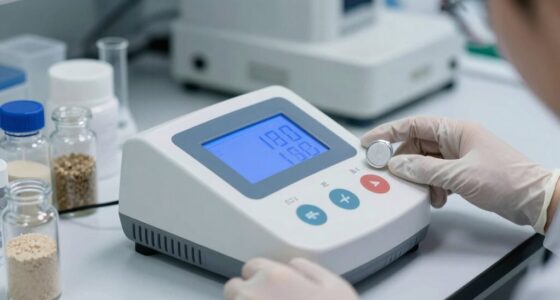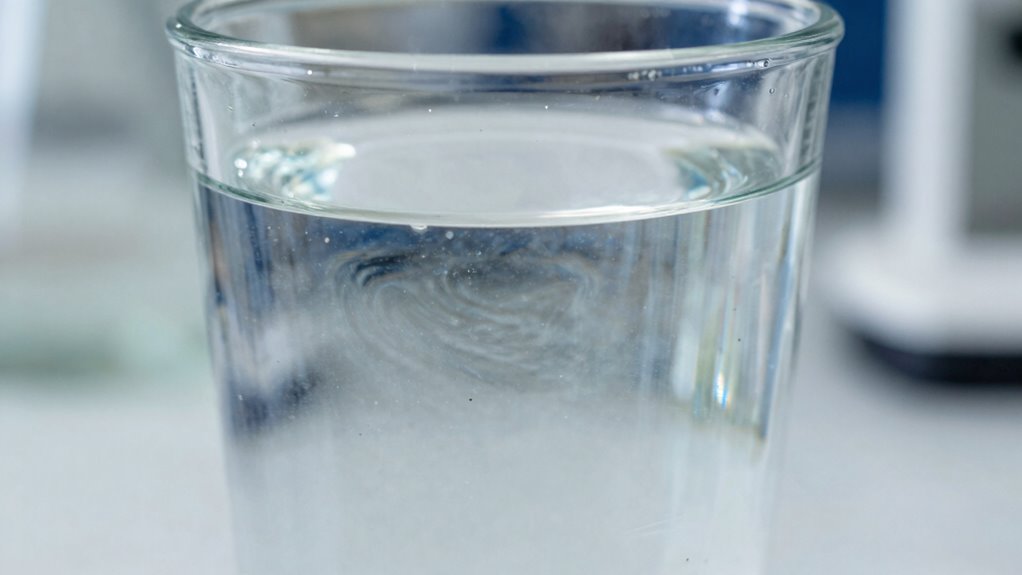

A turbidity meter shows you how clear or murky water is, by detecting suspended particles like dirt, algae, or pollutants. High readings suggest water might be contaminated or contain pollutants from runoff or waste. It helps you assess how well water treatment works and if water safety standards are being met. By understanding what turbidity indicates, you can better gauge water quality and spot potential problems early. Keep exploring to learn more about how it impacts water safety and environment.

Prime made for students and young adults
- Fast, free delivery for dorm and study essentials
- Prime Video and Amazon Music included
- Member-only deals
Key Takeaways
- Indicates water clarity by measuring suspended particles like dirt, algae, and bacteria.
- Reveals potential pollution sources and contamination levels in water.
- Helps assess the effectiveness of water treatment processes over time.
- Guides adjustments in filtration systems to ensure safe water quality.
- Serves as an early warning tool for water safety and environmental health issues.

Have you ever wondered how scientists measure the clarity of water? It’s a crucial question because water clarity directly impacts health, safety, and the environment. A turbidity meter is the tool that provides a quick, accurate answer. When you use a turbidity meter, you’re fundamentally measuring how much suspended particles are floating in the water. These particles can include dirt, algae, bacteria, and other pollutants. The more particles present, the murkier the water appears, and the higher the turbidity reading. This measurement helps you understand whether the water has undergone proper water filtration or if it’s still contaminated with pollutants that might pose health risks.
The turbidity meter doesn’t just tell you how clear the water is; it also plays a key role in pollutant detection. Elevated turbidity levels often indicate the presence of pollutants that could have come from runoff, sewage, or industrial waste. By detecting these levels early, you can take appropriate action, whether that’s further treatment or investigation into pollution sources. Think of the turbidity meter as an indispensable early warning system—its readings can alert you to potential water quality issues before they escalate into serious health problems or environmental damage. It’s especially useful in water treatment plants, where consistent monitoring ensures that water is safe for public consumption. If turbidity levels are high, it’s a sign you might need to adjust or improve your water filtration processes to remove more particles and contaminants.
Using a turbidity meter provides more than just a snapshot of water quality; it offers ongoing insights into how effective your water filtration methods are. Regular measurements can reveal trends, helping you confirm whether your current treatment systems are working or if they need upgrades. This continuous monitoring makes it easier to comply with safety standards and prevent contaminated water from reaching consumers. It also enhances pollutant detection, enabling rapid responses to sudden spikes in turbidity, which could signal accidental releases or other pollution events. Additionally, understanding turbidity levels can help optimize water treatment processes for better efficiency and safety. Proper calibration and maintenance of the turbidity meter are essential to ensure accurate readings over time, emphasizing the importance of instrument care in water quality management. Moreover, advancements in measurement technology have made turbidity meters more precise and user-friendly, facilitating widespread adoption in various water management settings. Furthermore, developing a comprehensive understanding of biodiversity impacts related to water quality can foster more sustainable practices in water resource management.
An understanding of turbidity can also support environmental conservation efforts by helping identify sources of pollution and protect aquatic ecosystems. In the end, a turbidity meter is a simple yet powerful device that directly informs you about water clarity and overall quality. It helps you assess whether the water is safe, if your filtration systems are effective, and whether pollutants are present. By paying attention to its readings, you can better protect public health, safeguard the environment, and ensure your water remains clean and clear.
digital turbidity meter for water testing
As an affiliate, we earn on qualifying purchases.
As an affiliate, we earn on qualifying purchases.
Frequently Asked Questions
How Often Should I Calibrate My Turbidity Meter?
You should calibrate your turbidity meter regularly, typically before each use or every day if used frequently, to guarantee accurate readings. Follow the manufacturer’s recommendations for calibration frequency, and include proper maintenance practices like cleaning the cuvette and checking for damage. Consistent calibration helps maintain measurement precision, especially in critical water quality assessments, so make it a routine part of your maintenance practices.
Can Turbidity Meters Detect Specific Contaminants?
Think of a turbidity meter as a lighthouse, guiding you through murky waters but not revealing every hidden reef. While it excels at contaminant detection by measuring cloudiness, its sensor specificity limits it from identifying specific contaminants. It acts like a broad brushstroke, signaling that water isn’t clear but not pinpointing the exact hazard. For detailed contaminant analysis, specialized testing remains your best tool.
What Is the Ideal Turbidity Level for Drinking Water?
You should aim for a turbidity level of less than 1 NTU in drinking water to guarantee ideal water clarity and safety. Low turbidity indicates fewer suspended particles, which helps you detect potential contaminants and maintain clean water. When turbidity is high, it can hide harmful substances and reduce the effectiveness of disinfection processes. Keeping water clear ensures better contaminant detection and promotes healthier, safer drinking water.
How Does Temperature Affect Turbidity Readings?
Temperature effects can influence turbidity readings, making water appear clearer or murkier than it truly is. As temperature fluctuates, your turbidity meter may need recalibration to maintain accuracy. You should regularly check and adjust calibration frequency, especially if testing water at different temperatures. By doing so, you guarantee your readings remain reliable, providing an accurate assessment of water quality regardless of temperature changes.
Are Portable Turbidity Meters as Accurate as Lab Instruments?
You might think portable turbidity meters can’t match lab precision, but with proper calibration and durable sensors, they often come close. While lab instruments typically offer higher accuracy, portable devices are convenient for field testing, provided you regularly calibrate them and choose models with sturdy sensors. This combination guarantees reliable readings, making them a practical choice for on-the-go water quality assessments, especially when lab access isn’t possible.
As an affiliate, we earn on qualifying purchases.
Conclusion
So, next time you see a turbidity meter, remember it’s like your water’s superhero sidekick, revealing hidden dirt villains lurking in every drop. It’s not just about clarity—it’s a crystal ball showing you whether your water’s hiding secrets that could cause chaos. Trust this tiny device to keep you one step ahead of murky mysteries, ensuring your water stays as pure and pristine as a mountain spring. Because, honestly, clear water isn’t just nice—it’s life-saving!
water quality testing kit with turbidity meter
As an affiliate, we earn on qualifying purchases.
As an affiliate, we earn on qualifying purchases.
portable turbidity meter for environmental monitoring
As an affiliate, we earn on qualifying purchases.
As an affiliate, we earn on qualifying purchases.
Fall Picks
fall essentials
As an affiliate, we earn on qualifying purchases.