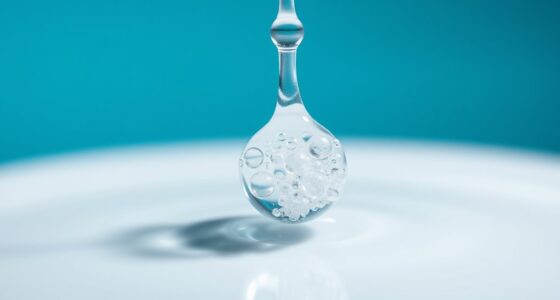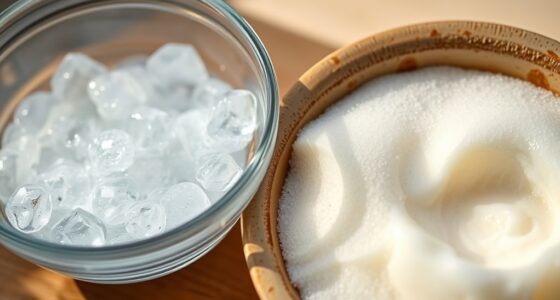

Hard water leaves residue behind because it contains high levels of minerals like calcium and magnesium that don’t dissolve easily. These minerals settle on surfaces and form a chalky film when water evaporates. When you use soap, it reacts with the minerals to create soap scum, which sticks and leaves a sticky, filmy residue. If you want to understand how to prevent or remove this buildup, you’ll learn more as you explore the details.

Prime made for students and young adults
- Fast, free delivery for dorm and study essentials
- Prime Video and Amazon Music included
- Member-only deals
Key Takeaways
- Hard water contains minerals like calcium and magnesium that don’t dissolve easily, leading to deposits.
- When water evaporates, minerals settle on surfaces, forming residue and buildup.
- Soap reacts with minerals to produce insoluble soap scum, which sticks to surfaces.
- Mineral deposits create a chalky film that becomes thicker over time if not cleaned.
- Hard water causes mineral buildup that clings to fixtures, dishes, and surfaces, leaving residue behind.
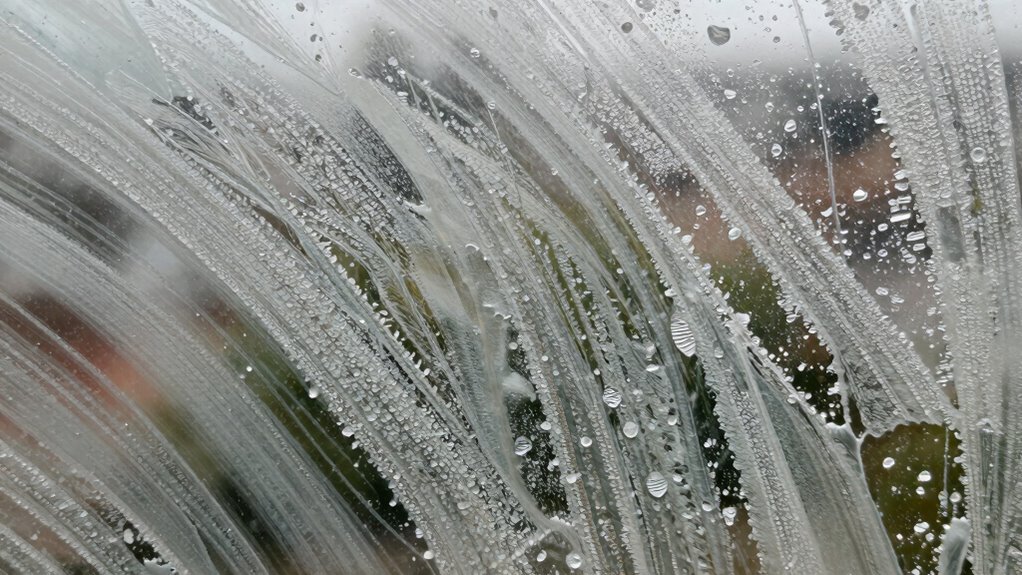
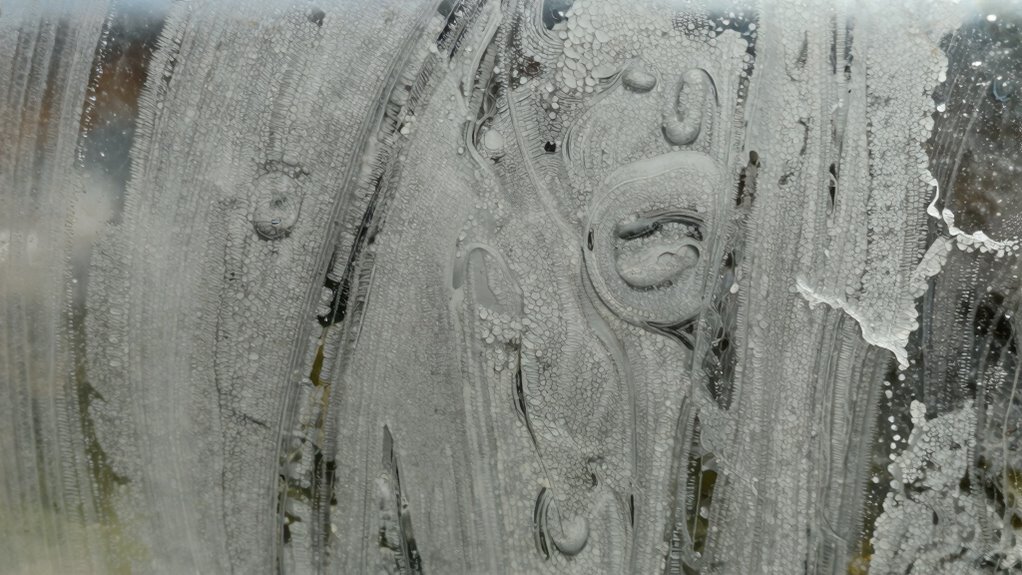
Ever notice a chalky film on your dishes or soap scum in the bathroom? That’s a classic sign of hard water residue. Hard water contains a high concentration of minerals like calcium and magnesium, which don’t dissolve easily in water. When you wash your dishes or clean your bathroom, these minerals don’t just wash away—they settle on surfaces, leaving behind a stubborn film. This mineral buildup is what causes that persistent residue, and it’s often mistaken for soap scum, but they’re closely related. Soap scum forms when soap reacts with these minerals, creating an insoluble compound that clings to surfaces. Instead of rinsing away with water, soap scum sticks around, making your bathroom fixtures and dishes look dull and dirty.
Hard water leaves a stubborn chalky film on dishes and surfaces, often mistaken for soap scum.
When you use hard water regularly, the mineral content starts to accumulate, especially on surfaces where water evaporates or dries. You might notice this buildup on your glassware, tiles, or faucets. The minerals leave behind a film that’s not only unsightly but can also be difficult to remove if neglected. Over time, the mineral deposits become thicker and more stubborn, requiring stronger cleaning agents or scrubbing to eliminate. This buildup can also clog pipes and reduce water flow, which adds to the frustration. It’s not just about appearance—mineral buildup can impact the longevity of your appliances and fixtures, increasing maintenance costs. Understanding mineral buildup is crucial for effective cleaning and maintenance. Additionally, hard water damage can cause long-term harm to plumbing and appliances, making mitigation even more important.
Soap scum, in particular, is a common and annoying byproduct of hard water. When soap interacts with calcium and magnesium, it forms a sticky, filmy residue that clings to shower doors, tubs, and sinks. This residue isn’t just unsightly; it can also trap dirt and bacteria, making cleaning more challenging. Many people notice that regular soap doesn’t lather well in hard water, prompting them to use more soap, which in turn creates even more soap scum. It’s a cycle that’s hard to break without addressing the root cause—hard water itself. Using the wrong cleaning products can sometimes worsen the problem, leaving behind more residue instead of cleaning it away.
In essence, hard water leaves behind residue because of the minerals it carries. These minerals settle on surfaces, creating that chalky film and reacting with soap to produce soap scum. To keep your home looking clean and to prevent long-term damage, you need to find effective ways to manage this mineral buildup. Whether that’s through water softening systems, regular cleaning, or specific cleaning agents designed for hard water, tackling the root cause can save you time, money, and frustration.
As an affiliate, we earn on qualifying purchases.
Frequently Asked Questions
Can Hard Water Cause Health Issues?
Hard water can cause health issues, especially if you’re exposed regularly. The minerals like calcium and magnesium might lead to health risks such as skin irritation or aggravate existing conditions like eczema. Additionally, consuming excessive minerals from hard water could contribute to mineral imbalances, affecting your overall health. While generally safe in moderation, prolonged exposure might have some negative effects, so it’s worth monitoring your water quality and seeking alternatives if needed.
How Do I Test My Water Hardness?
To test your water hardness, you can use water testing kits or hardness indicators. These are simple, cost-effective tools you dip into your water sample to get quick results. Follow the instructions carefully, usually involving a color change to gauge hardness levels. Regular testing helps you monitor your water quality, identify hard water issues early, and decide if you need a water softener or other treatment solutions.
Are There Eco-Friendly Solutions for Hard Water Residue?
Yes, you can use eco-friendly soaps and natural descalers to tackle hard water residue. Eco-friendly soaps are formulated to be gentle on the environment, reducing chemical runoff. Natural descalers, like vinegar or lemon juice, effectively break down mineral deposits without harmful chemicals. Regularly using these solutions helps prevent buildup, keeps your surfaces clean, and supports eco-conscious choices, making hard water easier to manage without harming the planet.
Does Softening Water Affect Mineral Content?
When you soften water, you’re like a gardener pruning a tree—removing excess minerals to shape a healthier balance. Softening primarily targets minerals like calcium and magnesium, which can alter the mineral balance and pH levels. While it reduces hardness, it can slightly change the mineral content, making water gentler on your appliances and skin. You’ll still keep essential minerals, just in a more balanced, harmonious way.
How Often Should I Clean Mineral Buildup?
You should clean mineral buildup every 4 to 6 weeks to prevent significant mineral accumulation. Regular cleaning helps maintain appliance efficiency and prevents stubborn residue. If you notice spots or reduced water flow, increase cleaning frequency. Using vinegar or commercial descalers can effectively dissolve mineral deposits. Staying consistent with your cleaning routine guarantees your appliances stay in good shape, and mineral accumulation stays under control.
As an affiliate, we earn on qualifying purchases.
Conclusion
So, next time you notice that stubborn film or spots, remember—hard water’s residue is like a persistent shadow, following wherever it goes. It’s a silent reminder of minerals clinging on, refusing to let go. But now, armed with this knowledge, you can tackle it head-on. Don’t let mineral deposits dictate your space—take control and banish that residue. After all, isn’t it time you reclaimed your shine and left those minerals in the dust?
As an affiliate, we earn on qualifying purchases.
As an affiliate, we earn on qualifying purchases.
Halloween Picks
halloween
As an affiliate, we earn on qualifying purchases.