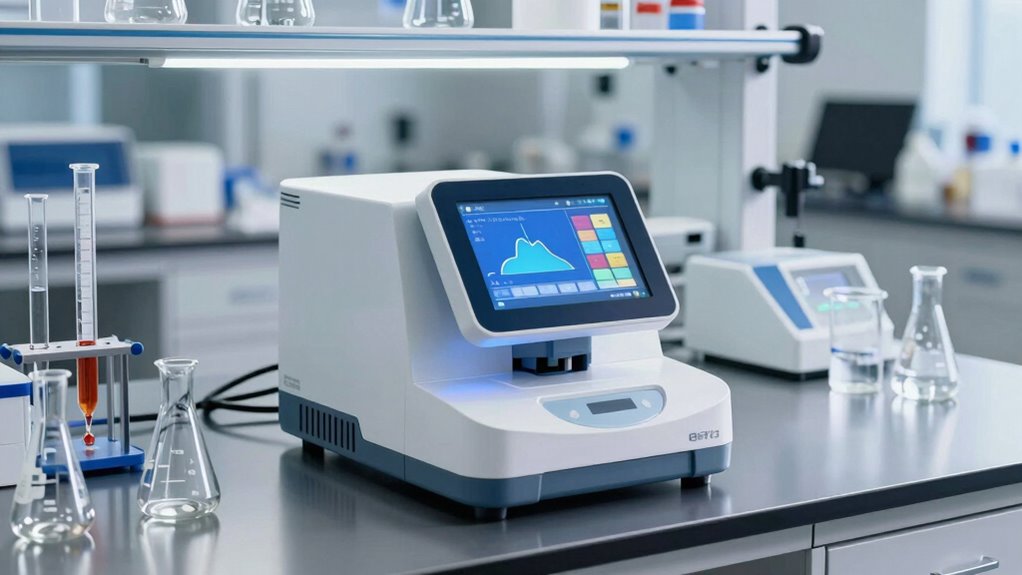

Automatic titrators boost your workflow efficiency by automating sample preparation, measurement, and data recording, reducing manual tasks and human error. They allow you to process multiple samples quickly, standardize methods, and guarantee consistent results across shifts. With seamless integration into laboratory information systems, you can save time on data management and generate instant reports. These tools also improve safety and resource use, helping you optimize productivity—keep going to learn more about how they can transform your lab.
Open a free Amazon Business account
Business pricing, bulk buying and tax-exempt orders.
As an affiliate, we earn on qualifying purchases.
Key Takeaways
- Automating titration processes enhances laboratory workflow efficiency by reducing manual tasks and increasing throughput.
- Integration with LIMS ensures seamless data management, minimizing errors and accelerating result reporting.
- Sample preparation automation improves consistency, reduces turnaround times, and optimizes resource use.
- Automation enhances safety by decreasing manual handling of hazardous chemicals and standardizes testing procedures.
- Overall, it allows analysts to focus on data analysis and interpretation, boosting productivity and result reliability.
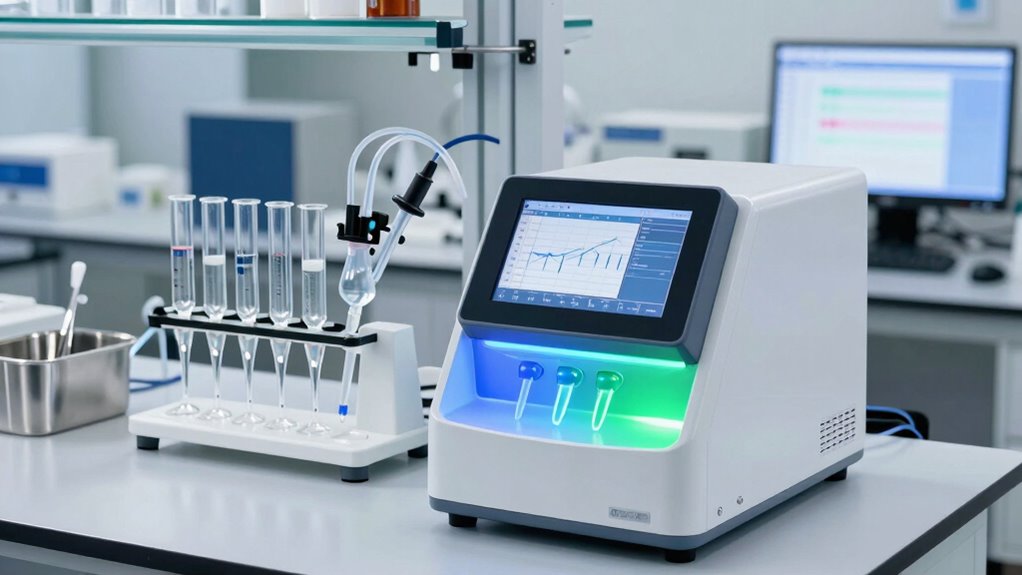
Automatic titrators have become indispensable tools for laboratories aiming to boost workflow efficiency. They streamline the titration process, allowing you to focus on other critical tasks while guaranteeing accurate and consistent results. One of the key benefits of these systems is how they handle sample preparation. With automatic titrators, you no longer need to manually measure and prepare samples, which minimizes human error and saves valuable time. You simply set up your samples according to the protocol, and the machine takes care of the rest. This automation not only reduces variability between runs but also allows for high-throughput testing, especially when dealing with multiple samples. Efficient sample preparation means quicker turnaround times and more reliable data, which are essential for timely decision-making and quality control. Additionally, automation in laboratory processes enhances overall productivity by minimizing manual interventions. Implementing these systems also supports consistent results across different operators and environments, further improving reliability. Moreover, the integration of automated systems with laboratory workflows can help optimize resource utilization and reduce reagent waste, contributing to cost savings. Incorporating laboratory automation can also improve safety by reducing manual handling of hazardous chemicals and samples.
Another significant advantage of automatic titrators is their ability to seamlessly integrate data. Modern systems come equipped with sophisticated data management features that connect directly to laboratory information management systems (LIMS) or other software platforms. This integration allows you to automatically record, store, and analyze titration results without manual data entry. As a result, you reduce the risk of transcription errors and guarantee that your data is accurate and traceable. You can also generate reports instantly, facilitating faster review and compliance with regulatory standards. The use of automated data capture further streamlines the overall workflow by reducing manual steps and potential errors. Data integration becomes especially valuable when managing large datasets, as it helps you maintain consistent documentation and enhances overall laboratory organization. In addition, these systems can often be configured to support compliance standards, ensuring that your laboratory remains aligned with regulatory requirements.
Furthermore, the combination of streamlined sample preparation and robust data integration enhances your workflow’s overall efficiency. You spend less time on repetitive tasks, such as manual measurements and data entry, and more time on analysis and interpretation. This shift allows your lab to operate more productively, handle higher sample volumes, and deliver results more quickly. Automatic titrators also support method standardization, guaranteeing uniformity across different analysts and shifts, which is essential for maintaining high-quality results. As you adopt these systems, you’ll notice improved consistency, reduced error rates, and a smoother workflow from sample receipt to final report.
automatic titrator for laboratory
As an affiliate, we earn on qualifying purchases.
As an affiliate, we earn on qualifying purchases.
Frequently Asked Questions
How Do Automatic Titrators Handle Complex or Multiple Analytes Simultaneously?
Automatic titrators handle complex or multiple analytes simultaneously through advanced multi-analyte handling features. They can be programmed to perform complex sample analysis by setting specific parameters for each analyte, allowing you to analyze multiple components in one run. This capability speeds up your workflow, reduces manual errors, and guarantees precise results even with challenging samples, making your laboratory processes more efficient and reliable.
What Are the Maintenance Requirements for Automatic Titrators?
Think of your automatic titrator as a finely tuned orchestra, needing regular tuning to stay in harmony. You should perform calibration procedures regularly to guarantee accuracy and reliability. Keep the software updated to prevent glitches and enhance performance. Clean the instrument components, such as the burette and sensors, to avoid blockages. Routine maintenance, including checking seals and replacing worn parts, keeps the titrator running smoothly and extends its lifespan.
Can Automatic Titrators Be Integrated With Laboratory Information Management Systems (LIMS)?
Yes, automatic titrators can be integrated with laboratory information management systems (LIMS). You can streamline data integration, ensuring that titration results automatically transfer to your LIMS, reducing manual entry errors. To maintain accuracy, calibration procedures are essential and should be regularly performed. This integration improves workflow efficiency, enhances data management, and supports compliance with laboratory standards.
What Training Is Necessary for Operators of Automatic Titrators?
You need to undergo training that covers operator safety, proper handling, and troubleshooting of automatic titrators. It’s essential to learn calibration procedures to guarantee accuracy and reliability in your results. Training should also include understanding the software interface, maintenance routines, and safety protocols to prevent accidents. Regular refresher courses help you stay updated on best practices, ensuring efficient operation and maintaining high-quality data accuracy.
How Do Automatic Titrators Ensure Accuracy With Minimal Sample Volume?
Think of automatic titrators as precision artists, ensuring accuracy even with tiny samples. You prepare samples carefully and follow strict calibration procedures, which set the foundation for reliable results. The titrator’s advanced sensors and algorithms monitor each step meticulously, minimizing errors. This combination guarantees that even with minimal sample volume, your measurements stay precise, saving resources while maintaining high-quality data.
As an affiliate, we earn on qualifying purchases.
Conclusion
Just as a master conductor harmonizes every instrument, an automatic titrator streamlines your workflow, turning what once was a chaotic symphony into seamless precision. Embrace this technology, and you’ll find your lab operates with the grace of a well-orchestrated performance. With efficiency and accuracy in your hands, you’re not just conducting experiments—you’re composing a masterpiece of scientific discovery. Let automation be your baton, guiding every step with confidence and clarity.
integrated titration and data management system
As an affiliate, we earn on qualifying purchases.
As an affiliate, we earn on qualifying purchases.
high throughput automatic titrator
As an affiliate, we earn on qualifying purchases.
As an affiliate, we earn on qualifying purchases.
NFL season / tailgating Picks
team gear
As an affiliate, we earn on qualifying purchases.