

Recent breakthroughs in photocatalyst technology now enable more efficient solar-driven conversion of CO₂ into fuels like methanol and methane. Researchers are developing new materials, such as metal oxides and perovskites, that absorb sunlight better and facilitate faster reactions. Surface engineering and nanostructuring further improve stability and reaction rates. These advances move us closer to practical, sustainable fuel production using sunlight and CO₂. If you continue exploring, you’ll discover even more exciting innovations transforming green energy.
Key Takeaways
- Recent innovations focus on developing nanostructured photocatalysts with enhanced light absorption and charge separation for efficient CO₂ reduction.
- Advances include hybrid materials like metal oxides combined with co-catalysts to improve selectivity toward fuels like methanol and methane.
- Surface engineering techniques are used to increase catalyst stability and durability under prolonged solar exposure.
- Breakthroughs aim to expand the light absorption spectrum, capturing more sunlight for higher solar-to-fuel conversion efficiency.
- Researchers are exploring scalable, sustainable systems that integrate photocatalysts into practical CO₂ reduction and solar fuel production processes.
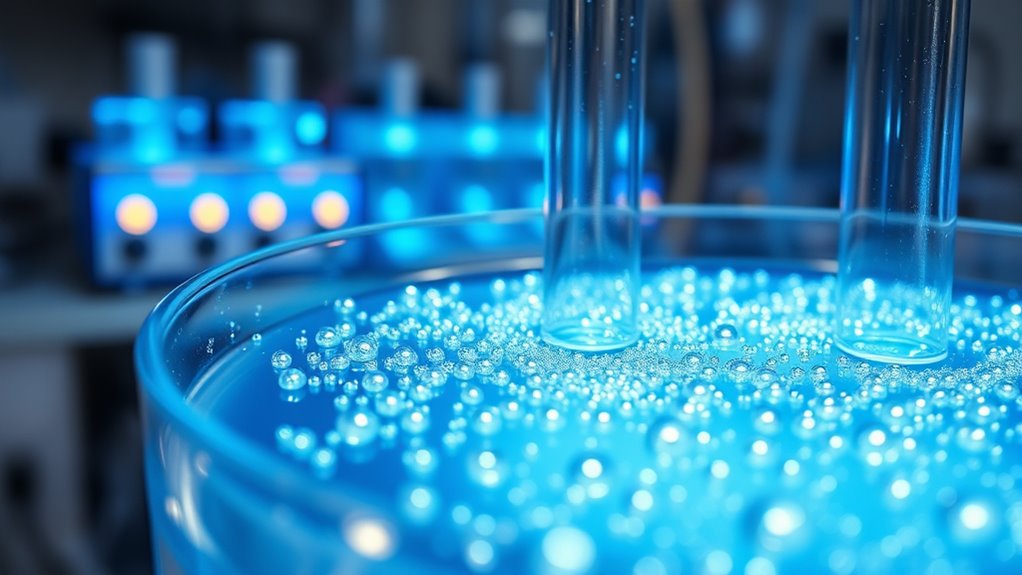
Scientists are making significant progress in developing photocatalysts that convert carbon dioxide into usable fuels, offering a promising solution to combat climate change. These innovations harness the power of solar energy, transforming CO₂ into valuable hydrocarbons or alcohols directly using sunlight. The core idea is to mimic natural photosynthesis but with enhanced efficiency, enabling you to capture and store solar energy in chemical bonds. As researchers optimize these systems, one critical focus is improving solar conversion—the ability of photocatalysts to absorb sunlight and convert it into chemical energy with minimal losses. By enhancing the absorption spectrum and reducing energy wastage, they aim to maximize the amount of sunlight that can be converted into fuel, making the process more practical and scalable.
Advances in photocatalysts aim to efficiently convert sunlight and CO₂ into sustainable fuels for a greener future.
Catalyst efficiency plays a pivotal role in this effort. You want photocatalysts that not only absorb sunlight effectively but also facilitate rapid and selective chemical reactions to produce fuels like methane, methanol, or formic acid. Achieving high catalyst efficiency means reducing energy barriers and increasing reaction rates, so that the conversion process becomes both faster and more energy-conserving. Recent breakthroughs involve designing nanostructured catalysts with increased surface area, which provides more active sites for reactions, and tailoring their electronic properties to improve charge separation. This means fewer electrons recombine prematurely, ensuring more of the absorbed solar energy is channeled into fuel synthesis rather than lost as heat.
In your pursuit of better solar conversion, scientists are experimenting with different materials—such as metal oxides, sulfides, and emerging perovskites—to find combinations that optimize light absorption and catalytic activity. These materials are often combined with co-catalysts to boost overall efficiency, ensuring that each photon absorbed results in a chemical transformation. Advances in surface engineering also help in stabilizing photocatalysts under prolonged exposure to sunlight and reactants, ensuring durability and consistent performance over time. Such improvements are essential if you’re aiming to develop commercially viable systems that can operate continuously without significant degradation.
Ultimately, the goal is to make photocatalytic CO₂ reduction a practical, sustainable way to produce clean fuels directly from sunlight. By boosting solar conversion and catalyst efficiency, scientists are bringing this vision closer to reality. These breakthroughs could transform the way we think about energy production, turning a problematic greenhouse gas into a valuable resource, all while reducing our reliance on fossil fuels. As research continues, you’re getting closer to a future where sunlight, CO₂, and smart catalysts work together to power your world more sustainably.
Frequently Asked Questions
How Scalable Are Current Photocatalyst Technologies for Industrial Use?
Current photocatalyst technologies face significant scalability challenges for industrial use. You’ll encounter manufacturing hurdles like producing large quantities with consistent quality and maintaining efficiency at scale. While promising lab results exist, scaling up requires overcoming material stability, cost-effectiveness, and process integration issues. Addressing these challenges is essential for widespread adoption, but it’s clear that further research and development are needed before you can implement photocatalysts on an industrial level.
What Are the Environmental Impacts of Large-Scale Co₂ Conversion?
You might worry about large-scale CO₂ conversion impacting the environment. It can cause ecosystem disruption if not managed properly, affecting local flora and fauna. Additionally, resource depletion could occur if processes rely heavily on scarce materials. While it offers promise for reducing greenhouse gases, you should consider these risks and promote sustainable practices to minimize negative impacts on ecosystems and resources.
How Cost-Effective Are These Photocatalytic Processes Compared to Traditional Fuels?
You’ll find that photocatalytic processes are currently less cost-effective than traditional fuels due to higher production costs and lower efficiency. However, with ongoing advancements, their economic feasibility is improving. When you compare costs, these methods may become more competitive over time, especially as renewable energy sources power the process. So, while not yet as cheap, future innovations could make photocatalytic Co₂ conversion a more affordable alternative.
What Are the Main Challenges in Commercializing This Technology?
You’ll face challenges in commercializing this technology, mainly related to market adoption and policy support. Limited infrastructure and high production costs slow down implementation, while uncertain regulations make investors hesitant. To succeed, you need stronger policies encouraging sustainable fuels and increased market demand. Overcoming these hurdles requires collaboration between industry, government, and researchers to create incentives and build confidence in photocatalytic CO₂ conversion.
Can Photocatalysts Be Tailored for Specific Types of Co₂ Emissions?
You can tailor photocatalysts for specific CO₂ emissions through selective design, much like crafting a key for a unique lock. By adjusting the catalyst’s surface properties and composition, you target emission specificity, enabling more efficient conversion of particular pollutants. This customization allows you to optimize the process, making it more effective at addressing distinct emission sources, and moves you closer to practical, real-world applications in cleaner energy solutions.
Conclusion
Just as Prometheus brought fire to mankind, these groundbreaking photocatalysts could ignite a new era of sustainable fuel. By transforming CO₂ into usable energy, you’re part of a revolutionary shift—turning what was once a waste into a powerful resource. As scientists continue to unveil nature’s secrets, you stand on the brink of a future where clean fuel isn’t just a dream, but a reality forged by innovative minds and daring breakthroughs.