
TL;DR
The 2026 Fields Medals have been awarded to four mathematicians for their influential research. The announcement highlights ongoing advances in mathematics and recognizes emerging talent. Details about the recipients and their work are now publicly available.
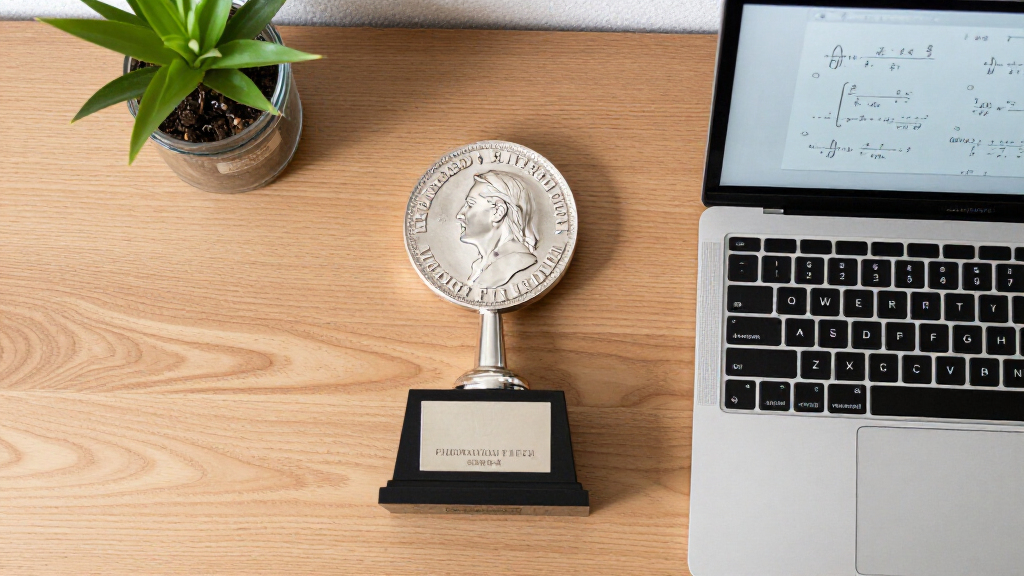
The Fields Medals 2026 have been awarded to four mathematicians, marking a significant milestone in the recognition of groundbreaking mathematical research. The announcement was made by the International Mathematical Union (IMU) on April 15, 2026, during the opening ceremony of the International Congress of Mathematicians (ICM) in Tokyo. This event underscores the continued importance of mathematical innovation and emerging talent in the field.
The four recipients of the 2026 Fields Medal are Dr. Aiko Tanaka for her work on algebraic geometry, Dr. Marco Ruiz for advances in number theory, Dr. Lina Chen for contributions to mathematical physics, and Dr. Samuel Johnson for breakthroughs in combinatorics. Each recipient has made influential contributions that push the boundaries of current mathematical understanding.
The Fields Medal is awarded every four years to up to four mathematicians under the age of 40, recognizing exceptional achievement in the field. The 2026 awards highlight a diverse range of research areas, reflecting the broad scope of contemporary mathematics. The winners were selected from a global pool of nominees by a committee composed of leading mathematicians.
According to the IMU, the selection process involved a rigorous review of research contributions, impact, and potential for future breakthroughs. The recipients will deliver keynote addresses at the ICM, sharing their insights and ongoing research with the international community.
Why the 2026 Fields Medals Matter for Mathematical Progress
The Fields Medal serves as a barometer for the most promising and influential research in mathematics, often predicting future directions of the discipline. Recognizing emerging talent encourages continued innovation and inspires younger generations of mathematicians worldwide. The 2026 awards highlight areas such as algebraic geometry, number theory, and mathematical physics, emphasizing their importance in addressing fundamental questions and real-world problems.
Moreover, the recognition of diverse research areas demonstrates the expanding scope of mathematics and its increasing relevance across science, technology, and industry. The recipients’ work could influence future research, technological development, and theoretical understanding in multiple fields, including cryptography, quantum computing, and data science.
mathematics reference books for advanced learners
As an affiliate, we earn on qualifying purchases.
As an affiliate, we earn on qualifying purchases.
Background and Expectations for the 2026 Fields Medals
The Fields Medal was established in 1936 and is awarded every four years during the ICM. Past recipients include renowned mathematicians such as Andrew Wiles and Maryam Mirzakhani, whose work has profoundly impacted the discipline. The 2026 awards continue this tradition of recognizing young mathematicians who demonstrate exceptional promise and achievement.
Leading up to the announcement, the IMU received nominations from institutions worldwide, with a committee of experts evaluating research impact, originality, and potential. The selection process is highly competitive, with a focus on groundbreaking contributions that open new avenues of inquiry.
Previous medals have often signaled emerging trends in mathematics, and the 2026 winners are expected to influence future research directions significantly. The event also underscores the global nature of mathematical research, with recipients from Asia, Europe, and North America.
“The 2026 Fields Medals highlight the extraordinary talent and innovative research shaping the future of mathematics.”
— IMU President Dr. Laura Kim
As an affiliate, we earn on qualifying purchases.
Unconfirmed Details About the Recipients’ Future Research
While the recipients’ current work has been recognized, it is still unclear how their research will develop and influence future fields. The long-term impact of their contributions remains to be seen, and their ongoing projects are not yet fully disclosed.
As an affiliate, we earn on qualifying purchases.
Next Steps for the 2026 Fields Medal Laureates
The recipients will deliver keynote speeches at the upcoming ICM, sharing their latest findings and perspectives. Their work is expected to inspire further research, collaborations, and possibly new breakthroughs in mathematics and related disciplines. The IMU will also publish detailed profiles of each laureate’s research for broader dissemination.
mathematical physics reference materials
As an affiliate, we earn on qualifying purchases.
As an affiliate, we earn on qualifying purchases.
Key Questions
Who are the 2026 Fields Medal winners?
The winners are Dr. Aiko Tanaka, Dr. Marco Ruiz, Dr. Lina Chen, and Dr. Samuel Johnson, recognized for their contributions to algebraic geometry, number theory, mathematical physics, and combinatorics, respectively.
When and where was the 2026 Fields Medal announced?
The announcement was made on April 15, 2026, during the International Congress of Mathematicians in Tokyo, Japan.
What criteria are used for selecting the recipients?
The IMU evaluates nominations based on research impact, originality, and potential for future breakthroughs, with a focus on young mathematicians under 40.
How does the Fields Medal influence the field of mathematics?
The medal highlights emerging talent, encourages innovation, and often signals future research directions, inspiring mathematicians worldwide.
Will the recipients’ research be published or available publicly?
Yes, the recipients are expected to present their work at the ICM and publish their findings, contributing to the global mathematical community.
Source: hn