
TL;DR
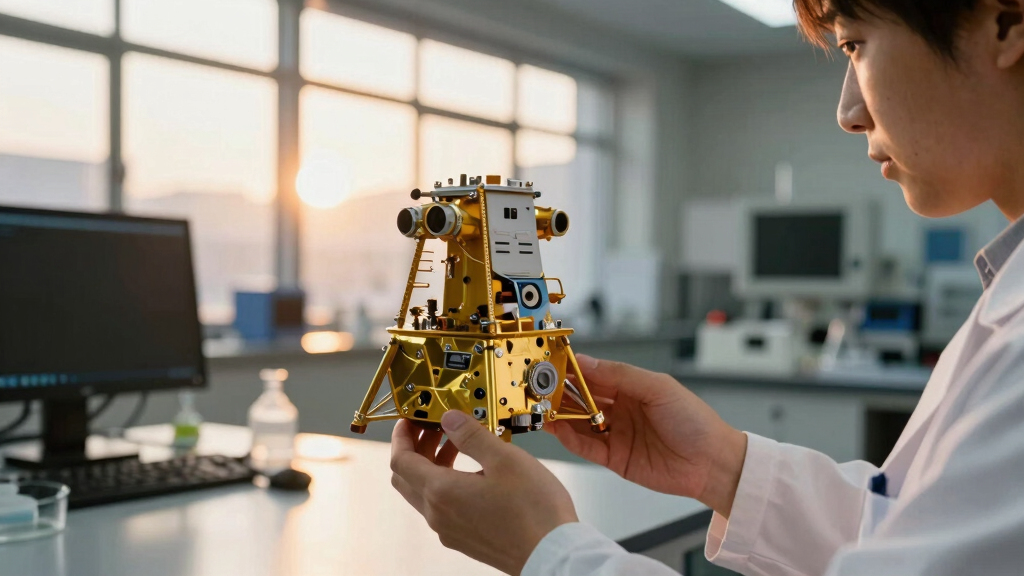
Japan’s Hayabusa2 spacecraft is set to perform a flyby of the Torifune asteroid. This mission aims to gather valuable data on small celestial bodies, furthering asteroid research.
Japan’s Hayabusa2 spacecraft is preparing to conduct a flyby of the Torifune asteroid, marking a significant step in its ongoing mission to study small celestial bodies. The flyby is scheduled for late March 2024 and aims to collect detailed data on the asteroid’s composition and orbit, which could provide insights into the early solar system. This event is confirmed by the Japan Aerospace Exploration Agency (JAXA) and is part of the spacecraft’s extended scientific operations.
Hayabusa2, launched in December 2014, originally aimed to return samples from the asteroid Ryugu. After completing its primary mission, it has been orbiting and studying other small bodies, including the upcoming flyby of Torifune. The spacecraft will approach the asteroid at a distance of a few kilometers, using its onboard instruments to capture high-resolution images and gather spectroscopic data.
According to JAXA, the flyby will help scientists better understand the physical properties of Torifune and its orbit, which is classified as a near-Earth object. The event is part of a broader effort to understand the diversity and characteristics of small bodies in the solar system, which can inform planetary defense strategies and future exploration missions.
Implications for Solar System and Planetary Defense
This flyby is significant because it offers a rare opportunity to directly observe and analyze small celestial bodies up close. Data collected could improve understanding of asteroid composition, structure, and behavior, which is vital for assessing impact risks and developing potential asteroid deflection techniques. Additionally, the mission continues Japan’s leadership in asteroid exploration and contributes to global scientific knowledge about the early solar system.
astronomy telescope for space observation
As an affiliate, we earn on qualifying purchases.
As an affiliate, we earn on qualifying purchases.
Background on Hayabusa2 and Its Extended Mission
Launched in December 2014, Hayabusa2 successfully returned samples from the asteroid Ryugu in 2020, providing valuable insights into primitive solar system material. After completing its primary objectives, the spacecraft has been in extended operations, including studying other small bodies like Torifune. The upcoming flyby marks its first close approach to this asteroid, which was discovered relatively recently and is classified as a near-Earth object.
Previous missions by Hayabusa2 have established the spacecraft’s capabilities in remote sensing and sample collection, making this flyby an important step in its ongoing scientific exploration. The mission is part of Japan’s broader efforts to understand asteroid diversity and contribute to planetary defense initiatives.
“The upcoming flyby of Torifune will provide valuable data on the asteroid’s physical characteristics, aiding our understanding of small bodies in the solar system.”
— JAXA spokesperson
portable space science kit for kids
As an affiliate, we earn on qualifying purchases.
As an affiliate, we earn on qualifying purchases.
Details on the Exact Flyby Parameters Still Unconfirmed
While the timing of the flyby is scheduled for late March 2024, specific details about the closest approach distance and the instruments’ operational status during the event are still being finalized. JAXA has not yet disclosed precise orbital parameters or the exact duration of the flyby.
Additionally, it remains unclear how much data will be transmitted back to Earth in the immediate aftermath of the event, or whether any unexpected technical issues could affect the mission’s success.
astrophotography camera for celestial objects
As an affiliate, we earn on qualifying purchases.
As an affiliate, we earn on qualifying purchases.
Upcoming Data Collection and Analysis Post-Flyby
Following the flyby, scientists expect to analyze the collected data over the coming months to assess the asteroid’s composition and surface properties. JAXA plans to release preliminary findings within a few weeks after the event, with detailed reports expected later in 2024.
The mission team will also evaluate the spacecraft’s instrument performance during the flyby and prepare for potential follow-up observations or extended operations targeting other small bodies.
As an affiliate, we earn on qualifying purchases.
Key Questions
What is the purpose of Hayabusa2’s flyby of Torifune?
The flyby aims to gather detailed data on the asteroid’s physical and chemical properties, helping scientists understand small bodies in the solar system and inform planetary defense strategies.
When will the flyby occur?
The event is scheduled for late March 2024, with exact timing depending on orbital calculations.
Will Hayabusa2 collect samples from Torifune?
No, the current mission plan involves remote sensing during the flyby; sample collection is not part of this specific event.
What makes Torifune asteroid significant?
Torifune is a near-Earth object recently discovered, and studying it can provide insights into asteroid diversity and potential impact risks.
What are the next steps after the flyby?
Scientists will analyze the data collected, publish preliminary findings, and possibly plan further observations or missions based on the results.
Source: hn