You find trinocular microscopes popular in documentation because their integrated camera makes capturing high-quality images simple and reliable. They work seamlessly with various digital cameras, reducing setup time and minimizing distortion risks. This enhances your ability to create detailed reports, analyze subtle features, and share images easily. Plus, they support teaching and collaborative research by enabling real-time viewing and remote access. Keep exploring to discover more about how these microscopes transform your work.
Key Takeaways
- They enable high-quality digital image capture for detailed documentation and analysis.
- The third ocular lens allows easy attachment of cameras without complex setups.
- They facilitate seamless integration with imaging software and data management systems.
- Trinocular microscopes enhance collaborative research by sharing detailed visual records.
- They support educational needs by combining traditional microscopy with digital viewing and recording.
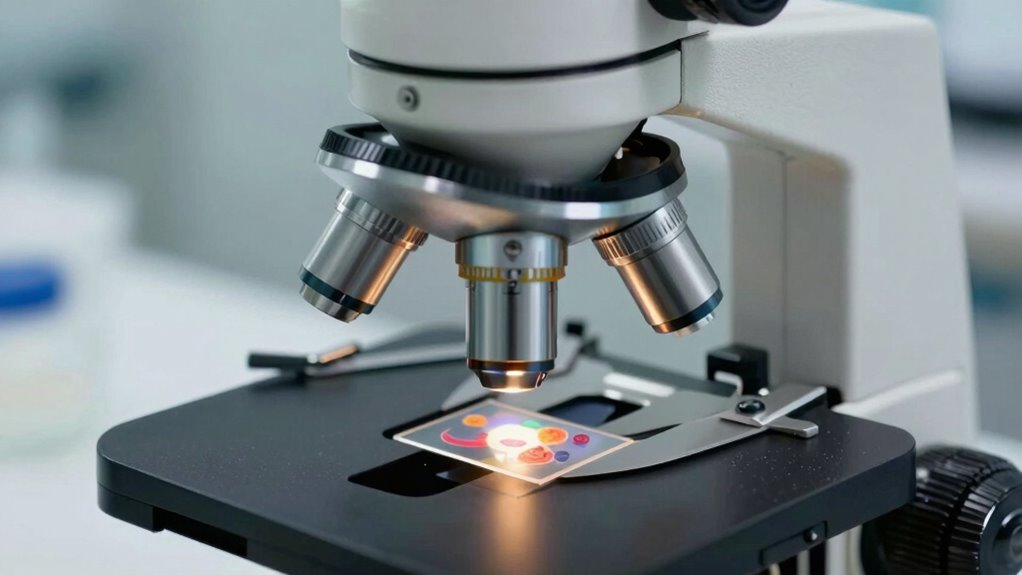
Trinocular microscopes have become essential tools in documentation, offering a seamless way to capture and record detailed images of microscopic specimens. Their design features a third ocular lens that allows you to attach a camera directly to the microscope, making digital imaging straightforward and efficient. This setup means you won’t need separate attachments or complicated setups, which saves you time and reduces the risk of misalignment or image distortion. With high-quality digital imaging capabilities, you can easily document your observations, create detailed reports, or share images with colleagues or students. This integration enhances accuracy and allows for precise analysis, especially when tracking subtle changes or rare features within specimens.
Trinocular microscopes enable seamless, high-quality digital imaging for precise documentation and analysis of microscopic specimens.
In educational applications, trinocular microscopes are especially valuable because they bridge the gap between traditional microscopy and modern digital teaching tools. Students can view specimens directly through the eyepieces while simultaneously capturing images or videos for later review. This dual functionality supports active learning, enabling students to compare specimens side by side or analyze images in detail at their own pace. Teachers appreciate how digital imaging with trinocular microscopes makes lessons more interactive and engaging, transforming the classroom into a more dynamic environment. The ability to record and share high-resolution images also fosters collaborative learning, as students can discuss and analyze findings more effectively.
The popularity of trinocular microscopes in documentation stems from their versatility and user-friendly design. The camera port is typically compatible with various digital cameras, including those with high megapixel counts, providing excellent resolution for scientific or educational purposes. This means you can produce professional-quality images suitable for publications or presentations without investing in expensive dedicated imaging equipment. Additionally, the digital images you capture can be easily stored, annotated, and organized, streamlining your workflow and ensuring that valuable data is preserved securely. Furthermore, digital imaging technology has advanced to make capturing and sharing microscope images more accessible and efficient than ever before. Many modern microscopes also feature software integration that simplifies image processing and analysis, further enhancing user experience.
Moreover, the integration of high-resolution sensors into trinocular microscopes has significantly improved image clarity, allowing for more detailed examinations and precise documentation. The convenience of digital imaging with trinocular microscopes extends beyond simple documentation. You can integrate these images into databases, online platforms, or virtual labs, expanding their reach and usefulness. For educators, this means creating a library of resources that students can access anytime, anywhere. This also encourages collaborative research, fostering teamwork and the exchange of ideas among scientists and students. For researchers, it means building a detailed visual record that supports ongoing studies or publications. Overall, the combination of high-quality imaging, ease of use, and adaptability makes trinocular microscopes a preferred choice for anyone looking to elevate their microscopy documentation—whether for research, teaching, or detailed analysis.

Woehrsh Trinocular Microscope 40X-5000X Magnification Laboratory Grade with Dual Mechanical Stage and HD USB Camera Microscopes for Adults(Adult Trinocular Microscope with Electronic Eyepiece)
- Wide Angle Eyepieces: Includes 10x and 25x wide-angle eyepieces
- High-Resolution Objective: 195x achromatic infinity optical system
- Magnification Range: 40X to 5000X magnification
As an affiliate, we earn on qualifying purchases.
As an affiliate, we earn on qualifying purchases.
Frequently Asked Questions
How Do Trinocular Microscopes Compare to Binocular Microscopes in Cost?
Trinocular microscopes tend to be more expensive than binocular microscopes due to their additional features, like a dedicated camera port. When considering cost comparison, affordability factors include the intended use and budget. If you need higher-quality imaging and documentation capabilities, a trinocular scope might be worth the investment. However, for basic observation, a binocular microscope offers a more budget-friendly option without sacrificing essential functionality.
Can Trinocular Microscopes Be Used for Digital Imaging Outside Laboratories?
Yes, trinocular microscopes can be used for digital imaging outside laboratories. Their digital compatibility allows you to connect cameras easily, making them suitable for portable applications. You can capture high-quality images in the field or remote locations, enhancing documentation and analysis. Their versatility and ability to adapt for mobile use make them popular for on-the-go microscopy, even beyond traditional lab settings.
What Is the Maximum Magnification Achievable With a Trinocular Microscope?
You can achieve up to 2,000x magnification with a trinocular microscope, pushing the limits of optical clarity and detail. This high magnification allows you to see tiny structures with stunning precision, like an artist’s brushstroke or a jeweler’s gem. While the magnification limits are impressive, maintaining optical clarity at such levels is essential, ensuring every detail remains sharp and true to life, even at extreme zooms.
Are Trinocular Microscopes Suitable for Beginner Users or Only Professionals?
Trinocular microscopes are suitable for beginner users because they often feature user-friendly designs that make operation easier. They provide beginner compatibility through adjustable focus, ergonomic adjustments, and straightforward controls, helping new users feel confident. Although they’re ideal for professionals, their intuitive features also make them accessible for those just starting in microscopy. This balance of advanced capabilities and ease of use explains their popularity across skill levels.
How Do Lighting Options Differ Between Trinocular and Other Types of Microscopes?
You’ll find that trinocular microscopes offer greater lighting versatility compared to other types, thanks to their built-in or adjustable light sources. This allows you to customize illumination angles and intensity easily. Additionally, they provide better illumination consistency, ensuring clear, evenly lit images. This makes them ideal for detailed documentation work, as you can optimize lighting conditions for various specimens without hassle, unlike simpler microscopes with limited or fixed lighting options.

Wireless Digital Microscope, Skybasic 50X-1000X Magnification WiFi Portable Handheld Microscopes with Adjustable Stand HD USB Microscope Camera Compatible with iPhone Android iPad Windows Mac Computer
- Wireless Connectivity: WiFi and USB compatible with devices
- Adjustable LED Lights: 8 LED lights for clear imaging
- High-Resolution Imaging: 1080P HD photos and videos
As an affiliate, we earn on qualifying purchases.
As an affiliate, we earn on qualifying purchases.
Conclusion
In the world of documentation, trinocular microscopes are nothing short of revolutionary! They turn every tiny detail into a masterpiece, making your work look like it was crafted by a scientific wizard. With their unmatched clarity and versatility, you’ll wonder how you ever managed without one. If you want your documentation to stand out as the gold standard, investing in a trinocular microscope isn’t just smart—it’s absolutely essential. Prepare to wow everyone with your microscopic mastery!
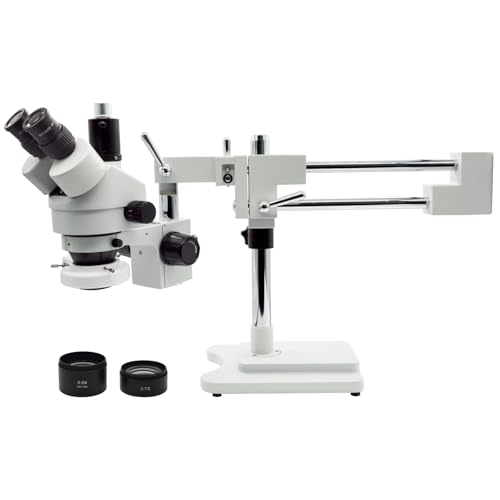
ZTEEERS Professional Trinocular Stereo Zoom Microscope, 3.5X-90X Magnification with WF10X Eyepieces, 0.7X-4.5X Zoom Objective and 0.5X & 2.0X Auxiliary Lens, Double-Arm Boom Stand, 56S LED Ring Light
- Trinocular Head with Widefield Eyepieces: Includes 10X eyepieces with adjustable inter-pupillary distance
- Digital Camera Compatibility: Trinocular port for camera or HD screen connection
- Magnification Range 3.5X-90X: Continuous zoom with auxiliary lenses for large specimens
As an affiliate, we earn on qualifying purchases.
As an affiliate, we earn on qualifying purchases.
Wireless Digital Microscope, Skybasic 50X-1000X Magnification WiFi Portable Handheld Microscopes with Adjustable Stand HD USB Microscope Camera Compatible with iPhone Android iPad Windows Mac Computer
- Wireless Connectivity: WiFi and USB compatible with devices
- Adjustable LED Lights: 8 LED lights for clear imaging
- High-Resolution Imaging: 1080P HD photos and videos
As an affiliate, we earn on qualifying purchases.
As an affiliate, we earn on qualifying purchases.