Making your own slime showcases the chemistry of polymers by linking long molecule chains through chemical reactions. When you mix glue with borax or saline solutions, it creates cross-links that transform runny glue into a flexible, stretchy material. The amount of cross-linking affects whether your slime is firm or soft, fluffy or smooth. Understanding these polymer interactions allows you to customize your slime’s texture and properties—keep exploring to discover how each ingredient influences the reaction.
Key Takeaways
- Mixing glue and borate-based activators triggers polymer cross-linking, transforming runny glue into stretchy, flexible slime.
- The degree of cross-linking affects slime’s firmness, stickiness, and elasticity, allowing customization of texture.
- Adding ingredients like shaving cream or foam beads introduces air, creating fluffier, lighter slime with different properties.
- Adjusting activator concentration and mixing controls polymer network strength, influencing slime’s stretchiness and durability.
- Making slime provides a visual, hands-on understanding of polymer reactions and molecular linking in chemistry.
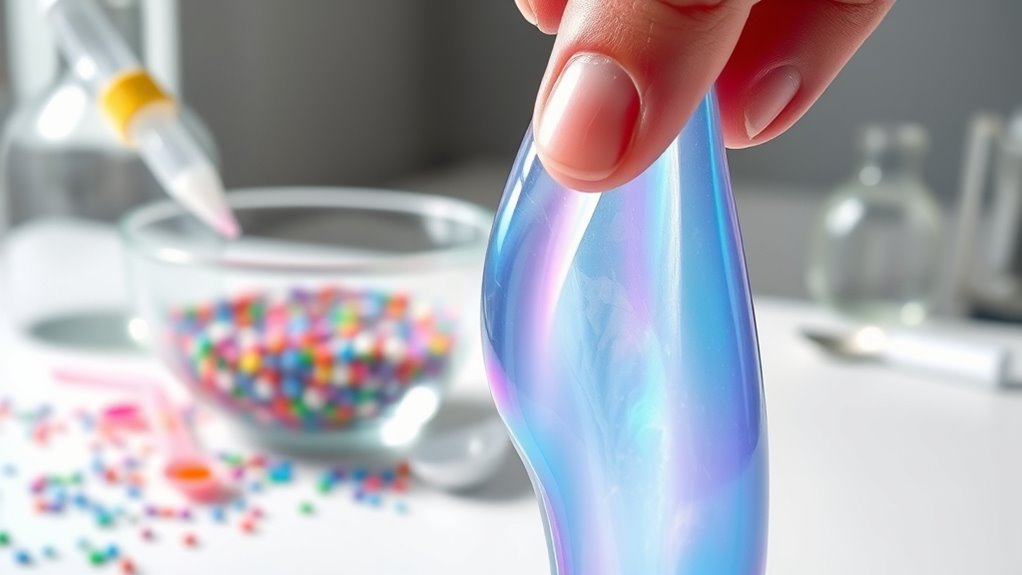
Have you ever wanted to create your own slime at home? If so, understanding the chemistry behind it can make the process even more exciting. When you mix ingredients to make slime, you’re actually triggering polymer reactions. These reactions involve long chains of molecules called polymers, which are responsible for the unique properties of slime. By manipulating these reactions, you can customize your slime’s texture, making it stretchier, fluffier, or more gooey depending on what you prefer.
The core of slime’s texture lies in the polymer reactions that happen during its formation. When you combine glue, which contains polyvinyl acetate, with a borate-based activator like borax solution, you’re essentially linking polymer chains together in a process called cross-linking. This cross-linking transforms the runny glue into a flexible, stretchy substance—your slime. The extent of this reaction affects the slime texture: more cross-linking results in a firmer, less sticky slime, while less cross-linking makes it softer and more elastic. By adjusting ingredients, you control these polymer reactions, giving you the power to create slime with your ideal consistency.
As you experiment, you’ll notice that different ingredients influence the polymer reactions and therefore the final slime texture. For example, adding saline solution with boric acid can also trigger cross-linking, but it might produce a slightly different texture compared to borax. Similarly, incorporating shaving cream or foam beads can introduce air into the mixture, making your slime fluffier and lighter. Conversely, adding lotion or cornstarch can make the slime thicker and less sticky. Understanding how these ingredients influence your polymer reactions helps you tailor the slime to your liking, whether you want it to snap, stretch, or bounce. Additionally, the concentration of activators and the mixing process itself can impact the polymer network, affecting the overall feel and durability of your slime.
The process of making slime is fundamentally a controlled chemical reaction. As you mix your ingredients, you’re facilitating polymer chains to link together in various ways, which directly affects the slime’s texture. Watching the slime form from a runny mixture into a more solid, stretchable mass is a fascinating visual of polymer reactions in action. The more you learn about these reactions, the better you become at customizing your slime’s properties. It’s a simple yet compelling way to explore chemistry firsthand, turning an ordinary craft into an insightful science experiment. So next time you make slime, remember that behind its fun and squishy surface is a complex dance of polymers working together to give you that perfect, stretchable texture.
Frequently Asked Questions
Can I Make Slime Without Borax or Glue?
Yes, you can make slime without borax or glue by using alternative activators and natural ingredients. For example, you might try cornstarch and water for a simple, natural slime, or use shaving cream and baking soda for a fluffy texture. These options allow you to create slime safely at home, avoiding harsh chemicals, and still enjoy a fun, stretchy substance. Just experiment with different natural ingredients for the best results.
How Long Does Homemade Slime Last Before It Spoils?
Your homemade slime typically lasts about one to two weeks before it spoils, depending on how well you store it. To maximize slime preservation and extend its shelf life, keep it in an airtight container and avoid exposing it to direct sunlight or moisture. If you notice an unpleasant smell, mold, or changes in texture, it’s time to toss it out. Proper storage helps keep your slime fresh longer.
Is Homemade Slime Safe for Young Children?
Like a vintage comic book, homemade slime can be safe for young children if you supervise them closely. Always guarantee proper child supervision and use safe, non-toxic ingredients to prevent any choking or skin irritation. Avoid adding harmful chemicals and teach kids how to handle slime gently. When you prioritize ingredient safety, your little ones can enjoy the fun without worry, making slime a safe, creative activity.
Can I Customize Slime Colors and Scents?
Yes, you can definitely customize slime colors and scents. You can mix different food coloring or liquid watercolors to create unique hues through color mixing. For scents, add a few drops of your favorite essential oils or extracts to give your slime a pleasant aroma. Just guarantee you use safe, kid-friendly ingredients and avoid adding too much to prevent altering the slime’s texture. Have fun creating your personalized slime!
What Are the Environmental Impacts of Slime Production?
You should know that slime production raises environmental concerns, mainly due to biodegradability issues and plastic pollution. Many slime ingredients are made from synthetic polymers that don’t break down easily, contributing to long-lasting waste in landfills and oceans. When you make or dispose of slime improperly, it can pollute ecosystems and harm wildlife. Being mindful of these impacts encourages you to choose eco-friendly ingredients and dispose of slime responsibly.
Conclusion
Now that you’ve uncovered the chemistry behind slime, you’re equipped to craft your own magical, stretchy creation. Remember, polymers are like tiny builders working together to make your slime possible. With just a few simple ingredients, you hold the power to turn science into fun. Think of your slime as a tiny universe, constantly changing and alive—proof that science isn’t just in textbooks, but right in your hands. So go ahead, get creative and let your imagination stretch!