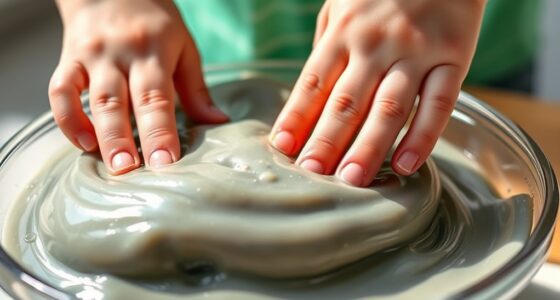

To grow alum crystals, start by dissolving 2-3 tablespoons of alum in a cup of boiling water, stirring until fully dissolved. Pour the solution into a clean jar and let it cool undisturbed at room temperature. As it cools, crystals will form on a seed crystal or at the container’s bottom. For larger crystals, patience is key, and keeping the solution steady helps. If you continue exploring, you’ll discover more about optimizing crystal growth.

Prime made for students and young adults
- Fast, free delivery for dorm and study essentials
- Prime Video and Amazon Music included
- Member-only deals
Key Takeaways
- Dissolve 2-3 tablespoons of alum in boiling water, stirring until fully dissolved.
- Pour the hot alum solution into a clean container and let it cool undisturbed at room temperature.
- Suspend a seed crystal or small alum piece in the solution without touching container sides.
- Keep the solution undisturbed and allow crystals to grow over several days as it cools.
- Observe the formation of clear, geometric alum crystals as they develop gradually.
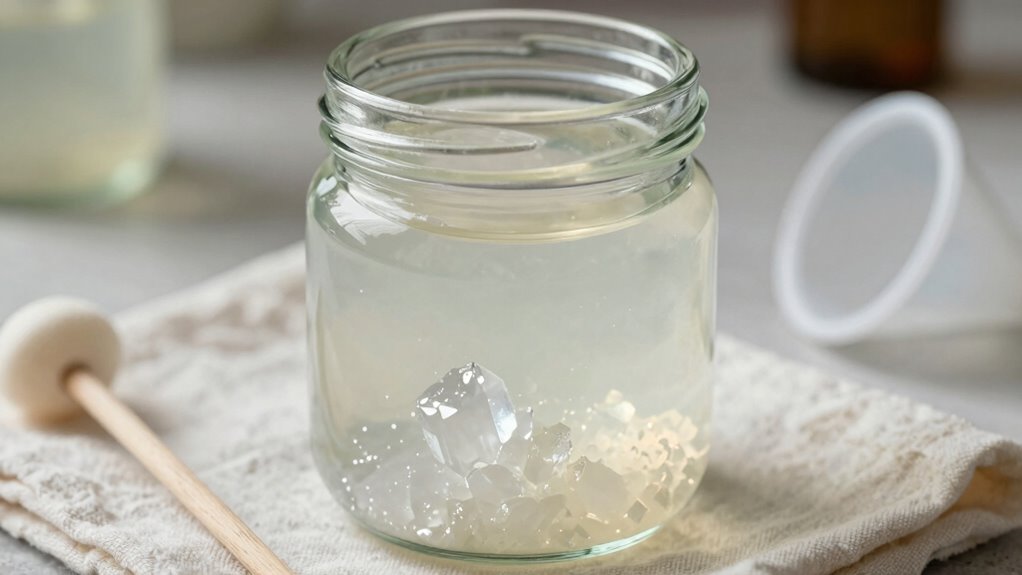
Growing alum crystals is a simple and rewarding science project you can do at home or in the classroom. Alum, or potassium aluminum sulfate, is a compound with unique chemical properties that make it ideal for crystal growing. Its ability to dissolve in water and form large, clear crystals is rooted in its chemical structure, which allows it to recrystallize easily when the solution cools. Historically, alum has been used for centuries in various applications, from dyeing textiles to medicinal uses, and it’s also a key ingredient in pickling and water purification. Understanding its chemical properties helps you appreciate why alum crystals form so well, and knowing about its past uses adds an interesting layer to your experiment.
Growing alum crystals is a fun and simple project that reveals the fascinating chemistry behind crystal formation.
To start, you need to prepare a saturated alum solution. Measure about 2 to 3 tablespoons of alum powder and add it to a cup of boiling water. Stir continuously until the alum dissolves completely. This creates a solution rich enough in alum to facilitate crystal growth. As the solution cools, alum’s ability to crystallize becomes evident, as the dissolved alum begins to form small crystals that act as nucleation points. You’ll want to pour the hot solution into a clean jar or container, and then allow it to cool undisturbed at room temperature. During this cooling process, larger crystals will start to develop over several days. Additionally, maintaining a steady temperature during cooling can significantly influence the quality of the crystals formed.
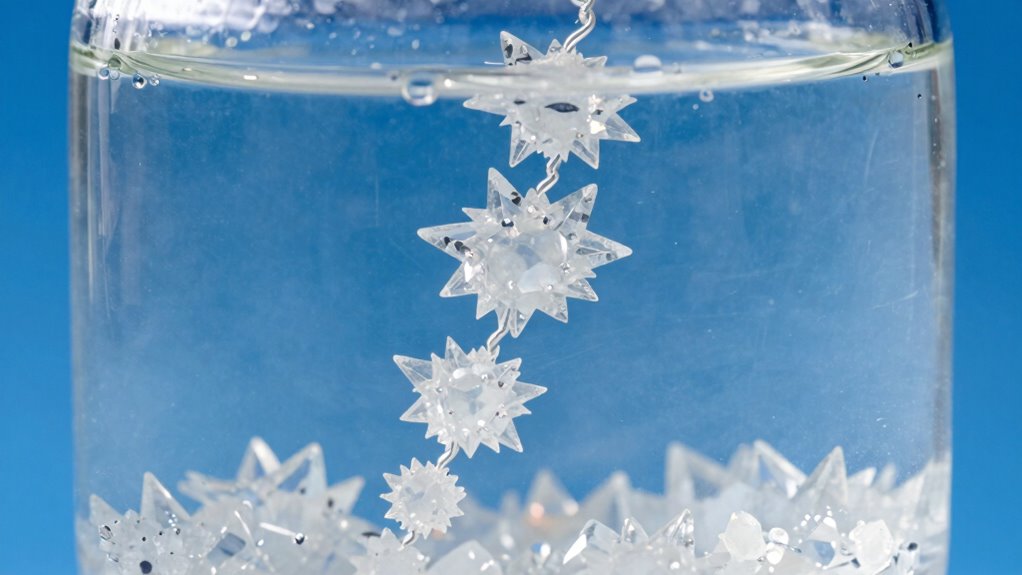
To promote the formation of well-formed crystals, you can introduce a seed crystal—an small piece of alum crystal you’ve saved from a previous batch or obtained from elsewhere. Tie this seed to a string or skewer and suspend it into the solution, ensuring it doesn’t touch the sides of the container. As the solution cools further, alum molecules will attach to the seed, causing the crystal to grow larger. Patience is key here; the crystals will grow slowly, so resist the urge to disturb the container. The shape and size of these crystals are also affected by the molecular structure, which determines their geometric form. The solubility of alum in water is another factor that impacts how quickly the crystals form and grow. Understanding crystallization processes can help you optimize the environment for better crystal growth.
Throughout the process, it’s important to keep the solution undisturbed and at a steady temperature. As alum crystallizes, it forms clear, geometric shapes that showcase its molecular structure. Watching these crystals grow not only teaches you about the physical process but also highlights the intriguing chemical properties that make alum such a versatile compound. Alum’s crystallization process is influenced by factors like temperature and impurity levels, which can be controlled for optimal crystal formation. The Chemical structure plays a crucial role in its ability to form well-defined crystals, linking its molecular makeup to its physical appearance. The historical uses of alum—ranging from its role in ancient dyeing techniques to its medicinal applications—demonstrate its long-standing importance. By growing your own alum crystals, you connect with this history and gain a deeper appreciation for this fascinating chemical compound.
As an affiliate, we earn on qualifying purchases.
Frequently Asked Questions
How Long Does It Take for Alum Crystals to Fully Grow?
It typically takes about one to two weeks for alum crystals to fully grow, depending on your crystal structure and growth rate. As you observe, larger crystals form gradually as alum molecules attach to the seed crystal. The faster the growth rate, the quicker you’ll see crystal development, but patience is key for clear, well-formed crystals. Keep your solution undisturbed for the best results.
Can Alum Crystals Be Grown at Room Temperature?
Yes, you can grow alum crystals at room temperature. Think of it like baking bread—patience and the right ingredients matter. Using high-purity alum guarantees clearer, larger crystals, while lower purity may result in smaller ones. At room temperature, alum dissolves slowly, promoting larger crystal growth over time. So, if you’re patient and use high-quality alum, you’ll likely see impressive crystals form without needing heat.
What Common Mistakes Should I Avoid When Growing Alum Crystals?
When growing alum crystals, avoid common mistakes like introducing crystal impurities, which can disrupt the growth process and lead to cloudy or uneven crystals. Also, don’t interrupt the growth by disturbing the solution or changing conditions abruptly, as this can cause crystals to break or form improperly. Keep the solution undisturbed and use clean materials to guarantee clear, well-formed crystals that grow steadily and successfully.
How Do I Prevent Mold or Contamination During Growth?
Imagine your crystal solution as a delicate garden; to keep it pristine, you must guard against mold and contamination. Cover your container with breathable material like cheesecloth to allow airflow while blocking dust, and work in a clean area. Regularly inspect your solution, removing any debris, and avoid opening the container unnecessarily. These mold prevention and contamination control steps ensure your alum crystals grow pure and clear, like sparkling gems.
Can Alum Crystals Be Grown Using Different Types of Water?
Yes, you can grow alum crystals using different types of water, but water quality affects crystal formation. Distilled or purified water produces clearer, more uniform crystals because it lacks impurities that can interfere with growth. Tap water or mineral water may contain minerals or contaminants that disrupt crystal formation or cause cloudiness. For best results, use clean, pure water to guarantee ideal crystal growth and clarity.
crystal growing experiment supplies
As an affiliate, we earn on qualifying purchases.
As an affiliate, we earn on qualifying purchases.
Conclusion
Now that you’ve watched your crystals bloom like tiny winter wonders, remember, patience is your best friend. Just like a gardener tending to delicate blooms, nurturing your alum crystals requires care and a steady hand. Watch as they grow, shimmering like stars caught in a jar, turning your kitchen into a mini universe of sparkling treasures. With each crystal, you’ve discovered a secret of nature’s artistry—your very own glittering galaxy, waiting to shine bright in your hands.
As an affiliate, we earn on qualifying purchases.
As an affiliate, we earn on qualifying purchases.
Halloween Picks
halloween
As an affiliate, we earn on qualifying purchases.