
To make natural dyes from plants and vegetables, start by chopping or grating your plant material, then simmer it in water to extract the pigments. Strain out solids and add mordants like alum or iron to fix the color onto fabric and improve its longevity. Adjust the pH to refine the hue and enhance stability. Proper preparation and fixation guarantee vibrant, lasting results, and exploring these techniques further can help you master the art of eco-friendly dyeing.
Key Takeaways
- Use boiling, soaking, or fermenting plant materials like onion skins or beetroot to extract vibrant dyes.
- Prepare plant matter by chopping or grating to increase surface area and improve pigment release.
- Incorporate mordants such as alum or iron to fix dyes and enhance colorfastness and durability.
- Adjust pH levels with acids or alkalines to modify dye hues and improve stability.
- Store dyed fabrics in cool, dark environments to preserve color intensity and prevent fading over time.

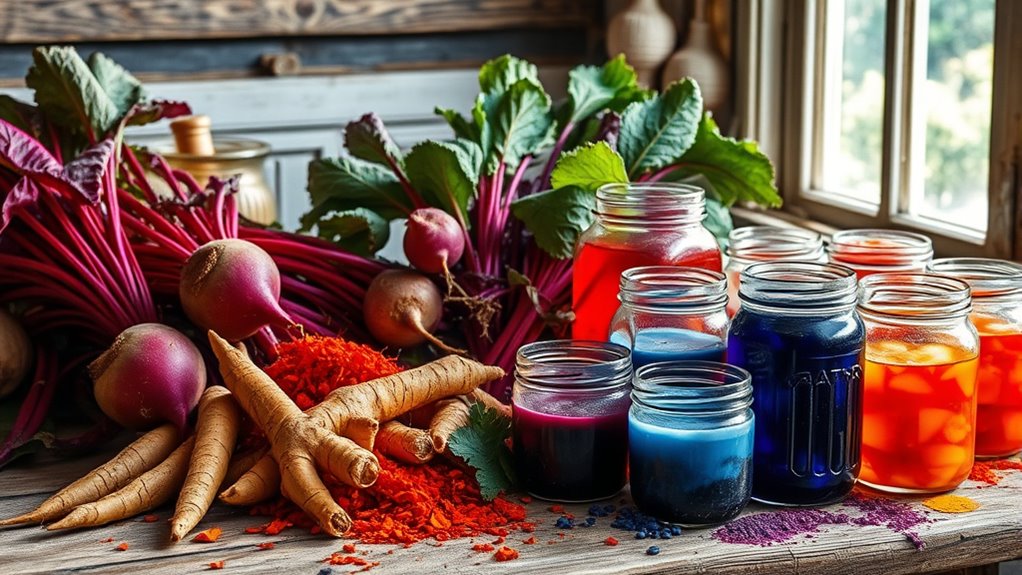
Have you ever wondered how to create vibrant colors without relying on synthetic dyes? The secret lies in understanding plant extraction techniques, which allow you to harness the natural pigments locked within fruits, vegetables, and herbs. These methods vary depending on the type of plant material and the desired hue, but generally involve soaking, boiling, or fermenting plant matter to release its color. For example, boiling onion skins or beetroot creates a rich dye bath. The key is to extract enough pigment efficiently while preserving its intensity, so your dye remains vivid and true to color. Once you’ve mastered these techniques, you’ll notice that vegetable dye stability becomes a fundamental factor. Stable dyes resist fading over time and withstand washing or exposure to light, making your creations durable.
To achieve good plant extraction, start with proper preparation. Chop or grate your plant material finely to maximize surface area, which facilitates better pigment release. Then, simmer the material in water—sometimes with an acid like vinegar or lemon juice, which helps intensify certain colors—until the water takes on the hue of the plant. Straining out the solids leaves you with a concentrated dye solution. The temperature and duration of boiling directly impact the richness of the dye; too short, and you won’t extract enough pigment, too long, and you risk degrading the color. Proper plant material preparation can further improve extraction efficiency. Once you have your dye, testing on small fabric swatches helps you gauge how well the color will hold.
Vegetable dye stability depends on multiple factors, including the type of vegetable, mordants used, and storage conditions. Mordants, such as alum or iron, bind the dye to the fabric and enhance colorfastness. Adding a mordant during or after dyeing can dramatically improve the dye’s longevity. Proper fixation is essential because many natural dyes tend to fade when exposed to sunlight or repeated washing. You should also consider the pH of your dye bath; acidity or alkalinity can shift the hue and influence stability. For instance, a vinegar bath can brighten reds and pinks, while an alkaline solution might turn colors into blue or green shades. Storing your dyed fabrics in cool, dark places extends their vibrancy and prevents fading.
Frequently Asked Questions
How Long Do Natural Dyes Typically Last on Fabrics?
Natural dyes typically last between 1 to 3 years on fabrics, depending on factors like colorfastness and dye stability. To maximize longevity, you should wash your dyed fabrics gently and avoid harsh detergents. Sun exposure can fade colors over time, so store your items away from direct sunlight. Proper care guarantees your natural dye colors stay vibrant longer, maintaining their beauty through regular use.
Can Natural Dyes Be Used on All Types of Textiles?
You might think all textiles are suitable for plant extraction dyeing, but that’s not always the case. Some fabrics, like silk and cotton, respond beautifully, especially with proper mordant selection, which enhances color fastness. However, others, like polyester, resist natural dyes. You’ll need to test different textiles and mordants to see which ones accept the plant extraction, ensuring vibrant, lasting results.
Are Natural Dyes Safe for Sensitive Skin?
Natural dyes are generally safe for sensitive skin, but you should watch for allergy risks, as some plants can cause reactions. They tend to have good chemical stability, meaning they don’t easily break down or cause irritation over time. However, it’s best to do a patch test before wearing dyed fabrics regularly. If you notice any irritation, discontinue use and consult a dermatologist.
How Can I Fix Natural Dyes to Prevent Fading?
Think of fixing natural dyes like sealing a treasure chest to keep its gems shining. You can prevent fading by using fixing mordants like alum or iron, which bond the dye to the fabric. Additionally, applying natural dye fixatives post-dyeing helps lock in color. Rinsing with cold water and washing gently also prolongs vibrancy. These steps make certain your colors stay bright and beautiful over time.
Do Natural Dyes Require Special Storage or Handling?
Yes, natural dyes need special storage and handling to maintain their vibrancy. You should focus on dye preservation by storing your dyes in airtight containers, away from direct sunlight and extreme temperatures. Use proper storage techniques like cool, dark places to prevent fading. Keep your dyes sealed tightly, and avoid exposing them to moisture or air, which can deteriorate their quality over time. This ensures your colors stay bright and effective for future use.
Conclusion
Now that you’ve uncovered the secret treasures hidden in plants and vegetables, you’re the artist wielding a brush of nature’s palette. With each dye you create, you’re painting your world with vibrant stories spun from the earth’s own heart. Embrace these natural hues—they’re like whispers of seasons past, waiting to transform your fabrics into living memories. So go ahead, dip into the magic of nature, and let your colors bloom with life and soul.