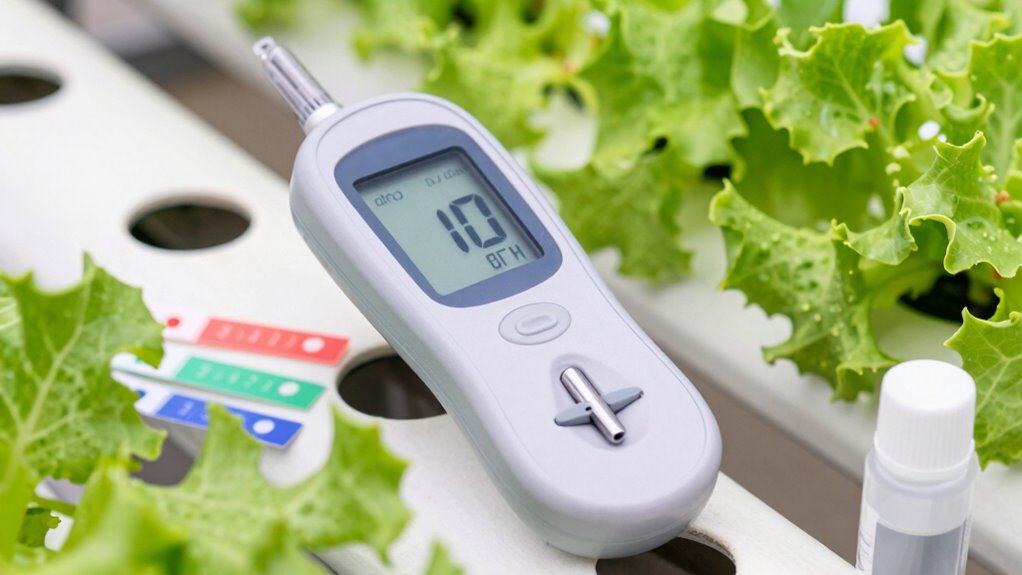

To find the best portable pH meter for hydroponics, start with strong calibration habits. Regularly calibrate your device using standard solutions to keep readings accurate. Always calibrate before each use and test water samples periodically to catch changes early. Proper maintenance, like rinsing with distilled water and storing in the right solution, extends sensor life. If you keep these habits, you’ll guarantee consistent pH control—continue further to uncover more tips for excellent results.
Key Takeaways
- Regularly calibrate the pH meter with fresh standard solutions before each use for accurate readings.
- Maintain consistent calibration intervals, especially when water quality or sensor conditions change.
- Use proper calibration techniques and follow manufacturer instructions to ensure sensor accuracy.
- Recalibrate after cleaning or sensor storage to prevent drift and ensure reliable measurements.
- Track calibration history to identify sensor degradation and determine optimal replacement timing.
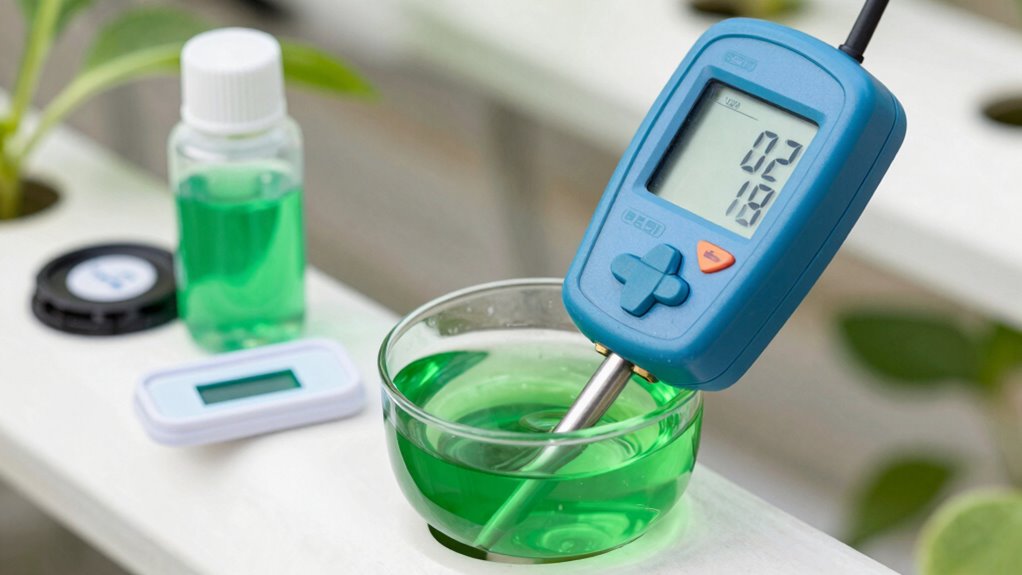
If you’re serious about maintaining ideal nutrient levels in your hydroponic system, choosing the right portable pH meter is essential. The quality of your water directly influences plant health, and a reliable pH meter ensures you’re accurately monitoring and adjusting the pH levels. But selecting the device is only part of the equation. Your calibration habits and sensor maintenance play a crucial role in ensuring consistent, precise readings. Proper calibration ensures your meter reflects true water conditions, preventing issues caused by inaccurate pH readings, which could lead to nutrient deficiencies or toxicities. Regular calibration with standard solutions helps keep your device accurate over time.
Water quality can vary significantly depending on your source, so it’s vital to test it periodically and calibrate your meter accordingly. If your water contains high levels of minerals or impurities, it can affect sensor performance, causing drift or false readings. To combat this, always use fresh calibration solutions, and keep your pH meter’s sensor clean and properly stored. Sensor maintenance isn’t just about cleaning after each use; it involves gentle rinsing with distilled water, avoiding harsh chemicals, and storing the sensor in a storage solution when not in use. Neglecting this can lead to sensor degradation, resulting in less reliable readings and more frequent replacements. Additionally, understanding the importance of biodiversity in water sources can help you better assess and manage water quality for your hydroponic system. Maintaining healthy microbial activity in your water can also contribute to overall water quality and plant health.
Monitoring water chemistry regularly can help detect changes that might impact sensor accuracy, allowing you to take corrective measures promptly. Keeping an eye on sensor lifespan, as aging sensors may become less accurate over time, is also essential. Furthermore, the habit of regularly checking your calibration before each use ensures you’re working with the most accurate data possible. Many portable pH meters have calibration prompts, but you should also be vigilant about when to recalibrate—especially if you notice inconsistent readings or sudden shifts. Proper maintenance extends the life of your device and guarantees that your hydroponic system stays within optimal pH ranges. This consistency is key to preventing nutrient lockout and promoting healthy plant growth. Additionally, understanding how water quality impacts sensor performance can help you troubleshoot calibration issues more effectively.
portable pH meter for hydroponics
As an affiliate, we earn on qualifying purchases.
As an affiliate, we earn on qualifying purchases.
Frequently Asked Questions
How Often Should I Replace the pH Meter’s Electrode?
You should replace your pH meter’s electrode when it no longer provides accurate readings, typically after an electrode lifespan of about 1-2 years with proper care. Regular calibration, ideally weekly or before each use, helps extend electrode life and maintain accuracy. If calibration becomes difficult or readings drift despite cleaning, it’s time to replace the electrode to guarantee reliable measurements in your hydroponic system.
Can I Use Distilled Water to Calibrate the pH Meter?
Yes, you can use distilled water to calibrate your pH meter, especially for electrode maintenance and ensuring accuracy. However, it’s best to calibrate frequently, about once a week, and after long periods of non-use. Regular calibration helps maintain proper calibration frequency and extends your electrode’s lifespan. Always rinse your electrode with distilled water before and after calibration to prevent contamination and keep your pH readings precise.
Is It Necessary to Calibrate Before Every Use?
Calibrating your pH meter is like tuning a guitar—regular adjustments keep it sounding perfect. You don’t need to calibrate before every use, but frequent calibration guarantees accuracy. Stick to a consistent calibration frequency based on how often you use your meter, and always maintain your electrode properly to prevent drift. Proper electrode maintenance and regular calibration are key to reliable pH readings in your hydroponic system.
How Do Temperature Changes Affect pH Readings?
Temperature changes can considerably affect pH readings, so you should perform temperature correction to guarantee accuracy. As water temperature varies, pH levels may appear different, leading to inaccurate measurements. Regular calibration becomes even more important with fluctuating temperatures, so you should adjust your calibration frequency accordingly. Always measure temperature alongside pH and apply temperature correction to get precise readings, helping you maintain ideal hydroponic conditions.
What Are Common Signs of a Malfunctioning pH Meter?
Imagine a clear pond suddenly murky—your pH meter shows signs of trouble. If readings become inconsistent or drift despite calibration, your electrode lifespan is likely compromised, or calibration techniques need review. You might notice the meter takes longer to stabilize or displays error messages. Regularly check and replace electrodes, and make certain of proper calibration to prevent malfunctions, keeping your hydroponic system thriving with accurate pH measurements.
digital pH meter with calibration solutions
As an affiliate, we earn on qualifying purchases.
As an affiliate, we earn on qualifying purchases.
Conclusion
To guarantee your hydroponic system thrives, prioritize regular calibration, maintain proper storage, and handle your pH meter with care. By establishing consistent calibration habits, you’ll improve accuracy; by storing your meter correctly, you’ll extend its lifespan; and by handling it gently, you’ll ensure reliable readings. Embrace these habits, and you’ll optimize your nutrient solution, support healthy plant growth, and enjoy a successful hydroponic harvest. Keep these routines, and your pH meter will serve you well.
As an affiliate, we earn on qualifying purchases.
handheld pH meter for plant nutrients
As an affiliate, we earn on qualifying purchases.
As an affiliate, we earn on qualifying purchases.