
TL;DR

Get school and study supplies delivered free — and shop member deals
- Fast, free delivery on millions of items
- Access to Prime Big Deal Days deals on October 6–7
- Prime Video, Amazon Music and more included
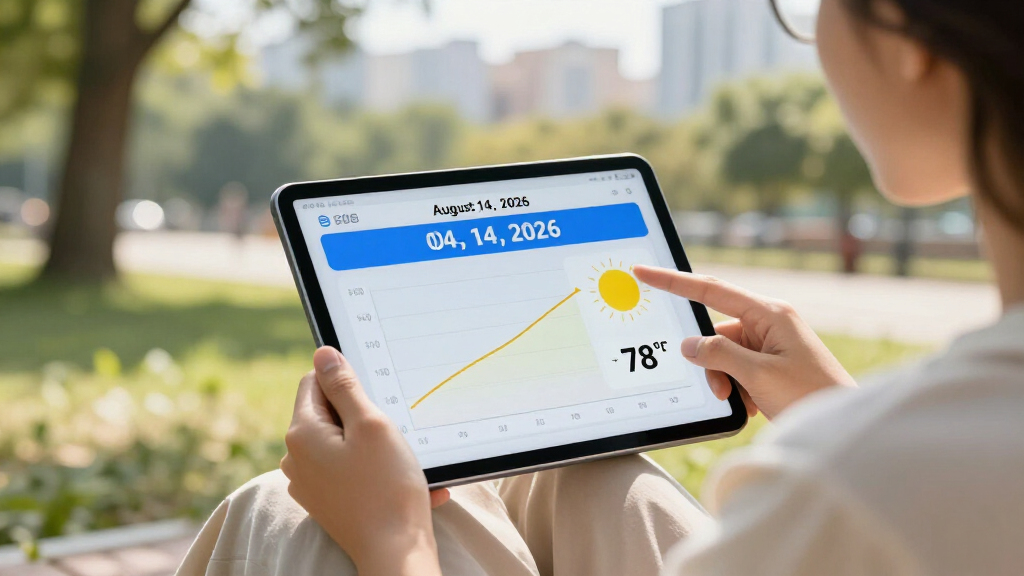
A market-based prediction indicates ongoing speculation about whether the temperature will surpass 78°F on August 14, 2026. No official weather forecast confirms this yet, and the event remains uncertain.
There is currently no confirmed weather forecast indicating whether the maximum temperature will be greater than 78°F on August 14, 2026. However, active trading on the Kalshi platform suggests market participants are speculating on this possibility, reflecting uncertainty about future weather conditions on that date. However, active trading on the Kalshi platform suggests market participants are speculating on this possibility, reflecting uncertainty about future weather conditions on that date.
Market activity on Kalshi, a platform for event-based trading, shows recent trades related to whether the maximum temperature on August 14, 2026 will exceed 78°F. These trades do not constitute an official weather forecast but indicate that traders are placing bets based on their expectations of future climate patterns.
Official weather models and forecasts are not available for such a distant date, and current climate projections do not definitively predict temperature extremes for that specific day. For more about climate predictions, see the future temperature forecasts. Meteorologists emphasize that forecasts beyond a few days are inherently uncertain, especially for a date several years in the future.
Experts caution that long-term climate predictions are subject to significant variability, and market speculation should not be relied upon as an authoritative forecast.
Implications of Long-Term Climate Market Predictions
This speculation highlights the growing role of market-based instruments in gauging public and investor sentiment about future climate conditions. While not a substitute for scientific forecasts, such markets can reflect collective expectations and risk assessments about future weather patterns.
Understanding whether temperatures could exceed certain thresholds years in advance has implications for agriculture, infrastructure planning, and climate policy. However, current predictions remain highly uncertain, and decisions should rely on official meteorological data.
As an affiliate, we earn on qualifying purchases.
Background on Climate Prediction Markets and Future Forecasting
Market-based prediction platforms like Kalshi allow traders to bet on future events, including weather conditions, by buying and selling contracts. These markets have gained attention as tools for aggregating collective expectations about future climate events.
While traditional meteorology relies on physical models, prediction markets incorporate the perspectives of a broader participant base, often reflecting perceived probabilities rather than scientific certainty. The accuracy of such markets for long-term forecasts remains unproven, especially for dates several years ahead.
Currently, climate models and weather agencies provide forecasts only up to a week or two in advance, with no specific predictions available for August 14, 2026.
“Long-term weather predictions are inherently uncertain, especially beyond a few months. Markets can reflect sentiment, but they are not substitutes for scientific forecasts.”
— Dr. Emily Carter, climate scientist
As an affiliate, we earn on qualifying purchases.
Limitations of Long-Range Weather Predictions
It remains unclear whether scientific weather models will be able to provide reliable forecasts for August 14, 2026, as current technology does not support precise predictions beyond a few weeks. The accuracy of climate projections several years into the future is highly uncertain, and no official forecast exists for that specific date at this time.
Additionally, market-based predictions are influenced by trader sentiment and do not reflect scientific consensus, further adding to the uncertainty.
As an affiliate, we earn on qualifying purchases.
Monitoring Scientific Forecasts and Market Trends
Meteorologists and climate scientists will continue to update forecasts as the date approaches, but reliable predictions for August 14, 2026, are unlikely until closer to that time. Meanwhile, market activity on platforms like Kalshi may serve as an informal indicator of public expectations, but should be interpreted with caution.
Official weather agencies are expected to release forecasts for late 2025 and 2026 as models improve, providing more definitive information about potential temperature extremes.
As an affiliate, we earn on qualifying purchases.
Key Questions
Can market predictions be trusted for long-term weather forecasts?
Market predictions reflect trader sentiment and are not scientifically validated forecasts. They can provide insights into perceived probabilities but should not be relied upon for accurate long-term weather predictions.
Is there any official forecast for August 14, 2026?
No, current official weather models do not provide forecasts this far in advance. Reliable predictions are generally limited to a week or two ahead.
Why do traders bet on weather events so far in advance?
Such markets allow participants to hedge against future climate risks or speculate on potential climate trends, but their predictions are inherently uncertain and speculative.
How accurate are climate models for long-term predictions?
Climate models can project broad trends over decades but are less precise about specific daily temperatures several years in advance. Uncertainty increases with the length of the forecast period.
Source: kalshi
Halloween Picks
halloween
As an affiliate, we earn on qualifying purchases.