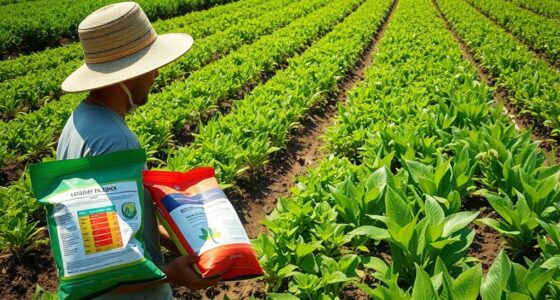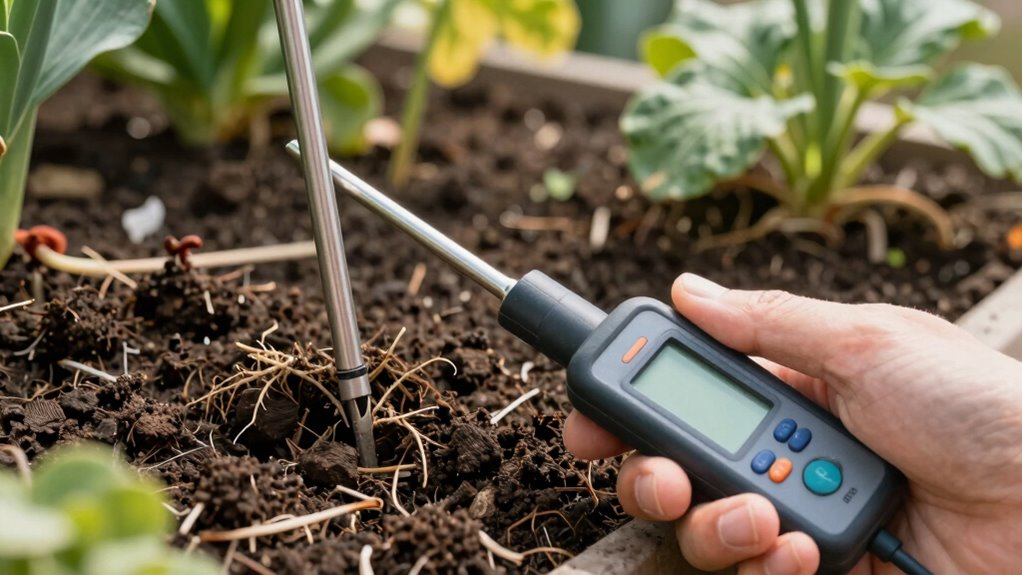

Soil nutrient meters quickly measure moisture levels and pH, helping you monitor basic soil conditions. However, they can’t tell you about essential nutrients like nitrogen, phosphorus, or potassium, nor can they identify specific deficiencies or excesses. They don’t replace detailed lab tests, which give a complete nutrient profile. Understanding what these meters can and can’t do helps you make better decisions—keep exploring to learn how to get the most accurate soil health insights.
Key Takeaways
- Soil nutrient meters can measure moisture levels and pH but do not directly analyze nitrogen, phosphorus, or potassium.
- They cannot identify specific nutrient deficiencies or excesses in the soil.
- Accurate readings depend on proper calibration and understanding of measurement limitations.
- Soil meters provide quick, initial assessments but should be complemented with lab testing for comprehensive analysis.
- They do not replace detailed nutrient profiling needed for precise soil fertility management.
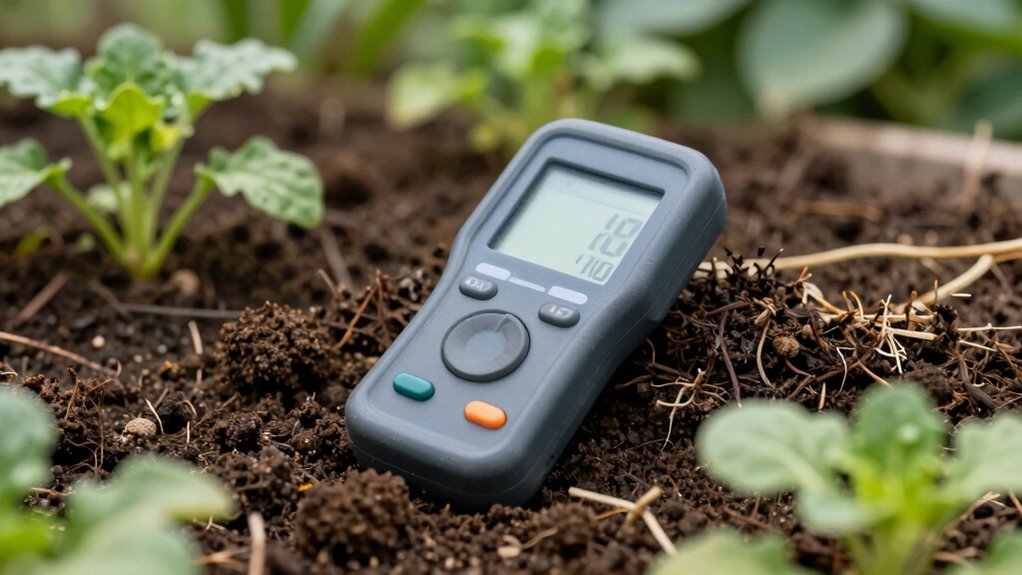
Understanding the nutrient levels in your soil is essential for healthy plant growth, and soil nutrient meters make this task easier than ever. These devices can quickly give you a snapshot of your soil’s condition, focusing on key factors like soil moisture and pH levels. When you use a soil nutrient meter, you get immediate feedback on whether your soil has enough water or if it’s too dry, which is crucial for plant health. Many meters also measure pH levels, helping you determine if your soil is acidic, neutral, or alkaline. This information guides you in adjusting your soil to optimize nutrient uptake, leading to healthier plants.
Soil meters quickly assess moisture and pH, guiding you to optimize conditions for healthier plant growth.
However, it’s important to understand what soil nutrient meters can and cannot tell you. While they provide valuable insights into soil moisture and pH, they don’t measure all essential nutrients directly. For instance, they don’t tell you about nitrogen, phosphorus, or potassium content explicitly. These are critical nutrients that influence plant growth, and deficiencies or excesses might not be apparent from a simple meter reading. To get a complete picture of your soil’s nutrient profile, you might still need to perform a lab test or use more detailed testing kits. Soil nutrient composition is a complex aspect that requires comprehensive analysis beyond basic meter readings. Additionally, understanding soil testing methods can help you interpret results more accurately and plan appropriate interventions. Proper sensor calibration** is crucial for obtaining reliable data, and being aware of measurement limitations** helps prevent misinterpretation of results.
As an affiliate, we earn on qualifying purchases.
Frequently Asked Questions
Can Soil Nutrient Meters Predict Future Crop Yields Accurately?
Soil nutrient meters can’t predict future crop yields with complete accuracy because they mainly measure current soil conditions. Their predictive accuracy for crop management depends on how well you interpret results and integrate other factors like weather, crop type, and management practices. Using these meters as part of a thorough approach can improve your decision-making, but relying solely on them won’t guarantee precise yield predictions.
Do Soil Nutrient Meters Work for All Types of Soil?
You can’t judge a book by its cover, and the same applies to soil nutrient meters. They don’t work equally well for all soil types because meter limitations vary with soil composition. Clay, sandy, or organic soils may give less accurate readings, so you might need different tools or methods for specific soils. Always consider your soil type before relying solely on a nutrient meter for accurate results.
How Often Should I Test My Soil With a Nutrient Meter?
You should test your soil with a nutrient meter at least once a season, especially before planting. While nutrient meters are convenient, they have limitations and might not detect all nutrient imbalances or deficiencies. Regular soil testing frequency helps you catch issues early and maintain healthy soil. Remember, supplement meter readings with occasional lab tests for an in-depth understanding of your soil’s health.
Can These Meters Detect Soil Contaminants or Toxins?
Soil nutrient meters generally can’t detect soil toxins or contaminants directly. They focus on measuring essential nutrients like nitrogen, phosphorus, and potassium, but aren’t designed for contaminant detection. If you’re concerned about soil toxins, you’ll need specialized testing kits or lab analysis. These methods can identify harmful substances like heavy metals or pesticides, giving you a clearer picture of soil safety beyond what standard nutrient meters provide.
Do Soil Nutrient Meters Measure Soil pH Levels?
Soil nutrient meters do measure soil pH levels, helping you assess acidity or alkalinity. This insight is vital for balancing nutrients and nurturing plants. When you test soil pH, you gain a gauge of the ground’s general health, guiding your gardening decisions. Remember, maintaining proper pH levels promotes nutrient absorption, ensuring your plants thrive. Soil pH measurement is a fundamental step in fostering fertile, flourishing fields.
As an affiliate, we earn on qualifying purchases.
Conclusion
Soil nutrient meters are your trusted guides, revealing the secrets beneath your feet with surprising clarity. Yet, remember—they can’t tell you everything. Think of them as a map, not the destination itself. To truly nurture your soil, combine their insights with your hands-on experience and expert advice. Only then can you access the full potential of your land, turning humble dirt into a flourishing paradise—your personal masterpiece waiting to be revealed.
As an affiliate, we earn on qualifying purchases.
As an affiliate, we earn on qualifying purchases.