
To select the right fertilizer for your crops, start by testing your soil to identify nutrient levels, pH, and organic matter. Match fertilizers to your plants’ needs; leafy greens need nitrogen, root crops require phosphorus and potassium, while fruiting plants need a balanced mix. Choose appropriate types like granular, liquid, or organic options, and apply them at key growth stages. For detailed guidance, explore how timing and application methods can optimize your crop health and yields.
Key Takeaways
- Conduct soil tests to determine nutrient levels, pH, and organic matter before selecting fertilizer.
- Match fertilizer type and nutrient content to the specific needs of your crop (e.g., nitrogen for leafy greens).
- Choose appropriate application methods (granular, liquid, organic) based on scale and crop requirements.
- Time fertilizer application to key growth stages to maximize nutrient uptake and minimize waste.
- Monitor soil and crop health regularly to adjust fertilization practices for optimal results and sustainability.
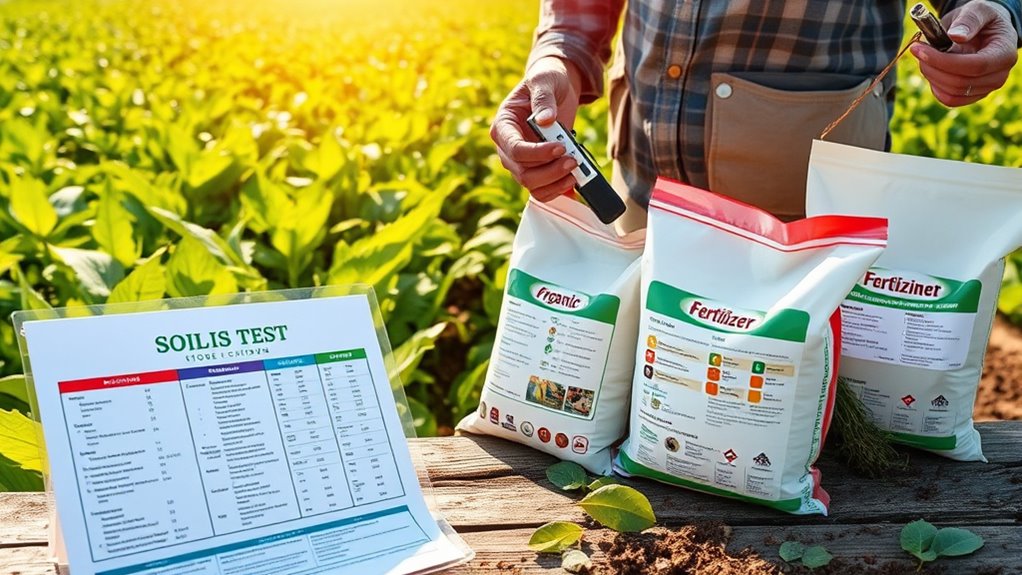
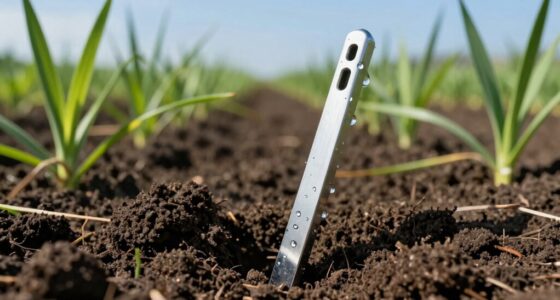
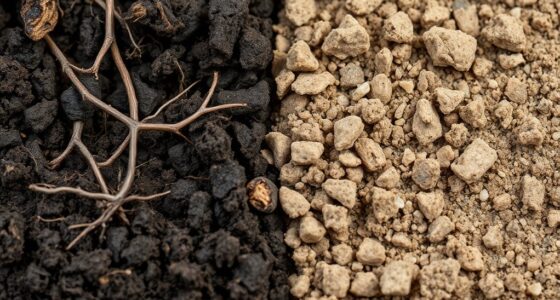
Are you unsure how to choose the best fertilizer for your crops? Picking the right fertilizer can seem overwhelming with so many options available. But understanding what your plants need and how to meet those needs is key to achieving healthy, productive crops. The first step is to assess your soil’s current condition. Conducting a soil test provides valuable information about nutrient levels, pH balance, and organic matter content. This data helps you identify deficiencies or excesses, guiding you toward the most appropriate fertilizer. For example, if your soil is low in nitrogen, you’ll want a fertilizer that supplies that nutrient specifically. Ignoring soil analysis can lead to over-fertilization, which not only wastes resources but can also harm your plants and environment.
Next, consider the type of crops you’re growing. Different plants have distinct nutrient requirements. Leafy greens like lettuce and spinach need more nitrogen to promote lush foliage, while root vegetables such as carrots and beets require more phosphorus and potassium to develop strong roots. Fruit-bearing plants, like tomatoes and peppers, often need a balanced supply of all three macronutrients. Understanding these needs allows you to tailor your fertilization approach, ensuring your plants get exactly what they need for healthful growth and yield. Additionally, choosing the right fertilizer application method can influence how effectively nutrients are delivered to your crops. Knowing about soil nutrient release rates can also help you time your fertilization more precisely, optimizing nutrient uptake and reducing waste.
Different crops have unique nutrient needs, so tailor your fertilizer to promote healthy growth and high yields.
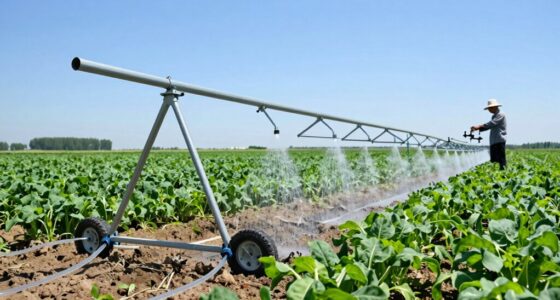
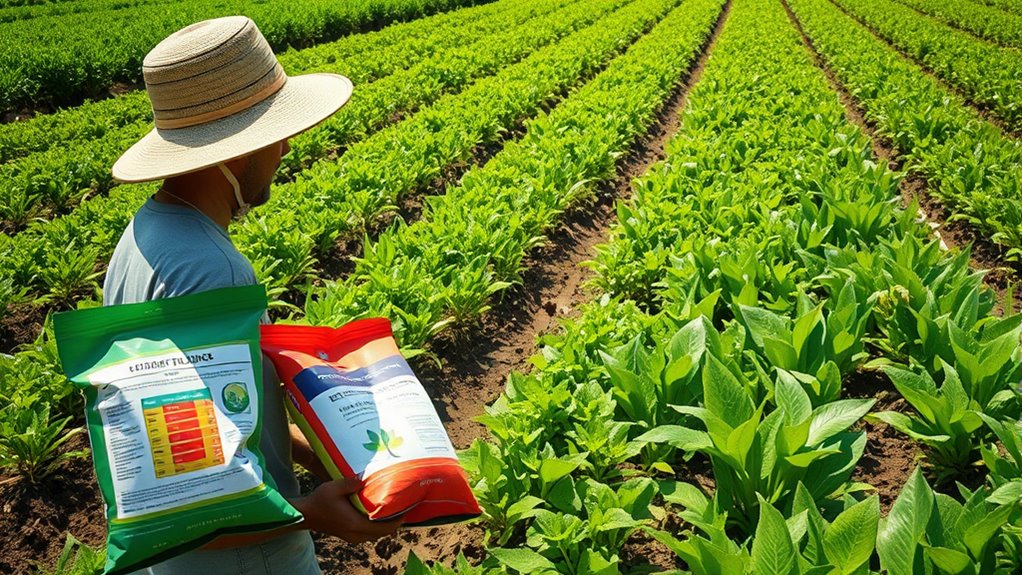
You also need to choose the right fertilizer form. Granular fertilizers are easy to apply and store, making them suitable for large-scale operations. They release nutrients gradually, providing a steady supply over time. Liquid fertilizers offer quick nutrient availability and are ideal for foliar feeding or addressing immediate deficiencies. There are also organic options, such as compost and manure, which improve soil health over time and support sustainable farming practices. Synthetic fertilizers deliver nutrients rapidly but should be used carefully to prevent runoff and pollution. Furthermore, understanding fertilizer compatibility with existing soil amendments can help prevent adverse reactions and improve overall efficiency.
Finally, timing your fertilization schedule is vital. Applying fertilizer too early or too late can reduce its effectiveness. For most crops, it’s best to apply nutrients during key growth stages—such as planting, flowering, or fruiting—when plants need the most support. Additionally, understanding the nutrient release rates of different fertilizers can help optimize their effectiveness and minimize waste. Regularly monitoring your crops and soil conditions helps determine when and how much fertilizer to apply, preventing over-application and ensuring efficient nutrient use.
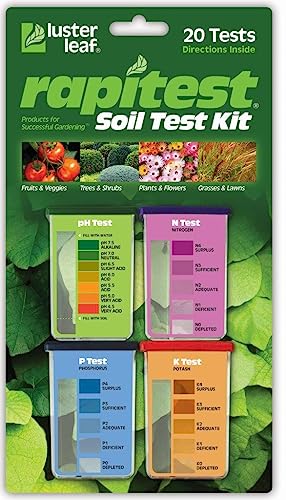
Rapitest Soil Test Kit for Gardens, Vegetables, Flowers and Lawns. USA designed and assembled soil tester completely, quickly and accurately measures/analyzes soil pH acidity and garden nutrients.
- Quick at-home soil test: Measures pH, N, P, K accurately
- Complete testing kit: Includes components for 20 tests
- Versatile testing: Tests multiple garden spots
As an affiliate, we earn on qualifying purchases.
As an affiliate, we earn on qualifying purchases.
Frequently Asked Questions
How Do I Determine the Specific Nutrient Deficiencies in My Soil?
To establish your soil’s nutrient deficiencies, start by observing your crops for signs like yellowing leaves or stunted growth, which indicate specific issues. Next, conduct a soil test using a kit or professional lab to analyze nutrient levels accurately. This data helps you identify deficiencies and choose the right fertilizer. Regular testing ensures your soil stays balanced, promoting healthy, productive crops.
What Are the Environmental Impacts of Different Fertilizer Types?
Oh, the joys of fertilizers! While they boost your crops, some can harm the environment by leaching into waterways or releasing greenhouse gases. Synthetic fertilizers often cause nutrient runoff, leading to algal blooms, while organic options tend to be more eco-friendly but might release nutrients slower. You’ll want to balance your crop needs with environmental responsibility, choosing fertilizers that support growth without causing long-term ecological damage.
How Often Should I Apply Fertilizer During the Growing Season?
You should apply fertilizer based on your crop’s needs, growth stage, and soil test results. Generally, you might fertilize every 3 to 4 weeks during active growth, but this varies. Over-fertilizing can harm plants and the environment, so monitor your crops and soil health closely. Adjust your schedule accordingly, and always follow label instructions to guarantee ideal growth while minimizing negative impacts.
Can Organic Fertilizers Replace Chemical Fertilizers Entirely?
Did you know that organic fertilizers improve soil health over time, unlike chemical options? While organic fertilizers can often replace chemical ones, it depends on your crop needs and soil conditions. Organic options release nutrients slowly, promoting sustainable growth, but may require more frequent application. You might need a mix of both for ideal results. Always test your soil to determine the best approach for your specific crops.
What Are the Signs of Over-Fertilization in Crops?
When you over-fertilize your crops, you’ll notice signs like yellowing leaves, especially at the edges, or stunted growth. You might also see salt deposits on the soil surface or a sudden increase in plant susceptibility to diseases. If your plants look overly lush or show uneven growth, it’s a clear sign you’ve applied too much fertilizer. Always monitor your crops closely to avoid these issues and adjust your fertilization practices accordingly.

Miracle-Gro Organic Plant Food, 32 fl. oz.
- Made from Plants: Organic plant fertilizer from plant ingredients
- Plant Care Nutrition: 94% plant-based ingredients for healthy growth
- Universal Use: Suitable for outdoor, garden, and indoor plants
As an affiliate, we earn on qualifying purchases.
As an affiliate, we earn on qualifying purchases.
Conclusion
Choosing the right fertilizer is like planting a seed in fertile soil—you set the foundation for healthy growth. When you understand your crops’ needs and match them with the perfect nutrients, your fields flourish like a well-tended garden. Remember, the right fertilizer acts as a trusted guide, leading your crops toward abundant harvests. Stay attentive, make informed choices, and watch your efforts bloom into a thriving, lush landscape.

Dr. Earth Organic 5 Tomato, Vegetable & Herb Fertilizer Poly Bag
- Enhances vegetable nutrition and flavor: For more nutritious and tasty vegetables
- Balanced plant nutrients: Optimum levels of primary plant nutrients
- Non-GMO and natural ingredients: Contains no GMOs, chicken manure or sewage sludge
As an affiliate, we earn on qualifying purchases.
As an affiliate, we earn on qualifying purchases.
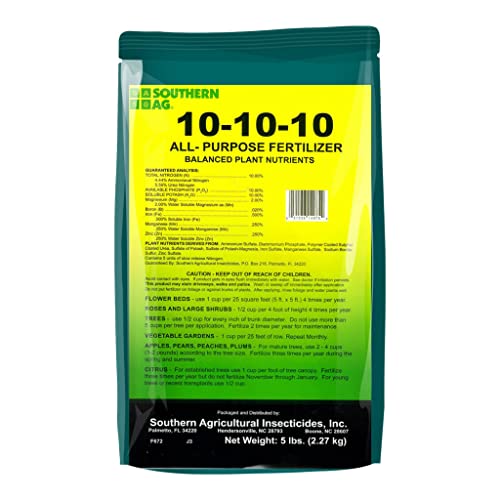
Southern Ag All Purpose Granular Fertilizer 10-10-10, 5 LB Size: 5 LB
- Size: 5 LB
- Formulation: Uniform granular formulation
- Nutrient Content: 10-10-10 NPK ratio with minor elements
As an affiliate, we earn on qualifying purchases.
As an affiliate, we earn on qualifying purchases.