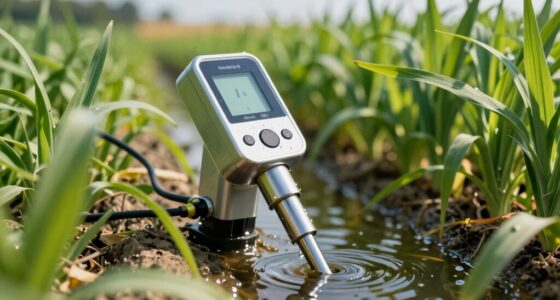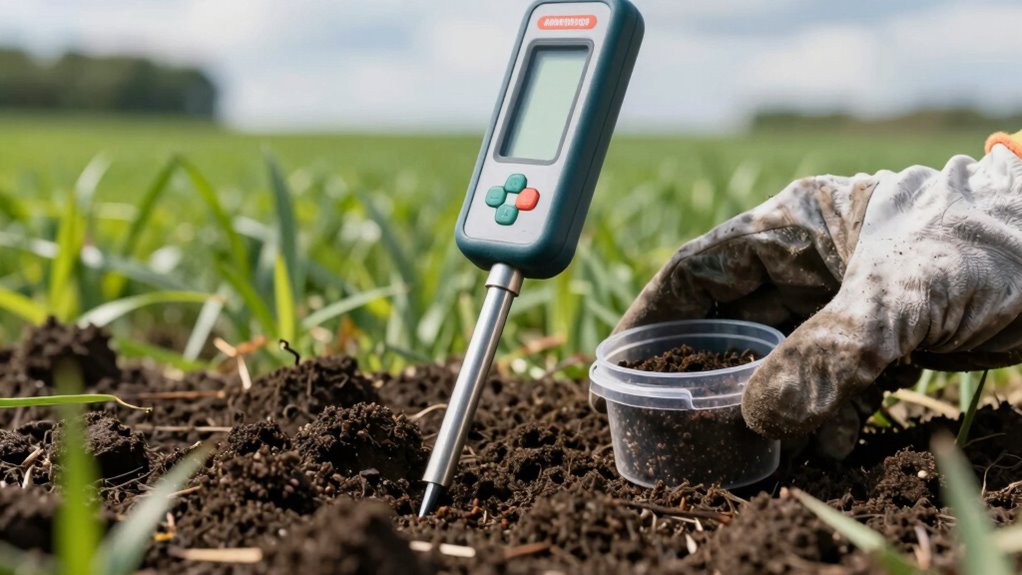

To get accurate results, invest in a professional soil pH meter and adopt good sampling habits. Use multiple samples from different spots, mix them well, and test a small portion for a representative reading. Regular calibration with fresh buffer solutions is key to maintaining accuracy and prolonging your device’s lifespan. Proper sampling and maintenance help you make informed decisions about soil amendments. Keep exploring to discover even more tips for precise testing and healthier gardens.

Prime made for students and young adults
- Fast, free delivery for dorm and study essentials
- Prime Video and Amazon Music included
- Member-only deals
Key Takeaways
- Use high-quality, calibrated professional soil pH meters for accurate, reliable readings.
- Collect multiple samples from different locations and thoroughly mix them for representative testing.
- Regularly calibrate meters with standard buffer solutions (pH 4.0, 7.0, 10.0) to maintain accuracy.
- Rinse the probe with distilled water before calibration and testing to prevent contamination.
- Perform tests under consistent environmental conditions and follow proper sampling protocols for reliable data.
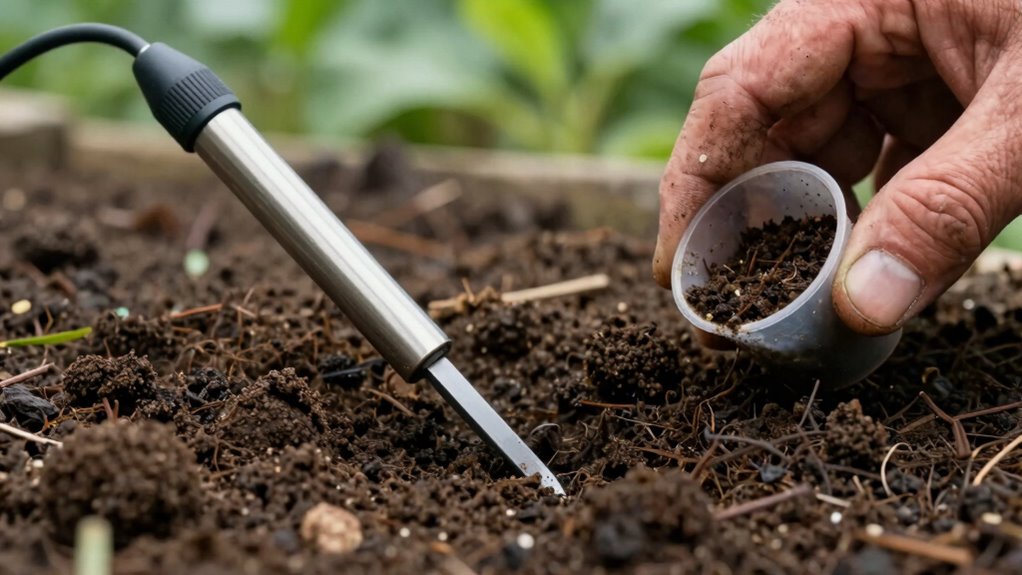
Understanding soil pH is essential for successful gardening and farming because it affects nutrient availability and plant health. To get an accurate reading, you need reliable tools and proper sampling techniques. Professional soil pH meters are designed to provide precise measurements, but their accuracy depends heavily on correct calibration and sampling habits. Soil testing using these meters involves more than just inserting the probe into the ground; it requires careful preparation and attention to detail. Before you start testing, make sure the soil sample is representative of the area you want to assess. Take multiple samples from different spots, mix them together, and then test a small portion. This approach guarantees your pH reading reflects the overall soil condition and not just one localized pocket.
Calibration techniques are vital for maintaining the accuracy of your soil pH meter. Over time, probes can drift from their original calibration, leading to skewed results. To prevent this, you should regularly calibrate your meter using standard buffer solutions that match the pH range of your soil. Typically, these solutions are available in pH 4.0, 7.0, and 10.0 buffers. When calibrating, rinse the probe thoroughly with distilled water, immerse it in the buffer solution, and follow the manufacturer’s instructions. Repeat the process for each buffer to ensure your meter stays accurate across different pH levels. Proper calibration not only improves measurement precision but also extends the lifespan of your device. Additionally, understanding soil pH variations across different areas helps in making more informed decisions about soil management and amendments. Recognizing how environmental factors influence soil pH can further enhance the accuracy and usefulness of your testing results. Maintaining proper testing protocols is essential to ensure consistent and reliable data over time. Regularly updating your knowledge about soil chemistry can also help interpret results more effectively. Furthermore, being aware of seasonal and weather-related pH fluctuations can help you plan testing schedules to obtain the most accurate readings.
As an affiliate, we earn on qualifying purchases.
Frequently Asked Questions
How Often Should I Calibrate My Soil pH Meter?
You should calibrate your soil pH meter at least once a month to guarantee accurate readings. Calibration frequency depends on how often you use the device and the soil’s compatibility, as frequent changes in soil conditions can affect readings. Always calibrate before each use if you’re working with different soil types or after long periods of storage. Regular calibration helps maintain precision and reliable results.
Can Soil pH Meters Work in Water or Other Liquids?
You can’t expect soil pH meters to work perfectly in water or other liquids, as they’re designed specifically for soil testing. While some meters might handle water testing or measure in liquids, most are not compatible with other liquids. It’s like putting a square peg in a round hole — your meter’s accuracy drops. Always check the manufacturer’s instructions for liquid compatibility to avoid false readings and keep your measurements reliable.
What Is the Lifespan of a Typical Soil pH Meter?
A typical soil pH meter lasts about 1 to 3 years, depending on how well you maintain it. Its durability depends on factors like soil composition and proper cleaning after use. If you regularly calibrate and store it correctly, you can extend its lifespan. Harsh soil conditions, such as high mineral content, may shorten its durability, so handling it carefully ensures accurate readings over time.
Are There Specific pH Meters for Different Soil Types?
You’re right to ask if there are specific pH meters for different soil types—absolutely, there’s a perfect fit for every situation. Some meters are designed with soil type compatibility in mind, ensuring more accurate readings. You should also consider meter calibration frequency; regular calibration keeps your device reliable across various soils. By matching the right meter to your soil and maintaining it well, you’re setting yourself up for success.
How Do Temperature Variations Affect pH Meter Readings?
Temperature variations can considerably impact your pH meter readings by causing inaccuracies. You should use temperature compensation features available on many professional meters to adjust readings accurately. Regular calibration ensures your device maintains calibration accuracy despite temperature changes. By compensating for temperature effects and calibrating properly, you’ll get more reliable soil pH measurements, helping you make better-informed decisions about soil health and treatment strategies.
soil pH testing kit with calibration solutions
As an affiliate, we earn on qualifying purchases.
As an affiliate, we earn on qualifying purchases.
Conclusion
By choosing a quality soil pH meter and adopting better sampling habits, you’re revealing the true potential of your garden—like a key turning in a lock. Remember, consistent testing is the guiding star that reveals your soil’s hidden secrets, shaping healthier growth. As you nurture your plants, you’re also tending to the delicate balance of nature’s symphony, where each reading symbolizes a step closer to harmony. Trust your tools; let the soil’s story unfold.
digital soil pH meter for gardening
As an affiliate, we earn on qualifying purchases.
As an affiliate, we earn on qualifying purchases.
As an affiliate, we earn on qualifying purchases.
Fall Picks
fall essentials
As an affiliate, we earn on qualifying purchases.