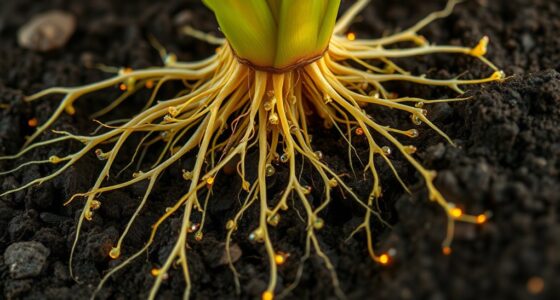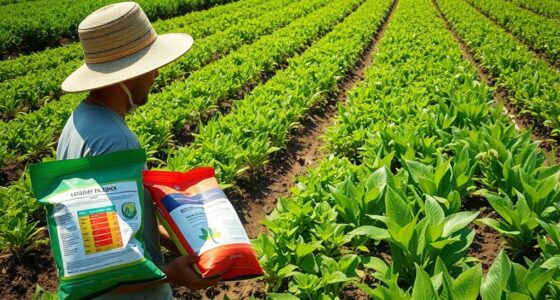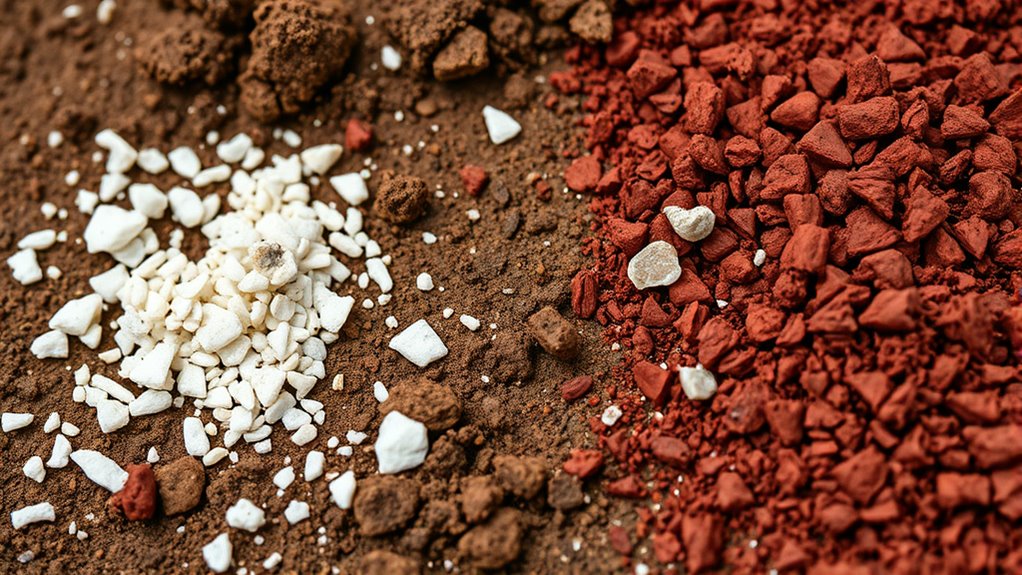

To improve nutrient availability in your soil, adjust the pH using lime or sulfur based on your soil test results. Lime raises acidity levels, making nutrients like calcium and phosphorus more soluble, while sulfur lowers pH, releasing nutrients such as iron and zinc. Proper application guarantees your plants absorb nutrients efficiently. Keep in mind that pH changes take time, and ongoing management is key—continue exploring to learn how to fine-tune your soil for ideal growth.
Key Takeaways
- Lime raises soil pH, increasing nutrient solubility for nutrients like calcium, magnesium, and phosphorus.
- Sulfur lowers soil pH, enhancing the availability of iron, manganese, and zinc.
- Proper pH adjustment prevents nutrient lockout and improves plant nutrient uptake.
- Regular soil testing guides accurate application of lime or sulfur for optimal pH correction.
- Adjustments should be made gradually, considering soil type and plant needs, to avoid over-correction.
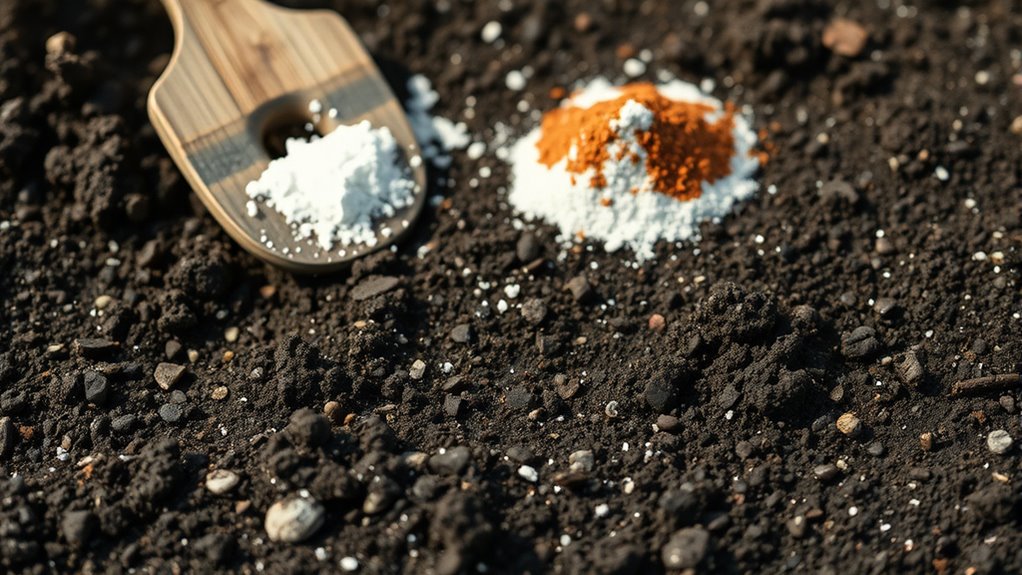
Have you ever wondered why some plants thrive while others struggle? The answer often lies in the soil’s pH level, which directly influences nutrient availability. When soil pH isn’t in the optimal range for your plants, essential nutrients can become less soluble, making it harder for roots to absorb what they need. To fix this, you need to understand pH adjustment techniques—methods like adding lime or sulfur—that can help you modify soil acidity or alkalinity. These adjustments are crucial because nutrient solubility hinges on the pH level; if the soil is too acidic or alkaline, vital nutrients may become locked away, leading to deficiencies that stunt plant growth. Regular use of glycolic acid products in skincare routines has been linked to improving skin texture and radiance, much like how pH adjustments improve nutrient uptake in soil. Lime is your go-to for raising soil pH, making acidic soils more neutral or alkaline. When you add lime, you’re increasing the soil’s pH, which helps improve nutrient solubility for elements like calcium, magnesium, and phosphorus. As these nutrients become more soluble, your plants can absorb them more efficiently, resulting in healthier growth. Conversely, sulfur is effective for lowering soil pH, especially in soils that are too alkaline. When you incorporate sulfur, it turns into sulfuric acid over time, gradually acidifying the soil. This process enhances the solubility of nutrients like iron, manganese, and zinc, which tend to become less available in high pH conditions. By adjusting soil pH with these amendments, you’re directly influencing nutrient solubility, ensuring your plants get the nutrients they need in a form they can easily absorb. Proper pH adjustment isn’t a one-time fix; it requires understanding your soil’s current pH and the specific needs of your plants. Testing your soil regularly helps you determine whether you need to add lime or sulfur. When you apply these amendments, follow recommended rates to avoid over-correction, which can lead to other problems. Keep in mind that pH adjustment techniques take time to show results—sometimes several weeks—so patience is key. During this period, watering helps distribute the amendments evenly and accelerates the pH change process.

Rapitest Soil Test Kit for Gardens, Vegetables, Flowers and Lawns. USA designed and assembled soil tester completely, quickly and accurately measures/analyzes soil pH acidity and garden nutrients.
Quick, at home results for Soil pH, Nitrogen, Phosphorous and Potash Innovative and inexpensive soil test kit features…
As an affiliate, we earn on qualifying purchases.
As an affiliate, we earn on qualifying purchases.
Frequently Asked Questions
How Often Should I Test My Soil’s Ph Levels?
You should test your soil’s pH levels at least once a year through soil testing and pH monitoring. If you’re making adjustments with lime or sulfur, consider testing more frequently, such as every 3 to 6 months, to track changes and guarantee ideal pH levels. Regular testing helps you maintain healthy soil conditions, ensuring your plants get the nutrients they need for excellent growth.
Can Over-Liming Harm My Plants?
You might not realize it, but over-liming can harm your plants by causing pH fluctuation, making them sensitive to nutrients. Too much lime raises soil pH excessively, leading to nutrient lockout and weakened growth. Keep a close eye on your soil tests, follow recommended application rates, and avoid guessing. Your plants thrive when pH remains stable, so careful liming guarantees they stay healthy and vibrant.
What Are Natural Alternatives to Lime and Sulfur?
You can consider natural alternatives like organic amendments such as wood ash or crushed eggshells to raise soil pH gently. For lowering pH, incorporate sulfur-rich organic materials like composted pine needles or sulfur amendments. Additionally, microbial solutions like mycorrhizal fungi or beneficial bacteria can help improve nutrient uptake and balance soil acidity naturally. These methods are eco-friendly and support healthy soil without the risks of over-liming or over-sulfurizing.
How Does Soil Type Influence Ph Adjustment Methods?
Think of soil type as the canvas for your gardening masterpiece. Your soil’s composition directly influences how well amendments like lime or sulfur work. Sandy soils, with their quick drainage, often require more frequent adjustments and may reduce amendment effectiveness, while clay soils retain nutrients better, making pH changes more stable. Understanding your soil type helps you choose the right method to adjust pH efficiently, ensuring healthy plant growth.
Are There Environmental Impacts of Using Lime or Sulfur?
Using lime or sulfur can impact the environment, so you should be aware of potential concerns. Lime can cause environmental issues like runoff, leading to soil acidification in nearby areas, while sulfur may contribute to air pollution if not applied carefully. Both methods, if misused, can affect local ecosystems and water quality. Always follow recommended application rates to minimize environmental impacts and protect your soil and surroundings.

Organic Dolomite Lime 5LB – Made in USA – Garden Soil Amendment Fertilizer for Plants. Calcium/Magnesium Additive. Raise & Stabilize pH – Earthbox Tomatoes & Peppers Blossom End Rot. OMRI Listed
OMRI Listed – Cz Dolomite Lime is an All-Natural mineral fertilizer listed by the Organic Materials Review Institute…
As an affiliate, we earn on qualifying purchases.
As an affiliate, we earn on qualifying purchases.
Conclusion
By understanding how soil pH influences nutrient availability, you hold the key to healthier plants. Think of pH adjustments as tuning an instrument—small changes can create harmony or discord in your garden’s growth. Whether you choose lime to raise pH or sulfur to lower it, your efforts can transform your soil into a thriving foundation. Remember, mastering soil chemistry isn’t just science; it’s the secret to releasing your garden’s full potential.

True Organic Prilled Sulfur – Organic Fertilizer for Better Plant Growth, Flowers, Vegetables, and Herbs – Lowers Soil pH – 5lb Bag Covers 1,333 Sq. Ft.
Promotes Healthy Growth: True Prilled Sulfur supports overall plant growth, helping to produce superior flowers, vegetables, herbs, and…
As an affiliate, we earn on qualifying purchases.
As an affiliate, we earn on qualifying purchases.
Organic Dolomite Lime 5LB – Made in USA – Garden Soil Amendment Fertilizer for Plants. Calcium/Magnesium Additive. Raise & Stabilize pH – Earthbox Tomatoes & Peppers Blossom End Rot. OMRI Listed
OMRI Listed – Cz Dolomite Lime is an All-Natural mineral fertilizer listed by the Organic Materials Review Institute…
As an affiliate, we earn on qualifying purchases.
As an affiliate, we earn on qualifying purchases.