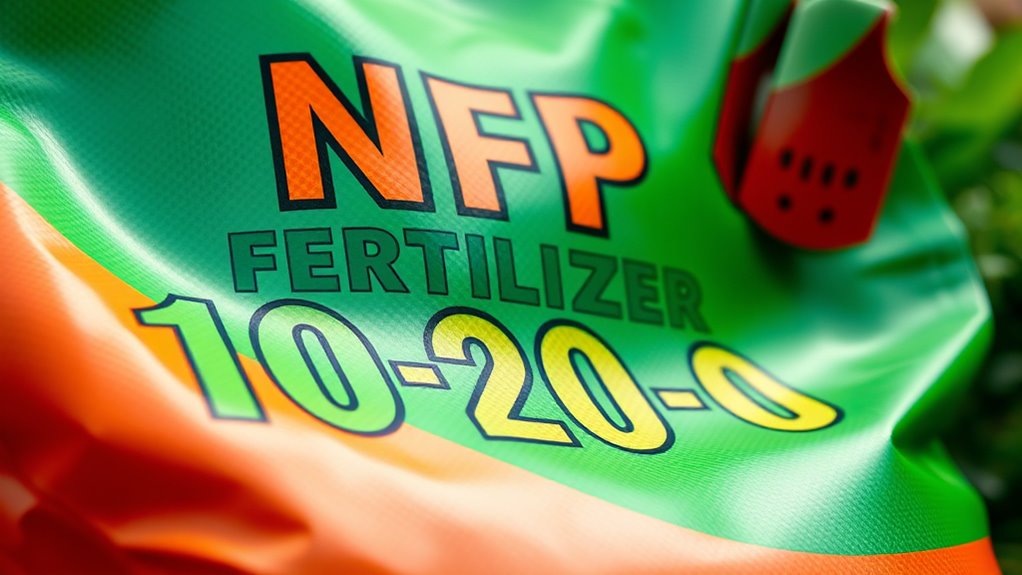

NPK ratios show the percentage of nitrogen (N), phosphorus (P), and potassium (K) in a fertilizer, helping you understand what nutrients your plants are getting. The first number is nitrogen, which promotes leafy growth; the second is phosphorus, essential for roots and flowers; and the third is potassium, supporting overall health and durability. Knowing these numbers helps you choose the right fertilizer for your plants’ specific needs—if you want to learn more, keep exploring how to tailor nutrients for your garden.
Key Takeaways
- The numbers in NPK ratios (e.g., 10-20-10) represent the percentage of nitrogen, phosphorus, and potassium in the fertilizer.
- Nitrogen (N) promotes leafy growth, phosphorus (P) supports roots and flowers, potassium (K) boosts overall plant health.
- Higher nitrogen ratios suit leafy vegetables; balanced or higher phosphorus/potassium benefit flowering and fruiting plants.
- Soil testing helps determine nutrient deficiencies, guiding the selection of appropriate NPK ratios for optimal plant growth.
- Understanding these ratios allows precise fertilization, preventing deficiencies, over-fertilization, and promoting healthy, productive plants.
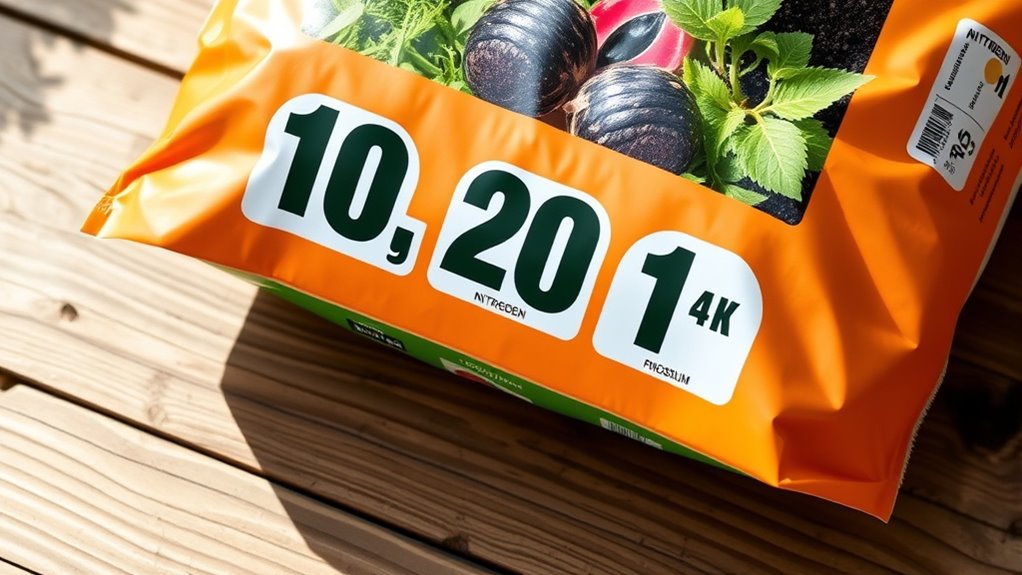
Have you ever wondered what those numbers on fertilizer packages mean? It’s a common question among gardeners and farmers alike. Those numbers, like 10-20-10 or 15-5-30, represent the fertilizer composition—specifically, the ratio of the three main nutrients essential for plant growth: nitrogen (N), phosphorus (P), and potassium (K). Understanding these ratios helps you tailor your fertilization to meet your plants’ nutrient needs, guaranteeing healthy growth and maximum yields.
The first number indicates the percentage of nitrogen in the fertilizer. Nitrogen is essential for leafy, vegetative growth because it’s a key component of chlorophyll, the molecule responsible for photosynthesis. When you see a high nitrogen number, it generally suggests that the fertilizer promotes lush, green foliage. The second number shows the percentage of phosphorus, which is indispensable for root development, flowering, and fruiting. Phosphorus helps plants establish strong roots and supports energy transfer within the plant cells. The third number shows the percentage of potassium, which plays a role in overall plant health, disease resistance, and water regulation.
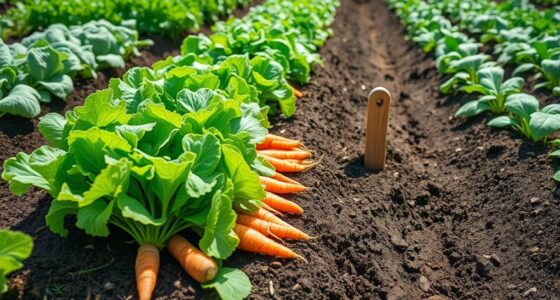
Knowing the fertilizer composition allows you to assess how well it aligns with your plants’ specific nutrient needs. For example, leafy vegetables like lettuce or spinach require higher nitrogen levels to promote lush leaf growth. Conversely, flowering plants such as tomatoes and peppers benefit from a balanced or slightly higher phosphorus and potassium ratio to encourage flowering and fruiting. If you’re growing root crops like carrots or potatoes, a fertilizer with a higher phosphorus content supports root development. By matching the NPK ratio to your plants’ growth stages and needs, you avoid over-fertilizing or under-fertilizing, which can lead to poor plant health or environmental issues.
It’s also important to consider the soil’s existing nutrient profile. Conducting a soil test helps determine what nutrients are already abundant or lacking. This way, you can select a fertilizer with the appropriate composition that complements your soil’s condition. For instance, if your soil is already rich in nitrogen but deficient in phosphorus, choosing a fertilizer with a higher phosphorus content makes sense. Adjusting fertilizer composition based on plant nutrient needs guarantees that your plants get what they require at each stage of growth, resulting in healthier, more productive plants. Additionally, understanding electric bikes and their components can help you make informed decisions about maintenance and upgrades to optimize performance.
Frequently Asked Questions
How Do NPK Ratios Vary Across Different Plant Types?
You’ll notice NPK ratios vary across plant types because different plants have unique soil requirements and adaptations. For example, leafy greens need higher nitrogen for lush growth, while flowering plants favor more phosphorus to promote blooms. Understanding these specific needs helps you select the right fertilizer. By matching NPK ratios to each plant’s soil requirements and adaptations, you ensure healthier growth and better yields.
Can NPK Ratios Be Customized for Specific Growth Stages?
You can customize NPK ratios for specific growth stages through fertilizer blending, which allows nutrient tailoring to your plants’ needs. During early growth, you might use a formula high in nitrogen to promote foliage, while flowering stages benefit from increased phosphorus and potassium. Adjusting ratios guarantees your plants get the right nutrients at the right time, enhancing growth and yield. Fertilizer blending makes this precise nutrient management achievable and effective.
Are There Environmental Impacts Associated With High NPK Fertilizers?
High NPK fertilizers can cause environmental impacts like runoff that pollutes water sources and soil degradation over time. When you use too much fertilizer, it can leach into nearby waterways, harming aquatic life, and deplete soil nutrients, reducing land fertility. To minimize these effects, you should apply fertilizers carefully, follow recommended dosages, and consider using slow-release options to protect your environment and maintain healthy soils.
How Do Organic Fertilizers Compare in NPK Ratios?
Organic fertilizers typically have lower and more balanced NPK ratios compared to synthetic ones, making them gentler soil amendments. You’ll notice they release nutrients slowly, which improves nutrient absorption and reduces runoff. These fertilizers are often derived from compost, manure, or plant extracts, providing essential nutrients naturally. While their ratios vary, organic options support sustainable soil health and promote better long-term nutrient management, benefiting your plants and environment alike.
What Are the Signs of Nutrient Imbalance Related to NPK Ratios?
You might notice deficiency symptoms like yellowing leaves, stunted growth, or poor flowering, indicating an NPK imbalance. Over-fertilization signs include dark, lush foliage with weak stems, or salt buildup on the soil surface. Keep an eye out for these clues, as they signal your plants aren’t getting the right nutrient balance. Adjust your fertilization to restore proper NPK ratios and promote healthy growth.
Conclusion
Now that you know what those numbers mean, you’ll make smarter choices for your plants. Did you know that the average garden fertilizer has an NPK ratio of 10:10:10? That balanced mix works well for general use, but understanding these numbers helps you target specific plant needs. So, next time you’re shopping, you’ll confidently select the right fertilizer, giving your plants the nutrients they crave and helping your garden thrive.