
Ancient pigments came from natural mineral sources like lapis lazuli and hematite, chosen for their lasting color and chemical stability. These minerals, when ground into fine powders, created vibrant hues such as deep blue and earthy reds. Their crystalline structures help lock in color, making them resistant to environmental damage over centuries. Understanding these chemical properties explains why some pigments, like ultramarine, still shine today. Keep exploring to uncover deeper insights into how chemistry shaped the colors that stand the test of time.
Key Takeaways
- Ancient pigments were derived from mineral sources like lapis lazuli and hematite, chosen for their chemical stability and vibrant hues.
- Mineral-based pigments exhibit crystalline structures that lock in color, making them durable and resistant to environmental degradation.
- Organic dyes are less stable over time compared to mineral pigments, which maintain color longevity due to their chemical properties.
- Environmental factors such as light and moisture can cause chemical reactions that degrade pigments, affecting artwork preservation.
- Understanding the chemistry of ancient pigments guides conservation efforts by identifying stable, durable materials for preserving artworks.
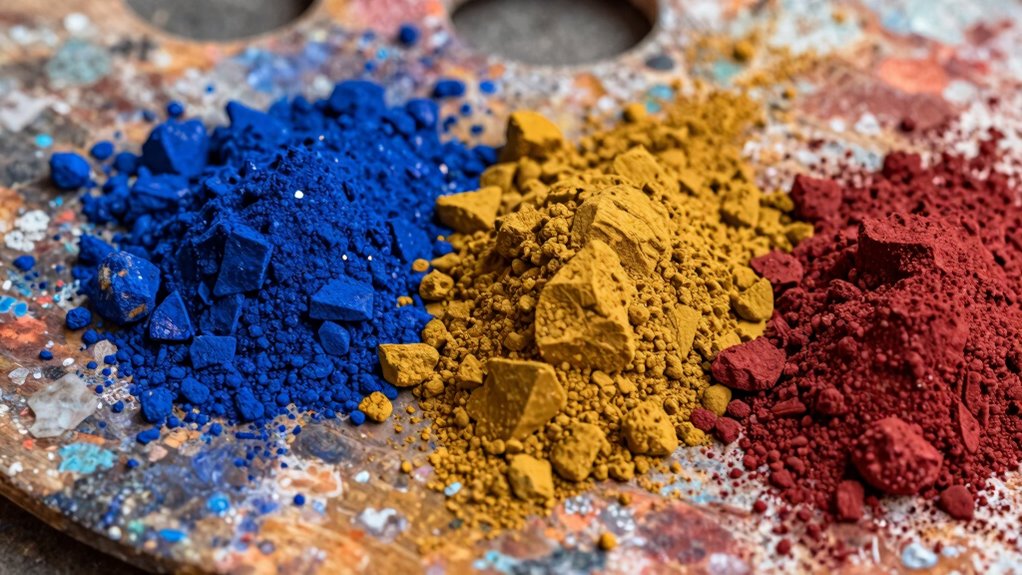
Throughout history, humans have sought to capture and communicate beauty through color, and ancient pigments reveal how chemistry shaped this pursuit. When you explore the origins of these vibrant hues, you’ll find that many ancient artists relied on natural mineral sources. These mineral sources provided a rich palette, from the deep blues of lapis lazuli to the earthy reds of hematite. The selection of these minerals wasn’t random; it was driven by their availability and their unique chemical properties that allowed them to produce lasting colors. For example, ultramarine made from lapis lazuli was prized for its vivid, intense blue, which remained stunning over centuries. Such mineral sources were carefully processed to extract pigment powders, which artists ground into fine powders to create paints.
Ancient artists chose minerals like lapis lazuli and hematite for their durability and vibrant, lasting colors.
Understanding how these pigments stand the test of time involves chemical stability analysis. You need to take into account how these minerals react—or resist reacting—to environmental factors like light, moisture, and air. Many ancient pigments, such as cinnabar, contain elements that are prone to degradation, causing color fading or chemical breakdown over centuries. By analyzing their chemical stability, scientists can determine why some pigments endure and others fade. This process involves testing how pigments react under simulated aging conditions, revealing their durability and potential for preservation. For instance, the stability of mineral-based pigments often depends on their crystalline structure, which can lock in color and resist chemical change better than organic dyes.
When you study ancient pigments, it’s fascinating to see how the chemistry of minerals influences their long-term stability. The natural mineral sources provide not only vibrant colors but also contribute to their chemical resilience. Stable minerals like certain oxides and sulfides resist environmental damage, making them ideal for lasting artworks. Conversely, pigments with less stable chemical compositions tend to degrade, which explains why some ancient murals have faded or altered over time. By conducting chemical stability analysis, researchers can identify the most durable pigments and develop better conservation techniques. This knowledge helps preserve cultural heritage and offers insight into the technological ingenuity of ancient artisans.
In essence, the chemistry behind ancient pigments reveals a blend of natural mineral sourcing and scientific understanding. The deliberate choice of mineral sources, coupled with knowledge of their chemical stability, allowed ancient artists to produce colors that have survived millennia. Today, scientists continue to study these materials, uncovering the secrets of their longevity and ensuring that the beauty captured in ancient artworks remains vibrant for future generations.

Natural Earth Paint Pigment Sample Pack – 20 Non-Toxic, Archival Earth & Mineral Pigments for DIY Paint – Eco-Friendly, Sustainably Sourced Colors – No Fillers or Additives
20 Natural Earth & Mineral Pigments – Create your own non-toxic, archival paint with 20 pure pigments. No…
As an affiliate, we earn on qualifying purchases.
As an affiliate, we earn on qualifying purchases.
Frequently Asked Questions
How Did Ancient Civilizations Discover New Pigments Naturally?
You discover new pigments naturally through natural extraction from minerals, plants, and insects, often by experimenting with different methods like heating or grinding. Ancient civilizations observed the cultural significance of vibrant colors, which motivated them to find new sources. These discoveries allowed them to create unique hues for art and rituals, enriching their cultural expressions and enhancing their societal importance. Their curiosity and reverence for color drove ongoing exploration.
Are Ancient Pigments Still Safe to Use Today?
Ancient pigments can be safe to use today, but you should consider safety regulations and toxicity concerns. Many traditional pigments, like ochre or charcoal, are non-toxic and safe for art projects. However, some, like lead-based or arsenic-based pigments, pose health risks. Always research the specific pigment, follow safety guidelines, and use protective gear when handling potentially hazardous materials. When in doubt, opt for modern, non-toxic alternatives.
How Do Modern Synthetic Pigments Compare to Ancient Ones?
Think of modern synthetic pigments as shields, offering superior chemical stability and color longevity compared to ancient ones. You’ll find they resist fading and degradation over time, unlike many historic pigments that can break down or change hue. This makes synthetic options more reliable for long-lasting artworks and applications. So, when it comes to durability and vibrant, enduring color, modern synthetics often surpass ancient pigments, ensuring your project stays vivid for generations.
What Are the Environmental Impacts of Producing Ancient Pigments?
Producing ancient pigments often results in environmental pollution and resource depletion. You might not realize that extracting minerals and natural dyes can harm ecosystems, polluting water and soil. Additionally, these processes consume significant raw materials, leading to resource depletion. While ancient pigment production generally uses fewer synthetic chemicals, it still impacts the environment, so you should consider sustainable practices to minimize pollution and conserve resources.
Can Ancient Pigments Be Preserved for Future Generations?
You can preserve ancient pigments for future generations, but it’s a challenge—over 70% of historic pigments deteriorate without proper care. Preservation challenges include environmental factors like humidity and light, which cause fading and damage. These pigments hold immense cultural significance, telling stories of ancient civilizations. To safeguard them, experts use advanced techniques like climate control and non-invasive analysis, ensuring these vibrant colors continue inspiring and educating future generations.

Dark Steel Pigment 35ml by AK Interactive
Ultrafine high quality pigment
As an affiliate, we earn on qualifying purchases.
As an affiliate, we earn on qualifying purchases.
Conclusion
You now see how ancient pigments, crafted with simple yet intricate chemistry, contrast sharply with modern synthetic dyes. While today’s colors boast consistency and vibrancy, they often lack the depth and cultural richness of those crafted by early artisans. The chemistry of color bridges past and present, revealing that true beauty isn’t just in brightness but in history and craftsmanship. In this dance of hues, the ancient and modern remind us that chemistry shapes more than just our palette—it shapes our identity.

Matte Ultramarine Blue Oxide Pigment Powder – 5oz/142g – Concrete Pigment, Cement Color Pigment, Resin Epoxy Dye, Colorant for Gypsum, Plaster, Putty, Grout, Lime-Wash, Milk Paints
Oxide ultramarine blue are man-made pigments from natural elements. Color pigment powder for use in arts, crafts and…
As an affiliate, we earn on qualifying purchases.
As an affiliate, we earn on qualifying purchases.
Natural Earth Paint Pigment Sample Pack – 20 Non-Toxic, Archival Earth & Mineral Pigments for DIY Paint – Eco-Friendly, Sustainably Sourced Colors – No Fillers or Additives
20 Natural Earth & Mineral Pigments – Create your own non-toxic, archival paint with 20 pure pigments. No…
As an affiliate, we earn on qualifying purchases.
As an affiliate, we earn on qualifying purchases.