TL;DR

Prime made for students and young adults
- Fast, free delivery for dorm and study essentials
- Prime Video and Amazon Music included
- Member-only deals
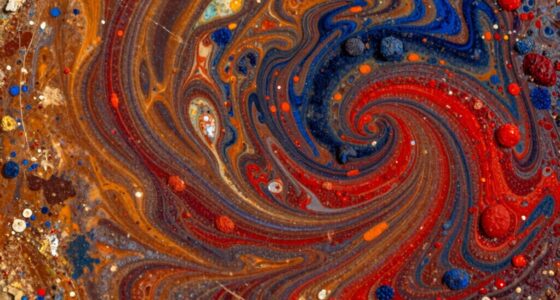
NASA’s Astronomy Picture of the Day for September 24, 2026, features images of the remnants of five supernovae. This discovery has prompted heightened interest in the astrophysics community, though details about their origins remain unconfirmed.
NASA’s Astronomy Picture of the Day (APOD) for September 24, 2026, showcases images of the remnants of five supernovae, stirring renewed scientific interest in these ancient cosmic explosions. The images, captured by advanced telescopes, reveal unusual features that suggest these remnants may be closer and more interconnected than previously thought, making this a significant development in astrophysics.
The APOD features high-resolution images of what appear to be five supernova remnants located within a relatively small region of our galaxy. According to NASA, these structures exhibit complex filaments and shockwaves, indicating they are the remains of massive stellar explosions that occurred thousands of years ago. The proximity of these remnants, as suggested by their apparent positions and velocities, has led scientists to hypothesize that they may share a common origin or be part of a larger, previously unrecognized stellar event.
While the images and initial analyses are confirmed, the precise ages, distances, and origins of these supernova remnants are still under investigation. Researchers are utilizing data from multiple observatories, including the James Webb Space Telescope and the Chandra X-ray Observatory, to determine whether these remnants are linked or coincidentally aligned along our line of sight. The findings could reshape understanding of supernova distribution and stellar evolution in our galaxy.
Implications for Stellar Evolution and Galactic History
This discovery matters because it could provide new insights into the lifecycle of massive stars and the history of stellar explosions in our galaxy. If these remnants are indeed connected or originate from a common event, it might suggest a previously unrecognized supernova cluster or a significant stellar event that shaped a region of the Milky Way. Such findings could influence models of galactic evolution and the distribution of heavy elements produced in supernovae, which are crucial for planet formation and life development.
Moreover, the apparent proximity of these remnants raises questions about the frequency and scale of supernovae in our galactic neighborhood. Understanding whether these are isolated remnants or part of a larger, interconnected event could impact future searches for supernova remnants and the study of cosmic ray sources. Overall, this discovery could mark a step forward in mapping our galaxy’s explosive past.
As an affiliate, we earn on qualifying purchases.
Unconfirmed Links and Prior Supernova Research
Supernova remnants are well-studied phenomena, with thousands identified across the Milky Way. However, recent advances in telescope technology have allowed astronomers to detect more subtle and complex structures, including remnants that appear to be unusually close or interconnected. The idea that multiple remnants could originate from a single, large-scale stellar event is not new but remains speculative without definitive evidence.
In recent years, astrophysicists have debated whether certain clusters of supernova remnants are related or simply aligned by chance. The current images from NASA’s APOD have reignited discussions, especially given the apparent proximity of these five structures. Prior research has suggested that some supernovae could be part of larger stellar associations, but conclusive proof has been elusive. The new data offers an opportunity to revisit these theories with more detailed observations.
astronomy binoculars for stargazing
As an affiliate, we earn on qualifying purchases.
As an affiliate, we earn on qualifying purchases.
Unconfirmed Origins and Possible Connections
It remains unclear whether these five supernova remnants are physically related or merely aligned along our line of sight. The exact distances, ages, and potential common origin are still under study. Scientists caution that current evidence is suggestive but not conclusive, and further data is needed to confirm any linkages or shared history.
As an affiliate, we earn on qualifying purchases.
Ongoing Analysis and Future Observations
Researchers will continue analyzing data from existing observatories and plan targeted follow-up observations with upcoming telescopes, including the European Extremely Large Telescope. The goal is to determine the precise distances, ages, and possible relationships among these remnants. Results from these studies are expected within the next year, potentially offering new insights into supernova clustering and galactic history.
As an affiliate, we earn on qualifying purchases.
Key Questions
What makes these five supernova remnants special?
Their apparent proximity and complex structures suggest they may be related or part of a larger stellar event, which is unusual compared to most isolated remnants observed in the galaxy.
Are these remnants definitely from the same supernova event?
It is not yet confirmed. Scientists are investigating whether they share a common origin or are coincidentally aligned, but no definitive conclusion has been reached.
How will this discovery impact our understanding of the galaxy?
If confirmed, it could change models of supernova distribution and reveal previously unknown clusters of stellar explosions that shaped parts of the Milky Way.
When will more information be available?
Further analysis is ongoing, with detailed results expected within the next 12 months as scientists continue studying the data from multiple observatories.
Could these remnants affect Earth or our solar system?
Based on current data, these supernova remnants are far enough away that they pose no immediate threat to Earth or the solar system.
Source: primary
Fall Picks
fall essentials
As an affiliate, we earn on qualifying purchases.