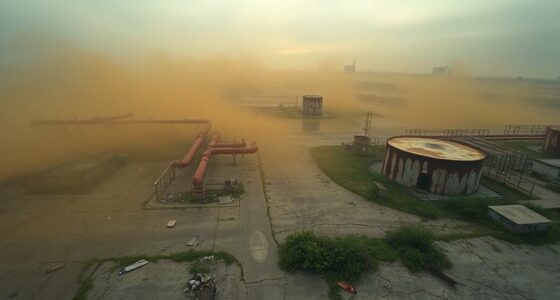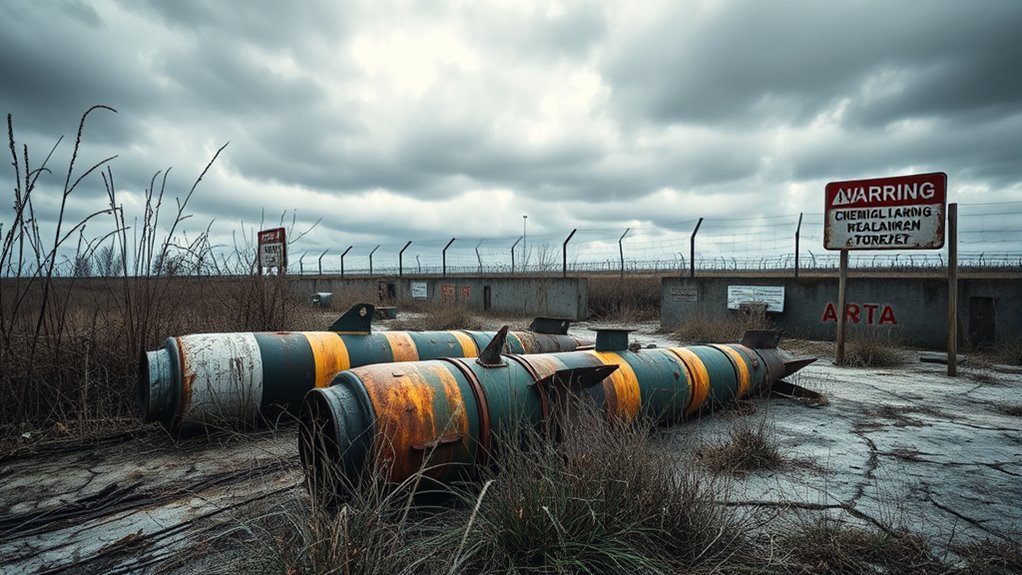

Chemical weapons have a dark history, starting with their use in World War I with gases like mustard and chlorine. They cause severe injuries and death by attacking nervous, skin, or respiratory systems, and their effects are both immediate and long-lasting. International treaties like the Geneva Protocol and Chemical Weapons Convention work to ban their use, but concerns remain about proliferation and misuse. Stay curious to explore how global efforts continue to combat these deadly weapons and prevent future threats.
Key Takeaways
- Chemical weapons first appeared in World War I, causing mass casualties and leading to international efforts to ban them.
- They include toxic agents like nerve gases and blistering agents that inflict rapid, severe injuries and death.
- The Geneva Protocol (1925) and Chemical Weapons Convention (1993) are key treaties banning their use and production globally.
- Chemical weapons pose immediate harm and environmental contamination, with ongoing concerns about proliferation and misuse.
- International cooperation aims to prevent the development, deployment, and spread of chemical weapons for global security.

Have you ever wondered what makes chemical weapons so perilous? Their destructive power doesn’t just come from their capacity to harm, but also from their complex history and biological effects. To understand their danger, you need to look at their historical development and how they compare biologically to other harmful agents. Chemical weapons first emerged during World War I, when armies realized that toxic gases like chlorine and mustard gas could inflict mass casualties and terrorize opponents. These early weapons marked a disturbing shift in warfare, showing how chemicals could be weaponized to cause suffering on a massive scale. Over time, the development of more sophisticated agents—such as nerve agents like sarin and VX—took this threat to new levels, exploiting biological vulnerabilities in humans to cause paralysis, respiratory failure, or death within minutes. Their evolution reflects a relentless pursuit of more lethal, faster-acting substances, making them some of the most feared weapons in history.
Biologically, chemical weapons work by disrupting crucial processes in the body, often targeting the nervous system, skin, or respiratory tract. Unlike biological weapons, which involve living organisms or spores that can spread and multiply, chemical agents deliver a direct, immediate effect upon exposure. For example, nerve agents interfere with neurotransmitters, leading to overstimulation of muscles and organs, culminating in paralysis or death. Mustard gas, on the other hand, causes severe blistering and damage to skin and lungs. These agents are designed for quick action, but their biological comparisons reveal differences in deployment and impact: chemical weapons are generally more controllable and faster to act, whereas biological weapons can spread silently and persist longer in the environment. Understanding this biological comparison underscores why chemical weapons are particularly feared—they can strike suddenly, with devastating precision, and without warning.
Throughout history, the use of chemical weapons has prompted international outrage and efforts to control their proliferation. The Geneva Protocol of 1925 was one of the first steps, banning use in warfare, but it lacked enforcement mechanisms. Later, the Chemical Weapons Convention of 1993 marked a significant milestone, outlawing the production, stockpiling, and use of these agents altogether. These treaties recognize that the threat posed by chemical weapons extends beyond battlefield casualties; their potential for mass harm, environmental contamination, and long-term health effects makes them uniquely hazardous. As you consider their history and biological impact, it becomes clear that the ongoing international efforts aim to prevent such horrors from recurring. The development, comparison, and regulation of chemical weapons serve as a stark reminder of how science can be misused and why vigilance remains essential to global security.

3M Goggle Chemical Splash, Impact-Resistant, Blocks 99.9% of UV, Scratch Resistant, Adjustable Strap, Indirect Ventilation, Flexible Frame Conforms To Face For Secure & Protective Fit (91252H1-DC-10)
Durable, one piece lens helps protect eyes from certain liquids, dirt and particles
As an affiliate, we earn on qualifying purchases.
As an affiliate, we earn on qualifying purchases.
Frequently Asked Questions
How Are Chemical Weapons Detected in Conflict Zones?
You can detect chemical weapons in conflict zones through various detection methods, like portable sensors, colorimetric test kits, and advanced spectrometers. These tools help identify toxic agents quickly. Often, covert operations also assist in uncovering hidden chemical weapon facilities. By combining technology and intelligence, you increase the chances of early detection, preventing mass harm and ensuring safety amid the chaos of conflict zones.
What Are the Long-Term Health Effects of Chemical Weapon Exposure?
Exposure to chemical weapons can cause long-term health effects like chronic health issues, including respiratory problems, skin conditions, and nerve damage. You might also experience psychological trauma, such as anxiety or depression, long after the exposure. These effects can persist for years, impacting your daily life and mental well-being. It’s essential to seek medical help early to manage symptoms and reduce the risk of lasting damage.
How Do Chemical Weapons Impact Civilian Populations Differently?
Like a thunderclap, chemical weapons strike civilians with devastating force, impacting them differently. You see, they cause not just physical injuries but also psychological trauma that lingers long after the attack. Communities often face displacement, tearing social fabric apart. Children grow up haunted, families shattered—showing how chemical weapons devastate lives on multiple levels, leaving scars that time alone can’t heal.
What Are the Challenges in Enforcing International Chemical Weapons Bans?
You face enforcement challenges in chemical weapons bans due to verification issues and compliance monitoring difficulties. Countries may hide or destroy stockpiles, making it hard to verify adherence. Limited access to suspect sites hampers inspections, and technological gaps can obscure violations. These obstacles create loopholes, enabling some states to evade restrictions, which underpins global efforts to prevent chemical weapons proliferation and ensure consistent enforcement of international agreements.
How Do Chemical Weapons Influence Modern Military Strategies?
Chemical weapons influence your modern military strategies by shaping chemical warfare tactics and emphasizing strategic deterrence. You focus on preventing enemy use through threats of retaliation and develop specialized defenses against chemical attacks. These weapons also act as a deterrent, discouraging conflict escalation. As a result, your military planning integrates chemical defense measures, while maintaining the potential for offensive chemical operations if necessary, ensuring a balance between deterrence and preparedness.

Andes Safety Hazmat Suits, Heavy Duty Full Body Disposable Paint Suits, Coveralls with Hood, Elastic Wrists and Ankles (XX-Large)
Inherent Protection: The Microporous PE Film Coverall, designed to provide unparalleled protection, comfort, and durability. Enhanced Seam Strength:…
As an affiliate, we earn on qualifying purchases.
As an affiliate, we earn on qualifying purchases.
Conclusion
You now see how chemical weapons have cast dark shadows over history, like storms that leave scars on the earth. Their devastating impact reminds us of the fragile line between progress and destruction. Yet, international treaties act as vigilant guardians, endeavoring to lock away these deadly tools forever. By understanding their history, we arm ourselves with knowledge—hopeful that humanity’s brighter future can outshine the shadows of these corrosive horrors.

AMZYXUAN Gas Masks Survival Nuclear and Chemical, Gas Mask with 40mm Activated Carbon Filter, Full Face Respirator Mask for Gases, Chemicals, Vapors, Spray Paint, Dust, Welding
【Professional Design】The gas masks survival nuclear and chemical adopt high-quality silicone, comfortable, soft, and safe material. Adjustable headband…
As an affiliate, we earn on qualifying purchases.
As an affiliate, we earn on qualifying purchases.

PIG Chemical Cleanup Kit – for Small Laboratory Spills – 9.25" L x 4" W x 13" H – PM50002
CLEANUP KIT INCLUDES: 3 – 10" W x 13" L PIG HazMat Chemical Absorbent Pad, 1 – 3.5…
As an affiliate, we earn on qualifying purchases.
As an affiliate, we earn on qualifying purchases.