
TL;DR

Prime made for students and young adults
- Fast, free delivery for dorm and study essentials
- Prime Video and Amazon Music included
- Member-only deals
Archaeologists have uncovered a lost city beneath Egypt’s desert, including an ancient Christian church. The discovery offers new evidence of early settlements and religious practices. Further analysis is ongoing to confirm the full extent of the site.
Archaeologists have announced the discovery of a lost city beneath Egypt’s desert, which includes the remains of an ancient Christian church. The find was revealed during recent excavations and is considered one of the most significant archaeological discoveries in the region in recent years. The discovery provides new insights into early Christian settlements in Egypt and their historical context.
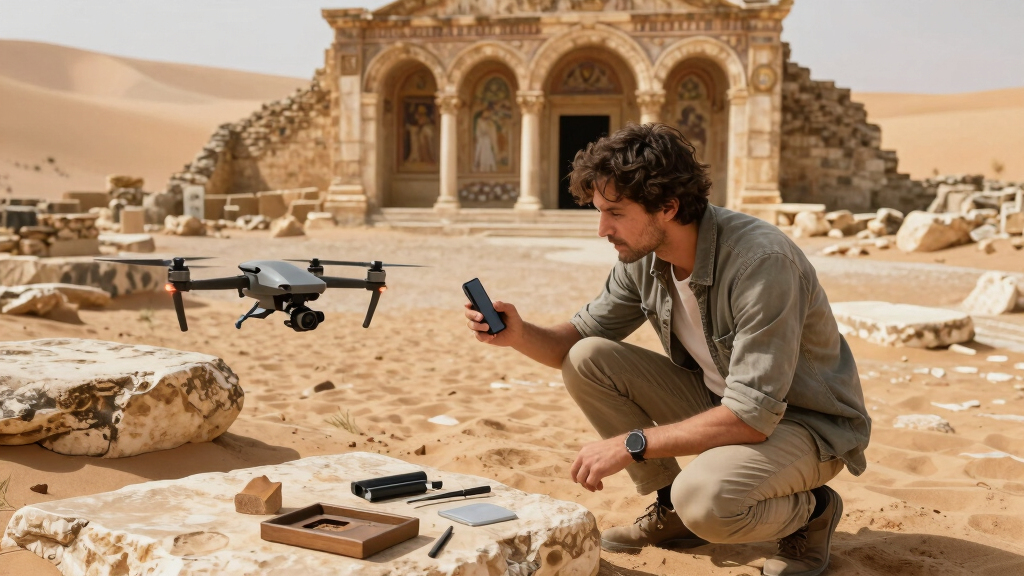
The site was uncovered through a combination of satellite imaging and ground excavations led by an international team of archaeologists. The city appears to date back to the late Roman or early Byzantine period, approximately 4th to 6th centuries AD. The remains include well-preserved structures, streets, and the church, which features a mosaic floor and a cross-shaped layout. Experts say the site could reshape understanding of early Christian communities in Egypt, especially in the desert regions where few such sites had been documented.
According to Dr. Lisa Carter, an archaeologist involved in the excavation, ‘The discovery of this city and the church is a major breakthrough. It suggests that early Christian populations were more widespread and organized than previously thought, especially in remote desert areas.’ The site was initially detected via satellite data, which indicated anomalies beneath the desert surface, prompting further excavation efforts. The team has yet to fully excavate the entire site, and many artifacts remain to be uncovered, including pottery, inscriptions, and relics that could shed light on the community’s history and religious practices.
Implications for Early Christian History in Egypt
This discovery is significant because it provides concrete evidence of early Christian presence in Egypt’s desert regions, an area previously thought to be sparsely populated during that period. The church’s well-preserved state suggests it was an active place of worship and community gathering. The find could lead to revisions of historical narratives concerning Christian spread and settlement patterns in North Africa. It also highlights the importance of remote desert areas as centers of early religious activity, challenging existing assumptions about population distribution during late antiquity.
ancient Christian church replica model
As an affiliate, we earn on qualifying purchases.
As an affiliate, we earn on qualifying purchases.
Previous Discoveries and the Role of Desert Settlements
Egypt has a long history of archaeological finds related to ancient civilizations, including the Pharaonic period and early Christianity. Prior discoveries of Christian monasteries and churches in desert regions, such as the Monastery of Saint Catherine, have demonstrated the strategic and spiritual importance of these areas. However, the recent discovery of an entire city with a church beneath the desert surface marks a new chapter in understanding early Christian urbanization and religious life in Egypt. The site’s location and preserved structures suggest it was a significant center of activity that had been lost to time until now.
Experts note that advances in satellite imaging and remote sensing technology have played a crucial role in identifying potential sites beneath the desert, leading to targeted excavations. This approach has increased the likelihood of uncovering hidden archaeological remains in Egypt and other arid regions.
“The discovery of this city and the church is a major breakthrough. It suggests that early Christian populations were more widespread and organized than previously thought, especially in remote desert areas.”
— Dr. Lisa Carter
Egypt archaeological excavation tools
As an affiliate, we earn on qualifying purchases.
As an affiliate, we earn on qualifying purchases.
Extent of the Site and Remaining Artifacts Unknown
While the initial findings are promising, it is not yet clear how extensive the city is or what other structures and artifacts remain buried. The full scope of the settlement, its population size, and its role within the broader region are still under investigation. Researchers caution that further excavations are necessary to confirm these details and understand the site’s historical significance fully.
As an affiliate, we earn on qualifying purchases.
Ongoing Excavations and Future Research Plans
The archaeological team plans to continue excavations at the site over the coming months, aiming to uncover more structures, artifacts, and inscriptions. Radiocarbon dating and other scientific analyses will help establish precise dates and cultural context. Researchers also intend to study the mosaics and religious symbols to better understand the community’s faith and practices. The discovery is expected to attract further scholarly interest and potentially lead to new archaeological projects in the region.
As an affiliate, we earn on qualifying purchases.
Key Questions
How was the lost city discovered?
The city was identified through satellite imaging that revealed anomalies beneath the desert surface, followed by targeted ground excavations.
What is the significance of the church found at the site?
The church’s well-preserved state and Christian symbols suggest it was an active place of worship, providing valuable insights into early Christian religious life in Egypt.
When did the city likely exist?
Based on initial dating, the city appears to date from approximately the 4th to 6th centuries AD, during late Roman or early Byzantine periods.
Are there plans to open the site to the public?
Not at this stage. Archaeologists are prioritizing excavation and preservation efforts before considering public access.
Could this discovery change historical understanding of Egypt?
Yes, it could revise existing narratives about desert settlements and the spread of Christianity in Egypt during late antiquity.
Source: hn
Halloween Picks
halloween
As an affiliate, we earn on qualifying purchases.