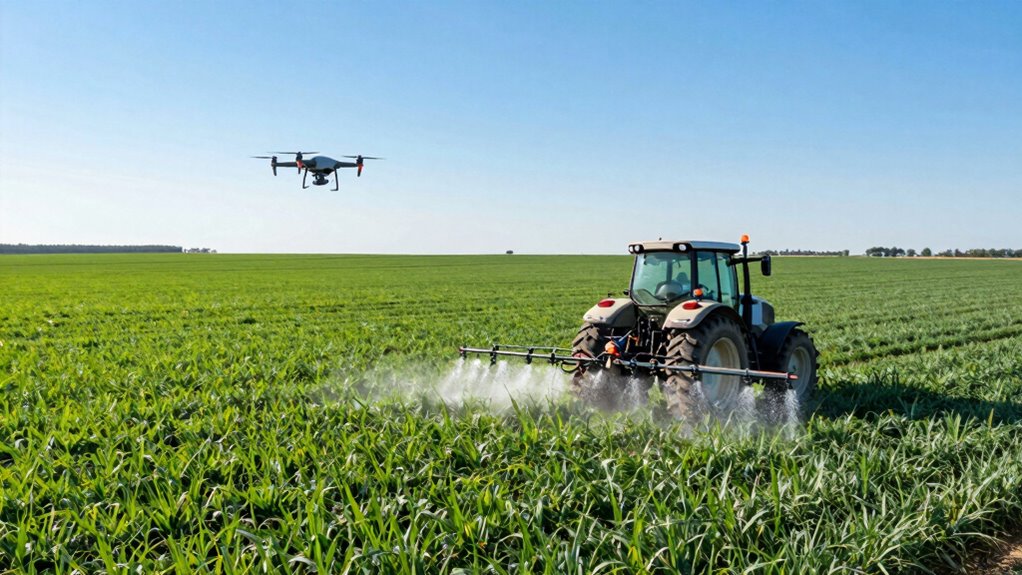

Fertilizers have transformed agriculture by boosting crop yields and ensuring food security. Starting from organic sources like manure, their use expanded with the development of chemical and synthetic fertilizers in the early 20th century. Scientific advances allowed precise nutrient application, making farming more efficient and reliable. This revolution supported growing populations and reduced land clearing pressure. If you keep exploring, you’ll discover how ongoing innovations aim to balance productivity with environmental sustainability.

Prime made for students and young adults
- Fast, free delivery for dorm and study essentials
- Prime Video and Amazon Music included
- Member-only deals
Key Takeaways
- Transition from organic manure to chemical and synthetic fertilizers in the early 20th century boosted crop yields.
- Scientific discoveries led to targeted fertilizers containing nitrogen, phosphorus, and potassium.
- Industrial innovations scaled up fertilizer production, making them widely accessible globally.
- Fertilizer use revolutionized farming, increasing productivity and supporting larger populations.
- Environmental concerns have prompted ongoing research to develop sustainable fertilization practices.
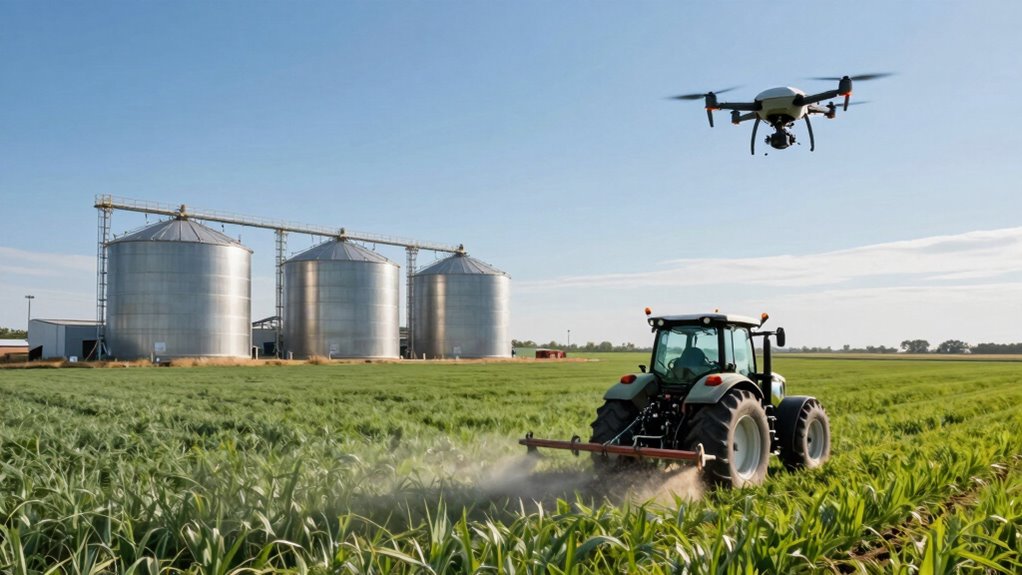
Fertilizers play an essential role in modern agriculture by boosting crop yields and guaranteeing food security. They are fundamental to maintaining healthy, productive soils that can support the growing demands of the global population. When you apply fertilizers, you’re directly enriching the soil, providing essential nutrients that might be lacking naturally. This soil enrichment promotes healthier plant growth, leading to increased crop yields. Without fertilizers, many crops would struggle to reach their full potential, especially in soils depleted over time by continuous farming. The use of fertilizers revolutionized agriculture, allowing farmers to harvest more abundant crops from the same amount of land, therefore supporting larger populations and reducing the pressure to clear additional land for cultivation.
Historically, the rise of chemical fertilizers in the early 20th century marked a significant turning point. Before that, farmers relied heavily on organic sources like manure and compost, which, while effective, often couldn’t meet the rising demand for food. The development of synthetic fertilizers introduced a more concentrated and efficient way to supply essential nutrients such as nitrogen, phosphorus, and potassium. This technological advancement led to rapid increases in crop yields, transforming agriculture into a more reliable and scalable industry. As fertilizer technology improved, farmers gained the ability to better control soil enrichment, tailoring nutrient application to specific crops and soil conditions. This precision meant higher crop yields and more efficient use of resources.
The rise of fertilizers didn’t happen overnight. It was driven by scientific discoveries, industrial innovations, and the need to feed growing urban populations. Governments and agricultural organizations promoted their use, recognizing the potential to eliminate food shortages and promote economic growth. Over time, fertilizer production scaled up, making these inputs more accessible to farmers worldwide. Today, fertilizers are integrated into almost every farming operation, underpinning modern agricultural practices. They enable you to boost crop yield, improve soil fertility, and guarantee that the land remains productive over time. While concerns about environmental impacts exist, ongoing research aims to make fertilizer use more sustainable, balancing the need for high productivity with ecological responsibility. Ultimately, the history of fertilizers in agriculture reflects a continuous effort to improve soil enrichment techniques and meet the expanding food demands of the world.
As an affiliate, we earn on qualifying purchases.
Frequently Asked Questions
How Have Fertilizers Impacted Global Food Security Historically?
Fertilizers have historically boosted food security by enabling significant yield improvements, supporting a growing global population. You see, they fueled agricultural development, making farms more productive and reliable. This advancement helped prevent food shortages and famine in many regions. As a result, fertilizers played an essential role in transforming agriculture into a more sustainable and efficient system, ensuring that more people had access to sufficient, nutritious food over the decades.
What Are the Environmental Risks Associated With Fertilizer Overuse?
If you overuse fertilizers, you risk soil contamination and water pollution. Excess nutrients often leach into groundwater or run off into nearby water bodies, causing algal blooms and harming aquatic life. Soil health may decline as over-fertilization disrupts natural nutrient balances. To protect the environment, you should apply fertilizers judiciously, follow recommended guidelines, and consider sustainable practices like crop rotation and organic alternatives.
How Do Organic Fertilizers Compare to Synthetic Ones?
Imagine nurturing your plants with a gentle, natural touch—organic fertilizers often feel more harmonious with the environment, offering slow, steady nutrient release. In contrast, synthetic fertilizers deliver rapid nutrient efficiency, but can sometimes disrupt soil health. Organic options tend to be kinder to the earth and potentially safer for your crops, fostering a balanced ecosystem. Ultimately, choosing between them depends on your goals for sustainability and productivity in your garden.
What Future Innovations Are Expected in Fertilizer Technology?
Future fertilizer innovations will likely include nanotechnology fertilizers, which deliver nutrients more efficiently and reduce waste. You can expect biofertilizer innovations as well, harnessing beneficial microbes to naturally boost plant growth and soil health. These advancements aim to increase crop yields sustainably, lower environmental impact, and improve nutrient absorption. As technology advances, you’ll see more eco-friendly options that enhance farming productivity while protecting ecosystems.
How Do Fertilizer Subsidies Influence Agricultural Practices Worldwide?
Fertilizer subsidies considerably influence agricultural practices worldwide by shaping market regulation and encouraging increased fertilizer use. You may find that subsidies lower costs for farmers, boosting crop yields but sometimes leading to overuse and environmental concerns. These subsidy effects can distort market dynamics, making fertilizers more accessible but also risking long-term sustainability. Overall, subsidies drive changes in farming methods, impacting productivity and environmental health globally.
As an affiliate, we earn on qualifying purchases.
Conclusion
As you explore the rise of fertilizers, consider the intriguing theory that their widespread use may have inadvertently contributed to environmental issues like pollution and climate change. While fertilizers revolutionized agriculture, boosting crop yields and feeding billions, they also come with hidden costs. Keep questioning how this powerful tool shapes our future—balancing the benefits with the potential risks—because understanding this balance could be key to sustainable farming for generations to come.
As an affiliate, we earn on qualifying purchases.
As an affiliate, we earn on qualifying purchases.
Evergreen bestsellers Picks
bestsellers
As an affiliate, we earn on qualifying purchases.