
Ammonium sulfate is mainly produced by reacting ammonia with sulfuric acid, ensuring high purity and efficient yields through controlled processes like crystallization and spray drying. It’s widely used in agriculture as a fertilizer, in food processing as an additive, and in chemical manufacturing for pH regulation. Recycling waste streams and utilizing the Haber process help support sustainable production. If you want to explore how these methods impact industries and applications, there’s more to discover below.
Key Takeaways
- Ammonium sulfate is primarily produced by reacting ammonia with sulfuric acid, involving controlled temperature and catalyst use.
- It is widely used as a nitrogen-rich fertilizer, enhancing soil fertility and crop yields.
- The manufacturing process includes purification steps like crystallization and quality control to ensure high product purity.
- Recycling waste streams and emission controls minimize environmental impact during production.
- Its applications extend to food processing, chemical manufacturing, and as a buffering agent across various industries.
Overview of Ammonium Sulfate and Its Significance
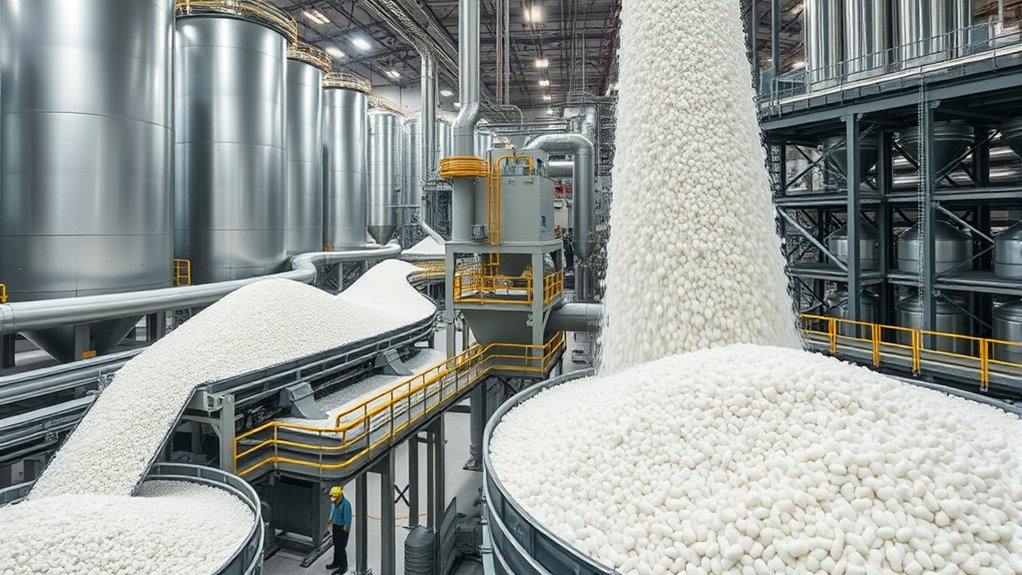
Ammonium sulfate is a widely used inorganic fertilizer that provides essential nutrients for plant growth. Its historical development dates back to the early 19th century, when scientists began exploring nitrogen sources to support agriculture. Over time, it became a popular choice due to its high nitrogen content and affordability. When considering its environmental impact, ammonium sulfate is generally safer than some other fertilizers, but it can contribute to soil acidification and runoff issues if not managed properly. Its widespread use has helped increase crop yields globally, making it a significant agricultural input. Understanding its development and environmental considerations highlights its importance in modern farming, emphasizing the need for responsible application to maximize benefits while minimizing negative effects. Incorporating natural materials like wood and stone in fertilizer production can also enhance sustainability. Additionally, adopting vertical storage solutions and other organization strategies can help manage the packaging and distribution of fertilizers more efficiently, reducing waste and environmental footprint. Moreover, ongoing research into sustainable fertilizer alternatives aims to reduce the reliance on traditional chemical inputs and promote eco-friendly practices.
Synthetic Production via Reactions of Ammonia and Sulfuric Acid

Synthetic production of ammonium sulfate primarily involves the reaction between ammonia and sulfuric acid. You control this process through key factors like catalyst selection and reaction temperature. First, you choose the right catalyst, often a neutral or slightly basic surface, to optimize efficiency. Second, you carefully regulate the reaction temperature, typically around 70°C to 100°C, to ensure complete reaction without side products. Third, you monitor the mixing process, ensuring the ammonia and sulfuric acid combine evenly for maximum yield. This precise control helps produce high-purity ammonium sulfate. Additionally, high temperature control is essential to prevent decomposition or unwanted byproducts, further ensuring product quality. By managing these elements, you facilitate a smooth, efficient reaction that results in a stable, crystalline product suitable for fertilizer use. This method is reliable, scalable, and cost-effective for industrial production.
Recovery From Industrial Waste and Byproducts
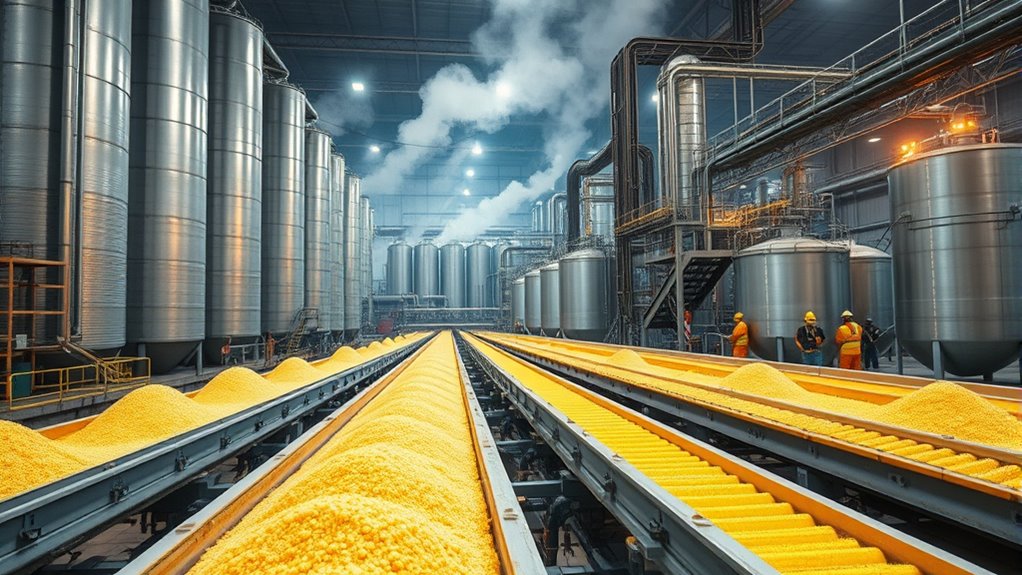
You can transform industrial waste and byproducts into valuable resources through effective recovery processes. Waste stream processing enables you to extract useful compounds like ammonium sulfate, reducing environmental impact. Recycling these byproducts not only benefits the environment but also enhances your operational efficiency. Additionally, recovering pet therapy resources can support caregiver programs and improve patient well-being. To ensure safe and efficient recovery, implementing risk assessment strategies is essential for identifying potential hazards and mitigating operational disruptions. Proper hazard management ensures compliance with safety standards and minimizes risks during processing.
Waste Stream Processing
Have you ever considered how industrial waste and byproducts can be transformed into valuable resources? Waste stream processing involves integrating waste streams through recycling techniques to recover ammonium sulfate efficiently. Imagine:
- Collecting waste gases rich in ammonia and sulfur compounds.
- Processing these streams via chemical treatments to isolate ammonium salts.
- Incorporating the recovered materials back into production cycles seamlessly.
- Utilizing sustainable waste management practices to minimize environmental impact and promote resource recovery.
- Applying positive energy principles from the Law of Attraction to optimize recovery processes and foster innovation in waste utilization.
- Recognizing the importance of dog names in personalizing and enhancing the connection with pets, which can also reflect the care taken in sustainable practices.
Recycling Industrial Byproducts
Recycling industrial byproducts offers a practical way to recover valuable materials like ammonium sulfate from waste streams. You can utilize biomass conversion processes to transform agricultural and organic waste into useful products, including ammonium sulfate. Marine waste, such as fish processing residues and seaweed, also provides a rich source of nitrogen compounds that can be converted into fertilizers. By implementing these recycling methods, you reduce environmental impact and enhance resource efficiency. Recovering ammonium sulfate from industrial byproducts not only minimizes waste but also creates a sustainable supply of fertilizer ingredients. This approach supports circular economy principles, turning waste streams into valuable inputs for agriculture and industry. Additionally, understanding the effectiveness of eye patches can be important for personal skincare routines, illustrating how innovative reuse and recycling extend beyond industrial processes to everyday life. Overall, recycling industrial byproducts is a smart strategy for sustainable ammonium sulfate production, especially when combined with resource recovery techniques that maximize efficiency. Integrating industrial waste management practices can further optimize the recovery process and ensure environmental compliance.
Spray Drying and Crystallization Techniques in Manufacturing
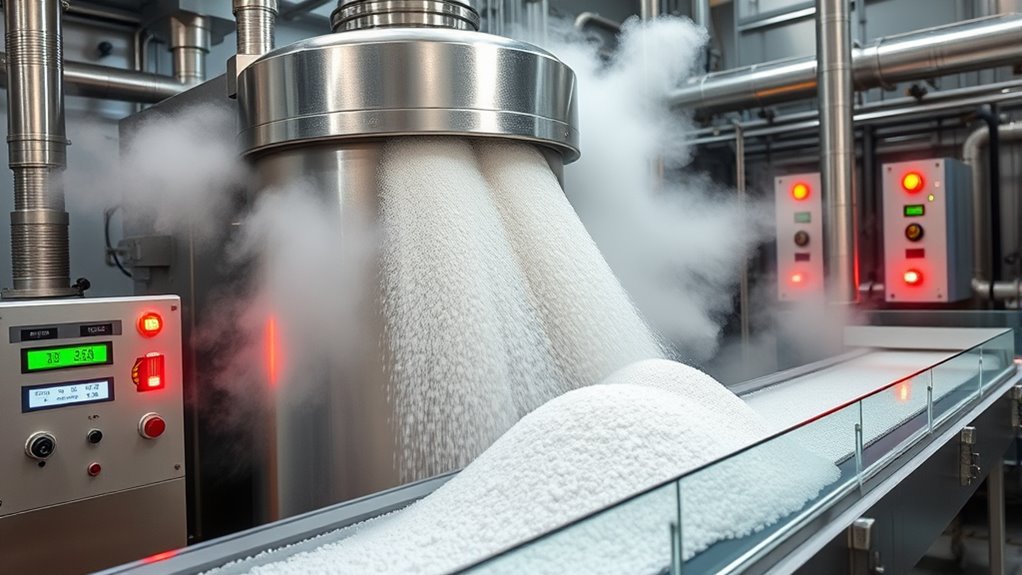
Spray drying and crystallization are essential techniques used in manufacturing ammonium sulfate, each offering distinct advantages for producing high-quality products. In spray drying, you utilize liquid atomization to create fine droplets that rapidly dry into powder. This process results in uniform, easily handled particles. Crystallization, on the other hand, involves controlled cooling or evaporation to form crystals, often promoting particle agglomeration for better flowability. Both methods help guarantee product purity, consistent particle size, and ideal handling characteristics. Additionally, the integration of automation technologies in these processes enhances efficiency and manufacturing precision. Incorporating particle size control techniques ensures the final product meets specific quality standards.
Role of the Haber Process in Ammonium Sulfate Formation

You should understand how the Haber Process synthesizes ammonia from nitrogen and hydrogen gases, forming the foundation for ammonium sulfate production. Once ammonia is created, sulfur is integrated using specific techniques to produce the sulfate compound. This process is essential for efficiently manufacturing ammonium sulfate as a fertilizer.
Ammonia Synthesis Process
The Haber process plays a vital role in the formation of ammonium sulfate by producing ammonia, a key raw material. You can envision this process as a high-stakes operation: 1) hydrogen and nitrogen gases are compressed under intense pressure, 2) they pass over a catalyst that maximizes efficiency, and 3) the reaction occurs at an optimal temperature to balance yield and energy use. Catalyst efficiency is crucial here because it speeds up ammonia formation without excessive energy consumption. The reaction temperature influences both the rate and equilibrium; too high, and the process becomes inefficient, too low, and it slows down. This finely tuned process ensures a steady ammonia supply, which later reacts with sulfur compounds to produce ammonium sulfate.
Sulfur Integration Technique
Once ammonia is produced via the Haber process, integrating sulfur compounds becomes the next key step in forming ammonium sulfate. This sulfur integration involves combining sulfur sources with ammonia to facilitate ammonium sulfate synthesis. You typically introduce sulfur in the form of sulfuric acid or sulfur dioxide, which reacts with ammonia to produce ammonium sulfate. The process guarantees efficient sulfur incorporation, essential for high-quality fertilizer production. This step also benefits from the use of glycolic acid products, which can improve the overall efficiency of the process. Here’s a simplified overview of sulfur integration in ammonium sulfate synthesis:
| Step | Reactants | Product |
|---|---|---|
| Sulfur source | Sulfuric acid or sulfur dioxide | Sulfate ions |
| Ammonia addition | Ammonia gas | Ammonium ions |
| Reaction | Sulfate + Ammonium | Ammonium sulfate |
| Crystallization | Cooling and concentration | Pure ammonium sulfate |
| Final product | Crystalline ammonium sulfate | Fertilizer application |
Environmental Considerations in Production Methods

Environmental considerations play a crucial role in the production methods of ammonium sulfate. You must address biodegradation concerns by ensuring waste products break down safely, preventing soil and water contamination. Emission control measures are essential to limit pollutants released into the atmosphere. Visualize the process as you:
- Install scrubbers to trap sulfur dioxide emissions, reducing acid rain risk.
- Use advanced filters to capture particulate matter from manufacturing fumes.
- Implement waste treatment systems that promote safe biodegradation of residual chemicals. Incorporating environmentally friendly home furnishings practices can further reduce the ecological footprint of production facilities.
Purification and Quality Control Processes
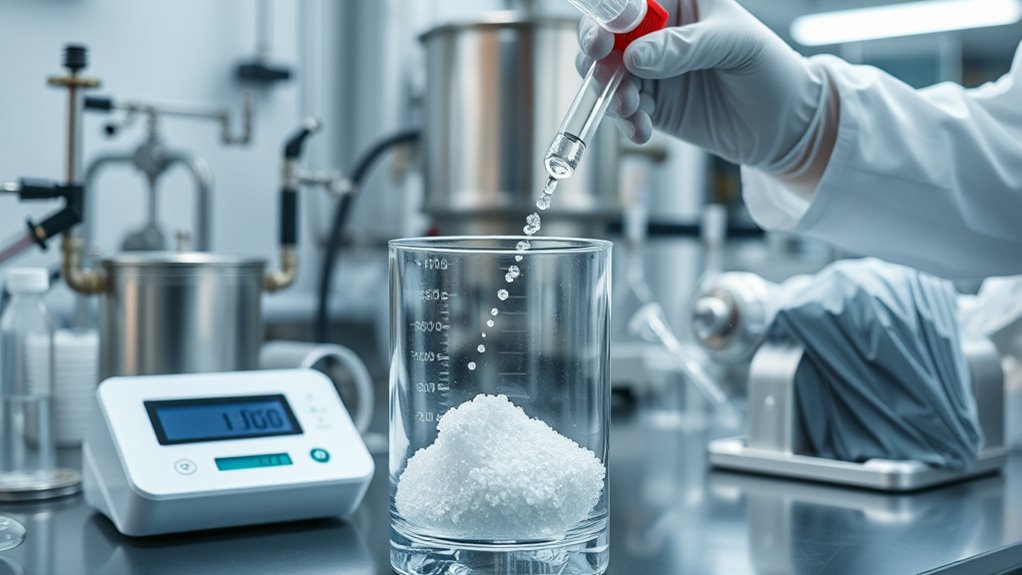
To guarantee ammonium sulfate meets industry standards and performs effectively, rigorous purification and quality control processes are essential. You start by removing impurities through chromatography techniques, which separate contaminants based on their chemical properties. This assures high purity levels necessary for various applications. Spectroscopic analysis then verifies the compound’s composition, detecting trace impurities and confirming concentration accuracy. You may use techniques like UV-Vis or infrared spectroscopy to assess purity and identify unwanted substances. These methods provide rapid, reliable data, allowing you to adjust processes if needed. Consistent application of chromatography and spectroscopic analysis ensures the ammonium sulfate product consistently meets quality specifications, minimizing variability and maintaining safety standards. This meticulous approach guarantees that your ammonium sulfate is suitable for its intended industrial or agricultural uses. Quality assurance is also crucial in maintaining consistent product standards across different production batches, reducing the risk of variability.
Major Industries Utilizing Ammonium Sulfate

Ammonium sulfate plays a essential role across several major industries, primarily due to its effectiveness as a fertilizer, desiccant, and buffering agent. Its historical development highlights its steady rise in importance, driven by increasing market demand. You can envision it being used in:
Ammonium sulfate is vital as a fertilizer, desiccant, and buffering agent across major industries.
- Agriculture, where it boosts crop yields.
- Chemical manufacturing, regulating pH levels.
- Food processing, as a stabilizer and additive.
As demand grew, industries expanded production, adapting processes to meet global needs. The market’s growth reflects its versatility and long-standing utility. Its ability to serve multiple functions makes it indispensable in many sectors, ensuring its presence remains indispensable across various applications. This continual evolution underscores ammonium sulfate‘s significance in modern industry, especially with innovations in production methods that enhance efficiency and sustainability.
Agricultural Applications and Fertilizer Formulations

You can use ammonium sulfate to improve soil nutrient levels and support healthy crop growth. It also plays a key role in fertilizer blending techniques to meet specific nutrient needs. Understanding these applications helps you optimize fertilizer formulations for better agricultural results.
Soil Nutrient Enhancement
In agricultural practices, ammonium sulfate plays a pivotal role in enhancing soil nutrient levels by providing a reliable source of nitrogen. It acts as a soil amendment, improving fertility and supporting healthy plant growth. When used effectively, it integrates into crop rotation strategies, ensuring nutrients are replenished and soil health is maintained. Visualize this process:
- You spread ammonium sulfate evenly across your field, boosting nitrogen content.
- Crops absorb the nutrients, leading to better yields and stronger plants.
- After harvest, crop rotation with legumes or cover crops helps balance soil nutrients and reduces dependency on chemical inputs.
Using ammonium sulfate in your fertilization plan enhances overall soil quality, promotes sustainable farming, and optimizes crop production without compromising long-term soil health.
Fertilizer Blending Techniques
Fertilizer blending techniques are essential for creating effective and customized agricultural inputs that meet specific crop and soil needs. By carefully combining ammonium sulfate with other nutrients, you can develop formulations suited for various applications, including pesticide formulation and wastewater treatment. Blending allows for precise control over nutrient ratios, optimizing plant uptake and minimizing runoff. In pesticide formulation, fertilizer blends improve delivery efficiency and stability. For wastewater treatment, ammonium sulfate-based blends help manage nitrogen levels and reduce pollutants. Using modern blending equipment ensures uniformity and quality, making your fertilizers more reliable and tailored to particular agricultural challenges. Ultimately, these techniques enhance crop yields, protect the environment, and support sustainable farming practices.
Uses in Food Processing, Chemical Manufacturing, and More
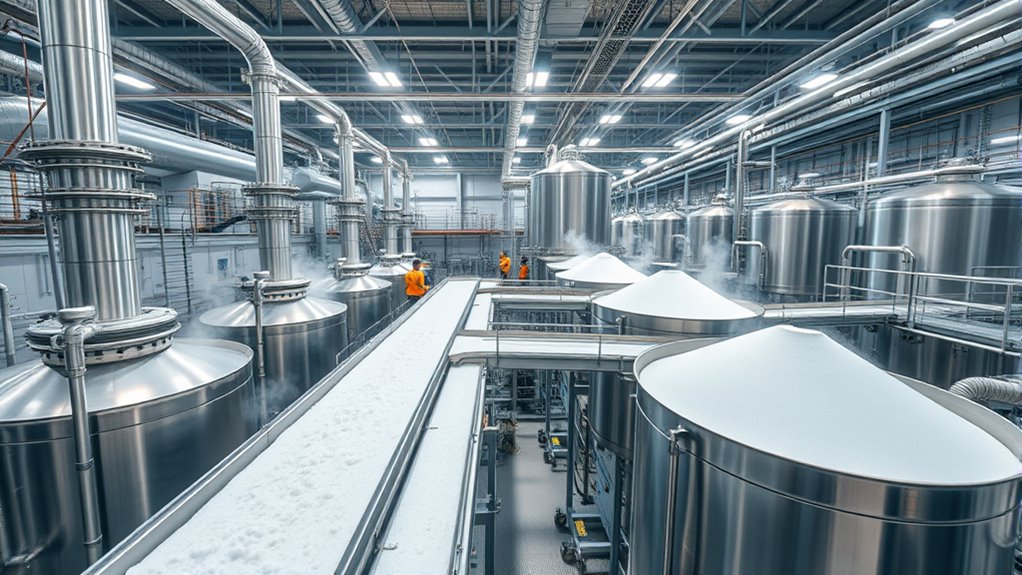
Ammonium sulfate plays a pivotal role across various industries, especially in food processing and chemical manufacturing. Its historical development reveals its longstanding importance, evolving alongside market trends. When used in food processing, it acts as a food additive, a preservative, and a nutrient supplement. In chemical manufacturing, it’s essential for producing fertilizers, pharmaceuticals, and textiles. Imagine this:
- You see it integrated into baked goods as a leavening agent.
- You observe it in fertilizer bags supporting crop growth.
- You notice it in laboratory settings aiding in chemical reactions.
These applications highlight its versatility. As market demands shift toward sustainable and efficient solutions, ammonium sulfate’s uses continue to expand. Understanding its historical development helps you grasp its growing significance in modern industries and the evolving market trends shaping its future applications.
Frequently Asked Questions
What Are the Environmental Impacts of Ammonium Sulfate Production?
You should consider that ammonium sulfate production can lead to environmental emissions like greenhouse gases and ammonia release, which contribute to pollution. Waste management is essential, as improper disposal of by-products may cause soil and water contamination. By implementing cleaner technology and effective waste handling practices, you can reduce the environmental impacts, ensuring production is more sustainable and minimizes harm to ecosystems and human health.
How Does Ammonium Sulfate Compare to Other Nitrogen Fertilizers?
You’ll find ammonium sulfate stands out among nitrogen fertilizers with its high nutrient efficiency, providing about 21% nitrogen content. It’s often more cost-effective than alternatives like urea or ammonium nitrate, especially in acidic soils, helping you save money while boosting crop yields. Its quick nitrogen release supports rapid plant growth, making it a smart choice for your farming needs, balancing both economic and environmental considerations effectively.
Are There Emerging Alternative Methods for Ammonium Sulfate Synthesis?
You should know that emerging alternative methods like green synthesis and bio-based approaches are gaining attention for ammonium sulfate production. These methods focus on reducing environmental impact by using renewable resources and eco-friendly processes. Researchers are exploring biological processes, such as microbial synthesis, and sustainable chemical pathways, making the production more sustainable. While still in development, these innovations could revolutionize ammonium sulfate manufacturing, offering greener and more efficient solutions for agriculture.
What Safety Measures Are Necessary During Industrial Handling?
You need to prioritize safety during industrial handling by always wearing protective gear like gloves, goggles, and masks to prevent skin and eye contact. Make certain of proper hazard communication, including clear labeling and safety data sheets, so everyone understands the risks involved. Follow strict safety protocols, handle ammonium sulfate carefully, and maintain good ventilation to avoid inhalation of dust. Regular training keeps you informed and prepared for safe handling practices.
How Is Ammonium Sulfate Used in Non-Agricultural Sectors?
You might think ammonium sulfate is only for farming, but it’s crucial in industrial applications too. In chemical synthesis, it helps produce other chemicals, ensuring efficiency and safety. It’s also used in wastewater treatment, stabilizing pH levels and removing impurities, which protects our environment. Don’t overlook its importance outside agriculture—this versatile compound supports manufacturing processes, making it essential for many industries you rely on daily.
Conclusion
You now see how ammonium sulfate quietly supports various industries, from nurturing crops to enhancing food quality. Its gentle versatility makes it a trusted partner in many processes, seamlessly blending into everyday life. By understanding its production and applications, you appreciate the subtle ways it helps keep our world thriving. Though often overlooked, ammonium sulfate’s contributions are quietly woven into the fabric of progress, ensuring a sustainable future with every careful application.