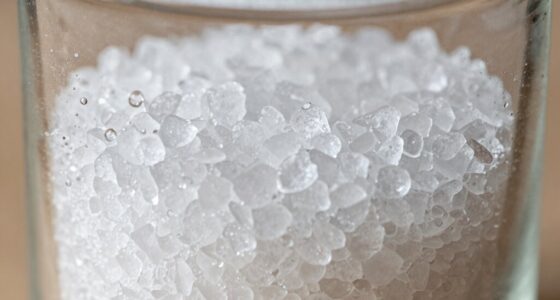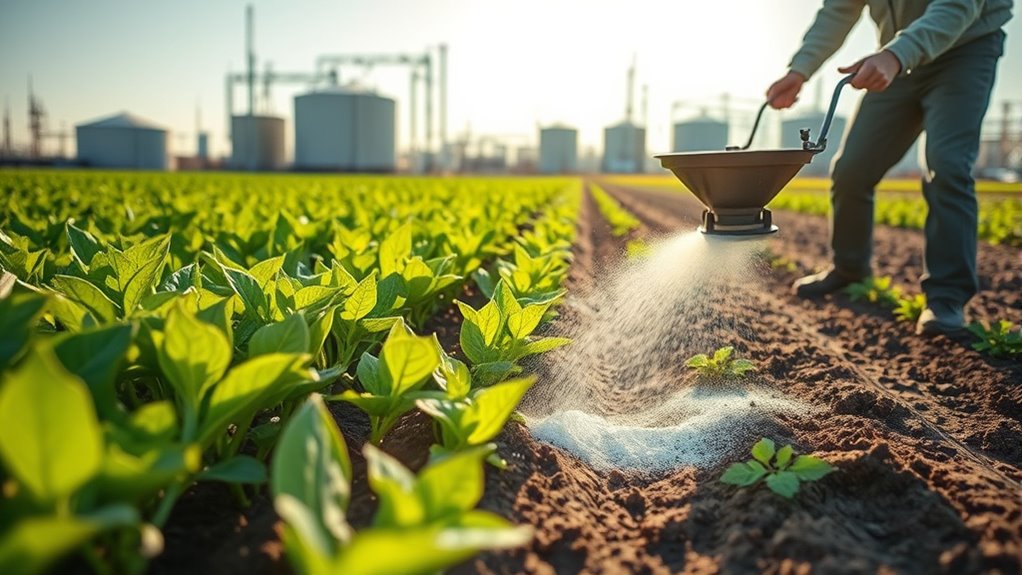
Potassium carbonate is widely used in agriculture to boost plant growth by providing essential potassium, improving soil fertility, and balancing pH levels. It’s also valuable as a natural fertilizer component that supports healthy roots, flowers, and fruits. In industry, it acts as a chemical agent for pH adjustments and manufacturing processes. Its natural, eco-friendly properties make it versatile. To discover more about its key applications, follow the next steps.

Prime made for students and young adults
- Fast, free delivery for dorm and study essentials
- Prime Video and Amazon Music included
- Member-only deals
Key Takeaways
- Used as a soil supplement to supply potassium and correct pH imbalances, enhancing soil fertility.
- Acts as an organic fertilizer component, promoting healthy plant growth and flowering.
- Serves as a buffering agent to stabilize soil pH and reduce plant stress.
- Utilized in industrial manufacturing processes, including chemical buffering and pH adjustment.
- Applied in water-soluble formulations via spraying or irrigation for efficient nutrient delivery.

Potassium carbonate plays a pivotal role in both agriculture and industry due to its versatile chemical properties. When you handle this compound, you’ll notice how adaptable it is, serving as a key ingredient in various processes. In agriculture, you might use potassium carbonate as a supplement to enhance plant growth. It supplies potassium, one of the essential nutrients plants need to develop strong roots, produce flowers, and yield healthy fruits. You’ll find it especially useful in correcting soil deficiencies, where it helps balance pH levels and improve soil fertility. Because it’s soluble in water, it can be easily applied through spraying or irrigation systems, guaranteeing uniform distribution. Its ability to act as a buffering agent helps maintain ideal soil conditions, reducing stress on plants and promoting better nutrient uptake. You may also encounter potassium carbonate in the production of organic fertilizers, where it’s valued for its natural origin and effectiveness.
Handling potassium carbonate requires care, but its safety profile makes it suitable for many applications. You should always wear protective gear when working with it to avoid skin and eye irritation. Proper storage in a cool, dry place guarantees its stability and prevents it from absorbing moisture from the air. Its high solubility and reactive nature mean that even small quantities can have significant effects, emphasizing the importance of precise measurement and application. Whether you’re applying it to improve soil health or using it in manufacturing processes, potassium carbonate’s versatility makes it an invaluable resource across multiple sectors. Its ability to serve as both a nutrient source and a chemical agent underpins many modern agricultural and industrial techniques, making it an essential compound in today’s world.
Additionally, understanding its chemical properties can help optimize its use in various applications, ensuring safety and effectiveness.
As an affiliate, we earn on qualifying purchases.
Frequently Asked Questions
Is Potassium Carbonate Environmentally Sustainable?
You might wonder if potassium carbonate is environmentally sustainable. It generally has a low environmental impact when used properly, as it’s a naturally occurring compound and biodegradable. However, excessive use can affect soil and water quality. By applying it responsibly and in moderation, you can minimize ecological harm. So, yes, potassium carbonate can be sustainable if managed carefully, aligning with environmental protection efforts.
How Does Potassium Carbonate Compare to Other Fertilizers?
You might wonder how potassium carbonate compares to other fertilizers. It’s advantageous because it supplies potassium without adding unwanted elements like nitrogen or phosphorus, reducing pollution. Unlike synthetic fertilizers, it’s more environmentally friendly and helps improve soil quality over time. However, it may be less immediately effective for certain crops. Overall, potassium carbonate offers a sustainable option, especially if you’re aiming for eco-conscious farming practices.
Can Potassium Carbonate Be Used in Organic Farming?
You might wonder if potassium carbonate fits in organic farming. While it’s naturally derived, organic standards often restrict synthetic additives, and potassium carbonate can be seen as a synthetic chemical depending on its source. If it’s extracted from natural sources and approved by organic certifying bodies, then yes, you can utilize it. Always check local regulations to guarantee it aligns with organic farming practices and standards.
What Are the Long-Term Effects of Potassium Carbonate Use?
You might wonder about the long-term effects of potassium carbonate use. Over time, it can improve soil fertility and support plant growth if used correctly. However, excessive use may lead to soil alkalinity, disrupting nutrient balance and harming beneficial microorganisms. To prevent negative impacts, you should monitor application rates carefully and apply it thoughtfully, ensuring sustainable benefits without damaging the environment or soil health.
Are There Health Risks Associated With Handling Potassium Carbonate?
When handling potassium carbonate, you should be aware of potential health risks. It can cause skin and eye irritation if it comes into contact, and inhaling dust may irritate your respiratory system. Always wear protective gear like gloves and goggles, and work in well-ventilated areas. If you accidentally ingest or get it on your skin, rinse thoroughly and seek medical attention if needed. Taking precautions helps keep you safe.
organic potassium carbonate for plants
As an affiliate, we earn on qualifying purchases.
As an affiliate, we earn on qualifying purchases.
Conclusion
As you’ve seen, potassium carbonate plays a crucial role in agriculture and industry, but its true potential is just beginning to unfold. Imagine the possibilities as new applications emerge, transforming crops and manufacturing processes in ways you never expected. With ongoing innovations, this compound could shape the future of sustainable farming and eco-friendly industries. Stay tuned—what’s next might just surprise you, opening doors to breakthroughs you haven’t even imagined yet.
potassium carbonate soil pH buffer
As an affiliate, we earn on qualifying purchases.
As an affiliate, we earn on qualifying purchases.
water-soluble potassium carbonate for irrigation
As an affiliate, we earn on qualifying purchases.
As an affiliate, we earn on qualifying purchases.
Fall Picks
fall essentials
As an affiliate, we earn on qualifying purchases.