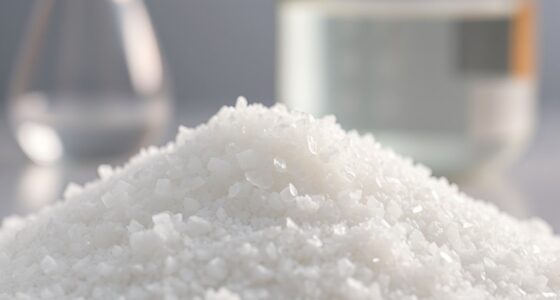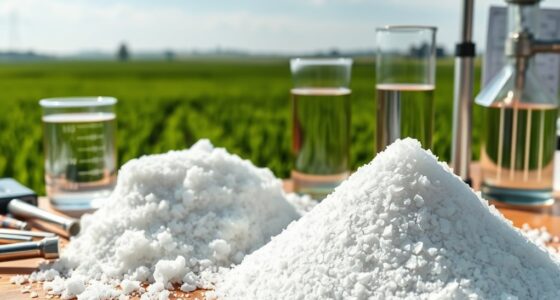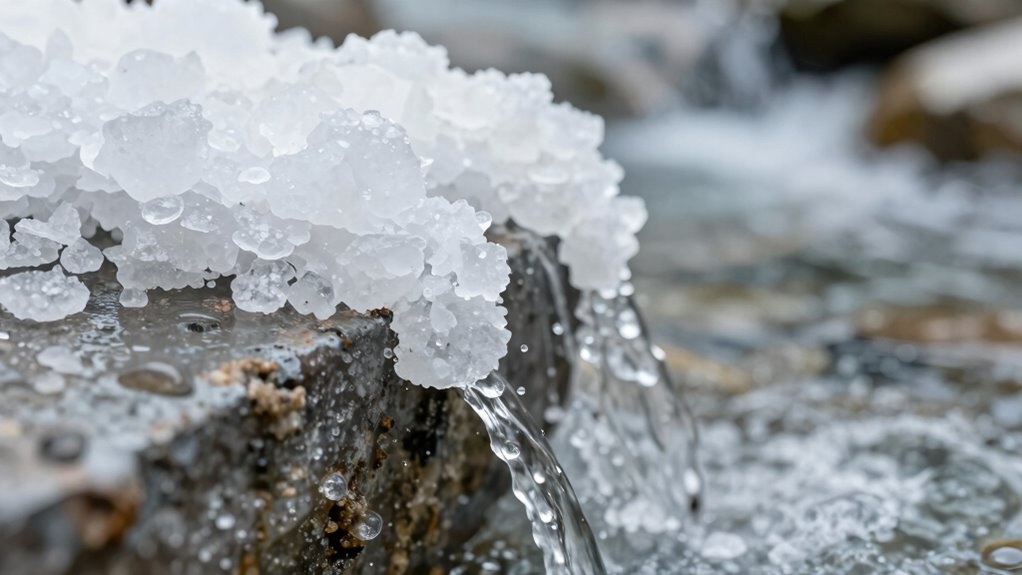
Inorganic salts, like sodium chloride and sodium carbonate, help remove hardness-causing minerals such as calcium and magnesium from water. They work either by triggering mineral precipitation or exchanging ions in water treatment processes, like ion exchange resins. These salts guarantee water is less likely to form scale and deposits, improving appliance efficiency. If you keep exploring, you’ll discover how combining these methods can optimize water softening and prevent scale buildup more effectively.
Key Takeaways
- Inorganic salts like sodium carbonate and calcium hydroxide are used to precipitate hardness minerals from water.
- They modify water chemistry, enabling mineral removal and preventing scale buildup in pipes and appliances.
- In water softening, inorganic salts facilitate ion exchange processes by supplying ions for exchange.
- Proper selection and dosage of inorganic salts optimize water treatment efficiency and water quality.
- Inorganic salts complement ion exchange by reducing overall mineral content through mineral precipitation.
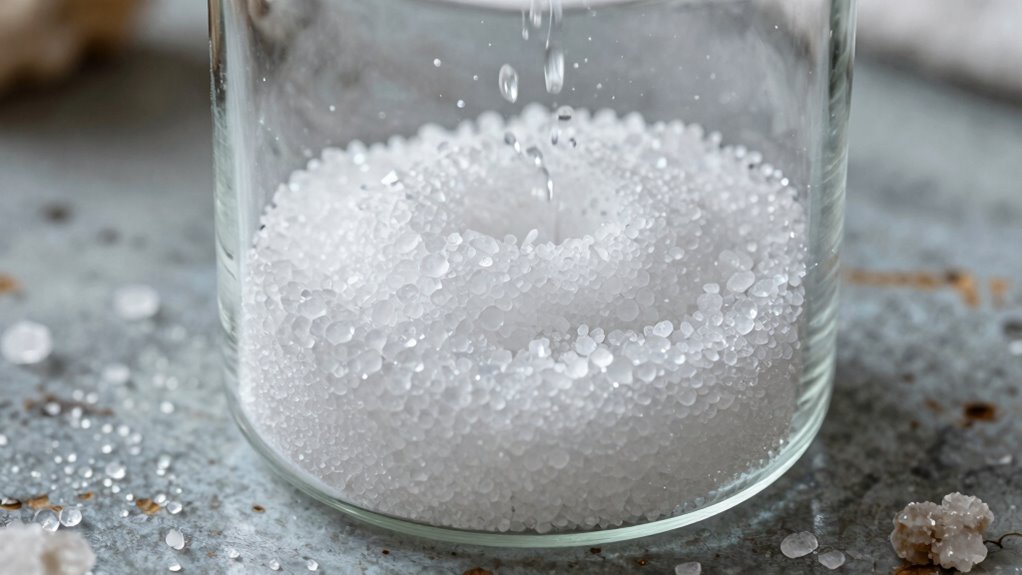
Have you ever wondered how inorganic salts can help remove hardness from water? It’s quite fascinating how these salts work to improve water quality, especially in industrial and domestic settings. The process primarily involves ion exchange and mineral precipitation, both of which are essential in softening hard water.
When hard water contains high levels of calcium and magnesium ions, these minerals tend to cause scale buildup and reduce the efficiency of appliances. Inorganic salts, like sodium chloride, play a critical role here. During ion exchange, the calcium and magnesium ions in the water are swapped with sodium ions from a resin bed or other exchange medium. This exchange occurs because the resin beads are loaded with sodium ions, which are more readily available and less likely to cause scaling. As water passes through this resin, the calcium and magnesium ions are replaced, resulting in softened water that’s free of scale-forming minerals.
In ion exchange, calcium and magnesium ions are replaced with sodium ions, softening water and preventing scale buildup.
Mineral precipitation also plays a significant role in water softening, especially in processes like lime softening. When you add certain inorganic salts, such as calcium hydroxide or sodium carbonate, they alter the water’s chemistry. These salts induce mineral precipitation by changing the pH or introducing ions that react with calcium and magnesium to form insoluble compounds. For example, adding sodium carbonate causes calcium ions to form calcium carbonate, which precipitates out of the solution. This makes it easier to remove the solid mineral deposits from the water, leaving behind softer water that won’t cause scaling in pipes or appliances. Additionally, understanding the chemical reactions involved can help in optimizing the softening process for different water conditions.
Both ion exchange and mineral precipitation processes are effective and often used together in water treatment plants. Ion exchange is quick and efficient for removing dissolved hardness ions, while mineral precipitation helps in reducing the overall mineral content and preventing scale formation. The choice between these methods depends on water hardness levels, the desired water quality, and economic factors. Understanding the inorganic salts involved can help optimize the softening process for different applications.

Clean and Protect Water Softener Salt Pellets 3-Pack 40 lb Bags 120 lbs Total Reduces Scale
This product is Sodium Chloride
As an affiliate, we earn on qualifying purchases.
As an affiliate, we earn on qualifying purchases.
Frequently Asked Questions
Are Inorganic Salts Environmentally Safe for Water Treatment?
Inorganic salts can be environmentally safe for water treatment if used properly, but their environmental impact depends on the specific type and amount used. You should consider their ecological safety, especially regarding potential runoff and accumulation in water sources. When managed correctly, inorganic salts pose minimal risks, but overuse or improper disposal could harm aquatic life and ecosystems. Always follow guidelines to guarantee safe and eco-friendly water treatment practices.
How Do Salts Affect the Taste of Softened Water?
Salt flavor and taste alteration can be dramatic when you soften water with inorganic salts. You might feel like you’re sipping from a salty ocean instead of pure water. The added salts can give your water a noticeable salty taste, overshadowing its natural freshness. This taste change can be quite intense, making you crave plain water less often. So, expect your softened water to carry a subtle, or sometimes not-so-subtle, salt flavor that’s hard to ignore.
Can Inorganic Salts Cause Corrosion in Plumbing Systems?
Inorganic salts can cause corrosion in plumbing systems, especially if the salt concentration is high. To prevent corrosion, you should focus on corrosion prevention strategies, such as using corrosion-resistant materials and controlling the salt levels in your water. Regular maintenance and monitoring of salt concentration help minimize the risk, ensuring your plumbing remains durable and functional over time. Proper management keeps your system safe and efficient.
Are There Alternative Methods to Inorganic Salts for Water Softening?
Yes, there are alternative techniques for water softening that don’t rely on inorganic salts. You can explore natural softening methods like using ion exchange resins, which replace calcium and magnesium ions with sodium, or employing physical methods such as reverse osmosis and electromagnetic treatment. These approaches often reduce the risk of corrosion and are eco-friendly, making them suitable options if you prefer to avoid inorganic salts in your water treatment process.
What Is the Cost Comparison Between Inorganic Salts and Other Softening Techniques?
Inorganic salts are generally more cost-effective due to their high chemical stability and ease of use, making them economically efficient for large-scale water softening. Alternative methods like ion exchange resins or magnetic treatment often involve higher initial investments and maintenance costs. While inorganic salts may have lower upfront expenses, consider long-term operational costs and effectiveness when comparing options to guarantee you choose the most economical and stable solution for your needs.
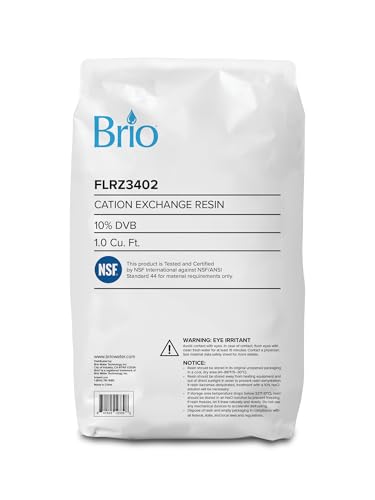
Brio Water Softner Resin Refill for Water Softener Systems & Cartridges | Cation Exchange Resin, 10% Cross-Linked DVB | NSF/ANSI Standard 44 Certified | 1 Cubic Ft. Bag
PREMIUM QUALITY: High-quality strong acid cation resin for comprehensive water softening; rigid polysytrene 10% cross-linked DVB resin construction…
As an affiliate, we earn on qualifying purchases.
As an affiliate, we earn on qualifying purchases.
Conclusion
So, next time you marvel at your spotless showerhead, remember it’s all thanks to those humble inorganic salts. Without them, you’d be stuck with limescale and frustration, questioning the very fabric of your water’s character. Truly, these salts are the unsung heroes in your household, quietly transforming your hard water into a soft, manageable stream. Who knew that a sprinkle of inorganic salt could wield such softening power—an elegant, salty solution to a gritty problem.
calcium carbonate precipitate remover
As an affiliate, we earn on qualifying purchases.
As an affiliate, we earn on qualifying purchases.

Duda Energy 5 lb Bag of Pure Sodium Carbonate Dense Soda Ash Na2CO3 pH Adjust Chemical Spa Pool Cleaning Dishwasher
Industrial Grade Soda ash (Sodium Carbonate) Na2CO3 99.8+% Soda Ash, 0.2% Water
As an affiliate, we earn on qualifying purchases.
As an affiliate, we earn on qualifying purchases.