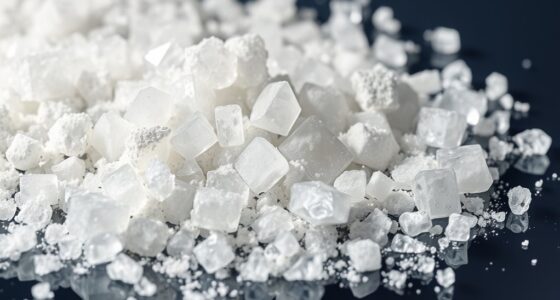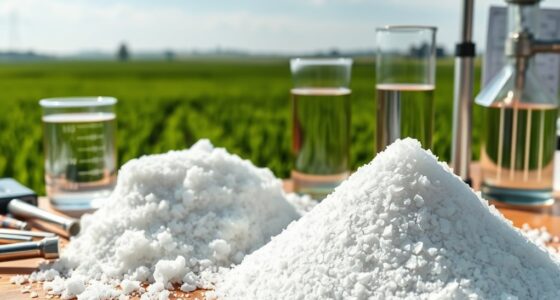
Magnesium sulfate, or Epsom salt, is widely used in agriculture to boost plant health, improve crop yields, and correct nutrient deficiencies like magnesium and sulfur. In medicine, it helps treat magnesium deficiencies, eases muscle cramps, and relaxes muscles through baths. It’s also essential during pregnancy for preeclampsia management and aids recovery from muscle strain. Understanding its versatile uses can help you make the most of this natural remedy—there’s more to discover about its benefits and applications.
Key Takeaways
- Supplies essential nutrients like magnesium and sulfur, promoting plant health, photosynthesis, and crop yields in agriculture.
- Corrects soil nutrient imbalances and enhances plant vigor when applied as a soil amendment or foliar spray.
- Treats magnesium deficiency in humans, alleviating cramps, fatigue, and supporting pregnancy health during preeclampsia.
- Used in medical settings for magnesium supplementation, managing arrhythmias, and preventing deficiencies in hospitalized patients.
- Promotes relaxation, reduces inflammation, and aids muscle recovery through Epsom salt baths for overall physical and mental well-being.

Magnesium sulfate, commonly known as Epsom salt, has a wide range of practical applications across various fields. One of its key uses is in agriculture, where it plays a significant role in soil nutrient enhancement. When added to soil, magnesium sulfate supplies essential nutrients that plants need for healthy growth, such as magnesium and sulfur. Magnesium is crucial for chlorophyll production, which directly impacts photosynthesis, allowing plants to convert sunlight into energy efficiently. Sulfur, on the other hand, supports protein synthesis and enzyme function. By incorporating Epsom salt into your gardening routine, you can improve plant vigor, increase yields, and promote better overall health in crops. It’s especially beneficial for plants that are prone to magnesium deficiency, such as tomatoes, peppers, and roses. You simply dissolve the salt in water and apply it directly to the soil or as a foliar spray, ensuring quick absorption and immediate benefits. This method not only boosts plant growth but also helps correct nutrient imbalances, leading to stronger and more resilient plants. Additionally, proper application techniques are essential to maximize its effectiveness and avoid overuse, which can harm plants. Beyond agriculture, magnesium sulfate has notable medical therapy uses that can benefit you in various health scenarios. It’s widely used to treat magnesium deficiency, which can cause symptoms like muscle cramps, fatigue, and irregular heartbeat. Medical professionals often administer magnesium sulfate through injections or IV infusions, especially in cases of severe deficiency or certain medical conditions. It’s also a common treatment during pregnancy to prevent and manage preeclampsia and eclampsia, conditions characterized by high blood pressure and seizures. In these situations, magnesium sulfate helps stabilize blood pressure and reduce the risk of complications for both mother and baby. Additionally, Epsom salt baths are popular for their soothing effects, helping to relax muscles, alleviate soreness, and reduce inflammation. Many people use these baths to relieve stress or recover from intense workouts. The magnesium absorbed through the skin can also promote better sleep and improve overall relaxation. Furthermore, magnesium sulfate is employed in medical settings to manage certain arrhythmias and to prevent magnesium deficiency in hospitalized patients, underscoring its importance in clinical care.
Frequently Asked Questions
Are There Any Environmental Risks Associated With Magnesium Sulfate Use?
Yes, there are environmental risks associated with magnesium sulfate use. You should consider its ecological impact, as excessive application can disrupt soil balance and harm aquatic life. Water contamination is a concern if runoff carries magnesium sulfate into nearby water bodies, potentially affecting plants, fish, and other wildlife. To minimize these risks, apply it carefully and avoid overuse, especially near water sources.
How Does Magnesium Sulfate Affect Soil Ph Levels?
Magnesium sulfate doesn’t substantially change soil pH levels, so it doesn’t act as a pH adjustment tool. Instead, it primarily supplies magnesium and sulfur, which are essential nutrients for plant growth. If your soil is too acidic or alkaline, you’ll need specific amendments for pH adjustment. Use magnesium sulfate carefully, as it improves nutrient availability without altering soil acidity, helping your plants thrive without disrupting soil pH balance.
Can Magnesium Sulfate Be Used as an Organic Fertilizer?
Yes, you can use magnesium sulfate as an organic fertilizer. It’s popular in organic farming because it provides essential nutrients like magnesium and sulfur, which boost soil nutrition and plant growth. Applying it helps improve crop yields naturally without synthetic chemicals. Use it carefully to avoid over-fertilizing, and combine it with other organic composts for balanced soil health. This approach supports sustainable, eco-friendly farming practices.
What Are the Signs of Magnesium Deficiency in Plants?
You notice the leaves turning yellow, especially between the veins—that’s a telltale sign of magnesium deficiency. Chlorophyll deficiency causes leaf discoloration, making plants look faded and unhealthy. If you see this pattern, it’s a warning that your plants aren’t getting enough magnesium. Addressing this early by supplementing with magnesium sulfate can restore the vibrant green and improve overall health. Don’t ignore these signs; act quickly to save your plants.
Are There Any Contraindications for Magnesium Sulfate Use in Medicine?
You should be cautious of contraindications when using magnesium sulfate in medicine. If a patient has allergies to magnesium sulfate or other similar medications, avoid use to prevent allergic reactions. Additionally, consider potential drug interactions, especially if the patient is taking other medications like neuromuscular blockers or antibiotics, which could lead to adverse effects. Always consult a healthcare provider to ensure safe and appropriate use.
Conclusion
In summary, magnesium sulfate magnificently manages medical maladies and nurtures natural nurseries. By balancing blossoms and boosting blooms, it benefits both biology and botany. Whether you’re fostering fabulous foliage or treating tender tissues, remember that magnesium’s magic makes a meaningful difference. Mastering this mineral’s multiple uses helps you harness health, happiness, and hearty harvests. So, seize the science, serve the soil, and savor the splendid success magnesium sulfate can deliver!