The best chemistry set for most kids is the National Geographic Amazing Chemistry Set, which pairs a broad selection of experiments with room to explore beyond a first activity. For younger children, Butterfly EduFields Wow Chemistry Science Kit is aimed at ages 4–8, while the Thames & Kosmos Chem C1000 V2.1 offers a more structured beginner experience with 125 experiments. The main tradeoffs are age suitability, the depth of chemistry versus general science, and whether a high experiment count comes with activities your child can manage. Some kits lean into spectacle, such as gross science or magic, while others put more emphasis on step-by-step chemistry. Read on for the full comparison and recommendations by buyer type.

Prime made for students and young adults
- Fast, free delivery for dorm and study essentials
- Prime Video and Amazon Music included
- Member-only deals
Key Takeaways
- The National Geographic Amazing Chemistry Set leads for variety with 100+ experiments, while its broad activity count may matter less to a child who wants a tightly focused chemistry course.
- Thames & Kosmos Chem C1000 V2.1 is the most study-oriented pick in this lineup, making it a stronger fit for children ready to follow more structured experiments than a novelty-first kit.
- Age range changes the shortlist: Butterfly EduFields is specifically aimed at ages 4–8, while several National Geographic kits and the UNGLINGA set are aimed at older children or a wider range.
- Experiment counts do not tell the whole story. Kits range from chemistry-focused sets to broad science, gross-out, and magic activities, so the theme and activity style matter as much as the number.
- National Geographic offers several distinct entry points—Junior Chemistry, 45-experiment chemistry, Mega Science Lab, Gross Science, and Science Magic—so buyers can match the theme rather than treating them as interchangeable.
| National Geographic Gross Science Kit with 45 Experiments for Kids Ages 8+ |  | Best for Gross-Themed Chemistry | Brand: Blue Marble | Recommended age: 8 years and up | Total experiments: 45 | VIEW LATEST PRICE | See Our Full Breakdown |
| National Geographic Junior Chemistry Set with 50 Experiments |  | Best for Young Beginners | Brand: Blue Marble | Recommended age: 4 years and up | Experiments: 50 | VIEW LATEST PRICE | See Our Full Breakdown |
| National Geographic Amazing Chemistry Set, 100+ Experiments |  | Best for Extended At-Home Exploration | Brand: Blue Marble | Recommended age: 8 years and up | Total activities: 100+ | VIEW LATEST PRICE | See Our Full Breakdown |
| National Geographic Chemistry Set with 45 Experiments for Kids |  | Best for Classic Reaction Demonstrations | Brand: National Geographic | Recommended age: 8 years and up | Experiments: 45 | VIEW LATEST PRICE | See Our Full Breakdown |
| Kuovei Science Kit for Kids with 80 Experiments |  | Best for a Varied Activity Mix | Brand: Kuovei | Recommended age: Over 6 years | Experiments: 80 | VIEW LATEST PRICE | See Our Full Breakdown |
| National Geographic Mega Science Lab: 75 Experiments for Kids Ages 8–12 |  | Best for Broad Science Variety | Brand: Blue Marble | Recommended age: 8 years and up | Total experiments: 75 | VIEW LATEST PRICE | See Our Full Breakdown |
| Ooze Labs Chemistry Station Experiment Set |  | Best for a Ready-Made Lab Setup | Brand: Thames & Kosmos | Recommended age: 6 years and up | Number of pieces: 57 | VIEW LATEST PRICE | See Our Full Breakdown |
| Thames & Kosmos Chem C1000 V2.1 Beginner Chemistry Set, 125 Experiments |  | Best for Serious Chemistry Beginners | Brand: Thames & Kosmos | Model: Chem C1000 V2.1 | Recommended age: 10 years and up | VIEW LATEST PRICE | See Our Full Breakdown |
| Butterfly EduFields Wow Chemistry Science Kit for Ages 4–8, 100+ Experiments |  | Best for Preschool and Early Elementary | Brand: Butterfly EduFields | Recommended age: 4 years and up | Experiments: 100+ | VIEW LATEST PRICE | See Our Full Breakdown |
| UNGLINGA 150-Experiment Science Kit for Kids | 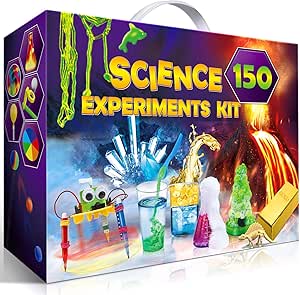 | Best for Cross-Subject Experiment Variety | Brand: UNGLINGA | Recommended age: 8 years and up | Experiments: 150 | VIEW LATEST PRICE | See Our Full Breakdown |
| National Geographic Science Magic Kit for Kids, 8+ |  | Best for Science-Led Performances | Brand: Blue Marble | Age range: 8 years and up | Included magic experiments: 20 | VIEW LATEST PRICE | See Our Full Breakdown |
| chemistry sets for kid | Brand | Recommended age | Model number | Experiments |
|---|---|---|---|---|
| National Geographic Gross Scie | Blue Marble | 8 years and up | NGMEGAGRS | — |
| National Geographic Junior Che | Blue Marble | 4 years and up | NGJRCHEMT | 50 |
| National Geographic Amazing Ch | Blue Marble | 8 years and up | NGMEGACHEMAR | — |
| National Geographic Chemistry | National Geographic | 8 years and up | NGMEGACHEMX | 45 |
| Kuovei Science Kit for Kids wi | Kuovei | Over 6 years | — | 80 |
| National Geographic Mega Scien | Blue Marble | 8 years and up | NGMEGASCIKIT | — |
| Ooze Labs Chemistry Station Ex | Thames & Kosmos | 6 years and up | — | Approximately 20 |
| Thames & Kosmos Chem C1000 V2. | Thames & Kosmos | 10 years and up | — | — |
| Butterfly EduFields Wow Chemis | Butterfly EduFields | 4 years and up | 516 | 100+ |
| UNGLINGA 150-Experiment Scienc | UNGLINGA | 8 years and up | — | 150 |
| National Geographic Science Ma | Blue Marble | — | NGMEGAMAGIC | — |
More Details on Our Top Picks
National Geographic Gross Science Kit with 45 Experiments for Kids Ages 8+
For kids who are more curious about slime-worthy reactions than traditional lab demonstrations, this kit uses a playful gross-science theme to make chemistry approachable. It supplies materials for 15 experiments, while the illustrated guide adds 30 more activities using household items. Those extras introduce polymers, chemical reactions, and pH, giving the set a broader learning path than its theme might suggest. Compared with the National Geographic Amazing Chemistry Set, this one has fewer total activities, but its experiments are framed around gross science rather than a wider mix of classic chemistry projects. The tradeoff is that most of the advertised activities depend on items you need to gather at home. I’d choose it for a child who enjoys messy, humorous themes; families wanting mostly self-contained experiments should look at a kit with more included materials.
Pros:- Includes materials for 15 gross-themed experiments
- Adds 30 household-item activities for continued exploration
- Illustrated instructions explain the science behind each activity
- Covers polymers, chemical reactions, and pH
Cons:- The 30 additional experiments require household items that are not included
- The gross-science theme may not appeal to children who prefer classic lab activities
Best for: Ages 8 and up, especially children drawn to gross-out science and families willing to collect household supplies for extra activities
Not ideal for: Buyers who want most experiments to use materials supplied in the box, or children who prefer conventional chemistry demonstrations
- Brand:Blue Marble
- Recommended age:8 years and up
- Total experiments:45
- Experiments with included kit materials:15
- Household-item experiments:30
- Topics:Polymers, chemical reactions, and pH
- Batteries:Not required
- Model number:NGMEGAGRS
Our verdict“Choose this set for an older child who learns best through gross-themed activities and does not mind gathering supplies for the bonus experiments.”
National Geographic Junior Chemistry Set with 50 Experiments
This is the clearest fit in the group for a child starting chemistry early: its stated age range begins at 4 years, and the illustrated, step-by-step directions are designed to guide young learners through each activity. More than 20 lab tools, including test tubes and goggles, give experiments a hands-on feel, while familiar ingredients such as baking soda and vinegar connect the activities to home. Compared with the age-8-and-up National Geographic Chemistry Set with 45 Experiments, this junior kit is aimed at younger children and offers more listed activities, but it relies on common household items for some of them. That means the experiment count does not equal a fully stocked box. I’d favor this set for an adult-child activity routine; older kids seeking more ambitious projects may find the junior positioning limiting.
Pros:- Designed for a younger stated age range than the other National Geographic chemistry kits here
- Includes more than 20 lab tools, including test tubes and goggles
- Illustrated step-by-step instructions support guided activities
- Uses familiar household ingredients in some experiments
Cons:- Some experiments require household supplies not included in the kit
- Its junior age positioning may make it less appealing to older children seeking harder projects
Best for: Families introducing chemistry to children ages 4 and up who want illustrated guidance, child-oriented lab tools, and adult-supervised activities
Not ideal for: Older children looking for more advanced chemistry challenges, or families who expect every experiment’s materials to be included
- Brand:Blue Marble
- Recommended age:4 years and up
- Experiments:50
- Lab tools:More than 20
- Included tools:Test tubes, goggles, and other lab tools
- Dimensions:11 x 4.22 x 9.64 inches
- Weight:0.72 kg
- Batteries:Not required
- Model number:NGJRCHEMT
Our verdict“Pick this as a first chemistry set for a young child if you can supply household ingredients and guide the activities.”
National Geographic Amazing Chemistry Set, 100+ Experiments
The appeal here is the combination of 15 supplied-material experiments and a guide to 85 more household-item activities. Included projects such as growing a crystal tree, making color-changing solutions, and creating a bouncy ball give kids tangible chemistry to start with; test tubes, beakers, and pipettes add familiar lab tools. Compared with the National Geographic Chemistry Set with 45 Experiments, this kit offers a much larger activity library, but that headline count comes with a clear distinction: most activities do not have their materials in the box. It is a better match for families who enjoy finding supplies and revisiting a guide than for buyers seeking a long run of ready-to-go experiments. Its age recommendation of 8 and up also makes it less suited to younger beginners.
Pros:- Provides materials for 15 hands-on chemistry activities
- Adds a guide to 85 household-item experiments
- Includes test tubes, beakers, and pipettes
- Features varied projects such as crystal growth and color-changing solutions
Cons:- Materials for only 15 of the listed experiments are included
- The additional activities depend on household supplies
- Recommended for ages 8 and up, limiting its fit for younger beginners
Best for: Families with children ages 8 and up who want a broad chemistry activity guide and are comfortable supplying household materials
Not ideal for: Buyers who want most experiments to be ready with included materials, or younger children who need an age-appropriate beginner kit
- Brand:Blue Marble
- Recommended age:8 years and up
- Total activities:100+
- Experiments with included materials:15
- Additional household-item experiments:85
- Tools:Test tubes, beakers, and pipettes
- Dimensions:8.78 x 3.19 x 11.93 inches
- Weight:1.8 pounds
- Model number:NGMEGACHEMAR
Our verdict“Choose this for an older child who wants a large menu of chemistry ideas and has an adult ready to help source supplies.”
National Geographic Chemistry Set with 45 Experiments for Kids
Volcanoes, geysers, and a launched rocket make this the most demonstration-focused option among these chemistry kits. The illustrated guide does more than list steps: it introduces chemical reactions, scientific methods, and lab safety, which can help an adult turn a dramatic activity into a discussion about what happened. Compared with the National Geographic Amazing Chemistry Set, this set emphasizes familiar reaction spectacles rather than a large catalogue of household-item experiments. Its listed total is 45, but the product details do not specify how many activities come with all required materials, so buyers should not assume the count represents 45 fully supplied projects. The 8-and-up recommendation also makes this a less suitable first kit for preschool-age children than the Junior Chemistry Set.
Pros:- Includes attention-grabbing projects such as a volcano, geyser, and rocket
- Illustrated instructions guide children through activities
- Introduces chemical reactions and scientific methods
- Includes guidance on lab safety
Cons:- Recommended for ages 8 and up, so it is less suited to younger children
- Product details do not clarify how many of the 45 experiments have materials included
Best for: Families with children ages 8 and up who want visually engaging reaction projects and an introduction to safe lab habits
Not ideal for: Younger beginners, or buyers who need a clearly specified number of fully supplied experiments before choosing
- Brand:National Geographic
- Recommended age:8 years and up
- Experiments:45
- Featured activities:Volcano, geyser, and rocket projects
- Educational topics:Chemical reactions, scientific methods, and lab safety
- Dimensions:8.78 x 3.19 x 11.93 inches
- Weight:2.9 pounds
- Batteries:Not required
- Model number:NGMEGACHEMX
Our verdict“Choose this for an older child who prefers dramatic reaction projects and can follow age-appropriate safety guidance.”
Kuovei Science Kit for Kids with 80 Experiments
Kuovei takes a broad, activity-packed approach: its 80 experiments include projects such as a rainbow fountain and an erupting volcano, with illustrated guidance cards explaining steps and scientific ideas. The included selection of goggles, gloves, test tubes, droppers, measuring cups, petri dishes, and other tools gives children several ways to handle and observe experiments. Compared with the National Geographic Chemistry Set with 45 Experiments, Kuovei offers a higher stated activity count and a wide assortment of components, but its description does not break down how many experiments have all materials supplied. It also calls for careful handling of chemical materials, so adult supervision matters. The listed dimensions of 1 x 1 x 1 inches are unusually small for a multi-piece kit and do not give a useful picture of its storage footprint.
Pros:- Lists 80 guided experiments with varied activities
- Guidance cards explain steps and scientific principles
- Includes goggles and gloves alongside assorted experiment tools
- Features projects such as a rainbow fountain and erupting volcano
Cons:- Some chemical materials require careful handling and adult supervision
- The listed 1 x 1 x 1-inch dimensions are unusually small and do not clarify the kit’s storage size
- Product details do not specify how many experiments have all required materials included
Best for: Families with children over 6 who want a varied, tool-heavy activity set and can supervise experiments involving chemical materials
Not ideal for: Buyers who need clear information about the kit’s actual size or a precise breakdown of which experiments have all materials included
- Brand:Kuovei
- Recommended age:Over 6 years
- Experiments:80
- Theme:Scientist
- Material:Plastic
- Weight:0.75 kg
- Listed dimensions:1 x 1 x 1 inches
- Included tools and components:Goggles, gloves, petri dishes, test tubes, measuring cups, droppers, and other experiment items
Our verdict“Consider Kuovei for a supervised child over 6 who wants a wide activity mix, but seek clearer size and materials details if those affect your choice.”
National Geographic Mega Science Lab: 75 Experiments for Kids Ages 8–12
I’d choose this kit for a child whose curiosity extends beyond chemistry. Its 45 included activities span Earth science, chemistry, and science magic, with projects such as growing crystals and making chemical reactions; the guide adds 30 experiments using household items. That breadth makes it a more varied introduction than the chemistry-centered National Geographic Amazing Chemistry Set, but it also means less of the kit is devoted to chemistry alone. The included rock, mineral, and crystal specimens give geology projects something tangible to explore, while the volcano and fossil activities offer variety between experiments. The tradeoff is that the extra household-item activities require supplies beyond the box, and the age-eight-and-up recommendation makes this a less suitable pick for preschoolers.
Pros:- Combines chemistry, Earth science, and science magic in one kit.
- Includes 45 activities plus a guide to 30 more using household items.
- Rock, mineral, and crystal specimens support hands-on geology exploration.
- Offers varied projects such as crystal growing, volcanoes, and fossil digging.
Cons:- Chemistry is only one part of the kit, so it offers less chemistry focus than the National Geographic Amazing Chemistry Set.
- Some additional experiments depend on household supplies not included.
- Recommended for ages 8 and up, limiting its fit for younger children.
Best for: Families with children ages 8 and up who want chemistry alongside geology, crystals, fossils, and science magic.
Not ideal for: Buyers seeking a chemistry-focused set with a deep sequence of chemistry activities, or families who want every project’s materials included.
- Brand:Blue Marble
- Recommended age:8 years and up
- Total experiments:75
- Included activities:45
- Additional experiments:30 using household items
- Subjects:Earth science, chemistry, and science magic
- Included specimens:Rock, mineral, and crystal specimens
- Model number:NGMEGASCIKIT
Our verdict“Choose this for an eight-and-up child who wants a varied science sampler rather than a chemistry-only program.”
Ooze Labs Chemistry Station Experiment Set
The standout here is the plastic lab station, which gives children a dedicated place to arrange beakers, test tubes, and other tools while working through roughly 20 chemistry experiments. Projects include slime, fizzing reactions, chromatography, and an underwater volcano, so activities feel varied without ranging as far from chemistry as the National Geographic Mega Science Lab does. Its non-hazardous chemicals and borax-free formula may appeal to families looking for a less intimidating starting point, though younger children still need adult supervision. Compared with the more extensive Thames & Kosmos Chem C1000 V2.1, this set has far fewer experiments and a shorter manual; its advantage is a lower-age recommendation and a compact, organized lab setup. Some supplied chemicals are consumed during use, which can limit repeat runs.
Pros:- Lab station keeps the included tools organized during experiments.
- About 20 activities cover slime, fizzing reactions, chromatography, and more.
- Uses non-hazardous chemicals and does not contain borax.
- Full-color manual explains activities and provides a visual guide.
Cons:- About 20 experiments offer less long-term variety than the 125 in the Thames & Kosmos Chem C1000 V2.1.
- Some included chemicals are consumed during activities, limiting repeat use.
- Younger children need adult supervision.
Best for: Families with children ages 6 and up who want a dedicated station, basic chemistry tools, and guided experiments in one kit.
Not ideal for: Older beginners seeking a large, progressive chemistry curriculum or children who need to repeat activities many times from the same chemical supply.
- Brand:Thames & Kosmos
- Recommended age:6 years and up
- Number of pieces:57
- Experiments:Approximately 20
- Manual:16-page, full-color experiment manual
- Chemicals:Non-hazardous; does not contain borax
- Included equipment:Beakers, test tubes, flasks, pipette, syringe, measuring cup, spatula, petri dish, and funnel
- Warranty:1 year against manufacturer defects
Our verdict“Pick this for a younger child who benefits from an organized lab station more than a large experiment count.”
Thames & Kosmos Chem C1000 V2.1 Beginner Chemistry Set, 125 Experiments
For a child ready to study chemistry as a subject, this is the most focused choice in this group. Its 125 guided experiments cover indicators, chromatography, solutions, electrochemical reactions, and electrolysis, while 30 lab tools and an 80-page manual support a more sustained learning path than the roughly 20 activities in the Ooze Labs Chemistry Station. The detailed instructions and safety guidance suit children who like following procedures and understanding what each activity demonstrates. That depth comes with a narrower age fit: it is recommended for ages 10 and up, unlike the National Geographic Mega Science Lab, which starts at age eight and mixes chemistry with other subjects. This set also calls for careful use of chemicals and adherence to its safety directions, so it is not a casual, unsupervised activity box.
Pros:- 125 experiments span a broad range of chemistry topics.
- Thirty lab tools support hands-on procedures across the activity set.
- The 80-page full-color manual provides step-by-step instructions and scientific explanations.
- Includes safety guidance for equipment and chemical handling.
Cons:- The age-10-and-up recommendation rules it out for younger children without an age-appropriate alternative.
- Experiments involving chemicals require close attention to the supplied safety directions.
- Its chemistry focus offers less subject variety than the National Geographic Mega Science Lab.
Best for: Children ages 10 and up who want a chemistry-centered set with many guided experiments and a range of core topics.
Not ideal for: Families shopping for children under 10, or buyers who prefer short, loosely structured activities with minimal chemical handling.
- Brand:Thames & Kosmos
- Model:Chem C1000 V2.1
- Recommended age:10 years and up
- Number of experiments:125
- Lab tools:30
- Manual:80-page, full-color experiment manual
- Topics:Indicators, chromatography, electrochemical reactions, solutions, and electrolysis
- Included components:Chemicals and chemistry lab equipment
Our verdict“Choose this for an older beginner who wants a structured, chemistry-first program rather than a mixed-subject science kit.”
Butterfly EduFields Wow Chemistry Science Kit for Ages 4–8, 100+ Experiments
This set has the youngest stated age range in this batch, making it a better fit for early science play than the age-10-and-up Chem C1000 V2.1. Its 100+ activities, illustrated instructions, and bonus booklet offer plenty of guided, screen-free projects, while the included tray, measuring tools, and safety gear help prepare children for hands-on work. The volcano mold and materials for colorful experiments give it an accessible, activity-led feel rather than the more formal chemistry curriculum in the Chem C1000. That is a useful distinction for families introducing basic cause and effect, but the large experiment count does not make it equivalent to a detailed older-child chemistry course. Despite the age-four recommendation, young children will need adult help with measuring, following instructions, and handling materials.
Pros:- Offers more than 100 hands-on activities for repeat engagement.
- Illustrated manual and bonus booklet provide guidance across projects.
- Includes a tray, measuring tools, volcano mold, goggles, and gloves.
- Designed for screen-free learning and introduces observation and critical thinking.
Cons:- Young children may need adult support to follow instructions and handle materials.
- Its activity-led approach is less chemistry-focused than the Thames & Kosmos Chem C1000 V2.1.
- The listed contents do not describe a broad set of specialized laboratory tools.
Best for: Caregivers seeking screen-free, guided science activities for children ages 4–8, with an adult available to help.
Not ideal for: Older children who want a systematic chemistry curriculum, or households expecting preschoolers to complete experiments independently.
- Brand:Butterfly EduFields
- Recommended age:4 years and up
- Experiments:100+
- Language:English
- Included tools:Test tube, measuring spoon, stirring stick, measuring cups, and tray
- Other included components:Volcano mold, food colors, food additives, snow powder, safety goggles, gloves, illustrated manual, and bonus booklet
- Safety standard:ASTM F963-17
- Model number:516
Our verdict“Choose this for an adult-guided introduction to hands-on science for a young child, not for advanced chemistry study.”
UNGLINGA 150-Experiment Science Kit for Kids
UNGLINGA is the widest-ranging option here by stated experiment count, with 150 activities across chemistry, physics, surface tension, and Earth science. That makes it a stronger fit for a child who likes switching between science topics than the chemistry-focused Thames & Kosmos Chem C1000 V2.1, which offers more detail within chemistry itself. The illustrated, step-by-step manual gives children ages 8 and up a route through the projects, and some activities use common household items, which can extend the kit beyond its supplied materials. The tradeoff is that those projects may require advance gathering, and the product information gives less detail about the tools and chemicals than the Chem C1000’s listed equipment and manual. Its compact box is easy to store, but does not by itself indicate how much setup individual experiments need.
Pros:- Includes 150 activities across chemistry, physics, surface tension, and Earth science.
- Illustrated, step-by-step manual supports independent reading and guided activity.
- Some projects use household items, extending the activities beyond the supplied kit materials.
- Compact listed dimensions make the box straightforward to store.
Cons:- Some experiments require household items that are not included.
- The subject range means less chemistry depth than the Thames & Kosmos Chem C1000 V2.1.
- Available product details do not specify a full tool list or individual experiment topics.
Best for: Families with children ages 8 and up who want one kit that ranges across chemistry and other science topics.
Not ideal for: Buyers looking for a chemistry-only course with clearly specified lab tools and a detailed topic-by-topic curriculum.
- Brand:UNGLINGA
- Recommended age:8 years and up
- Experiments:150
- Topics:Chemistry, physics, surface tension, and Earth science
- Manual:Illustrated, step-by-step manual
- Included components:Science experiment tools and materials
- Material:Plastic
- Dimensions:11.42 x 8.67 x 3.94 inches
Our verdict“Pick UNGLINGA for an eight-and-up child who values broad science variety more than a specialized chemistry course.”
National Geographic Science Magic Kit for Kids, 8+
For kids who would rather show an experiment as a trick than work through a conventional chemistry sequence, this kit gives science a performance angle. It includes materials and illustrated instructions for 20 magic demonstrations, from making a coin float to making a test tube appear to vanish; a wand and white gloves help set the scene. The guide explains the science behind the effects, so the presentation has an educational follow-through. Compared with the National Geographic Junior Chemistry Set, this is less focused on building chemistry skills through a larger set of experiments and more focused on demonstrations a child can perform for others. The bonus booklet adds more than 85 activities, but those use household items rather than supplied kit materials. Choose it for a playful introduction, not a deep chemistry program.
Pros:- Turns 20 included science demonstrations into performable magic tricks.
- Illustrated, kid-friendly guide explains the science behind the effects.
- Bonus booklet offers more than 85 additional experiments using common household items.
- Includes a magic wand and white gloves for presentation.
Cons:- Only the 20 core demonstrations come with experiment materials; bonus activities rely on household supplies.
- The performance-focused format offers less structured chemistry practice than dedicated chemistry sets.
- Designed for ages 8 and up, so it is not suited to younger children.
Best for: Children ages 8 and up who enjoy performing for family or friends and want science demonstrations with explanations.
Not ideal for: Families seeking a traditional chemistry curriculum or a large collection of experiments with all materials supplied; most bonus activities require household items.
- Brand:Blue Marble
- Age range:8 years and up
- Included magic experiments:20
- Bonus experiments:More than 85 using common household items
- Included components:Experiment materials, illustrated guide, bonus booklet, magic wand, and white gloves
- Educational objective:STEM
- Materials:Metal and paper
- Model number:NGMEGAMAGIC
Our verdict“Choose this kit for an 8+ child who learns through entertaining demonstrations, but pick a dedicated chemistry set for more sustained chemistry practice.”
How We Picked
I compared these 11 chemistry and science kits by how clearly they fit the needs of a child exploring chemistry: age guidance, activity variety, hands-on appeal, and how directly the experiments focus on chemistry rather than general science or performance. I also weighed usability, including whether the stated experiment count suggests a range of activities and whether the kit’s theme is likely to keep a particular kind of learner engaged. A larger number of experiments is useful only when it fits the child’s age and interests.
The ranking favors well-rounded chemistry learning and a clear audience fit over novelty alone. That puts the National Geographic Amazing Chemistry Set first for its broad chemistry activity range, with the Thames & Kosmos Chem C1000 V2.1 close behind for a more structured beginner path. Age-specific, theme-led, and broader science kits rank according to the children they serve best; they may be the better choice for a particular household even when they are not the strongest all-around chemistry pick.
| chemistry sets for kid | Brand |
|---|---|
| National Geographic Gross Scie | Blue Marble |
| National Geographic Junior Che | Blue Marble |
| National Geographic Amazing Ch | Blue Marble |
| National Geographic Chemistry | National Geographic |
| Kuovei Science Kit for Kids wi | Kuovei |
| National Geographic Mega Scien | Blue Marble |
| Ooze Labs Chemistry Station Ex | Thames & Kosmos |
| Thames & Kosmos Chem C1000 V2. | Thames & Kosmos |
| Butterfly EduFields Wow Chemis | Butterfly EduFields |
| UNGLINGA 150-Experiment Scienc | UNGLINGA |
| National Geographic Science Ma | Blue Marble |
Factors to Consider When Choosing Chemistry Sets For Kids
Before choosing a kit, I would match its activity style and age guidance to the child who will use it—not just compare experiment totals. These factors can help narrow the field and prevent a set from being too simple, too demanding, or focused on the wrong kind of science.
Match the Kit to the Child’s Age and Independence
Age guidance is a starting point, not a guarantee that a child can complete activities alone. Younger children may enjoy watching a reaction and following simple steps, while older children may want to measure, compare, and repeat experiments. Think about how much help an adult can provide during setup and cleanup, not only the child’s reading level. A kit aimed at ages 4–8, for example, serves a different purpose from a set designed for children 8 and up. A common mistake is buying for the child’s future ability rather than the skills and patience they have now. If a child needs frequent help, a simpler activity they can finish is often more rewarding than a larger set they cannot manage independently.
Look Beyond the Experiment Count
A high activity count can signal plenty to try, but it does not show how varied or chemistry-focused the activities are. Some kits mix chemistry with broader science demonstrations, gross-out themes, or magic effects. That mix can be a plus for a child who likes variety, but a less direct route for someone eager to learn about chemical reactions. Check whether the activities appear to build on one another or simply offer separate demonstrations. Consider whether your child likes repeating an experiment to see what changes or prefers moving quickly to the next surprise. Choose by the kinds of activities your child will actually want to do, not by the largest number on the box.
Decide How Much Structure Helps
Some children want clear instructions and a defined sequence; others enjoy choosing an activity and exploring its result. A more structured kit can help a beginner feel confident and give an adult a clearer role during shared experiments. A collection of independent activities may work better for a child who likes to dip in and out without following a course. Before buying, consider whether you plan to supervise every session or want activities your child can select with guidance. Do not assume that a larger set automatically offers a more coherent learning path. The right amount of structure is the amount that keeps experiments understandable without making them feel like homework.
Choose a Theme That Sustains Interest
Children often engage with chemistry through a particular hook: dramatic reactions, gross science, magic tricks, or a straightforward lab theme. A strong theme can make a kit more inviting, but it may also narrow its appeal once the novelty wears off. Ask whether the child enjoys performing demonstrations for others or prefers figuring out what caused a result. Science-magic activities can suit a budding showperson, while a more conventional chemistry set may better serve a child who asks how reactions work. If the child is unsure, a varied set may be safer than a highly specialized one. The best theme is the one that encourages repeated use, not merely an exciting first session.
Plan for Adult Help, Setup, and Cleanup
Experiments do not end when the reaction happens: setup, instructions, workspace, and cleanup shape how often a kit comes out. Before buying, think about whether there is a suitable table and an adult available to help with activities that need close supervision. A kit that fits into a short, planned session may suit a busy household better than one that needs a long block of focused time. Also check the product’s activity instructions and supplied materials so you know whether you will need to gather anything else. One common frustration is discovering that an appealing experiment depends on preparation the family did not plan for. A realistic match for your routine is often more useful than the most ambitious-looking box.
Pay More for Fit, Not Just Scale
A premium or larger kit makes sense when its activities match a child’s sustained interest and the family can support regular use. Paying for a big experiment count is less compelling if the child only wants a few guided demonstrations or is still building confidence. For a first set, age fit and clear instructions may matter more than breadth. For a returning young experimenter, a more structured kit or a wider range of activities may justify choosing a more involved option. Compare the intended use—independent exploration, adult-child activities, or show-and-tell—before judging whether a kit offers enough. The better purchase is the one likely to be used, not simply the one with the biggest claim.
Frequently Asked Questions
Which chemistry set in this roundup makes the best first purchase?
For a broad first look at chemistry, I would start with the National Geographic Amazing Chemistry Set because it offers 100+ experiments and a clear chemistry focus. If the child is younger, Butterfly EduFields is aimed at ages 4–8 and may be a closer age match. For a child who benefits from a more structured approach, the Thames & Kosmos Chem C1000 V2.1 is another strong starting point. Think about how much adult support is available before choosing. A kit that fits the child’s current confidence is a better first purchase than one chosen only for its activity count.
Are kits with more experiments always a better value for a child?
No. A larger experiment count can provide more options, but it does not tell you whether the activities suit the child’s age, interests, or patience. The Amazing Chemistry Set and UNGLINGA kit advertise high activity counts, while the Thames & Kosmos set offers a substantial number of experiments with a more structured chemistry identity. A broad science kit may include activities beyond chemistry, which can be useful for variety but less satisfying for a child seeking chemistry specifically. I would prioritize usable variety over the biggest number.
Should I choose a chemistry-focused kit or a general science kit?
Choose a chemistry-focused set if the child is already curious about reactions, mixtures, or lab-style experiments and wants that subject to remain central. A broader kit, such as the National Geographic Mega Science Lab or UNGLINGA set, can suit a child whose interests span several kinds of science. Theme-led options like Gross Science and Science Magic may attract children who enjoy surprising demonstrations more than formal explanations. The tradeoff is focus: a general kit may offer wider variety, while a chemistry set can provide a more consistent subject experience. Start with the child’s current curiosity rather than assuming one format is universally better.
Can a younger child use these sets without adult supervision?
Age labels do not mean that every child can complete every activity alone. Younger users may need help reading directions, preparing a workspace, and following steps safely, and adults should check the kit’s instructions before an experiment begins. Butterfly EduFields is aimed at ages 4–8, but that age range should not be read as a promise of independent use. For older children, the level of independence still depends on the activity and the child’s experience. Plan to be available, especially when a child is new to hands-on experiments.
What should I buy for a child who loses interest after a few experiments?
First, look for a kit whose theme matches what already holds the child’s attention: Gross Science for a child drawn to messy surprises, Science Magic for one who likes performing, or a more general set for someone who likes sampling different topics. A high experiment count alone may not solve fading interest if the activities feel too similar or too demanding. Short, easy-to-start sessions can also make it more likely that the kit gets used again. An adult can help by choosing one activity together and letting the child take the lead where appropriate. If the child’s interests are still changing, a varied kit is often a safer choice than a narrowly themed one.
Conclusion
For the best overall choice, I recommend the National Geographic Amazing Chemistry Set for its broad range of chemistry experiments. The National Geographic Chemistry Set with 45 Experiments is my best value-style pick for families who want a more modest chemistry activity count, while the Thames & Kosmos Chem C1000 V2.1 is the best premium-style option for a child ready for a more structured set. For younger beginners, I would choose Butterfly EduFields Wow Chemistry Science Kit because it is aimed at ages 4–8. For a specific interest, pick Gross Science for gross-out appeal, Science Magic for performance-minded kids, or Mega Science Lab for broader science variety. If you are still deciding, prioritize age fit and activity style over the largest experiment count.