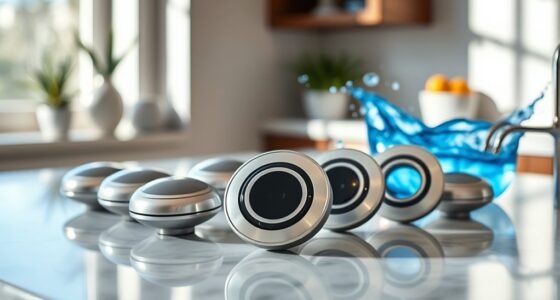
For a home lab that needs both close-up detail and a built-in screen, I’d start with the Andonstar AD246S-M, whose three lenses and HDMI output give it room to handle varied specimens and group viewing. The TOMLOV DM9 is a simpler fit for beginners who want an integrated display and storage, while the PalliPartners trinocular compound microscope better suits slide work that calls for binocular viewing and a camera port. The main tradeoff is between compound microscopes designed for transmitted-light samples and digital inspection scopes built for surfaces, soldering, and coins. Maximum magnification claims alone don’t settle that choice; working distance, lighting, focus control, and how images reach your screen matter just as much. Read on for my full comparison and recommendations by home-lab use.

Prime made for students and young adults
- Fast, free delivery for dorm and study essentials
- Prime Video and Amazon Music included
- Member-only deals
Key Takeaways
- Best all-around flexibility: The Andonstar AD246S-M combines three lenses, HDMI output, and 2160p capture, making it a stronger mixed-task choice than single-screen models.
- Slide work needs a different instrument: The PalliPartners compound and trinocular models suit prepared specimens better than surface-focused digital microscopes.
- Built-in screens favor quick inspection: The TOMLOV DM9 and DM9 Max keep viewing self-contained, while HDMI models are more adaptable for a larger shared display.
- Lens count changes practical range: Multi-lens models such as the LINKMICRO LM266S and Andonstar AD266S/AD269S offer more working options, but extra lenses do not replace suitable lighting or sample preparation.
- Compact picks trade control for convenience: The Skybasic wireless and Elikliv EDM4 are easier to place in a small workspace, though their simpler form is less suited to broad specimen work than larger bench setups.
| PalliPartners Compound Microscope for Adults and Students, White |  | Best for Slide-Based Home Learning | Objective lenses: 4X, 10X, 40X | Eyepiece: WF25X | Magnification lens: 2X | VIEW LATEST PRICE | See Our Full Breakdown |
| Andonstar AD246S-M 3-Lens 2160p HDMI Digital Microscope, 2000x |  | Best for Mixed Repair and Specimen Work | Model: AD246S-M | Lenses: Three interchangeable lenses: A, D, and L | Lens A range: 4.5–180X | VIEW LATEST PRICE | See Our Full Breakdown |
| TOMLOV DM9 Digital Microscope with 7-Inch Screen, 1080p Video, 12MP Camera, and 16GB Storage |  | Best for Comfortable Bench Viewing | Screen: 7-inch LCD | Magnification: Up to 1200X | Camera: 12MP | VIEW LATEST PRICE | See Our Full Breakdown |
| LINKMICRO LM266S 7-Inch HDMI Digital Microscope with 5 Lenses |  | Best for Positioning and Lens Choice | Model: LM266S | Screen: 7-inch IPS LCD | Lenses: 5 | VIEW LATEST PRICE | See Our Full Breakdown |
| Skybasic Wireless Digital Microscope, 50X–1000X |  | Best Compact Pick for Casual Exploration | Magnification: 50X–1000X | Connectivity: Wi-Fi for Android and iOS; USB for Windows and Mac | Sensor: 2MP HD CMOS | VIEW LATEST PRICE | See Our Full Breakdown |
| PalliPartners 40x–2000x Biological Compound Trinocular Microscope |  | Best for Slide-Based Home Labs | Magnification: 40x–2000x | Type: Compound biological microscope | Head: Trinocular | VIEW LATEST PRICE | See Our Full Breakdown |
| TOMLOV DM9 Max 20MP Digital Microscope with 10.1-Inch IPS Display |  | Best for Bench-Side Digital Inspection | Display: 10.1-inch IPS, 178° viewing angle | Magnification: 5X–1500X | Maximum photo resolution: 20MP (6096 × 3424) | VIEW LATEST PRICE | See Our Full Breakdown |
| Elikliv EDM4 LCD Digital Coin Microscope, 4.3-Inch Display, 1000x Magnification, 8 LED Lights |  | Best Compact Starter | Model: EDM4 | Display: 4.3-inch LCD | Display resolution: 720p | VIEW LATEST PRICE | See Our Full Breakdown |
| Andonstar AD266S 20x–5000x HDMI Digital Microscope with 5 Lenses and 2160p UHD Video |  | Best Multi-Specimen Kit | Model: AD266S | Lenses: 5 interchangeable lenses (A, B, C, M, and L) | Magnification: Up to 5100x on the microscope screen; varies by lens and display | VIEW LATEST PRICE | See Our Full Breakdown |
| Andonstar AD269S 20×–5000× HDMI Digital Microscope with Five Lenses |  | Best for Large-Screen Versatility | Model: AD269S | Magnification: 20×–5000×; varies by lens and monitor | Display: 10.1-inch LCD IPS monitor | VIEW LATEST PRICE | See Our Full Breakdown |
| 40X–2500X Microscope with 4.3-Inch Display and 5-Megapixel Camera |  | Best Starter Kit for Home Specimen Work | Magnification: 40X–2500X (listed range; configurations are unclear) | Display: 4.3-inch high-definition screen | Camera: Built-in 5-megapixel camera | VIEW LATEST PRICE | See Our Full Breakdown |
| digital microscopes for home lab | Magnification |
|---|---|
| PalliPartners Compound Microsc | — |
| Andonstar AD246S-M 3-Lens 2160 | — |
| TOMLOV DM9 Digital Microscope | Up to 1200X |
| LINKMICRO LM266S 7-Inch HDMI D | — |
| Skybasic Wireless Digital Micr | 50X–1000X |
| PalliPartners 40x–2000x Biolog | 40x–2000x |
| TOMLOV DM9 Max 20MP Digital Mi | 5X–1500X |
| Elikliv EDM4 LCD Digital Coin | Up to 1000x; varies with screen size and camera-to-object distance |
| Andonstar AD266S 20x–5000x HDM | Up to 5100x on the microscope screen; varies by lens and display |
| Andonstar AD269S 20×–5000× HDM | 20×–5000×; varies by lens and monitor |
| 40X–2500X Microscope with 4.3- | 40X–2500X (listed range; configurations are unclear) |
More Details on Our Top Picks
PalliPartners Compound Microscope for Adults and Students, White
For a home lab centered on prepared and homemade slides, I’d choose the PalliPartners compound microscope over the TOMLOV DM9: its eyepiece optics and 4X, 10X, and 40X objectives suit biological specimens, while the DM9 is better set up for inspecting larger solid objects on a screen. Top and bottom LEDs let me adjust illumination for opaque or translucent samples, and the included 28 slides make it easier to start exploring without assembling a separate kit. A phone clip and Bluetooth shutter also offer a simple way to document observations. The tradeoff is that the 2000X headline range does not make this an advanced research instrument; its described strengths are educational use and basic to intermediate experiments. I’d pick another option for electronics repair or a large shared display.
Pros:- Compound optics and three objective lenses are suited to viewing biological slides
- Top and bottom LED illumination supports both opaque and translucent specimens
- Includes 10 prepared slides and 18 blank slides for getting started
- Phone clip and Bluetooth shutter support photo documentation
Cons:- Educational design is not presented as suitable for advanced professional research
- An eyepiece workflow is less convenient for group viewing than the TOMLOV DM9’s built-in screen
Best for: Parents, students, and home biology learners who want an eyepiece microscope with starter slides and phone-based documentation
Not ideal for: Electronics hobbyists who need a broad work surface, HDMI display, or a stand designed for repair tasks
- Objective lenses:4X, 10X, 40X
- Eyepiece:WF25X
- Magnification lens:2X
- Magnification range:100X to 2000X
- Illumination:Adjustable top and bottom LED
- Focus:Coaxial coarse and fine focus knobs
- Included slides:28 total: 10 prepared and 18 blank
- Included accessories:Phone clip adapter, Bluetooth remote camera shutter, power adapter
Our verdict“Choose it for slide-based home biology lessons; choose a screen microscope if shared viewing or electronics inspection matters more.”
Andonstar AD246S-M 3-Lens 2160p HDMI Digital Microscope, 2000x
The Andonstar AD246S-M is the most adaptable pick here for a home lab that shifts between circuit boards, natural objects, and biological slides. Its three interchangeable lenses give those tasks distinct viewing ranges, while the adjustable boom arm leaves room to position a repair project beneath the camera. That makes it a more flexible workbench tool than the slide-focused PalliPartners compound microscope. For recording, it captures 2160p video and sends a view to an HDMI display; a microSD card is included, so saving observations does not depend on a computer. The compromises are the lens-specific magnification ranges, which vary by output method, and Windows-only measurement software. I’d choose the LINKMICRO LM266S for its five lenses and X-Y stage if slide positioning and a broader lens selection take priority over this model’s three-task versatility.
Pros:- Three interchangeable lenses cover repair work, general object viewing, and biological slides
- 2160p video capture and HDMI output support recording and external viewing
- Adjustable metal boom arm accommodates work beneath the camera
- Includes a 32GB microSD card and task-specific accessories
Cons:- Magnification ranges differ by lens and output method, which can complicate comparisons
- Measurement software is specified for Windows PCs
- Its three lenses offer fewer specialized options than the LINKMICRO LM266S’s five
Best for: Home electronics repairers who also want to inspect coins, natural objects, and occasional biological slides
Not ideal for: Mac users who need the included measurement software, or buyers seeking one consistent magnification scale across lenses and displays
- Model:AD246S-M
- Lenses:Three interchangeable lenses: A, D, and L
- Lens A range:4.5–180X
- Lens D range:450–510X; up to 2040X via HDMI with 3X digital zoom
- Lens L range:15–60X on microscope screen
- Video resolution:2160p
- Display output:HDMI
- Stand and lighting:Adjustable metal boom arm; LED lights with 8 intensity levels
- Storage and software:32GB microSD card included; Windows measurement software
Our verdict“Pick it for a varied repair bench that also handles specimens; choose the LINKMICRO if lens choice and mechanical slide positioning matter more.”
TOMLOV DM9 Digital Microscope with 7-Inch Screen, 1080p Video, 12MP Camera, and 16GB Storage
For a home lab where people want to inspect a specimen together, the TOMLOV DM9 puts the live image on a 7-inch LCD instead of requiring everyone to take turns at an eyepiece. Its 12MP camera, photo capture, and 1080p video suit documenting coins, electronics, jewelry, and other solid objects. Compared with the Skybasic handheld, the DM9 offers a more stable metal stand and a larger built-in view; compared with the LINKMICRO LM266S, it has fewer stated lens and stage controls. Built-in LEDs plus two flexible gooseneck lights give me options for illuminating uneven surfaces. This is a practical screen microscope rather than a traditional compound instrument for routine slide work, and the listing does not specify battery or wireless operation. Choose the PalliPartners if biological slides and eyepiece optics are the main goal.
Pros:- Built-in 7-inch screen makes live viewing comfortable for more than one person
- Metal stand provides a stable setup for bench inspection
- Built-in and flexible lights help illuminate different object shapes
- Captures photos and 1080p video, with a 16GB card included
Cons:- The described use centers on solid objects rather than traditional slide-based microscopy
- Battery and wireless operation are not specified
- For specialized slide positioning and lens selection, it offers less detail than the LINKMICRO LM266S
Best for: Families and hobbyists who want to inspect coins, small objects, or electronics together on a stable bench setup
Not ideal for: Home biology learners seeking a conventional eyepiece microscope and a clearly specified setup for routine slide study
- Screen:7-inch LCD
- Magnification:Up to 1200X
- Camera:12MP
- Video:1080p
- Stand:8.5-inch adjustable metal stand
- Lighting:8 built-in LEDs and 2 flexible gooseneck lights
- Computer compatibility:Windows and Mac
- Included storage:16GB microSD card
Our verdict“Choose the DM9 for shared, screen-based inspection of solid objects; choose PalliPartners for eyepiece-based biological slide work.”
LINKMICRO LM266S 7-Inch HDMI Digital Microscope with 5 Lenses
The LINKMICRO LM266S earns its place for home labs that need more control over where a specimen sits and which lens views it. Its five specialized lenses span tasks such as coins, plants, slides, and circuit boards, while the adjustable X-Y mechanical stage helps move a specimen across the viewing area in a controlled way. That makes it a stronger fit for methodical inspection than the TOMLOV DM9, whose description emphasizes general object viewing from an adjustable stand. A 7-inch IPS screen, HDMI and USB connections, and 24MP photos with 2160P video provide a capable capture setup. The listed 5000X maximum is not a guarantee of useful detail for every sample, so I would choose by the actual task and lens rather than that headline figure. Its Windows 10 and 11 software compatibility may also constrain some workflows.
Pros:- Five specialized lenses support a range of specimen and inspection tasks
- Adjustable X-Y mechanical stage allows controlled sample movement
- 7-inch IPS screen with HDMI and USB connectivity
- Captures 24MP photos and 2160P video to an included memory card
Cons:- The 5000X maximum may not provide useful detail for every sample or task
- Measurement software is specified for Windows 10 and 11
- More lens and stage controls may be unnecessary for casual coin viewing
Best for: Hobby lab users who regularly compare varied samples and want controlled X-Y movement under a digital microscope
Not ideal for: Mac users who depend on the specified measurement software, or buyers who want a simple, low-adjustment viewer
- Model:LM266S
- Screen:7-inch IPS LCD
- Lenses:5
- Maximum magnification:5000X
- Photo resolution:24MP
- Video resolution:2160P
- Connectivity:HDMI and USB
- Stage and storage:Adjustable X-Y mechanical stage; 32GB memory card included
- Warranty:1-year manufacturer warranty
Our verdict“Choose it when lens flexibility and precise sample positioning matter more than a simpler screen microscope like the TOMLOV DM9.”
Skybasic Wireless Digital Microscope, 50X–1000X
The Skybasic Wireless Digital Microscope is the easiest option here to carry between a desk, classroom, or outdoor observation spot. It connects to Android and iOS devices over Wi-Fi and to Windows or Mac computers by USB, making a phone or computer the viewing screen. For casual looks at leaves, fabric, or small household objects, that flexibility is handy; compared with the stand-mounted TOMLOV DM9, though, it is less suited to steady bench inspection and group viewing. The fixed-focus design is the main constraint: it limits fine control over focus, which matters for repeatable microscopy or detailed slide work. Its 2MP sensor and 720P computer image are also more modest than the Andonstar AD246S-M’s 2160p recording. I’d choose it as a portable observation tool, not as the core instrument for a serious home lab.
Pros:- Portable handheld form connects to Android and iOS devices over Wi-Fi
- USB connection supports Windows and Mac computers
- Eight adjustable LED lights help adapt illumination
- Includes a bracket and base for occasional stationary use
Cons:- Fixed focus limits control for precise or repeatable microscopy
- 2MP sensor and 720P computer output are modest for detailed documentation
- USB adapter is not included, and some functions are Wi-Fi-only
Best for: Beginners, families, and nature hobbyists who want a portable microscope for occasional phone or computer viewing
Not ideal for: Home lab users who need adjustable fine focus, repeatable biological slide work, or higher-resolution recording
- Magnification:50X–1000X
- Connectivity:Wi-Fi for Android and iOS; USB for Windows and Mac
- Sensor:2MP HD CMOS
- Adjustable LED lights:8
- Image resolution:1920 × 1080 for smartphone; 720P for computer
- Focal length range:3–60 mm
- Focus:Fixed focus
- Included accessories:USB cable, bracket, base, user manual
- Warranty:One-year replacement service for quality problems
Our verdict“Pick Skybasic for portable, casual observations on a phone; choose the TOMLOV DM9 for a steadier bench setup and larger built-in screen.”
PalliPartners 40x–2000x Biological Compound Trinocular Microscope
For home labs centered on prepared slides and biological specimens, I’d choose this compound microscope over the object-focused TOMLOV DM9 Max. Its 40x–2000x range, bottom LED illumination, and double-layer stage suit transmitted-light viewing, while top lighting adds flexibility for specimens that benefit from surface illumination. The trinocular head gives a route to camera documentation, a useful distinction from simpler viewing setups. The tradeoff is that the listing gives no camera compatibility details, so I’d check the connection requirements before buying. It also leaves accessories and construction materials unspecified. Compared with the more feature-rich Andonstar AD266S, this PalliPartners is the more direct fit for basic biological learning, but offers less documented imaging and accessory support.
Pros:- 40x–2000x range supports a variety of slide observations.
- Bottom and top LED illumination accommodate different specimen setups.
- Trinocular head supports adding a camera or other imaging device.
- Double-layer stage and coarse and fine focus provide basic lab controls.
Cons:- Camera compatibility and connection details are not specified.
- Included accessories and construction materials are not described.
Best for: Home learners and hobbyists who mainly examine biological slides and want the option to attach an imaging device.
Not ideal for: Buyers who need a confirmed camera package, detailed accessory list, or a digital display included.
- Magnification:40x–2000x
- Type:Compound biological microscope
- Head:Trinocular
- Illumination:Top and bottom LED
- Stage:Double-layer
- Focus:Coarse and fine focus knobs
- Camera connection:Supports connecting a camera or additional imaging device
Our verdict“Choose this PalliPartners for slide-focused home biology if you can confirm the camera setup you need separately.”
TOMLOV DM9 Max 20MP Digital Microscope with 10.1-Inch IPS Display
I’d rank the TOMLOV DM9 Max for people who want a generous screen and straightforward recording while inspecting coins, circuit boards, or other solid objects. Its 10.1-inch IPS display makes shared viewing easier than the smaller screen on the Andonstar AD266S, and the remote can reduce disturbance when capturing images. The included 16GB card means recording can start without sourcing storage first. This is an object inspection setup, though, not the compound microscope I’d pick for routine biological slides; the PalliPartners trinocular model is better aligned with that work. Video tops out at 1080p, below the 2160p capture listed for both Andonstar options, and the 12.6-inch stand may constrain taller samples or work areas.
Pros:- Large 10.1-inch IPS display supports comfortable shared viewing.
- Remote control can reduce movement during photo and video capture.
- Includes adjustable lens LEDs, gooseneck lights, and a 16GB microSD card.
- Connects to a computer or monitor.
Cons:- Video capture is limited to 1080p, below the Andonstar AD266S and AD269S specifications.
- The 12.6-inch stand may limit clearance for taller objects or certain bench setups.
Best for: Electronics hobbyists and collectors who want a large built-in screen for bench-side inspection and recording.
Not ideal for: Home lab users focused on transmitted-light biological slides or those needing 2160p video capture.
- Display:10.1-inch IPS, 178° viewing angle
- Magnification:5X–1500X
- Maximum photo resolution:20MP (6096 × 3424)
- Video resolution:Up to 1080p (1920 × 1080)
- Lighting:8 adjustable lens LEDs and 2 dimmable gooseneck lights
- Stand height:12.6 inches
- Base dimensions:7 × 8 inches
- Included storage:16GB microSD card
- Connectivity:Computer or monitor connection
Our verdict“Pick the DM9 Max for screen-first inspection of solid objects when its 1080p video ceiling is acceptable.”
Elikliv EDM4 LCD Digital Coin Microscope, 4.3-Inch Display, 1000x Magnification, 8 LED Lights
The Elikliv EDM4 is the simpler portable choice for someone who wants to inspect small objects without building a large bench setup. Its 4.3-inch display, rechargeable battery, and adjustable stand make it easier to move around than the TOMLOV DM9 Max, whose 10.1-inch screen and taller stand suit a more fixed workspace. Computer connection can expand the viewing area when the built-in screen feels small. The tradeoff is that image capture requires a separately purchased memory card, and the stated up to 1000x magnification varies with distance and screen size, so the headline number does not describe every viewing setup. For biological slide work, I’d favor the PalliPartners compound model with its bottom illumination and slide-oriented stage.
Pros:- Portable design with battery life listed up to 3 hours.
- Height-adjustable stand helps position objects for viewing.
- Eight adjustable LEDs provide controllable illumination.
- Can connect to Windows PCs and MacBooks for a larger view.
Cons:- Memory card for photo and video capture is sold separately.
- Actual magnification varies with screen size and camera-to-object distance.
Best for: Beginners who need a portable rechargeable microscope for coins, jewelry, or occasional circuit-board inspection.
Not ideal for: Buyers who need included recording storage, a large built-in screen, or a compound microscope for regular slide work.
- Model:EDM4
- Display:4.3-inch LCD
- Display resolution:720p
- Magnification:Up to 1000x; varies with screen size and camera-to-object distance
- Lighting:8 adjustable LED lights
- Compatibility:Windows PCs and MacBooks
- Battery life:Up to 3 hours
- Stand:Height-adjustable
- Photo and video recording:Supported; memory card required and not included
Our verdict“Choose the EDM4 for portable, casual inspection if you are comfortable supplying a memory card and working with its smaller screen.”
Andonstar AD266S 20x–5000x HDMI Digital Microscope with 5 Lenses and 2160p UHD Video
Among these five, the Andonstar AD266S makes the strongest case for a home lab that moves between prepared slides, plants, coins, and electronics. Its five interchangeable lenses give it more task-specific range than the TOMLOV DM9 Max, while the metal stand and X-Y stage help position a sample without relying only on hand movement. The 7-inch display is smaller than the AD269S’s 10.1-inch monitor, but this kit lists 2160p video, HDMI, a 32GB card, prepared slides, and a remote, so core viewing and capture accessories are covered. The broad magnification claim needs context: usable range varies by lens and display, and the measurement software is for Windows. That makes this a more versatile kit than the Elikliv EDM4, with more setup complexity.
Pros:- Five interchangeable lenses cover several types of home lab observation.
- 2160p video and HDMI support higher-resolution capture and external viewing.
- Metal stand with X-Y movable stage supports controlled sample positioning.
- Includes prepared slides, 32GB microSD card, and remote control.
Cons:- Magnification and viewing range vary by lens and display.
- Measurement software is specified for Windows PCs.
Best for: Home lab hobbyists who alternate between biological slides, plants, coins, and electronics and want several lenses in one kit.
Not ideal for: Buyers who want a simple, compact microscope or rely on measurement software on a Mac.
- Model:AD266S
- Lenses:5 interchangeable lenses (A, B, C, M, and L)
- Magnification:Up to 5100x on the microscope screen; varies by lens and display
- Display:7-inch LCD IPS screen
- Video resolution:2160p UHD
- Connectivity:HDMI and USB
- Stand:Metal stand with X-Y movable stage
- Storage:32GB Micro SD card included
- Lighting:External LED lights and bottom lights with brightness adjustment
Our verdict“Choose the AD266S if you want a broad lens kit and UHD recording and are willing to manage lens-specific setup.”
Andonstar AD269S 20×–5000× HDMI Digital Microscope with Five Lenses
The Andonstar AD269S suits a home lab where several people need to watch the same sample or where a larger built-in view matters more than a compact footprint. Its 10.1-inch monitor is larger than the AD266S’s 7-inch screen, while the five lenses and endoscope extend the kit across slides, coins, plants, stones, and components. The included X-Y stage, slide kit, remote, and 32GB card help make it a ready-to-start package. It shares the AD266S’s 2160p video capability and Windows-only measurement software, so the key choice between them is screen and included viewing tools: the AD266S specifies five named lenses and adjustable lighting details, while the AD269S lists an endoscope. Its magnification depends on lens and monitor, so I would choose it for the larger display and range of included gear, not the maximum figure alone.
Pros:- 10.1-inch LCD IPS monitor supports shared viewing.
- Five lenses and an endoscope cover varied inspection tasks.
- 2160p video capture via HDMI is specified.
- Includes X-Y movable stage, biological slides kit, remote, and 32GB card.
Cons:- Measurement software is for Windows PCs.
- Magnification varies by lens and whether the monitor is used.
Best for: Households or hobby groups that want a large shared display and multiple ways to inspect different specimen types.
Not ideal for: Users with limited bench space or Mac users who need the measurement software.
- Model:AD269S
- Magnification:20×–5000×; varies by lens and monitor
- Display:10.1-inch LCD IPS monitor
- Video resolution:2160p UHD
- Lenses:5
- Included accessories:Endoscope, X-Y movable stage, biological slides kit, remote control, and 32GB card
- Warranty:2 years
Our verdict“Choose the AD269S when the larger display and endoscope matter more than a compact setup or clearly specified lens-by-lens magnification.”
40X–2500X Microscope with 4.3-Inch Display and 5-Megapixel Camera
For a home lab where getting started with prepared slides matters more than a large screen, this microscope pairs a 4.3-inch display with a 5-megapixel camera and a bundle of slides, coverslips, specimens, and tools. That makes it more immediately ready for basic exploration than the Skybasic Wireless Digital Microscope, which is a handheld option rather than a compound microscope kit. Its WF10X and WF16X eyepieces and three achromatic objectives offer several viewing combinations, while cable or battery power gives you flexibility at a desk or away from an outlet. The tradeoff is uncertainty: the stated 40X–2500X range does not clearly match the listed optical components, and battery runtime is unspecified. I’d choose it for guided slide work, but prefer the PalliPartners 40x–2000x Biological Compound Trinocular Microscope if a clearly specified compound setup matters more than bundled supplies.
Pros:- 4.3-inch display supports direct viewing without relying only on the eyepiece.
- Built-in 5-megapixel camera can capture specimen images.
- Includes prepared specimens, slides, coverslips, and laboratory tools for getting started.
- Can run from a data cable or batteries.
Cons:- The stated 40X–2500X magnification range is inconsistent with the listed eyepieces and objective lenses.
- Battery type and runtime are not specified.
- The 4.3-inch display is smaller than the 7-inch screens on several digital alternatives in the roundup.
Best for: Beginners and families setting up a home slide-viewing station who want specimens and basic lab tools in the box.
Not ideal for: Buyers who need verified magnification combinations, documented battery runtime, or a larger display for extended group viewing.
- Magnification:40X–2500X (listed range; configurations are unclear)
- Display:4.3-inch high-definition screen
- Camera:Built-in 5-megapixel camera
- Eyepieces:WF10X and WF16X
- Objective lenses:4X, 10X, and 40X achromatic
- Power:Data cable or batteries; battery requirements and runtime unspecified
- Included accessories:Cell phone holder, 5 specimens, 5 slides, 100 coverslips, and laboratory tools
Our verdict“Choose this as a ready-to-start slide kit if the included supplies matter more to you than a larger display or fully clarified magnification range.”

How We Picked
I ranked these digital microscopes for home labs by how well their design matches common home tasks: examining prepared slides, inspecting surfaces or electronics, capturing images, and sharing a live view. I weighed optical approach, lens options, display and connection choices, lighting, stated capture capability, and the likely demands of setup and workspace. A claimed maximum magnification received less weight than whether the instrument’s configuration makes useful focusing and sample access practical.
The order reflects versatility for a typical mixed-use home lab, then fit for more specific needs. The Andonstar AD246S-M leads for its multiple lenses and HDMI workflow; compound models rank higher for biological slide work, while screen-based and compact models suit quick inspection and limited benches. Product specifications can describe different measurement conventions, so I treat magnification figures as manufacturer claims rather than directly comparable proof of image detail. Each option has a distinct role, and the drawbacks matter when choosing between them.
Factors to Consider When Choosing Digital Microscopes For Home Labs
Before choosing a model, I’d match the microscope to the samples and the way I want to work. A home lab can mean transparent slides, opaque objects, circuit boards, or a mix, and those jobs place different demands on optics, lighting, and camera setup.
Start With the Specimen, Not the Magnification Number
Ask whether your usual samples are transparent slides or opaque surfaces. Compound microscopes pass light through thin specimens and are generally the more fitting design for cells, prepared slides, and similar work. Digital inspection microscopes typically view reflected light from objects such as coins, components, and materials. A large advertised magnification range does not make one design a substitute for the other. If you plan to study both kinds of samples, decide which work matters most and whether a second instrument would be more useful than compromising on one.
Check Working Distance and Sample Access
Working distance is the room between the lens and the specimen when focused. That space matters when you need to position a circuit board, adjust a tool, or move a larger object under the camera. High-power views often leave less room for handling, so a headline figure can describe a mode that is awkward for practical bench work. Look for clear details about the stand, focus controls, and how the sample is supported. A microscope that keeps the target accessible may serve a home lab better than one with a higher maximum number but little clearance.
Choose Lighting for the Material
Lighting can change what details are visible as much as the camera does. Transmitted illumination is useful for thin slides, while adjustable reflected light helps reveal texture on coins, rocks, and electronics. Brightness control matters because glare can wash out shiny surfaces and strong illumination can flatten contrast. Before buying, think about whether the instrument’s lights can reach your sample evenly and whether you can adjust their angle or intensity. A common mistake is to focus on camera resolution while overlooking how the specimen will be lit.
Decide How You Want to View and Save Images
A built-in display makes a microscope ready for quick inspection without a separate monitor or computer. HDMI output can be a better fit when you want a larger shared view, while wireless connection may reduce cable clutter if the setup supports your devices reliably. Check whether storage is included, how files transfer, and what video and image formats are available. Resolution labels do not describe every part of image quality, and lighting, focus, and sensor behavior all affect the result. Choose the viewing path that fits your bench routine instead of paying attention to a single camera specification.
Treat Lens Options as a Workflow Choice
Multiple lenses can make it easier to switch between a wider view and closer inspection without rebuilding the entire setup. They also add choices that may take time to learn, and their listed magnifications may not map neatly across brands or configurations. Consider how often you will change magnification and whether lens changes preserve a useful working distance for your task. If you mostly inspect one type of sample, a simpler configuration may be easier to use consistently. Extra lenses pay off when they solve a real change in specimen size or task, not merely because the count is higher.
Plan for the Space and Accessories Around the Microscope
The instrument is only part of the bench setup. Leave room for the stand, specimen trays, cables, a monitor if needed, and the movement required to position samples. Small-screen models can suit a crowded workspace, but a compact footprint may limit how large or awkward an object can be. Slide work may also call for prepared slides and supplies that are not part of a digital scope package. Before choosing, sketch where the microscope will sit and list the accessories your actual work requires so the setup remains usable after unpacking.
Frequently Asked Questions
Can one digital microscope handle both prepared slides and circuit boards?
Sometimes, but the two tasks favor different optical designs. Compound microscopes are built around transmitted light for thin samples, while digital inspection scopes are usually more convenient for opaque objects and close-up bench work. Multi-lens models broaden the range of surface tasks, but they do not automatically provide the slide stage and illumination approach you need for biology. If both uses are equally important, compare the time you spend on each before deciding which should get the better-matched instrument. A mixed-use compromise can work, but it may not replace a dedicated microscope for demanding slide study.
Is a higher maximum magnification always better for home lab work?
No. A maximum figure does not tell you how much useful detail the microscope resolves or how comfortable the sample is to position at that setting. As magnification rises, the visible area often shrinks and focusing becomes more demanding. For electronics or coins, a clear image with enough working distance may be more useful than the largest stated number. For slide work, the optical configuration and illumination must also suit the specimen. Compare the intended task and setup, not just the number printed in the product name.
Should I prioritize a built-in screen or HDMI output?
Choose a built-in screen when you want a self-contained station that is quick to set up and easy to move. HDMI is appealing when you already have a suitable monitor or want other people to view the image at the same time. Neither connection alone guarantees better image quality; the display, sensor, focus, and lighting all contribute. Check what cables or storage are included and how you will move saved files to your computer. For a fixed home bench, the screen you will use comfortably is usually the better choice.
Do I need a trinocular microscope to capture images?
A trinocular design offers a separate camera path alongside the eyepieces, which can be convenient if you want to look through the microscope while recording. It is most relevant for people doing sustained slide work or documenting observations. If you mainly inspect objects on a digital screen, a dedicated digital microscope may already provide the viewing and capture workflow you want. Check whether the camera is included and compatible with your software before assuming the camera port is a complete imaging setup. The extra optical path is useful when it fits your routine, not a requirement for every home lab.
What should I verify before buying a microscope for soldering or electronics repair?
Focus on working distance, stand stability, and accessible controls so you can position components and tools around the sample. Check whether the base can hold the boards you work on and whether the light can be adjusted to reduce reflections from solder and metal. HDMI output can help when you prefer a larger display, but confirm the connection and cable requirements for your setup. Very close high-magnification modes may be less practical when you need room for a soldering iron. Compare the instrument around your real board size and repair posture rather than a small sample photo.
Conclusion
For the broadest mix of home-lab inspection, I’d choose the Andonstar AD246S-M as best overall because its three-lens setup and HDMI output support more varied viewing than a simple built-in-screen model. The Elikliv EDM4 is my best value-style pick for compact, straightforward surface checks, while the Andonstar AD266S or AD269S make stronger premium candidates for buyers who want several lens options and a more elaborate capture setup. Beginners who want an integrated display can start with the TOMLOV DM9. For prepared slides, choose the PalliPartners trinocular compound microscope; for a crowded bench, consider the Skybasic wireless model. Match the pick to your specimens and daily workflow, and the right choice becomes clear.
Black Friday Picks

Sony WH-1000XM6 Wireless Noise-Canceling Headphones, Black
As an affiliate, we earn on qualifying purchases.