
Choosing among educational science kits for students comes down to matching the kit type to the student’s age, subject interest, and how much supervision they’ll have. The UNGLINGA 150 Experiments Science Kit is my best overall pick because it delivers the widest variety of chemistry and STEM activities at a mid-range price, making it the safest bet when you’re not sure which science discipline will stick. Two standouts worth knowing early: the National Geographic Earth Science Kit for breadth across earth science topics, and the EUDAX Physics Labs Electricity Kit for older students who need real curriculum-style experiments rather than toy demonstrations. The main tradeoff you’ll face is breadth versus depth — big multi-activity kits keep younger kids engaged but often shallow, while specialized kits like molecular model sets and circuit labs teach more but demand focus and patience. Keep reading for the full breakdown of which kit fits which student.

Prime made for students and young adults
- Fast, free delivery for dorm and study essentials
- Prime Video and Amazon Music included
- Member-only deals
Key Takeaways
- Breadth won for younger students while depth won for older ones: the UNGLINGA 150-Experiments and National Geographic Earth Science kits excelled for ages 6-10, but high schoolers are better served by focused kits like the EUDAX electricity lab or LINKTOR molecular model set.
- The two chemistry molecular model kits — LINKTOR (444 pieces) and the generic 240-piece set — differ mainly in part count and durability, not concept, so the cheaper 240-piece version is the smarter buy unless a student is pursuing AP or college-level chemistry.
- The 58-Piece Kids Microscope clearly outclasses the National Geographic 400x microscope for longevity thanks to its metal body and carrying case, but the Nat Geo option is easier for beginners to operate independently.
- Electricity kits split cleanly by age: the STEM 8-Experiment Circuit Kit suits elementary beginners, while the EUDAX kit covers magnetism and circuit theory at a high school level — buying the wrong one for the wrong age is the most common mistake in this category.
- The Carson Dellosa STEM Challenges and Thames & Kosmos Bridges kits cost more per activity than experiment-count kits, but they build engineering problem-solving skills that chemistry volcano kits simply cannot teach.




More Details on Our Top Picks
UNGLINGA 150 Experiments Science Kit for Kids – Chemistry and STEM Toys
UNGLINGA’s 150-experiment kit earns the top spot because it covers more scientific ground per dollar than anything else in this roundup. Where the National Geographic Earth Science Kit stays anchored to geology and earth science, UNGLINGA spreads across chemistry, physics, and surface tension, which keeps a curious 8-to-12-year-old engaged for months rather than weeks. The illustrated manual is genuinely kid-readable, so students can lead their own sessions instead of waiting for a parent to interpret instructions. That said, the breadth comes with a catch: the experiments are shallower than a dedicated kit like the Forskere circuit set, and some projects quietly assume you have vinegar, baking soda, or food coloring on hand. Treat it as a wide sampler rather than a deep curriculum, and the tradeoff feels fair.
Pros:- 150 experiments across chemistry, physics, and earth science for exceptional variety
- Child-safe materials and quality tools included
- Illustrated manual kids can follow with limited help
- Strong value per experiment compared to single-topic kits
Cons:- Some experiments need household items not in the box
- Adult supervision required for several activities
- Individual experiments lack the depth of specialized kits
Best for: Parents and teachers who want a long-lasting, all-around science kit that spans multiple subjects for kids 8 and up
Not ideal for: Families wanting a self-contained kit — several experiments require household supplies and adult supervision
- Brand:UNGLINGA
- Age Range:96 months and up (8+)
- Number of Experiments:150
- Topics Covered:Chemistry, physics, earth science, surface tension
- Included Components:Experiments, tools, and materials
- Supervision:Required for some experiments
Our verdict“Buy this if you want the widest, longest-lasting introduction to science in one box — skip it if you need a single-subject deep dive.”
Carson Dellosa STEM Challenges, Hands-On Science Kits
This isn’t a box of parts — it’s 30 structured challenge cards, and that format is exactly why it costs a fraction of hardware kits like the Forskere circuit set. For homeschool co-ops and classroom stations, the cards solve a real problem: a teacher can hand one to a small group with a materials list on the back and walk away. Compared with the UNGLINGA kit, which front-loads all materials, Carson Dellosa shifts the prep onto you — pipe cleaners, tape, and recyclables are all sourced separately. That’s the central tradeoff: lowest cost and best classroom scalability, but zero supplies in the box. Coverage across physical, life, earth, and space science for grades 2-5 is broader in theme than any hardware-based option here, though each activity is lighter by design.
Pros:- 30 cards spanning physical, life, earth, and space science
- Very low cost per activity compared to hardware kits
- Includes divider-based organized storage
- Wide grade range suitability (grades 2-5)
Cons:- All materials must be sourced separately
- Limited to the 30 topics on the cards with no room to expand
Best for: Teachers and homeschool parents running group or center-based activities on a budget
Not ideal for: Families wanting an open-the-box experience — every activity requires gathering materials first
- Format:30 hands-on activity cards
- Grade Level:Grades 2-5
- Card Dimensions:7.75 x 5.5 inches
- Divider Dimensions:7.75 x 8 inches
- Topics Covered:Physical, life, earth, and space science
- Materials Included:Cards only — supplies sourced separately
Our verdict“The clear pick for budget-conscious educators running structured group challenges, not for families who want everything included.”
58-Piece Kids Microscope Kit – 100X-1200X Magnification, Metal Body, LED Light, Carrying Box
While most kits in this roundup deliver one-off experiments, this one hands a student a durable scientific instrument they’ll revisit for years. The 58 included pieces — prepared specimens, blank slides, and lab tools — mean a child can start observing within minutes, then graduate to making their own slides. Compared with the National Geographic Microscope for Kids (capped at 400x), this kit’s 1200x top-end magnification opens up finer detail, and the metal body feels less like a toy. The realistic caveat: maximum magnification only matters if the optics stay sharp, and serious students will eventually outgrow it for a lab-grade scope. It also arrives without the 2 AA batteries it needs, a small annoyance at gift time.
Pros:- Reusable instrument with 100X-1200X magnification range
- 58 pieces including prepared specimens, slides, and tools
- Sturdy metal body with LED illumination
- Carrying box and beginner guide make it gift-ready
Cons:- Requires 2 AA batteries not included
- Magnification range will be outgrown by serious students
Best for: Kids aged 8-12 showing sustained interest in biology who want a reusable tool, not a single-use project
Not ideal for: Advanced or middle-school students who need research-grade optics — the magnification ceiling becomes limiting
- Magnification:100X-1200X
- Pieces Included:58
- Body Material:Metal
- Illumination:LED light
- Dimensions:8.15 x 4.6 x 2.75 inches
- Batteries:2 AA required (not included)
- Includes:Prepared specimens, slides, lab tools, carrying box, guide
Our verdict“The right choice when you want to nurture a long-term interest in microscopy rather than a one-weekend activity.”
STEM Electric Circuit Kits – 8 Experiments in 7 Sets for Students
Where the UNGLINGA kit samples many subjects shallowly, this Forskere set goes deep on one: electricity. The seven experiment sets walk students through series and parallel circuits, fruit batteries, and seawater power — concepts that build on each other rather than feeling like random demonstrations. The step-by-step circuit diagram guide is the standout, translating abstract schematic skills into hands-on play for ages 8-12. It’s a better conceptual bridge to the EUDAX physics lab kit for high schoolers than anything else at this price. The tradeoffs are real, though: only eight experiments total, assembly can frustrate kids working solo, and the batteries (again) aren’t in the box. This is a focused purchase, not a variety pack.
Pros:- Progressive experiments that teach real circuit theory
- Clear circuit-diagram guide built for beginners
- Seven separate sets work well for siblings or classrooms
- Encourages independent and guided exploration
Cons:- Only eight experiments — limited replay value
- Assembly instructions can be tricky without adult help
- AA batteries not included
Best for: Kids 8-12 fascinated by how electricity works, especially those ready for parent-guided builds
Not ideal for: Students wanting variety or older teens — eight experiments on one topic will feel narrow
- Brand:Forskere
- Age Range:8-12 years
- Experiments:8 across 7 sets
- Topics:Series/parallel circuits, fruit batteries, seawater power
- Model Number:FK1601
- Batteries:AA required (not included)
- Learning Goals:Critical thinking, problem solving, exploratory skills
Our verdict“Pick this over broader kits when a child’s curiosity points specifically at electricity and engineering.”
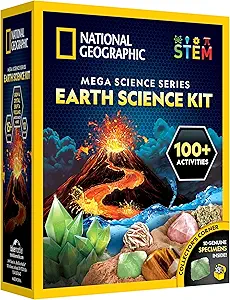
National Geographic Earth Science Kit with 100+ Activities for Kids 8-12
If UNGLINGA is the generalist, this kit is the specialist that does earth science properly. Volcano eruptions, crystal growing, and geologic digs give kids the tactile, dramatic experiments that make geology memorable, and the full-color learning guide connects each activity to real science rather than just spectacle. Its reflects polish the smaller brands here can’t match — instructions are clearer and components feel more considered than the Forskere set’s. Compared with the dedicated Ultimate Volcano Kit, you sacrifice some volcano-specific depth but gain a hundred other activities. Be aware that several experiments still need household items and supervision, and questions linger about long-term durability of some components. For an 8-to-12-year-old who collects rocks and asks why mountains exist, it’s the strongest thematic match in this lineup.
Pros:- 100+ activities focused on earth science with real depth
- Detailed full-color learning guide connects play to science
- High-drama experiments like volcanoes and crystal growing
Cons:- Some activities need extra household items
- Adult supervision required for several experiments
- Component durability is uncertain with repeated use
Best for: Kids 8-12 who love rocks, volcanoes, and geology and want a polished, trusted brand experience
Not ideal for: Students interested in chemistry, circuits, or biology — this kit stays firmly within earth science
- Brand:Blue Marble (National Geographic)
- Age Range:8-12 years
- Activities:100+ experiments and activities
- Signature Experiments:Volcano building, crystal growing, geologic digs
- Learning Materials:Detailed full-color learning guide
- Model Number:NGMEGAEARTH
Our verdict“The best choice for a young geology enthusiast who wants quality and focus over subject variety.”
National Geographic Gross Science Kit with 45 Experiments for Kids 8-12
Not every student is drawn to science through tidy lab reports — some need boiling boogers and glowing worms to get hooked. This kit leans fully into that impulse, using gross-out humor as a gateway to real chemistry like polymers and chemical reactions. Compared with the National Geographic Earth Science Kit’s 100+ activities, the experiment count here is smaller, but the engagement-per-experiment ratio is arguably higher for kids who resist traditional STEM toys. The illustrated instructions are genuinely kid-friendly, which matters if you want independent play. The tradeoff is mess: this is a kit that demands supervision and a protected surface, and about 15 of the 45 experiments require household items you’ll need to gather yourself.
Pros:- High engagement through humor-driven experiments
- Illustrated, easy-to-follow instructions support independent use
- Teaches genuine chemistry concepts like polymers and reactions
- 45 experiments provide strong replay value for the price
Cons:- Genuinely messy experiments require active adult supervision
- Not all materials are included — household items needed for roughly 15 experiments
- Gross-science theme actively alienates some children
Best for: Parents of kids aged 8-12 who show little interest in conventional science toys and need a high-engagement entry point
Not ideal for: Households that avoid messy activities or kids sensitive to gross themes — the entire premise depends on loving the ick factor
- Number of Experiments:45
- Recommended Age:8-12 years
- Includes:Experiment guide, household items for 30 experiments
- Educational Focus:Polymers, chemical reactions, STEM
- Instruction Style:Illustrated, easy-to-follow guide
- Availability:Exclusive Amazon product, award-winning design
Our verdict“The pick that converts science skeptics into enthusiasts, as long as you can tolerate the cleanup.”
National Geographic Microscope for Kids with Up to 400x Magnification
This microscope gets the fundamentals right where many kids’ scopes fail: large focus knobs, a soft-touch eyepiece, and an adjustable platform that make first attempts at magnification frustrating instead of futile. The included 6 prepared slides plus rocks, minerals, and blank slides mean there’s something to look at on day one — no scavenging required. Compared with the 58-Piece Kids Microscope Kit, which offers higher magnification (up to 1200x), this model sacrifices power for usability and curated content, a sensible exchange for younger users. The lab guide with activities gives structure that open-ended kits lack. Where it falls short is ceiling: a motivated middle schooler will outgrow 400x within a year or two, and the specimen collection runs out quickly.
Pros:- Ergonomic design makes focusing easy for small hands
- Comes ready to use with prepared slides, rocks, and minerals
- Structured lab guide with activities extends engagement beyond free play
- Blank slides encourage kids to collect and examine their own specimens
Cons:- 400x maximum magnification is limiting for advanced biology
- Included specimens are finite and run out quickly
- Younger children still need adult help with slide preparation
Best for: Ages roughly 6-10 getting their first microscope, where guided exploration matters more than magnification power
Not ideal for: Older or advanced students who need higher magnification for cell-level biology work — the 400x ceiling limits serious study
- Magnification:Up to 400x
- Prepared Slides:6 plant slides
- Specimens:6 rocks and minerals
- Blank Slides:6 included
- Accessories:Pipette, specimen dish, tweezers, lab guide, stickers
- Design Features:Large focus knobs, soft-touch eyepiece, adjustable platform
Our verdict“The easiest on-ramp to microscopy for young kids, though serious students should step up to a higher-powered scope.”
LINKTOR Chemistry Molecular Model Kit (444 Pieces)
Where most kits in this roundup serve elementary-age curiosity, this one serves actual coursework. With 136 atoms, 158 bonds, and 150 parts for building a Fullerene, the LINKTOR kit handles everything from middle school intro chemistry through graduate-level organic structures. The inclusion of both ball-and-stick and space-filling modeling styles is what separates it from cheaper sets — students learn not just connectivity but molecular scale and geometry. Compared with the 240-Piece Molecular Model Kit later in this list, the extra ~200 pieces mean you can build multiple complex structures simultaneously without constant teardown, which matters for study groups or classroom demonstration. The tradeoff is audience: this is not a toy, and handing it to a child too young for chemistry concepts wastes its value — plus the small parts are a genuine hazard.
Pros:- 444 pieces allow building several large molecules without disassembly
- Covers grade 7 through graduate-level coursework
- Both ball-and-stick and space-filling models teach different aspects of geometry
- Durable construction survives repeated assembly cycles
Cons:- Too advanced for beginners with no chemistry background
- Small parts present a choking hazard around young siblings
Best for: High school AP Chemistry, pre-med, and college students who need to build complex structures for coursework
Not ideal for: Elementary-age kids — it requires chemistry knowledge to be useful and poses a choking hazard for young children
- Total Pieces:444
- Atoms:136
- Bonds:158
- Specialty Parts:150 parts for Carbon-60 Fullerene
- Model Types:Ball-and-stick and space-filling
- Suitable Levels:Grade 7 through graduate
- Subjects:Organic and inorganic chemistry
Our verdict“The molecular model set that will still be useful in college — buy it once for a student who is serious about chemistry.”
Molecular Model Kit (240 Pieces) for Organic and Inorganic Chemistry Learning
This 240-piece set covers the same conceptual ground as the LINKTOR kit — 3D visualization of bonds, geometry, and structures from middle school through graduate study — at a lower piece count and typically lower price. With 86 atoms and 154 bonds, it handles most standard coursework structures, and the food-grade, eco-friendly plastics are a thoughtful choice for households with safety concerns. Compared with the LINKTOR 444-piece kit, you give up the ability to build a Fullerene or maintain multiple large models at once, making this better suited to a single student than a study group. Assembly still requires real chemistry understanding, so this is a supplement to a class, not a standalone activity. For one student’s homework needs, though, paying for double the pieces rarely makes sense.
Pros:- Substantially more affordable than larger molecular kits
- Food-grade eco-friendly plastics (PP, LDPE, ABS) are safer around kids
- Spans middle school to graduate-level chemistry
- Visualizing 3D geometry makes abstract concepts concrete
Cons:- 240 pieces limit how many complex structures you can build at once
- Requires existing chemistry knowledge — not self-explanatory for beginners
Best for: Individual middle school through college students who need a molecular model kit for coursework without paying for extra capacity
Not ideal for: Very young children or students with no chemistry background — it demands assembly skill and conceptual knowledge to be useful
- Total Pieces:240
- Atoms:86
- Bonds:154
- Materials:Food-grade, eco-friendly plastics (PP, LDPE, ABS)
- Suitable Levels:Middle school through graduate
- Subjects:Organic and inorganic chemistry
Our verdict“The smart spend for a single chemistry student — same learning value as bigger sets unless you need parallel builds.”
National Geographic Ultimate Volcano Science Kit for Kids Ages 8-12
Unlike the broad experiment kits in this roundup — the UNGLINGA 150-experiment set or the National Geographic Earth Science Kit — this one goes deep on a single subject, and that focus is its strength. The real volcanic rocks and pumice give kids authentic specimens to examine, the reusable mold means the eruption can be repeated rather than performed once and discarded, and painting the volcano adds a creative phase that pure chemistry kits skip. The full-color learning guide ties the spectacle to actual geology and earth science. The tradeoff is obvious breadth: after a few eruptions, the content is exhausted, and eruption powder runs out before enthusiasm does. It also needs adult supervision for the plaster and eruption phases. Think of it as a memorable weekend project, not a months-long activity library.
Pros:- Real volcanic rocks provide authentic geology learning
- Reusable mold allows repeated eruptions
- Combines creativity (painting) with chemistry and earth science
- Full-color learning guide connects the fun to real science
Cons:- Eruption powder quantity is insufficient for many repeat uses
- Single-topic scope exhausts its content quickly
- Adult supervision required for plaster mixing and eruptions
Best for: Kids ages 8-12 fascinated by geology and volcanoes who want a repeatable, hands-on project rather than a broad sampler
Not ideal for: Parents seeking long-term value through many experiments — this is a single-topic kit with limited replay once powder runs low
- Brand:Blue Marble / National Geographic
- Age Range:8 years and up
- Educational Objective:STEM — geology, chemistry, earth science
- Included Components:Volcano plaster, volcano mold, paints and brush, real volcanic rocks, full-color learning guide
- Mold:Reusable
- Model Number:NGVOLCANOULT
- Manufacturer:JMW Sales, Inc.
Our verdict“A focused, high-impact geology project that outclasses broad kits on depth but not on longevity.”
Thames & Kosmos Structural Engineering: Bridges & Skyscrapers Science & Engineering Kit
Most kits in this roundup chase quick spectacle — think the National Geographic Ultimate Volcano Kit with its eruptions — but this one takes a slower, more structural path. With 285+ pieces and 20 buildable models, it teaches force, load, compression, and tension through genuine engineering rather than one-off demos. That depth is exactly why it earns the intermediate slot: compared with the beginner-friendly STEM Electric Circuit Kits, this set assumes the student already understands basic building concepts and wants to understand why structures stand up. The 36-page illustrated manual provides structure, but younger students will likely need adult guidance to connect the builds to the physics. The tradeoff for depth is replay variety — there is no chemistry or biology here, only civil engineering, so it works best as a focused supplement rather than an all-in-one science solution.
Pros:- 20 distinct models give it far more build variety than single-project kits
- Teaches genuine engineering concepts like tension, compression, and load distribution
- 285+ pieces allow custom structures beyond the manual’s designs
- Illustrated manual connects each build to the physics behind it
Cons:- Requires prior building experience or adult guidance to get full educational value
- Narrowly focused on structural engineering with no cross-discipline experiments
- No stated age range, making it harder to gauge fit before buying
Best for: Middle school and early high school students who already enjoy building toys and want to understand real engineering principles behind bridges and towers
Not ideal for: Younger kids or absolute beginners who need immediate, flashy results — the builds require patience and some prior knowledge to feel rewarding
- Number of Models:20
- Building Pieces:285+
- Manual:36-page illustrated
- Skill Level:Intermediate
- Subjects Covered:Force, load, compression, tension
- Model Types:Bridges and skyscrapers
Our verdict“A focused, well-designed pick for students ready to move past novelty experiments and into how real structures work.”
EUDAX School Physics Labs Basic Electricity and Magnetism Experiment Kit for High School Students
This is the only kit in the lineup aimed squarely at high school-level coursework, and that positioning changes everything. While the STEM Electric Circuit Kits offering covers eight beginner experiments, the EUDAX set goes deeper, spanning both electricity and magnetism — circuits, electromagnets, and even hand-crank generators — across 79 included items. That makes it closer to a portable physics lab than a toy, which is why it suits students tackling actual curriculum topics. The included storage bag and color manual help with organization across many experiments, something the piece-heavy Thames & Kosmos engineering kit doesn’t offer. The downsides are real, though: batteries aren’t included, so factor in that extra purchase, and some advanced builds assume familiarity students may not have yet. For a motivated teen or a homeschool physics unit, those are minor obstacles rather than dealbreakers.
Pros:- Covers two full physics domains — electricity and magnetism — in one kit
- 79 items including repair tools, far more complete than single-topic circuit kits
- Storage bag keeps dozens of small components organized between sessions
- Generator and electromagnet builds go beyond basic battery-and-bulb experiments
Cons:- Requires 3 AA batteries that aren’t included
- Complex projects need prior knowledge or a teacher’s help to complete successfully
- Dozens of small parts are easy to lose without diligent use of the storage bag
Best for: High school students and homeschool families who need a hands-on electricity and magnetism lab that aligns with physics coursework
Not ideal for: Elementary or middle school students — the experiments assume physics vocabulary and fine-motor assembly skills younger kids won’t have
- Total Items:79
- Electricity Components:56 items
- Magnetism Components:21 items
- Repair Tools:2 included
- Manual:Color page manual
- Batteries Required:3 AA (not included)
- Target Level:High school
- Storage:Included storage bag
Our verdict“A curriculum-grade physics lab in kit form — buy it for a serious high school student, not a curious younger sibling.”

How We Picked
My ranking logic starts with educational value per dollar — how much genuine science a student learns relative to the kit’s price, not just the experiment count stamped on the box. A kit advertising 150 activities can deliver less learning than one with 8 well-designed experiments if the activities are repetitive or purely decorative. I weighed each kit against the student’s developmental stage, because a brilliant high school physics set is a poor purchase for a third grader, and a foam volcano is an insult to a teenager.
Beyond that, I evaluated build quality and reusability (metal microscope bodies and reusable molecular model pieces score higher than single-use powder packets), independence of use (whether a student can proceed without constant adult help), instruction clarity, and alignment with actual school curricula. Kits that map onto what students study in class — circuits, molecular geometry, structural engineering — ranked higher for students, while kits optimized for wow-factor ranked higher for engagement-focused buyers. The ordering reflects a balance of these factors rather than price alone.
Factors to Consider When Choosing Educational Science Kits For Students
Before picking a specific kit, it helps to understand the forces that shape this category — because the most common buying mistakes come from mismatched expectations, not bad products.Match the Kit Type to the Curriculum, Not the Age Label
Age labels on science kits are unreliable — a kit marked “8+” can range from a baking-soda volcano to genuine circuit theory. What matters more is what the student is actually studying in school, because a kit that reinforces classroom material gets used twice as long as one that doesn’t. A middle schooler taking physical science benefits most from circuit and structure kits, while a biology student needs a microscope, and a chemistry student needs molecular models. Toy-store age guidance reflects safety and fine motor requirements, not intellectual fit. When the two conflict, prioritize curriculum alignment — a slightly “young” kit that reinforces what they’re learning beats an age-appropriate one covering science they won’t touch for three years.
Consumable Kits Versus Reusable Kits: The Hidden Cost Difference
Many buyers don’t realize that experiment-count kits are largely single-use. Once the chemical powders run out, a 100-experiment kit becomes an empty box, which is why their per-hour cost is higher than it appears. Reusable kits — molecular model sets, circuit labs, microscopes, and the Thames & Kosmos engineering kit — can be rebuilt, re-wired, and revisited for years, and often support multiple children in a household. The right choice depends on your goal: consumables create excitement and memorable moments, while reusables build durable skill. A practical approach for families is to buy one consumable kit per year for enthusiasm and one reusable kit per subject for depth, rather than stacking multiple consumable boxes that all expire together.
Supervision Requirements Vary More Than Parents Expect
Read the fine print on adult involvement before buying, because some “kid-friendly” kits require constant adult supervision — vinegar reactions, wiring, and anything involving heat or chemicals all carry supervision expectations that vary wildly between brands. If you’re buying for independent after-school use, microscope kits, molecular model sets, and Carson Dellosa challenge cards are the safest categories. Chemistry kits almost always need a parent present at some point, and the National Geographic volcano and gross science kits explicitly expect adult setup. Overestimating a child’s ability to self-direct is the fastest route to a kit that sits on a shelf — so be honest about who will actually be running the experiments.
Beware Experiment Count Inflation
Manufacturers know that “150 experiments” sells better than “15 experiments with 10 variations each”, and count inflation is rampant in this category. Many kits count every color change or repeat of the same reaction as a separate “experiment.” A kit claiming 100+ activities might contain 12 core procedures with small variations. The fix is to look at the materials list: if a kit lists a dozen distinct chemicals and tools, the count is probably honest; if it lists five powders and food coloring, expect repetition. Depth-focused buyers should compare instruction manuals online before purchasing — brands like Thames & Kosmos and National Geographic publish sample pages, and the manual quality is usually a better predictor of educational value than the number on the box.
When to Pay More: Build Quality Actually Matters for Instruments
There’s a real quality floor for scientific instruments like microscopes and circuit components, and below it, the product fails educationally rather than just feeling cheap. Plastic-bodied microscopes under a certain price produce dim, blurry images that frustrate kids out of the hobby entirely — the metal-bodied 58-Piece kit exists precisely because of this failure mode. The same applies to circuit kits: flimsy clips and weak connectors teach students that electricity “doesn’t work,” which is the opposite of the lesson. For chemistry powders and craft-based kits, though, price differences mostly reflect packaging and marketing, and cheaper options perform nearly identically. Spend more on instruments and reusable components; save on consumables.
Consider Whether the Student Wants Wow-Factor or Understanding
Science kits serve two different emotional goals: excitement (eruptions, color changes, glow-in-the-dark slime) and mastery (building a working circuit, balancing a bridge, modeling a benzene ring). Neither is wrong, but they lead to different purchases. Wow-factor kits like the Gross Science and Volcano kits are excellent for reluctant scientists who need to be won over — engagement is a prerequisite for learning. Mastery kits like the EUDAX physics lab and LINKTOR model set are better for students already curious who want to feel genuinely competent. The most common disappointment in this category is a motivated kid receiving a wow-factor kit and feeling patronized, or a hesitant kid receiving a textbook-style kit and feeling intimidated.
Frequently Asked Questions
Are big experiment-count kits like the UNGLINGA 150 or Nat Geo 100+ actually worth it, or is the count inflated?
Both kits do pad their counts with variations — a baking soda reaction done three ways counts as three experiments — but they’re still honest about the volume of activity you get. The UNGLINGA kit genuinely covers a wide range of chemistry concepts, and the National Geographic Earth Science kit spreads its activities across geology, weather, and water science rather than repeating one reaction. Expect roughly 25-40 truly distinct activities in a “100+” kit, which still works out to a strong cost per activity. The inflation only becomes a problem if you’re buying specifically for chemistry depth, in which case a focused kit like the Gross Science set or a molecular model kit serves better. For general exploration and keeping kids busy over a school break, the big-count kits deliver fine value.
Which microscope should I buy: the 58-Piece Kids Microscope Kit or the National Geographic model?
The 58-Piece kit is the better long-term instrument — its metal body, higher magnification range, and carrying case make it suitable for years of use, including into middle school science classes. The National Geographic microscope caps at 400x and uses more plastic, but it’s simpler for a young child to focus independently, which matters if the student is 6-8 years old and will mostly view prepared slides without help. If this is a first microscope for an elementary student whose interest is unproven, the Nat Geo version is the lower-risk purchase. If the student has shown sustained interest in biology or is approaching middle school, the 58-Piece kit avoids the upgrade cycle. One caution: neither replaces a laboratory-grade scope, so don’t expect cellular-level detail at these prices.
What’s the difference between the two molecular model kits, and which one should a chemistry student get?
The LINKTOR 444-piece kit includes more atom types and bond pieces, which lets students build larger, more complex structures — including coordination compounds and fuller inorganic models — making it the right choice for AP Chemistry or early college coursework. The 240-piece kit covers all the standard functional groups and ring structures a high school organic chemistry unit requires, and most students never exhaust its capacity. Both use similar ball-and-stick construction, and the concept taught is identical, so this is purely a question of scale and durability, not quality of learning. If budget is flexible and the student is serious about chemistry, the LINKTOR wins on longevity. For a single chemistry class or a student sampling the subject, the 240-piece version is the smarter spend.
Which electricity kit is right — the STEM 8-Experiment Circuit Kit or the EUDAX Physics Lab?
The STEM 8-Experiment kit is designed for elementary and early middle school students, using simple snap-together or basic wiring projects that demonstrate that circuits need a complete loop. The EUDAX kit is built for middle and high school physics, covering series versus parallel circuits, electromagnetism, and basic measurement — it maps directly onto typical physics curricula. Buying the EUDAX kit for a 7-year-old will frustrate both of you, while a 14-year-old will outgrow the beginner kit within a week. If you’re unsure of the student’s level, the beginner kit is the safer gift, but check whether their school teaches electricity this year — curriculum timing is the best guide in this subcategory.
Are volcano and gross-science kits educational or just entertainment?
Honestly, they’re about 30% education and 70% engagement — but that ratio is fine, because engagement is the gateway to everything else. The National Geographic Volcano kit teaches reaction chemistry and geological concepts at a real but shallow level, and the Gross Science kit sneaks in genuine biology and chemistry behind the slime-and-snot framing. Where these kits fail is with students who already like science; a motivated 12-year-old will find them thin. Their real value is converting science-averse kids, and as gifts for relatives’ children whose interests you don’t know well, they’re low-risk. If you want engagement plus depth, pair one of these with a reusable kit like the Thames & Kosmos Bridges set, so the excitement has somewhere to go afterward.
Conclusion
The right choice here depends less on quality rankings and more on who’s receiving the kit. For best overall, the UNGLINGA 150 Experiments Science Kit offers the widest appeal across ages and interests, making it the safest single purchase. For best value, the National Geographic Earth Science Kit delivers more genuinely distinct activities per dollar than most competitors. For best premium pick, the Thames & Kosmos Structural Engineering Kit provides reusable, curriculum-grade engineering learning that outlasts every consumable box in this lineup. For beginners, the National Geographic Microscope and the STEM 8-Experiment Circuit Kit are the gentlest entry points into their respective sciences. For specific needs: chemistry students should get the LINKTOR 444-piece molecular model kit, high school physics students belong with the EUDAX electricity and magnetism lab, and reluctant young scientists will respond best to the Gross Science or Volcano kits. Whatever you choose, match the kit to the student’s actual curiosity — that single decision predicts satisfaction more than any price or experiment count.
Fall Picks
fall essentials
As an affiliate, we earn on qualifying purchases.