

The best educational science reference book for most families is the DK Science Encyclopedia (Revised Edition), because it covers the widest range of scientific disciplines with the visual clarity DK is known for, and it holds up from late elementary through middle school. Two other standouts: the National Geographic Kids Science Encyclopedia brings the most engaging, readable voice for reluctant readers, while The Usborne Science Encyclopedia offers the most depth for students who want a serious reference rather than a browsing book. The main tradeoff in this category is between visual accessibility and long-term depth — heavily illustrated encyclopedias hook younger readers but get outgrown faster, while denser references like the Usborne dictionary-style guides last longer but can intimidate beginners. Price ranges from single-volume paperbacks to a six-book box set, so budget and shelf space matter too. Keep reading for the full breakdown, ranked by overall value, age fit, and reference longevity.

Prime made for students and young adults
- Fast, free delivery for dorm and study essentials
- Prime Video and Amazon Music included
- Member-only deals
Key Takeaways
- The DK Science Encyclopedia (Revised Edition) and the Knowledge Encyclopedia Science! 2nd Edition stood apart because they balance visual appeal with enough depth to stay useful for 4-5 years, while most single-subject titles are outgrown within two.
- This roundup exposed a naming trap: three similarly titled ‘Knowledge Encyclopedia Science’ editions differ meaningfully in edition year, depth, and page count — always check the edition and publication date before buying.
- The Usborne Illustrated Dictionary of Science was the only true reference-style option, making it the strongest pick for exam support and older students, but the weakest for casual browsing by younger kids.
- Box sets like the Science Knowledge Encyclopedia for Children (6 Books) delivered the best cost-per-page value but demand the most shelf space and work best when subjects are split across siblings or grade levels.
- Single-topic entries (The Elements Book, Knowledge Encyclopedia Human Body!) earned their spots as depth-first supplements — they beat general encyclopedias on their subject but should rarely be your only science reference.
| Knowledge Encyclopedia Science! |  | Best Overall | Publisher: DK Children | Format: Hardcover | Reading Level: Ages 9–14 | VIEW LATEST PRICE | See Our Full Breakdown |
| Knowledge Encyclopedia: Inventions and Discoveries for Children |  | Best for History-Minded Kids | Publisher: Wonder House Books | Format: Hardcover | Reading Level: Ages 7–11 | VIEW LATEST PRICE | See Our Full Breakdown |
| Knowledge Encyclopedia – Science for Children |  | Best Value for Younger Readers | Publisher: Wonder House Books | Format: Paperback/Hardcover | Reading Level: Ages 6–9 | VIEW LATEST PRICE | See Our Full Breakdown |
| DK Science Encyclopedia (Revised Edition) |  | Best Traditional Reference | Publisher: DK | Format: Hardcover | Edition: Revised edition | VIEW LATEST PRICE | See Our Full Breakdown |
| The Elements Book: A Visual Periodic Table Encyclopedia for Kids |  | Best Deep-Dive on a Single Subject | Publisher: DK Children | Format: Hardcover | Reading Level: Ages 8–12 | VIEW LATEST PRICE | See Our Full Breakdown |
| Science Encyclopedia | 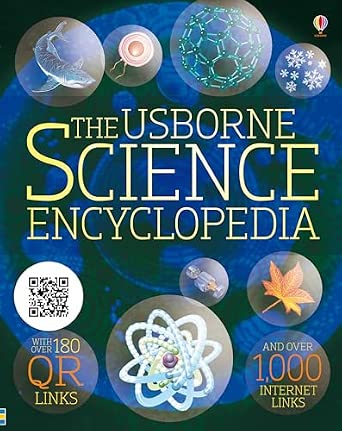 | Best All-Ages Desk Reference | Format: Hardcover | Audience: Students and general readers | Subjects Covered: Physics, chemistry, biology, earth science | VIEW LATEST PRICE | See Our Full Breakdown |
| National Geographic Kids Science Encyclopedia: Atom Smashing, Food Chemistry, Animals, Space, and More! |  | Best for Curious Kids | Format: Hardcover | Audience: Children, roughly ages 7-12 | Publisher: National Geographic Kids | VIEW LATEST PRICE | See Our Full Breakdown |
| The Usborne Illustrated Dictionary of Science |  | Best Quick-Lookup Companion | Format: Paperback / Hardcover | Publisher: Usborne | Type: Illustrated reference dictionary | VIEW LATEST PRICE | See Our Full Breakdown |
| Knowledge Encyclopedia Human Body! Human Anatomy as You’ve Never Seen It Before |  | Best Specialized Pick — Anatomy | Format: Hardcover | Publisher: DK | Subject Focus: Human anatomy and biology | VIEW LATEST PRICE | See Our Full Breakdown |
| First Science Encyclopedia (DK First Reference) |  | Best for Youngest Learners | Format: Hardcover | Publisher: DK | Series: DK First Reference | VIEW LATEST PRICE | See Our Full Breakdown |
| Knowledge Encyclopedia Science! 2nd Edition |  | Best Visual Reference for the Whole Family | Format: Hardcover encyclopedia | Edition: 2nd Edition | Audience: Ages 8 and up through adult | VIEW LATEST PRICE | See Our Full Breakdown |
| Encyclopedia of Science |  | Best Budget Text-First Reference | Format: Print encyclopedia | Edition: Not clearly specified by publisher | Audience: Students and adult enthusiasts | VIEW LATEST PRICE | See Our Full Breakdown |
| The Usborne Science Encyclopedia: An In-depth Guide for Young Scientists Exploring Gravity, Flight, Genes, DNA and More |  | Best for Extending Learning Beyond the Page | Format: Print encyclopedia with digital companion | Audience: Ages 8–12 | Video content: Over 180 video clips | VIEW LATEST PRICE | See Our Full Breakdown |
| Science Knowledge Encyclopedia for Children: Collection of 6 Books (Box Set) |  | Best Box Set for Building a Kid’s Science Library | Format: Box set of 6 books | Audience: Children (age range not specified) | Coverage: Multiple science topics, one per volume | VIEW LATEST PRICE | See Our Full Breakdown |
| educational science reference book | Format | Visual Style | Publisher | Audience |
|---|---|---|---|---|
| Knowledge Encyclopedia Science | Hardcover | Full-color 3D-rendered illustrations | DK Children | — |
| Knowledge Encyclopedia: Invent | Hardcover | Colorful illustrations throughout | Wonder House Books | — |
| Knowledge Encyclopedia | Paperback/Hardcover | Bright, colorful illustrations | Wonder House Books | — |
| DK Science Encyclopedia | Hardcover | — | DK | — |
| The Elements Book: A Visual Pe | Hardcover | Photographic element profiles | DK Children | — |
| Science Encyclopedia | Hardcover | — | — | Students and general readers |
| National Geographic Kids Scien | Hardcover | Full-color photography and illustrations | National Geographic Kids | Children, roughly ages 7-12 |
| The Usborne Illustrated Dictio | Paperback / Hardcover | Definition-supporting diagrams and illustrations | Usborne | Students and science learners |
| Knowledge Encyclopedia Human B | Hardcover | 3D-rendered anatomical cross-sections | DK | All ages interested in the human body |
| First Science Encyclopedia | Hardcover | Large colorful illustrations with simple labels | DK | Early readers, roughly ages 4-7 |
| Knowledge Encyclopedia Science | Hardcover encyclopedia | Full-color 3D-rendered illustrations | — | Ages 8 and up through adult |
| Encyclopedia of Science | Print encyclopedia | Illustrated but text-forward | — | Students and adult enthusiasts |
| The Usborne Science Encycloped | Print encyclopedia with digital companion | — | — | Ages 8–12 |
| Science Knowledge Encyclopedia | Box set of 6 books | — | — | Children (age range not specified) |
More Details on Our Top Picks
Knowledge Encyclopedia Science!
This volume stands out as the strongest all-around science reference in the group, largely because it balances breadth of coverage with the kind of rich visual presentation that keeps middle-grade readers actually turning pages. Where the more specialized The Elements Book goes deep on one topic, this encyclopedia moves confidently across physics, chemistry, biology, and space without feeling thin in any single area. Compared with the DK Science Encyclopedia (Revised Edition), it leans harder on rendered imagery than dense text, which makes it more inviting for visual learners but less useful as a citation-grade reference for school reports. The tradeoff for that polish is depth — a student needing rigorous definitions will outgrow it. For a household that wants one book to cover most science homework questions, this pick makes the most sense.
Pros:- Broad coverage across all major science disciplines
- High-quality rendered illustrations that explain abstract concepts visually
- Accessible writing that bridges elementary and middle school reading levels
- Durable, gift-worthy format suited to repeated home use
Cons:- Explanations stay at survey depth and lack technical detail for advanced students
- Limited user feedback makes it hard to gauge classroom durability
Best for: Families with kids aged 9–14 who want a single visually driven science reference for home study and curiosity browsing
Not ideal for: High school students or adults who need textbook-level rigor and citable detail — this is a survey, not a study text
- Publisher:DK Children
- Format:Hardcover
- Reading Level:Ages 9–14
- Subject Coverage:Physics, chemistry, biology, earth science, space
- Visual Style:Full-color 3D-rendered illustrations
- Reference Type:General science encyclopedia
- Edition:First edition (2nd edition available separately)
Our verdict“Buy this if you want the most versatile family science reference on the shelf; skip it if your student needs exam-level depth.”
Knowledge Encyclopedia: Inventions and Discoveries for Children
Unlike the general-science entries in this lineup, this book takes a narrative angle, telling the story of human ingenuity through key inventions and discoveries. That framing makes it a natural companion rather than a competitor — a child who enjoys the Knowledge Encyclopedia Science! can graduate to this for the human stories behind the science. Compared with the broader DK Science Encyclopedia, it sacrifices disciplinary coverage for chronological storytelling, which is exactly the point: it builds historical context that pure reference books skip. The downside is real — technical detail is light, and older children may find the explanations simplified past their level. This pick makes the most sense for a reader who asks ‘who invented that?’ more often than ‘how does that work?’
Pros:- Engaging narrative approach that frames science as human history
- Attractive illustrations that support the storytelling
- Wide-ranging selection of inventions and discoveries
- Approachable for younger readers in the encyclopedia category
Cons:- Technical and scientific detail is thin by design
- Content skews young and may be outgrown quickly
Best for: Curious kids aged 7–11 who love stories of inventors and want the history behind scientific breakthroughs
Not ideal for: Students needing a core science reference for schoolwork — this covers invention history, not curriculum concepts
- Publisher:Wonder House Books
- Format:Hardcover
- Reading Level:Ages 7–11
- Focus Area:Inventions and discoveries history
- Visual Style:Colorful illustrations throughout
- Reference Type:Thematic children’s encyclopedia
Our verdict“A great second book for a young inventor-obsessed reader, but not a substitute for a core science reference.”
Knowledge Encyclopedia – Science for Children
This title positions itself as the entry-level option of the group, aiming at kids who are a step or two below the audience for Knowledge Encyclopedia Science!. The writing is simpler, the illustrations are brighter, and the goal is concept exposure rather than mastery — a distinction that matters when choosing between the two. Where the flagship Knowledge Encyclopedia assumes some science vocabulary, this one strips concepts down to basics, which is its strength and its ceiling. Compared with the Inventions and Discoveries volume from the same imprint, it covers actual curriculum topics rather than history, making it the more practical first reference. Families should accept the tradeoff that an eager reader will finish it and need something heavier within a year or two.
Pros:- Breaks complex science concepts into truly kid-friendly language
- Colorful illustrations keep early readers engaged
- Lower price point than flagship DK encyclopedias
- Covers core curriculum-friendly topics
Cons:- Content depth is limited and quickly outgrown
- Sparse publisher specifications make classroom planning harder
Best for: Parents of early-elementary kids (ages 6–9) wanting an affordable first science encyclopedia
Not ideal for: Middle schoolers and above — the simplification that helps young kids will frustrate older students
- Publisher:Wonder House Books
- Format:Paperback/Hardcover
- Reading Level:Ages 6–9
- Subject Coverage:Introductory general science
- Visual Style:Bright, colorful illustrations
- Reference Type:Beginner children’s encyclopedia
Our verdict“The right cheap first step into science reference books for young kids, with the expectation that they’ll graduate to a bigger volume.”
DK Science Encyclopedia (Revised Edition)
Compared with the flashier Knowledge Encyclopedia Science!, this revised classic takes the more conventional route: denser text, structured entries, and an alphabetical-topic organization that behaves like an actual reference work rather than a coffee-table browse. That makes it the stronger choice for a student who needs to look something up for homework and write about it — the definitions and explanations carry more weight than the visual-first competitors. The cost is engagement; younger or reluctant readers will find it less inviting than the rendered-image-heavy titles in this lineup, and its age shows in places. For a school-age household that prioritizes function over flair, this model is better suited than the newer visual encyclopedias. Buyers should note the edition ambiguity and lack of recent user feedback before committing.
Pros:- Structured, reference-style organization suited to looking topics up
- More substantial written explanations than visual-first competitors
- Trusted DK pedigree with detailed diagrams
- Works for both students and general adult readers
Cons:- Drier presentation than modern visual encyclopedias
- Older edition — some content and imagery feel dated
Best for: Students aged 10+ who need a proper look-up reference for homework and school reports
Not ideal for: Visual learners and younger kids who need images to stay engaged — the text-heavy layout will lose them
- Publisher:DK
- Format:Hardcover
- Edition:Revised edition
- Reading Level:Ages 10 and up
- Subject Coverage:Full general science curriculum
- Organization:Topic-based reference entries
- Reference Type:Traditional encyclopedia
Our verdict“Pick this over the visual-heavy titles when homework lookup matters more than browsing appeal.”
The Elements Book: A Visual Periodic Table Encyclopedia for Kids
Every other entry here spreads across all of science; this one goes deep instead of wide, walking kids through the periodic table element by element with big, glossy photography. That focus is its superpower — a child struggling with chemistry basics will get more from these visual element profiles than from a paragraph in a general encyclopedia. Compared with Knowledge Encyclopedia Science!, it trades breadth for a genuinely thorough treatment of one discipline, which also means it can’t serve as a household’s only science reference. It pairs well as a second purchase alongside a general title, especially for kids approaching chemistry units at school. The drawback is straightforward: outside of elements and basic chemistry, it offers nothing, so buyers need to know what they’re getting.
Pros:- Element-by-element visual format that makes the periodic table approachable
- Photography of actual samples makes abstract elements concrete
- Strong chemistry preparation for upper-elementary and middle school
- Engaging enough to browse recreationally
Cons:- Narrow scope — chemistry and elements only
- Not usable as a standalone science reference for homework
Best for: Kids aged 8–12 approaching chemistry who benefit from visual, element-by-element learning
Not ideal for: Anyone wanting general science coverage — this is chemistry-only and won’t answer questions about biology or space
- Publisher:DK Children
- Format:Hardcover
- Reading Level:Ages 8–12
- Focus Area:Periodic table and elements
- Visual Style:Photographic element profiles
- Organization:Element-by-element entries
- Reference Type:Subject-specific visual encyclopedia
Our verdict“An excellent specialized second book for chemistry-curious kids, provided a general encyclopedia already sits on the shelf.”
Science Encyclopedia
This encyclopedia earns its place as the most versatile family reference in this roundup because it serves two audiences at once: middle-grade students working on school projects and adults who want a refresher on scientific concepts. Compared with the National Geographic Kids Science Encyclopedia, which leans heavily into playful presentation, this volume takes a more balanced editorial tone, trading some of the fun-factor for meatier explanations across physics, chemistry, and biology. The generous use of illustrations keeps dense material approachable without dumbing it down. The main tradeoff is documentation: with no clear edition or publication details, buyers can’t easily verify how current the coverage is, which matters for fast-moving fields like space science. For a household that wants one book instead of three, this pick makes more sense than buying separate titles for different age groups.
Pros:- Broad coverage across all major scientific fields in one volume
- Detailed explanations that work for both students and adults
- Illustrations support the text without replacing it
- Tone stays serious enough for school reports
Cons:- No edition or publication details available to confirm currency
- No user reviews or ratings to gauge real-world reception
- Less engaging for younger children than kid-focused competitors
Best for: Families with multiple kids at different reading levels who want a single shared reference book
Not ideal for: Buyers who need verifiable, up-to-date coverage of fast-changing science topics, since edition information is unclear
- Format:Hardcover
- Audience:Students and general readers
- Subjects Covered:Physics, chemistry, biology, earth science
- Illustrations:Included throughout
- Purpose:General desk reference and school support
- Reading Level:Middle grade and up
Our verdict“A sensible single-purchase reference for households that need breadth across ages, provided you’re not fussy about edition dates.”
National Geographic Kids Science Encyclopedia: Atom Smashing, Food Chemistry, Animals, Space, and More!
Where most encyclopedias in this lineup inform, this one recruits kids into science. National Geographic’s signature photography and fun-fact formatting make topics like atom smashing and food chemistry feel like discoveries rather than homework. Compared with the Science Encyclopedia, it sacrifices depth for engagement — a fair trade if your goal is sparking curiosity rather than citing sources for a report. The topic range is wider than the anatomy-focused Knowledge Encyclopedia Human Body!, making it the better first science book for a child whose interests haven’t settled yet. The real weakness is scattered product data: sparse details and no ratings make pre-purchase research harder than it should be. But if the mission is getting an eight-year-old to voluntarily open a science book, this format has few rivals in the roundup.
Pros:- Exceptional visual appeal with signature National Geographic photography
- Fun facts and playful framing keep reluctant readers engaged
- Unusually wide topic mix, from particle physics to zoology
- Accessible to independent readers around age 7 and up
Cons:- Light on depth — better for browsing than studying
- Minimal product details and no ratings available for buyers
- Kids may outgrow it within a couple of years
Best for: Parents of elementary-school kids who need a gateway book that makes science feel like entertainment
Not ideal for: Students who need rigorous, citation-worthy reference material for assignments
- Format:Hardcover
- Audience:Children, roughly ages 7-12
- Publisher:National Geographic Kids
- Subjects Covered:Atoms, food chemistry, animals, space, and more
- Visual Style:Full-color photography and illustrations
- Special Features:Fun facts and kid-friendly formatting
Our verdict“The best choice in this batch for turning a curious kid into an excited one, though serious students will need more depth elsewhere.”
The Usborne Illustrated Dictionary of Science
Not every science book needs to be read cover to cover, and that’s the point of this one. Usborne’s dictionary format makes it the fastest way in this roundup to find what a quark or an enzyme actually is — a genuine advantage over narrative encyclopedias like the Science Encyclopedia, where the answer is buried inside a longer chapter. The illustrations are functional rather than flashy, clarifying terms instead of decorating pages. Compared with the National Geographic Kids Science Encyclopedia, definitions here are tighter and more precise, which suits homework moments when a student needs clarity in thirty seconds. The tradeoff is structural: a dictionary can’t build understanding the way a chapter-based book can, and advanced students will hit its ceiling quickly on topics like quantum mechanics or organic chemistry. Pair it with a fuller encyclopedia and it shines; on its own, it’s a supplement, not a curriculum.
Pros:- Instant lookups — the fastest format for homework questions
- Clear, precise definitions with supporting illustrations
- Compact enough to keep on a desk permanently
- Covers core terminology across physics, chemistry, and biology
Cons:- Definitions too brief for advanced coursework
- No digital or multimedia companion resources
- Works best as a supplement rather than a standalone reference
Best for: Middle and high school students who need fast, clear definitions during homework and revision
Not ideal for: Learners wanting deep conceptual explanations, since entries are deliberately brief
- Format:Paperback / Hardcover
- Publisher:Usborne
- Type:Illustrated reference dictionary
- Audience:Students and science learners
- Subjects Covered:Scientific terms across physics, chemistry, biology
- Visual Style:Definition-supporting diagrams and illustrations
Our verdict“A smart second purchase alongside a full encyclopedia — ideal for quick answers, insufficient as a sole reference.”
Knowledge Encyclopedia Human Body! Human Anatomy as You’ve Never Seen It Before
This is the only title in this batch that goes deep on a single subject, and that focus pays off. Where the Science Encyclopedia spreads itself across every discipline, this DK volume dedicates every page to human anatomy, and the rendered cross-sections do what flat diagrams in general references can’t — showing organs, systems, and structures from angles that make spatial relationships obvious. It sits comfortably between a picture book and a textbook: accessible to a curious ten-year-old, still useful to a teen considering biology coursework. Compared with the Usborne Illustrated Dictionary of Science, it trades quick lookups for narrative understanding, walking readers through how the body works rather than just naming parts. The drawback is the flip side of specialization — it covers nothing outside human biology, and readers already past intro-level anatomy will find the explanations too basic. As a companion to a general encyclopedia, though, it’s the strongest deep-dive in the lineup.
Pros:- Stunning 3D-style visual renders that clarify complex anatomy
- Deep single-subject coverage unmatched by general encyclopedias here
- Accessible to a wide age range, from curious kids to teens
- Explains systems functionally, not just label-by-label
Cons:- Covers only human biology — no chemistry, physics, or earth science
- Too basic for pre-med or advanced biology readers
- Sparse technical and edition details listed for buyers
Best for: Kids and teens fascinated by how the body works, or students wanting a head start on biology
Not ideal for: Buyers seeking general science coverage, and advanced anatomy students who need textbook rigor
- Format:Hardcover
- Publisher:DK
- Subject Focus:Human anatomy and biology
- Audience:All ages interested in the human body
- Visual Style:3D-rendered anatomical cross-sections
- Series:Knowledge Encyclopedia
Our verdict“The obvious choice for anatomy-obsessed readers, as long as it’s bought alongside a general science reference rather than instead of one.”
First Science Encyclopedia (DK First Reference)
Every roundup needs an entry point for the youngest readers, and this is it. DK’s First Science Encyclopedia is built for children who are just starting to read independently, with short sentences, big pictures, and vocabulary a five-year-old can handle. The comparison with the National Geographic Kids Science Encyclopedia is instructive: both target children, but this one skews younger and simpler, trading Nat Geo’s dazzling facts for a gentler pace that won’t overwhelm early readers. Against the Usborne Illustrated Dictionary of Science, it reads more like a browse-and-discover book than a lookup tool. The honest limitation is longevity — the scientific depth is deliberately thin, and by age eight or nine most kids will be ready to graduate to the fuller encyclopedias elsewhere in this guide. Buy it as a first science book, not a last one, and it does its job well.
Pros:- Language and layout genuinely matched to early readers
- Bright, friendly illustrations on every spread
- Builds science vocabulary gently without overwhelming
- Encourages independent browsing and curiosity
Cons:- Very little scientific depth, even for older elementary kids
- Short usable lifespan before children outgrow it
- Not useful for school reports or reference needs
Best for: Parents of children roughly ages 4-7 who want a gentle, readable first science book
Not ideal for: Readers eight and up, who will find the content too simple and quickly outgrow it
- Format:Hardcover
- Publisher:DK
- Series:DK First Reference
- Audience:Early readers, roughly ages 4-7
- Reading Level:Beginner / early independent reader
- Visual Style:Large colorful illustrations with simple labels
Our verdict“A great first science book for the youngest readers in the house — just plan on upgrading to a fuller encyclopedia within a few years.”
Knowledge Encyclopedia Science! 2nd Edition
Knowledge Encyclopedia Science! 2nd Edition earns its place as the visual centerpiece of a home science shelf. Where The Usborne Science Encyclopedia leans on digital extras and Encyclopedia of Science leans on text density, this one bets everything on rendered illustrations that make abstract concepts — atoms, black holes, plate tectonics — legible at a glance. That makes it the rare reference a 9-year-old and a parent can genuinely share.
The tradeoff is depth. Compared with the DK Science Encyclopedia (Revised Edition), explanations are broader and lighter, so a student writing a report may need a second, denser source. And because the publisher doesn’t publish detailed edition notes, buyers upgrading from the first edition won’t easily know what changed. This pick makes the most sense for families who want one beautiful book that covers everything at an accessible level rather than the most rigorous treatment of any single topic.
Pros:- Extensive topic coverage across physics, chemistry, biology, and space in one volume
- High-quality rendered illustrations that explain concepts without dense text
- Accessible enough for younger readers while still engaging for adults
- Updated second-edition content reflects more current science than older one-volume encyclopedias
Cons:- Explanations prioritize visual appeal over academic depth
- Publisher provides little detail on what the second edition actually changes, making an upgrade decision guesswork
Best for: Families with mixed-age kids (roughly 8–14) who want a single visually driven science book everyone can browse
Not ideal for: Middle and high school students who need citation-grade depth — the explanations stay intentionally broad
- Format:Hardcover encyclopedia
- Edition:2nd Edition
- Audience:Ages 8 and up through adult
- Coverage:Broad — physics, chemistry, biology, earth and space science
- Visual style:Full-color 3D-rendered illustrations
- Use case:Home reference and casual browsing
Our verdict“Buy this if you want the most browsable, family-friendly one-volume science reference on the list — skip it if your child needs textbook-level rigor.”
Encyclopedia of Science
Encyclopedia of Science takes the opposite approach from Knowledge Encyclopedia Science!: less spectacle, more straightforward explanation. For a student who actually needs to read and absorb information rather than flip through eye-catching spreads, this older, denser format holds up well — and secondhand copies are typically the cheapest substantial science reference you can buy.
The catch is age. Because no edition or publication date is clearly specified, some scientific content predates recent discoveries, something the National Geographic Kids Science Encyclopedia handles better with fresher framing. There’s also no companion web content, so compared with The Usborne Science Encyclopedia and its 1,000 linked websites, this is a closed system — what’s on the page is all you get. It stands out for value and readability, not for currency or interactivity.
Pros:- Detailed, informative entries that reward actual reading rather than skimming
- Works equally well for students and adult enthusiasts refreshing their knowledge
- Widely available at low prices, often the best cost-per-topic on the market
- Reliable alphabetical reference structure for looking up specific terms
Cons:- Unclear edition and publication date means some content may be dated
- No multimedia or interactive companion content unlike newer competitors
Best for: Budget-conscious buyers and classical homeschoolers who want a text-first A–Z reference without paying for glossy production
Not ideal for: Families wanting current science or digital extensions — the content skews older and has no online component
- Format:Print encyclopedia
- Edition:Not clearly specified by publisher
- Audience:Students and adult enthusiasts
- Coverage:Broad multi-discipline science reference
- Visual style:Illustrated but text-forward
- Digital content:None included
- Positioning:Value-oriented general reference
Our verdict“The smart pick if you want maximum science content per dollar and don’t mind older material — pass if currency and digital resources matter to you.”
The Usborne Science Encyclopedia: An In-depth Guide for Young Scientists Exploring Gravity, Flight, Genes, DNA and More
What separates The Usborne Science Encyclopedia from every other book in this lineup is its digital backbone: over 180 video clips and roughly 1,000 vetted websites turn a printed reference into a launchpad. Compared with Knowledge Encyclopedia Science!, which ends at its back cover, this one keeps growing — a child fascinated by DNA can watch a clip, then follow curated links instead of wandering into unfiltered search results.
The tradeoff is dependence. QR codes and link libraries can break or shift over time, so the book ages differently than a self-contained volume like the DK Science Encyclopedia. It’s also better suited to guided discovery than quick lookups — the topic selection (gravity, flight, genes) is curated for curiosity rather than exhaustive coverage. Families without easy tablet or computer access lose much of what they’re paying for.
Pros:- 180+ video clips demonstrate concepts that static images can’t
- 1,000 curated web links provide safe, structured paths for deeper research
- Topic selection (gravity, flight, genes, DNA) hits high-interest areas for young scientists
- Encourages independent exploration and research skills
Cons:- Digital content depends on links staying live, so longevity is less certain than a self-contained book
- No customer ratings or pricing transparency make it harder to evaluate before buying
Best for: Curious kids aged roughly 8–12 with tablet or computer access who want to explore topics beyond the printed page
Not ideal for: Households limiting screen time or lacking internet access, since much of the value lives in the digital extras
- Format:Print encyclopedia with digital companion
- Audience:Ages 8–12
- Video content:Over 180 video clips
- Web resources:1,000 recommended websites
- Key topics:Gravity, flight, genes, DNA, and more
- Use case:Guided exploration and independent study
Our verdict“The clear choice for screen-allowed families who want a science book that opens onto the internet safely — skip it if you want a purely offline reference.”
Science Knowledge Encyclopedia for Children: Collection of 6 Books (Box Set)
Rather than one giant volume, Science Knowledge Encyclopedia for Children splits science across six themed books — and that format choice matters. A child can carry one slim book to the car or bedtime without wrestling a coffee-table tome like Knowledge Encyclopedia Science!, and splitting topics into volumes often makes a large subject feel less intimidating for reluctant readers.
But this is the least transparent product in the batch. Unlike the Usborne Science Encyclopedia with its documented video and web extras, there’s little published detail on what the six books actually contain, no stated age range, and no customer reviews to gauge quality. Compared with single-volume options from DK or National Geographic, you’re trading known, proven content for format and quantity. It makes the most sense for gift-givers who want an impressive shelf-ready set, and least sense for buyers who need to verify reading level before purchasing.
Pros:- Six separate books make each topic portable and less overwhelming than a single large volume
- Boxed presentation works well as a gift or starter library
- Breadth across six volumes can cover more ground than comparably priced single books
- Themed split encourages kids to finish one book before starting the next
Cons:- No detailed information about the actual contents of the six books
- No customer reviews or ratings to confirm quality
- Age range is unstated, making it hard to match to a specific child
Best for: Parents and gift-givers who want a multi-book set that introduces young readers to science one manageable topic at a time
Not ideal for: Buyers who need verified reading level and content quality — the vague age range and absent reviews make this a gamble
- Format:Box set of 6 books
- Audience:Children (age range not specified)
- Coverage:Multiple science topics, one per volume
- Presentation:Gift-ready boxed collection
- Digital content:None included
- Review data:No customer ratings available
Our verdict“A reasonable pick for a giftable multi-book starter set, but if you need confidence about reading level and content, a single reviewed encyclopedia is the safer buy.”

How We Picked
I evaluated these 14 titles against five criteria that actually predict whether a science reference book gets used or sits on a shelf. Age range and longevity came first: a book that spans roughly ages 8-14 delivers far better value than one suited to a single grade level. Depth and accuracy mattered next — I favored titles with clear curriculum alignment, updated editions, and content vetted by recognizable publishers or scientific consultants. Visual design was judged not on prettiness alone but on whether diagrams, cross-sections, and photo spreads genuinely aid comprehension of abstract concepts like DNA or atomic structure.
I also weighed navigation and usability — indexing, glossaries, and logical chapter structure determine whether a child can actually look things up independently. Finally, I considered price per year of use, which is why a more expensive hardcover often outranked a cheaper paperback that gets outgrown quickly. Products are ranked by how well they combine these factors, with role-based picks (best value, best for beginners, best premium) called out where a specific buyer type is better served by a lower-ranked title.
| educational science reference book | Publisher |
|---|---|
| Knowledge Encyclopedia Science | DK Children |
| Knowledge Encyclopedia: Invent | Wonder House Books |
| Knowledge Encyclopedia | Wonder House Books |
| DK Science Encyclopedia | DK |
| The Elements Book: A Visual Pe | DK Children |
| Science Encyclopedia | — |
| National Geographic Kids Scien | National Geographic Kids |
| The Usborne Illustrated Dictio | Usborne |
| Knowledge Encyclopedia Human B | DK |
| First Science Encyclopedia | DK |
| Knowledge Encyclopedia Science | — |
| Encyclopedia of Science | — |
| The Usborne Science Encycloped | — |
| Science Knowledge Encyclopedia | — |
Factors to Consider When Choosing Educational Science Reference Books
Before choosing a science reference book, it helps to understand the broader landscape — this category is full of near-identical titles, overlapping editions, and age-range claims that don’t match the actual content. These are the factors that separate a book that gets read for years from one that gathers dust.Match the Book to the Child’s Reading Level, Not Their Grade
Publishers label most of these books for broad ranges like ‘8-12’, but reading level varies enormously within that span. A visually driven encyclopedia with short captions suits a strong visual learner at age 8, while a text-dense reference like the Usborne dictionary style assumes comfortable independent reading closer to age 11 or 12. The most common mistake I see is buying up — parents choose a ‘serious’ reference a child will grow into, and the child never opens it because the text walls feel like homework. A better approach is to buy for the child’s current comfort level and plan to upgrade in two to three years, since mid-range encyclopedias cost less than a single tutoring session. If a child reads well above grade level, that’s the one scenario where buying the denser reference early makes sense.
Beware of Duplicate Editions and Near-Identical Titles
This roundup alone contains three variations of ‘Knowledge Encyclopedia Science’ at different editions and price points, plus similarly generic titles like ‘Science Encyclopedia’ and ‘Encyclopedia of Science’ that sound interchangeable. Edition matters more than most buyers realize: a revised edition can mean updated astronomy and climate content, better diagrams, and corrected facts, while an older edition may teach outdated planetary classifications or pre-2015 genetics framing. Before purchasing, check the publication year, page count, and whether the listing specifies the edition number. Retailer listings frequently mix reviews across editions, so a five-star rating may reflect a version you’re not actually buying. When in doubt, the newer edition is almost always worth the small price difference for a science reference, since facts in this field age faster than in history or geography titles.
General Encyclopedia vs. Single-Subject Depth
General science encyclopedias cover physics, chemistry, biology, and earth science in one volume — great for homework across subjects, but each topic gets maybe 20-30 pages. Single-subject books like a human body encyclopedia or a visual periodic table guide devote their entire page count to one area, going far deeper than any general reference can. The mistake to avoid is treating these as substitutes. A family on a budget should almost always start with one strong general encyclopedia, then add single-subject titles based on the child’s actual interests — a kid obsessed with chemistry will outgrow the chemistry chapter of a general encyclopedia within months. Single-subject books also make better gifts because they feel like a deep exploration rather than a school supply.
Reference Longevity: How Long Will It Actually Stay Useful?
I’ve found that the realistic useful life of a children’s science encyclopedia is three to five years, driven less by outdated facts than by reading-level growth. Younger-skewing titles with large photos and minimal text are typically abandoned by age 10, while middle-grade references stay relevant into early high school. Hardcovers and box sets cost more upfront but usually survive multiple children and heavy homework use — a real factor if you have siblings close in age. One tradeoff worth knowing: internet-linked books (several Usborne titles include curated link portals) can extend usefulness, since online content updates even as the print pages age. However, they require supervised internet access, which not every household wants tied to homework time.
Curriculum Alignment and Homework Usability
Not all encyclopedias are organized the way school science is taught. Some organize by theme or spectacle (big animals, explosions, space wonders), which makes for great browsing but frustrating homework lookup. Others follow discipline-based chapters with proper indexing and glossaries, letting a child find ‘photosynthesis’ or ‘states of matter’ in seconds. If the book’s main job is supporting schoolwork, check for a detailed index, a glossary, and clearly labeled diagrams — features that vary more than price in this category. Reference-style dictionaries of science are the strongest here, which is why they earn a spot in this lineup despite being the least visually exciting options. Browsing-first books still have a place, but as interest builders rather than study tools.
Price, Format, and Realistic Shelf Space
Prices in this category cluster between roughly $15 and $40 for single volumes, with box sets running higher. What changes the math is durability and per-year cost: a $30 hardcover used for five years beats a $15 paperback outgrown in two. Box sets look like strong value on paper — and they are on cost-per-page — but they demand genuine shelf space and can overwhelm a younger child who does better with one book at a time. Paperbacks with tight spines also crack with heavy reference use, which matters if the book lives on a homework desk rather than a display shelf. My general rule: for a first science reference, buy one well-chosen mid-price hardcover rather than a multi-volume set, and expand only after seeing which subjects the child returns to.
Frequently Asked Questions
What age is a science encyclopedia actually best for, and when should I buy one?
Most general science encyclopedias in this roundup genuinely suit ages 8-12, though the visual-first titles skew closer to 7-10 and the dictionary-style references work best from 11 up. The right moment to buy is when a child starts asking questions that outpace picture books — usually around second or third grade. Buying too early rarely pays off, because the vocabulary and text density become frustrating before they become interesting. If you’re choosing between a younger-skewing visual encyclopedia and a denser reference, default to the visual one for a first science book; the depth-focused reference makes more sense as a second purchase around age 10 or 11.
Are print science encyclopedias still worth buying when kids can search online?
Yes, and for a specific reason: print reference books teach structured browsing, not just fact retrieval. When a child flips to ‘the human body’ chapter, they encounter adjacent concepts — skeletal systems next to muscle function — that a search engine never surfaces, and this builds connected understanding rather than isolated answers. Print also removes the distraction risk entirely, which matters enormously during homework time. That said, print does age: space and climate science content from older editions can be a decade out of date. The best strategy is a current-edition print encyclopedia for foundation concepts, paired with supervised online searches for fast-moving topics like astronomy discoveries.
Should I buy a general encyclopedia or a single-subject book like a periodic table or human body encyclopedia?
Start with a general encyclopedia unless the child already shows a strong, sustained interest in one subject. A general reference covers homework across physics, chemistry, biology, and earth science, and it helps you discover which topics genuinely captivate your child before you invest further. Single-subject books are depth plays: a visual periodic table guide teaches chemistry far beyond any general encyclopedia’s chemistry chapter, but it’s useless the night homework covers ecosystems. Families with two or more children often get the best of both by keeping one general encyclopedia shared and giving single-subject titles as individual gifts matched to each child’s interests.
The Knowledge Encyclopedia Science editions look identical online — how do I know which one to get?
This is the single most confusing naming situation in the category, because the similar titles hide real differences in edition year, page count, and content updates. Check the publication date and edition number in the listing details, not just the title — the 2nd Edition generally reflects updated science content and improved layouts compared with the original. Also verify page count and dimensions, since some listings are for condensed or abridged versions at a lower price. Reviews are frequently merged across editions, so a complaint about outdated content may refer to the older printing rather than the one you’re buying. When the price gap is under $10, the newest edition is the safer choice for a science reference.
Are the six-book box sets actually better value than a single encyclopedia?
On pure cost-per-page, yes — the Science Knowledge Encyclopedia for Children box set delivers more content per dollar than any single volume in this lineup. But value depends on use, not page count. A single well-matched encyclopedia that a child reads cover to cover beats six volumes that sit unread because the reading level or subject split doesn’t match their interests. Box sets work best for families with multiple children at different ages, or for kids who like consuming subjects one at a time. They also demand real shelf space and, often, thinner per-volume construction. My advice: choose the box set only if you already know the child engages with science books regularly; otherwise, start with one strong single volume.
Conclusion
For most families, the DK Science Encyclopedia (Revised Edition) is the best overall choice — it covers the most ground, looks current, and stays useful across the widest age range. For best value, the Knowledge Encyclopedia Science! 2nd Edition delivers near-premium content depth at a mid-range price, edging out cheaper paperbacks that get outgrown quickly. The best premium option is the Science Knowledge Encyclopedia for Children six-book box set, which rewards the investment with subject-by-subject depth — ideal for households with multiple kids or a genuinely science-obsessed child. For beginners and younger readers (roughly ages 6-9), the First Science Encyclopedia (DK First Reference) and the National Geographic Kids Science Encyclopedia are the gentlest entry points, with the Nat Geo title especially strong for reluctant readers. For specific needs: choose the Usborne Illustrated Dictionary of Science for exam support and older students, the Knowledge Encyclopedia Human Body! for anatomy-obsessed kids, and The Elements Book for a child hooked on chemistry. Whatever you pick, match the book to the child in front of you today — the right science reference is the one that actually gets opened.
Halloween Picks
halloween
As an affiliate, we earn on qualifying purchases.