Choosing the right student scientific calculator can make a significant difference in exam performance and daily classwork. The best overall pick, the Texas Instruments TI-36X Pro, offers advanced functions suitable for high-level coursework without overwhelming beginners. For those seeking affordability, the Texas Instruments TI-30XIIS provides reliable basic features at a lower price. Meanwhile, the Texas Instruments TI-34 MultiView stands out with its multi-line display, ideal for visual learners. Many students face tough choices between advanced features, ease of use, and budget constraints. Keep reading for a detailed breakdown of each option and what makes them suitable for different needs.
Key Takeaways
- The top-ranked calculator, Texas Instruments TI-36X Pro, balances advanced functions with ease of use, making it ideal for high school and college students in STEM fields.
- Budget-friendly options like the TI-30XIIS remain reliable for basic calculations, but lack features needed for more complex coursework.
- Multi-line displays, as seen on the TI-34 MultiView, enhance usability for algebra and calculus, but often come at a slightly higher cost.
- Color-coded or specialized designs, such as the pink TI-30X IIS, are more about personalization than performance, and should be considered secondary.
- Choosing a calculator with exam approval or non-graphing status is crucial for standardized tests; not all models meet these requirements.
| Texas Instruments TI-36X Pro Engineering/Scientific Calculator |  | Best Overall for Versatile High School and College Use | Display: MultiView | MathPrint: Yes | Dimensions: 9.7 inches | VIEW LATEST PRICE | See Our Full Breakdown |
| Texas Instruments TI-34 MultiView Scientific Calculator |  | Best for Middle School and Standard Exams | Display: Four-line MultiView | Features: Advanced fractions, table of values | Suitable for: Middle school math, SAT, ACT | VIEW LATEST PRICE | See Our Full Breakdown |
| Texas Instruments TI-30XIIS Scientific Calculator, Raspberry Small | 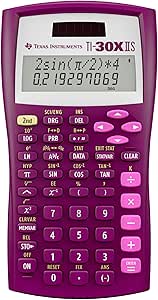 | Best Compact Scientific for On-the-Go Use | Display: Two-line | Power: Solar and battery | Functions: Statistics, scientific, engineering | VIEW LATEST PRICE | See Our Full Breakdown |
| Texas Instruments TI-30Xa Scientific Calculator |  | Best Budget-Friendly Scientific Calculator | Display: 10-digit | Power: Battery | Includes: Slide case | VIEW LATEST PRICE | See Our Full Breakdown |
| SC-216 Non-Graphing Scientific Calculator, Middle/High School, Fraction Key |  | Best for Standardized Tests and Versatile School Use | Functions: 240 | Display: 12-digit HD | Power: 2 AAA batteries | VIEW LATEST PRICE | See Our Full Breakdown |
| Texas Instruments TI-30X IIS 2-Line Scientific Calculator, Pink |  | Best for Basic Scientific Use with Clear Display | Display: 2-line | Power: Solar and battery powered | Functions: Statistics, scientific, engineering, antilogs, logs | VIEW LATEST PRICE | See Our Full Breakdown |
| Texas Instruments TI-30XS MultiView Scientific Calculator |  | Best for Comparing Multiple Calculations Simultaneously | Display: Four-line MultiView | Supports math expressions: Yes | Scientific notation: Yes | VIEW LATEST PRICE | See Our Full Breakdown |
| Texas Instruments TI-30XIIS Scientific Calculator |  | Best for Standardized Test Preparation and High School Use | Power: Solar and battery powered | Display: Two-line | Functions: Scientific, trigonometric, statistical, fraction conversions | VIEW LATEST PRICE | See Our Full Breakdown |
| student scientific calculator | Display | Power | Functions |
|---|---|---|---|
| Texas Instruments TI-36X Pro E | MultiView | — | — |
| Texas Instruments TI-34 MultiV | Four-line MultiView | — | — |
| Texas Instruments TI-30XIIS Sc | Two-line | Solar and battery | Statistics, scientific, engineering |
| Texas Instruments TI-30Xa Scie | 10-digit | Battery | Trigonometry, logs, roots, powers |
| SC-216 Non-Graphing Scientific | 12-digit HD | 2 AAA batteries | 240 |
| Texas Instruments TI-30X IIS 2 | 2-line | Solar and battery powered | Statistics, scientific, engineering, antilogs, logs |
| Texas Instruments TI-30XS Mult | Four-line MultiView | — | — |
| Texas Instruments TI-30XIIS Sc | Two-line | Solar and battery powered | Scientific, trigonometric, statistical, fraction conversions |
More Details on Our Top Picks
Texas Instruments TI-36X Pro Engineering/Scientific Calculator
The TI-36X Pro stands out for its ability to handle a wide range of math and science tasks without the complexity of graphing. Its MultiView display allows students to compare multiple calculations side-by-side, which is a major advantage over the simpler TI-30X series. The MathPrint feature displays expressions as they appear in textbooks, reducing errors and improving understanding. However, its lack of graphing functions means it can’t replace a graphing calculator for advanced courses. Compared to the TI-34 MultiView, it offers more advanced features but at a slightly higher price and complexity, making it better suited for students who need more power without the expense of a graphing calculator.
Pros:- MultiView display for comparing calculations side-by-side
- Textbook-style MathPrint expressions for easier input
- Supports a variety of scientific and engineering functions
Cons:- No graphing capabilities for visual data analysis
- More complex interface may be intimidating for beginners
Best for: High school and college students in STEM courses who need advanced scientific functions and multiple calculation views
Not ideal for: Students in courses requiring graphing capabilities or those seeking a simple, budget-friendly calculator
- Display:MultiView
- MathPrint:Yes
- Dimensions:9.7 inches
- Color:Black
- Suitable for:High school to college courses in math and science
Our verdict“This calculator is ideal for students who want comprehensive scientific functions without the complexity of graphing tools.”
Texas Instruments TI-34 MultiView Scientific Calculator
The TI-34 MultiView makes a strong case as an intermediate calculator for middle school and early high school courses. Its four-line MultiView display supports comparing multiple calculations or results, which is a step up from basic single-line models. The MathPrint feature helps students visualize expressions like fractions and algebraic formulas, easing the transition to more complex math. Compared to the TI-30Xa, it offers more display space and better expression input, but it doesn’t have graphing capabilities or advanced functions needed for calculus. This makes it perfect for standardized tests like the SAT or ACT, where fundamental scientific functions are sufficient, but it may fall short in advanced classes.
Pros:- Four-line MultiView display for comparison
- Clear MathPrint expressions and fractions
- Includes features for exploring functions and patterns
Cons:- Limited to intermediate math, not suitable for advanced calculus
- No graphing or programmable functions
Best for: Middle school students and those preparing for standardized tests needing clear display and multi-step comparison
Not ideal for: High school students in calculus or courses requiring graphing or advanced functions
- Display:Four-line MultiView
- Features:Advanced fractions, table of values
- Suitable for:Middle school math, SAT, ACT
Our verdict“This calculator offers a balanced mix of features for middle school and early high school learners focused on exam prep.”
Texas Instruments TI-30XIIS Scientific Calculator, Raspberry Small
The TI-30XIIS Raspberry is a compact, portable scientific calculator ideal for students who need a simple yet capable device. Its two-line display allows entry and results to be viewed simultaneously, which is helpful during quick calculations. While it supports a broad set of functions, including trigonometry and engineering calculations, it doesn’t include graphing or programming features, limiting its use for more advanced coursework. Compared to larger models like the TI-36X Pro, it sacrifices some functionality for portability. Its small size makes it perfect for exams or fieldwork, but less comfortable for extended use or complex calculations.
Pros:- Two-line display for simultaneous entry and results
- Supports scientific and engineering functions
- Solar and battery power for extended usability
Cons:- Limited scientific functions compared to larger models
- Small size may hinder use for prolonged periods
Best for: Students who need a lightweight, basic scientific calculator for exams or quick calculations
Not ideal for: Students in calculus or engineering programs requiring advanced features or graphing
- Display:Two-line
- Power:Solar and battery
- Functions:Statistics, scientific, engineering
- Modes:Degrees, radians, grads
- Warranty:1 year
Our verdict“This calculator suits students seeking portability for everyday scientific calculations without advanced features.”
Texas Instruments TI-30Xa Scientific Calculator
The TI-30Xa remains a budget-friendly staple for students needing basic scientific functions. Its 10-digit display is sufficient for most algebra and science tasks, and its straightforward layout makes it easy to use for beginners. Compared to the TI-30XIIS, it offers fewer functions and display digits, but it still covers essential calculations like roots, logs, and trigonometry. While it lacks solar power, the battery operation keeps it simple and reliable. This calculator is ideal for students in entry-level courses or those who want a straightforward device, but it doesn’t support advanced functions or graphing for higher-level classes.
Pros:- Simple, easy-to-use interface
- Performs common scientific calculations reliably
- Compact with a protective slide case
Cons:- Limited to basic scientific functions
- No solar power option
Best for: Beginners or students in basic science and math courses needing a simple, affordable calculator
Not ideal for: Students in advanced science, engineering, or calculus courses requiring more features
- Display:10-digit
- Power:Battery
- Includes:Slide case
- Functions:Trigonometry, logs, roots, powers
Our verdict“This calculator provides reliable basic scientific functions at an affordable price, perfect for entry-level coursework.”
SC-216 Non-Graphing Scientific Calculator, Middle/High School, Fraction Key
The SC-216 is designed for students needing a durable, feature-rich calculator for exams like the SAT and classroom use. Its 12-digit HD display ensures clear viewing of complex calculations, and with 240 functions, it covers trigonometry, statistics, algebra, and more. The inclusion of a dedicated fraction key and multiple angle modes makes it versatile for a variety of math tasks. Compared to the TI-30Xa, it offers more functions and a larger display, but it remains non-programmable and lacks graphing. Its lightweight and rugged design make it suitable for daily use, though it might be overkill for basic courses or students who prefer simple devices.
Pros:- Comprehensive 240 functions for various math topics
- Clear 12-digit HD display for accuracy
- Durable, lightweight design for portability
Cons:- Non-programmable, limiting advanced use
- Requires AAA batteries that need replacement
Best for: Students preparing for standardized tests and needing a multi-functional, durable calculator
Not ideal for: Students in calculus or engineering who require graphing or programmable features
- Functions:240
- Display:12-digit HD
- Power:2 AAA batteries
- Warranty:6 months
- Modes:Degrees, Radians, Grads
Our verdict“This calculator offers a well-rounded set of features for exam-focused students who need reliability and versatility without graphing capabilities.”
Texas Instruments TI-30X IIS 2-Line Scientific Calculator, Pink
The TI-30X IIS stands out for its two-line display, allowing students to see their input and results simultaneously, which makes it easier to double-check calculations. Compared with the TI-30XIIS, it offers similar scientific functions but in a slightly more compact form, though its limited features mean it won’t satisfy those needing advanced graphing or programmability. Its solar and battery power ensure reliable operation, but the pink color might not appeal to all users. This calculator is ideal for students who want a straightforward, professional-grade device without the complexity of higher-end models.
Pros:- Two-line display simplifies input and verification
- Supports a wide array of scientific and statistical functions
- Solar and battery power for consistent reliability
Cons:- Limited to basic scientific functions, lacking graphing or programming features
- Pink color may not appeal to all users or professional settings
Best for: Middle school and early high school students who need a reliable, no-frills scientific calculator for classwork and exams.
Not ideal for: Advanced science or engineering students requiring graphing, programming, or higher-level functions.
- Display:2-line
- Power:Solar and battery powered
- Functions:Statistics, scientific, engineering, antilogs, logs
- Angles:Degrees, radians, grads
- Warranty:1 year
Our verdict“This calculator offers clear, straightforward scientific functions suitable for middle and high school students focused on standard coursework.”
Texas Instruments TI-30XS MultiView Scientific Calculator
The TI-30XS MultiView excels at displaying multiple calculations side-by-side thanks to its four-line display, making it ideal for students juggling complex problems or exploring science experiments. Unlike the TI-30X IIS, which shows only one calculation at a time, the MultiView’s format supports comparison and step-by-step review, but it lacks advanced features like graphing or programming, limiting its use to high school level courses. Its support for math expressions and scientific notation makes it versatile, though it’s primarily designed for classroom use rather than professional or advanced scientific work. This model is well-suited for students who need to visualize multiple steps or compare results easily.
Pros:- Four-line display enables side-by-side comparison
- Displays math expressions in textbook format
- Supports scientific notation and table of values
Cons:- Limited to basic scientific functions, no graphing or programming
- Designed mainly for high school coursework, not advanced scientific research
Best for: High school students in math and science classes who benefit from multiple calculation views and expression display.
Not ideal for: Students requiring graphing, programming, or advanced calculus capabilities, as it’s mainly for basic scientific tasks.
- Display:Four-line MultiView
- Supports math expressions:Yes
- Scientific notation:Yes
- Table of values:Yes
Our verdict“This calculator is ideal for high school students who want to compare multiple calculations and visualize expressions clearly in their work.”
Texas Instruments TI-30XIIS Scientific Calculator
The TI-30XIIS offers a balance of essential scientific functions with a two-line display, making it a solid choice for students preparing for exams like the SAT, ACT, and AP. Compared to the TI-30X IIS, it includes advanced statistical and fraction functions, which are helpful for high school coursework and test scenarios. Its solar and battery power ensure consistent performance, but it lacks the multi-line display and expression viewing found in the TI-30XS MultiView, which can limit ease of use during complex calculations. This calculator is best for students who need reliable, exam-approved features without extra complexity.
Pros:- Two-line display for easy calculation review
- Includes advanced scientific and statistical functions
- Approved for SAT, ACT, and AP exams
Cons:- Limited to basic scientific functions, no graphing capabilities
- Lacks the multi-line and expression features of higher-end models
Best for: High school students focusing on exam prep and standard coursework with a need for trusted, exam-approved tools.
Not ideal for: College students or professionals requiring advanced scientific, graphing, or programming features.
- Power:Solar and battery powered
- Display:Two-line
- Functions:Scientific, trigonometric, statistical, fraction conversions
- Approval:SAT, ACT, AP exams
Our verdict“This calculator provides trusted, exam-ready scientific functions suited for high school test takers and coursework.”

How We Picked
These calculators were evaluated based on a combination of performance, durability, ease of use, and value. We prioritized models that are widely accepted in academic settings and included features relevant to high school and early college coursework. Additional factors such as display quality, battery life, and design also played a role. The ranking reflects a balance between advanced capabilities for serious students and simplicity for beginners, ensuring that each pick serves a clear purpose within different student needs.Factors to Consider When Choosing Student Scientific Calculator
When selecting a student scientific calculator, it’s important to consider how it aligns with your coursework, exam requirements, and comfort level with technology. The right calculator can streamline problem-solving, but selecting one with unnecessary features can add cost and complexity. Here are key factors to guide your choice:Exam Compatibility and Approval
Many standardized tests restrict the use of graphing calculators or certain advanced models. Always check if the calculator is approved for your exams, such as the SAT or ACT. Non-graphing models tend to be more universally accepted, making them a safer choice for test day. Opting for an approved calculator prevents surprises and ensures compliance with testing policies.
Ease of Use and Interface
A calculator should simplify calculations, not complicate them. Look for models with clear button layouts and intuitive functions. Multi-line displays can reduce errors by showing previous entries, which is especially helpful for complex calculations. Avoid overly complicated interfaces if you’re a beginner or need quick, straightforward calculations.
Functionality and Features
Consider the math skills required for your coursework—basic arithmetic, algebra, trigonometry, or calculus. More advanced models like the TI-36X Pro include functions such as fractions, exponents, and scientific notation, which are valuable for higher-level classes. However, if you only need basic operations, a simpler model will save money and reduce learning curves.
Durability and Battery Life
Students often carry calculators in backpacks or lockers, so durability matters. Look for models with sturdy construction and long-lasting batteries, including solar options if possible. Battery life affects reliability during long study sessions or exams—avoid models that require frequent charging or battery replacements.
Price and Value
While budget is always a consideration, investing in a slightly more expensive calculator with better features can pay off in the long run. A good balance between cost and capabilities ensures you’re prepared for coursework and exams without overspending. Remember, the most expensive isn’t always the best for your specific needs.
Frequently Asked Questions
Is a graphing calculator necessary for high school math?
Most high school math courses do not require a graphing calculator, and many standardized tests restrict their use. A scientific calculator like the TI-36X Pro or TI-30XIIS is usually sufficient for algebra, geometry, and basic trigonometry. However, for calculus or advanced classes, a graphing calculator may become necessary, so check your course or exam requirements beforehand.
Can I use the same calculator for college and standardized tests?
Yes, selecting a non-graphing, scientifically approved calculator ensures compatibility across many exams and college coursework. Models like the TI-30XIIS are widely accepted for tests like the SAT and ACT, making them a versatile choice. Avoid calculators with features forbidden during standardized testing, such as graphing functions or wireless connectivity.
Are solar-powered calculators reliable during long study sessions?
Solar-powered calculators generally offer good battery life, especially in well-lit environments. Many models also include backup batteries, which add to reliability during extended use. For exam situations, it’s wise to carry spare batteries or a calculator with a long-lasting power source to prevent interruptions.
What’s the benefit of a multi-line display on a scientific calculator?
A multi-line display allows you to see previous calculations and steps, reducing errors and making complex problem-solving easier. This feature is especially helpful for algebra, calculus, or sequences where keeping track of multiple entries improves accuracy. However, multi-line models tend to be more expensive and slightly bulkier.
Should I buy a color or novelty-designed calculator?
Colorful or themed calculators can boost motivation and personalization but usually do not impact performance. For serious coursework, prioritize functionality and exam approval over design. If budget allows, a colorful model can make studying more enjoyable without sacrificing essential features.
Conclusion
For students seeking the best overall performance in high school or early college, the Texas Instruments TI-36X Pro strikes a balance between advanced features and ease of use. Budget-conscious learners will find the TI-30XIIS reliable for everyday calculations, while those in need of a multi-line display or visual clarity may prefer the TI-34 MultiView. For beginners, a simple, approved calculator offers peace of mind, and advanced students pursuing STEM courses might consider specialized models. Choose based on your coursework, exam requirements, and comfort with technology to get the most value from your investment.