

If you’re looking for the best Mac Studio models for machine learning in 2025, I suggest focusing on those with Apple’s latest M4 and M4 Pro chips, which offer high-core CPUs,GPU cores, and Neural Engines. Models with 24GB to 64GB of RAM and large SSDs will handle large datasets effortlessly. If you continue, you’ll discover more about the top configurations tailored for power, performance, and precision in your AI workflows.
Key Takeaways
- Mac Studio models equipped with M4 and M4 Pro chips deliver high-core CPU, GPU, and Neural Engine performance for demanding ML tasks.
- Configurable RAM (24GB to 64GB) and SSD storage (up to 8TB) support large datasets and complex machine learning models.
- Multiple Thunderbolt, HDMI, and Ethernet ports enable fast data transfer, device expansion, and multi-display setups essential for ML workflows.
- Compact design combined with energy-efficient architecture ensures powerful performance with minimized operational costs.
- High-end Mac Studios provide scalability, hardware acceleration, and compatibility with popular ML frameworks like TensorFlow and PyTorch.
Apple Mac mini Desktop Computer with M4 Chip (512GB SSD, 16GB RAM)
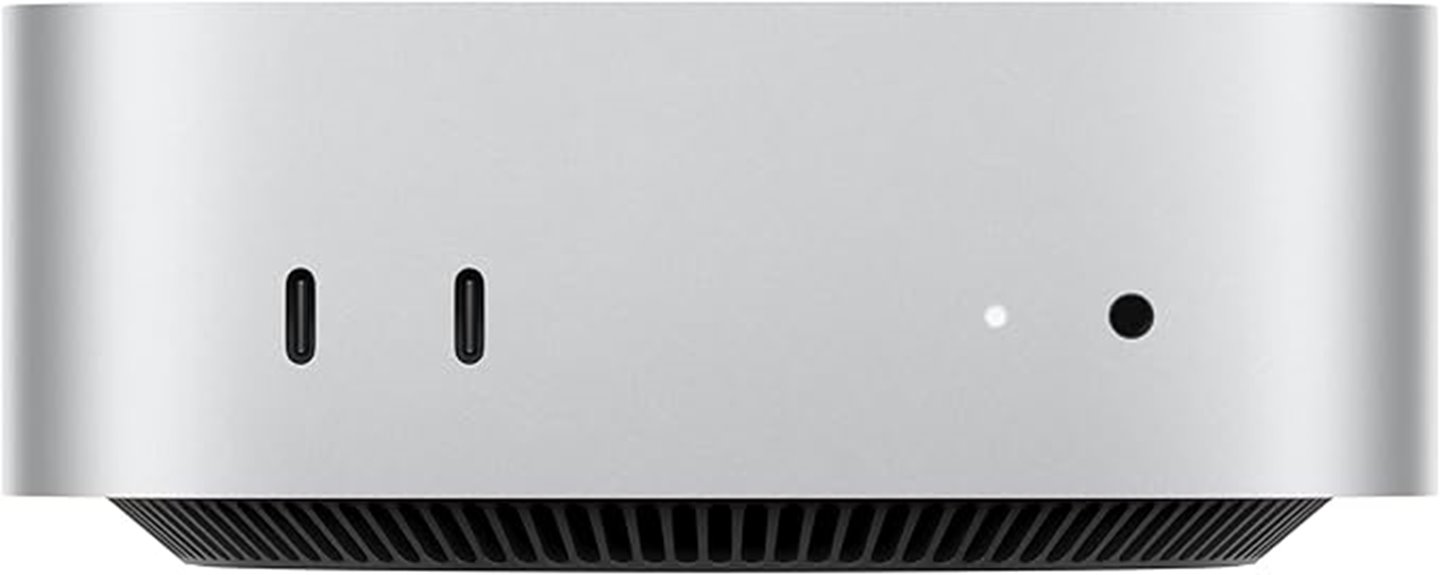
If you’re looking for a compact yet powerful machine for machine learning tasks, the Apple Mac mini with M4 chip is an excellent choice. Its small, five-by-five-inch design fits easily next to monitors or in tight spaces, yet it packs serious performance. The M4 chip features a 10-core CPU, 10-core GPU, and a 16-core Neural Engine, making data processing and AI workloads seamless. With 16GB of unified memory and a 512GB SSD, it handles multitasking and large datasets efficiently. Connectivity options include Thunderbolt 4, USB-C, HDMI, and Gigabit Ethernet, supporting multiple high-resolution displays and fast data transfer, perfect for demanding machine learning projects.
Best For: professionals and developers seeking a compact, high-performance machine for machine learning, AI, and data processing tasks.
Pros:
- Powerful M4 chip with 10-core CPU and GPU for efficient handling of complex workloads
- Compact design easily fits into small spaces or workspace setups
- Supports multiple high-resolution displays and fast data transfer with Thunderbolt 4 and HDMI
Cons:
- Limited upgrade options for memory and storage post-purchase
- Premium price point may be a consideration for budget-conscious users
- Lacks traditional expandability ports such as PCIe slots or additional RAM slots
Apple Mac mini Desktop Computer with M4 Chip, 24GB Memory, 512GB SSD

The Apple Mac mini Desktop Computer with M4 Chip, 24GB memory, and 512GB SSD stands out as an excellent choice for professionals seeking a compact yet powerful machine for machine learning tasks. Its small, five-by-five-inch design fits easily anywhere, making it perfect for tight workspace setups. Powered by the latest M4 chip with a 10-core CPU and GPU, it delivers fast, smooth performance. With 24GB of unified memory and a 512GB SSD, multitasking and data handling are efficient. Plus, its versatile connectivity options and seamless integration with the Apple ecosystem make it ideal for demanding machine learning workflows in a compact form factor.
Best For: professionals and developers seeking a compact, high-performance machine optimized for machine learning workflows and multitasking within the Apple ecosystem.
Pros:
- Compact design easily fits in tight workspace setups
- Powerful M4 chip with a 10-core CPU and GPU ensures fast performance
- Ample 24GB memory and 512GB SSD support efficient multitasking and data handling
Cons:
- Limited upgrade options due to integrated hardware design
- Higher price point compared to some Windows-based compact desktops
- Compatibility may be limited with non-Apple-specific software or peripherals
Apple Mac mini Desktop Computer with M4 Pro chip
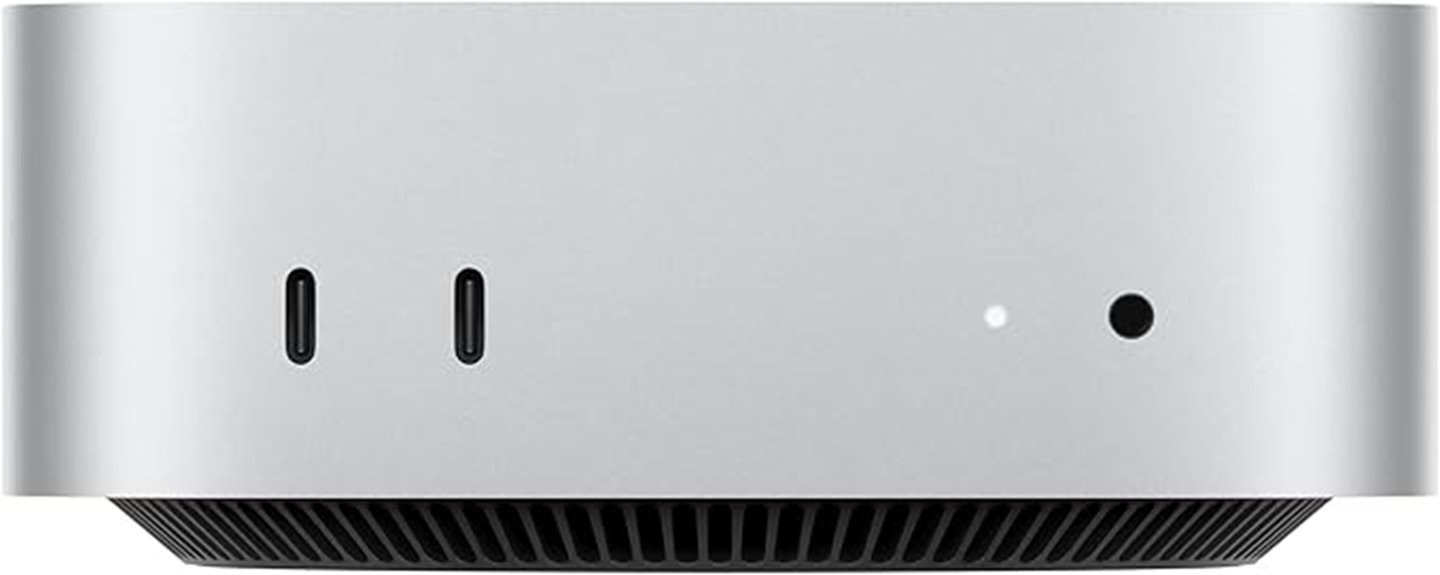
For professionals seeking a compact yet powerful machine learning workstation, the Apple Mac mini with M4 Pro chip stands out as an ideal choice. Its small five-by-five-inch aluminum chassis packs a punch, featuring a 12-core CPU, 16-core GPU with ray tracing, and a 16-core Neural Engine. With 24GB of unified memory, configurable up to 64GB, and up to 8TB of SSD storage, it handles demanding ML tasks with ease. Supporting up to three 6K displays and hardware-accelerated video formats, it offers excellent connectivity via Thunderbolt, HDMI, Ethernet, and USB-C. Weighing just 1.6 pounds, it’s a powerful, environmentally friendly option for high-performance machine learning on a compact desktop.
Best For: professionals and developers seeking a compact, high-performance machine learning workstation with powerful processing, graphics, and connectivity capabilities.
Pros:
- Compact five-by-five-inch aluminum chassis ideal for space-saving setups
- Equipped with the powerful M4 Pro chip featuring a 12-core CPU, 16-core GPU, and 16-core Neural Engine for demanding ML tasks
- Supports up to three 6K displays and extensive connectivity options including Thunderbolt, HDMI, Ethernet, and USB-C
Cons:
- Limited upgradability with storage options, requiring careful initial configuration
- Slightly heavier and larger than some ultra-compact mini PCs, potentially affecting portability
- Premium price point may be a consideration for budget-conscious users
Apple Mac mini Desktop Computer with M4 Chip (256GB SSD, 16GB RAM)
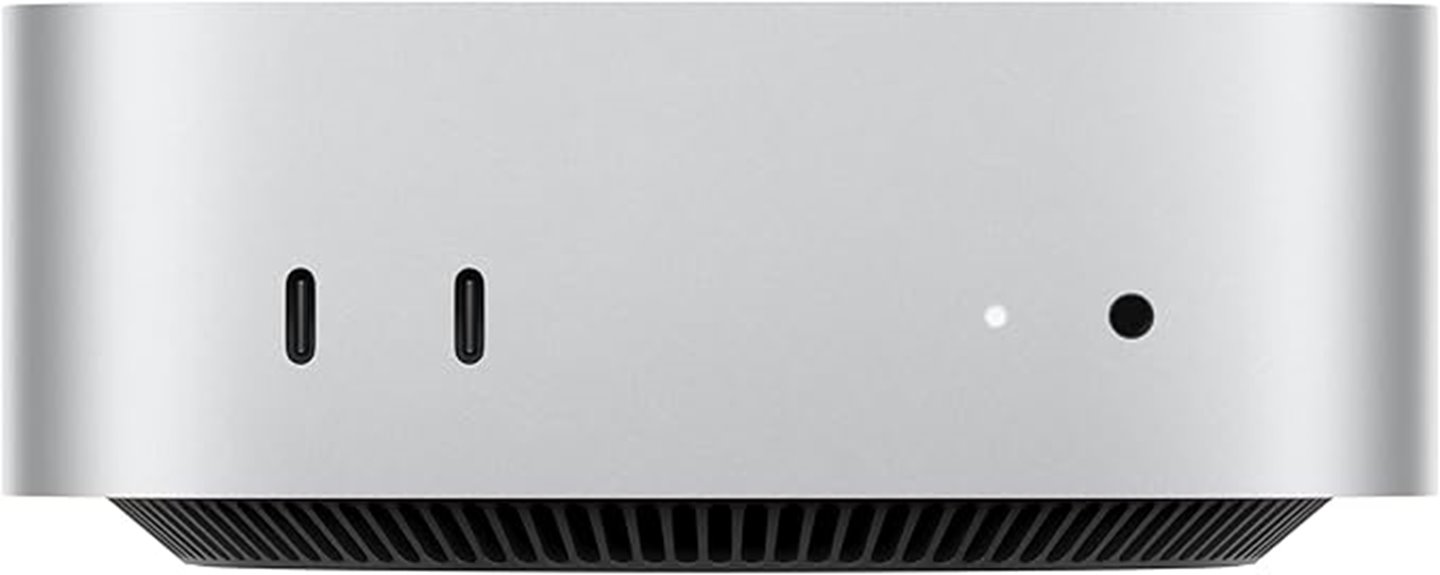
Designed for power and efficiency in a compact form, the Apple Mac mini with M4 chip is an ideal choice for machine learning enthusiasts who need a reliable workstation without sacrificing space. Its M4 chip features a 10-core CPU, 10-core GPU, and a 16-core Neural Engine, delivering impressive processing and AI capabilities. With 16GB of unified memory and a 256GB SSD, it handles demanding tasks smoothly. The Mac mini supports up to three displays and offers fast connectivity via Thunderbolt 4, USB-C, HDMI, and Ethernet. Its small footprint, combined with Apple’s environmental commitment, makes it a versatile, eco-friendly option for power users.
Best For: power users, machine learning enthusiasts, and professionals seeking a compact yet high-performance desktop with advanced AI capabilities.
Pros:
- Compact size fits easily into small workspaces while offering high-end performance
- Powerful M4 chip with 10-core CPU and GPU, plus Neural Engine for AI tasks
- Supports up to three displays, enhancing multitasking and productivity
Cons:
- Limited to 256GB SSD storage by default, which may require upgrades for large data needs
- Price may be higher compared to other compact desktops with similar specs
- Limited upgradeability post-purchase, especially in terms of RAM and storage
Factors to Consider When Choosing a Mac Studio for Machine Learning

When selecting a Mac Studio for machine learning, I focus on processing power, memory, and storage to meet my workload. I also consider GPU performance and connectivity options to guarantee smooth operation and expandability. Understanding these factors helps me choose a model that balances performance and future-proofing.
Processing Power Needs
Choosing the right Mac Studio for machine learning hinges on its processing power. I recommend selecting models with a high-performance CPU, like the M4 Pro chip, to efficiently handle complex algorithms. A robust GPU is essential—aim for 16 cores or more—to speed up neural network training and inference. Adequate memory is also critical; at least 24GB of unified memory ensures smooth handling of large datasets and multiple processes simultaneously. Don’t forget storage—512GB or more—to keep sizeable datasets and models accessible without bottlenecks. Additionally, verify that the Mac Studio supports hardware-accelerated media engines and high bandwidth, which optimize data throughput during intensive workflows. Prioritizing these processing capabilities guarantees a machine that can meet demanding machine learning tasks efficiently and reliably.
Memory Capacity Options
Selecting the right memory capacity for your Mac Studio is essential for efficient machine learning performance. More RAM allows you to handle larger datasets and complex models without slowing down. Opting for 24GB or 32GB makes a noticeable difference in training speed and stability by reducing data swapping between memory and storage. For advanced tasks involving extensive model parameters or large batch sizes, 48GB or 64GB of RAM provides the necessary headroom. Adequate memory also ensures smooth multitasking when running multiple frameworks or preprocessing tools simultaneously. Additionally, choosing higher memory options future-proofs your setup, accommodating evolving workloads and increasingly large datasets. Investing in expanded memory capacity is a strategic move to maximize your Mac Studio’s performance and longevity in demanding machine learning projects.
Storage Requirements
Have you considered how storage capacity impacts your machine learning projects on a Mac Studio? Adequate storage is vital for handling large datasets, trained models, and project files efficiently. I recommend opting for higher SSD options, like 1TB or more, to guarantee fast read/write speeds during data transfers and training sessions. Faster storage types such as NVMe SSDs can considerably reduce bottlenecks, boosting overall workflow efficiency. If internal space isn’t enough, external storage solutions can be a practical supplement without sacrificing performance. The amount of storage you need depends on your project scale—whether you’re running small experiments or extensive training. Prioritizing sufficient, speedy storage helps maintain smooth operation and accelerates your machine learning pipeline.
GPU Performance Level
The GPU performance level plays a key role in determining how well a Mac Studio can handle machine learning tasks that demand heavy parallel processing. A GPU with more cores and a modern architecture accelerates training and inference, reducing time and increasing efficiency. Features like hardware-accelerated ray tracing and optimized support for frameworks such as TensorFlow and PyTorch mean better performance for tensor operations and matrix computations. This allows me to process large datasets and complex models in real-time, boosting productivity. Choosing a Mac Studio with a high-performance GPU ensures scalability and future-proofing for demanding AI and ML projects. The right GPU level directly impacts the speed, accuracy, and overall feasibility of implementing advanced machine learning workflows on my Mac Studio.
Connectivity Features
When choosing a Mac Studio for machine learning, evaluating its connectivity features is essential to guarantee smooth data transfer and seamless workflow integration. I look for multiple Thunderbolt 4 ports, supporting high-speed data transfer and daisy-chaining devices to expand my setup. HDMI support capable of driving 6K or 8K displays is crucial for visual data analysis and model visualization. I also verify the presence of Gigabit Ethernet or higher, like 10Gb Ethernet, to handle large dataset transfers efficiently during training and deployment. Front-facing USB-C ports with USB 3 support are vital for quick peripheral connections, such as external drives. Additionally, Wi-Fi 6E and Bluetooth 5.3 ensure reliable, high-speed wireless connectivity with other devices and network infrastructure, keeping my workflow smooth and uninterrupted.
Software Compatibility
Are you confident that your Mac Studio supports the latest macOS versions and the machine learning frameworks you rely on? Ensuring compatibility is vital for smooth workflows. Check that your Mac Studio can run the newest macOS, which includes optimized frameworks like Core ML and TensorFlow. Make sure your preferred tools and libraries are compatible with Apple Silicon architecture to avoid integration issues. Confirm that popular data processing and visualization applications, such as Jupyter Notebook or MATLAB, work seamlessly on your device. Additionally, verify that the GPU and Neural Engine are supported by the frameworks you’ll use for accelerated training and inference. Finally, review the availability of development environments and SDKs that integrate well with Apple’s ecosystem, ensuring your machine learning projects run efficiently and without compatibility hiccups.
Energy Efficiency
Energy efficiency plays a crucial role in selecting the right Mac Studio for machine learning, especially since intensive tasks can markedly increase power consumption. I look for models with advanced power management features that optimize energy use without sacrificing performance. Hardware architecture, like the M4 or M4 Pro chips, considerably influences efficiency by balancing high processing power with lower energy draw. Many models also include power-saving modes to cut energy use during idle or low-usage periods. Additionally, I consider the thermal design and power supply, as these impact how effectively electricity is converted into computing performance. Overall, choosing a Mac Studio with strong energy efficiency helps reduce operational costs and minimizes environmental impact, making it a smart investment for demanding machine learning workloads.
Frequently Asked Questions
How Do Mac Studio Models Compare to Windows-Based Workstations for ML Tasks?
I find Mac Studio models hold their own against Windows workstations for ML tasks, especially with the latest M2 Ultra chip offering impressive power and efficiency. While Windows machines often have more hardware customization options, Macs provide seamless integration and optimized software performance. If you’re focused on stability and a user-friendly environment, Mac Studios are a solid choice, but for raw power and flexibility, high-end Windows workstations might edge ahead.
What Future Upgrades Are Expected for Mac Studio in 2025?
I believe future upgrades for the Mac Studio in 2025 will focus on integrating even more powerful chips, possibly the next generation of Apple silicon, boosting AI processing speeds. We’ll likely see expanded RAM options, faster storage, and enhanced GPU capabilities to handle complex machine learning tasks. Apple’s continued emphasis on energy efficiency and seamless integration with their ecosystem promises a machine that’s not just faster but smarter and more efficient.
Which Mac Studio Configuration Offers the Best Value for Machine Learning?
If you’re looking for the best value for machine learning, I recommend the Mac Studio with the M2 Ultra chip and 64GB of RAM. It offers incredible processing power and memory at a reasonable price, making it ideal for handling intensive ML tasks without breaking the bank. This setup balances performance and cost, ensuring you get the most out of your investment for machine learning workloads.
How Important Is GPU Performance Versus CPU in Mac Studio for ML?
GPU performance is vital for machine learning on a Mac Studio because many ML tasks rely heavily on parallel processing, which GPUs excel at. While the CPU handles general tasks and orchestration, a powerful GPU accelerates training times and improves efficiency. So, I’d prioritize a model with a robust GPU, especially if you’re working with large datasets or complex models, to get the best performance and faster results.
Are External GPUS Compatible With Mac Studio for Enhanced ML Processing?
Ever wonder if an external GPU can boost your Mac Studio’s ML capabilities? The good news is, yes, it’s compatible, especially with Thunderbolt 3 or 4 ports. This setup can profoundly enhance processing power, making complex machine learning tasks faster and more efficient. Just keep in mind that software support varies, so check compatibility before investing. Ready to take your ML projects to the next level?
Conclusion
Choosing the right Mac Studio depends on your machine learning needs. Do you need raw power, ample memory, or a balance of both? Picture yourself training models smoothly and efficiently—these models are designed to deliver just that. Whether you prioritize performance or storage, these options can help you push your projects forward. Are you ready to elevate your machine learning game with the best Mac Studio model in 2025?