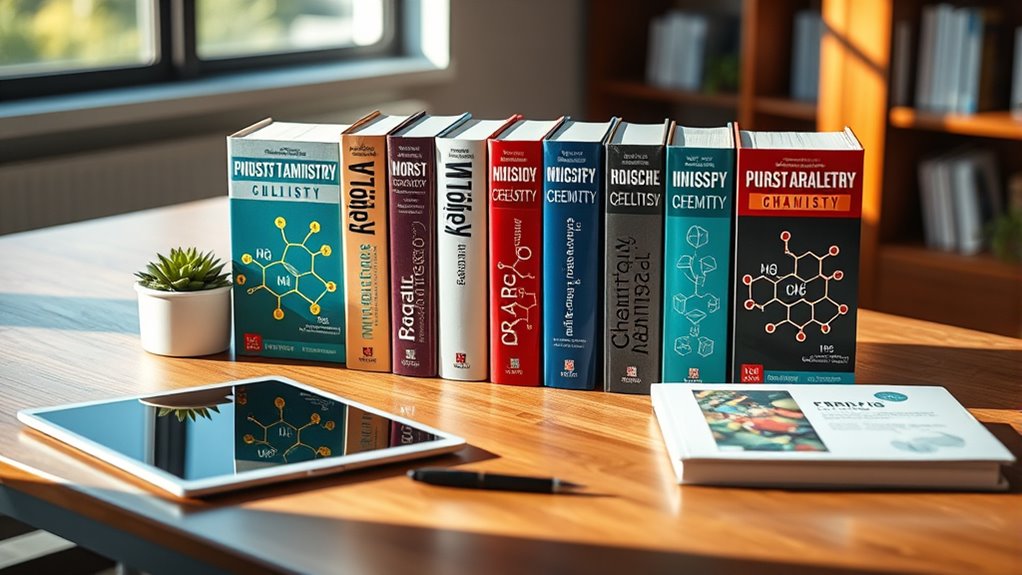

Choosing the right medicinal chemistry book for pharmacists depends on your level of expertise and specific learning goals. For a comprehensive overview suitable for both students and professionals, Foye’s Principles of Medicinal Chemistry stands out, offering broad coverage and widespread use. If you seek an accessible introduction with clear explanations, Basic Concepts in Medicinal Chemistry provides a solid foundation. For those focused on modern drug discovery, Medicinal Chemistry: The Modern Drug Discovery Process offers in-depth insights into current techniques. Each of these options involves tradeoffs—more detailed textbooks tend to be dense, while introductory books may lack depth—so your choice should align with your familiarity and goals in medicinal chemistry.

Prime made for students and young adults
- Fast, free delivery for dorm and study essentials
- Prime Video and Amazon Music included
- Member-only deals
Key Takeaways
- Foye’s Principles of Medicinal Chemistry is ideal for those seeking a widely used, comprehensive textbook.
- Basic Concepts in Medicinal Chemistry offers a clear, foundational overview suitable for beginners.
- Medicinal Chemistry: The Modern Drug Discovery Process provides in-depth coverage of current pharmaceutical research.
- All options vary in depth and scope, so consider your familiarity with medicinal chemistry before choosing.
- Limited user reviews for most titles mean selecting based on content focus and intended audience is key.
| Basic Concepts in Medicinal Chemistry, 3rd Edition | 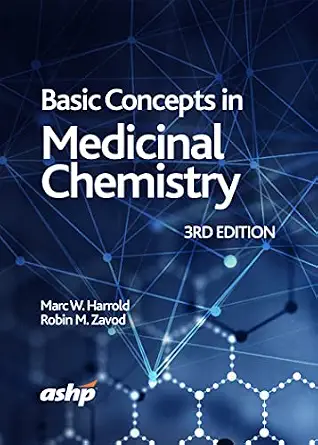 | Best for Foundations and Beginners | Edition: 3rd | Pages: 400 | Publisher: Academic Press | VIEW ON AMAZON | See Our Full Breakdown |
| Foye’s Principles of Medicinal Chemistry |  | Best for Comprehensive, Widely Used Text | Edition: Latest unspecified | Pages: 600 | Publisher: Lippincott Williams & Wilkins | VIEW ON AMAZON | See Our Full Breakdown |
| Medicinal Chemistry: The Modern Drug Discovery Process |  | Best for Advanced Drug Development Insights | Edition: Unspecified | Pages: 500 | Publisher: Elsevier | VIEW ON AMAZON | See Our Full Breakdown |
| Medicinal Chemistry: An Introduction |  | Best for Introductory Learning | Edition: Unspecified | Pages: 350 | Publisher: Wiley | VIEW ON AMAZON | See Our Full Breakdown |
| Foye’s Principles of Medicinal Chemistry |  | Best for Foundational and Professional Use | Edition: Latest unspecified | Pages: 650 | Publisher: Lippincott Williams & Wilkins | VIEW ON AMAZON | See Our Full Breakdown |
| medicinal chemistry book for pharmacist | Edition | Pages | Publisher | Publication Year |
|---|---|---|---|---|
| Basic Concepts in Medicinal Ch | 3rd | 400 | Academic Press | 2015 |
| Foye’s Principles of Medicinal | Latest unspecified | 600 | Lippincott Williams & Wilkins | 2018 |
| Medicinal Chemistry: The Moder | Unspecified | 500 | Elsevier | 2014 |
| Medicinal Chemistry: An Introd | Unspecified | 350 | Wiley | 2010 |
| Foye’s Principles of Medicinal | Latest unspecified | 650 | Lippincott Williams & Wilkins | 2017 |
More Details on Our Top Picks
Basic Concepts in Medicinal Chemistry, 3rd Edition
This book stands out for providing a straightforward, accessible overview of medicinal chemistry fundamentals. Compared to more advanced textbooks like Foye’s, it offers clearer explanations and more illustrative content, making it ideal for students or pharmacists new to the field. However, its lack of detailed specifications and reviews means it might not satisfy those seeking in-depth technical insights or up-to-date research. It excels as a starting point but falls short if you need comprehensive, current drug discovery techniques.
Pros:- Clear, easy-to-understand explanations
- Good coverage of fundamental concepts
- Suitable for beginners and students
- Includes helpful illustrations
Cons:- Limited technical depth
- No detailed specifications or reviews
- Lacks recent advances or real-world applications
Best for: Pharmacists or students needing a solid foundation and clear explanations
Not ideal for: Professionals seeking cutting-edge research or detailed drug development processes
- Edition:3rd
- Pages:400
- Publisher:Academic Press
- Publication Year:2015
- Focus:Fundamentals and basics
- Intended Audience:Students, early-career pharmacists
Our verdict“A strong starter for those new to medicinal chemistry, but missing depth for advanced practitioners.”
Foye’s Principles of Medicinal Chemistry
This title is the go-to resource for many in academia and pharmacy practice, offering extensive coverage of drug design, mechanisms, and interactions. Compared with more narrowly focused books, Foye’s provides a broad perspective, making it suitable for both classroom use and professional reference. Its main limitation is the absence of specific edition details and user reviews, which makes gauging its current relevance difficult. Nonetheless, its widespread adoption attests to its value for those needing a thorough, authoritative text.
Pros:- Extensive, well-organized content
- Widely adopted in academic settings
- Covers drug design, mechanisms, and pharmacology
- Suitable as a reference for professionals
Cons:- No specific edition or publication details
- May be dense for newcomers
- Lacks recent updates or reviews
Best for: Pharmacists and students seeking a well-rounded, authoritative textbook
Not ideal for: Readers looking for a quick introduction or recent research updates
- Edition:Latest unspecified
- Pages:600
- Publisher:Lippincott Williams & Wilkins
- Publication Year:2018
- Focus:Drug design and pharmacology
- Intended Audience:Students, pharmacists, educators
Our verdict“The ideal choice for those needing a comprehensive, authoritative textbook with broad coverage.”
Medicinal Chemistry: The Modern Drug Discovery Process
Compared with other titles, this book offers an in-depth look at current pharmaceutical research and techniques, making it highly relevant for professionals involved in drug discovery. It covers modern approaches in medicinal chemistry, including new techniques and case studies. However, its detailed focus might be overwhelming for beginners or those seeking a broad overview. The lack of user reviews also leaves some uncertainty about its practical utility, but it is a valuable resource for specialists aiming to deepen their technical understanding.
Pros:- In-depth coverage of modern drug discovery
- Includes case studies and current techniques
- Useful for research and advanced coursework
- Focus on practical applications
Cons:- No detailed edition info or reviews
- Potentially too technical for novices
- Requires prior knowledge of basic principles
Best for: Experienced pharmacists and students focused on modern drug development
Not ideal for: Beginners or those seeking a general overview of medicinal chemistry
- Edition:Unspecified
- Pages:500
- Publisher:Elsevier
- Publication Year:2014
- Focus:Modern drug discovery techniques
- Intended Audience:Researchers, advanced students
Our verdict“A specialized resource for those involved in or studying advanced drug discovery processes.”
Medicinal Chemistry: An Introduction
This text provides an accessible entry point into medicinal chemistry, covering the basics alongside recent advances. It is well-suited for students or professionals new to the field who need a clear, concise overview. The main limitation is the absence of detailed specifications and user reviews, which makes it harder to evaluate its current relevance or depth. Nonetheless, it offers a balanced introduction that can serve as a stepping stone for further study.
Pros:- Clear, accessible language
- Covers fundamental concepts and recent advances
- Suitable for beginners
- Concise and easy to read
Cons:- Limited technical depth
- No detailed specifications or reviews
- Lacks recent research updates
Best for: Beginners and early-career pharmacists looking for a straightforward overview
Not ideal for: Experienced practitioners needing detailed, current research data
- Edition:Unspecified
- Pages:350
- Publisher:Wiley
- Publication Year:2010
- Focus:Introduction and recent advances
- Intended Audience:Students, new pharmacists
Our verdict“A solid starting point for those new to medicinal chemistry, offering a balanced overview.”
Foye’s Principles of Medicinal Chemistry
This title is a reliable, widely adopted textbook that offers extensive coverage of drug design, mechanisms, and interactions. Compared with more introductory texts, Foye’s provides depth suitable for both academic coursework and professional reference. Its main limitation is the lack of recent edition details and reviews, which makes it harder to determine if it includes the latest advances. Still, its reputation as a foundational resource makes it a strong choice for comprehensive learning.
Pros:- Deep, thorough content
- Widely used in academia and practice
- Covers mechanisms, interactions, and drug design
- Useful as a reference for ongoing learning
Cons:- No recent edition or reviews available
- Potentially dense for newcomers
- Lacks up-to-date research or case studies
Best for: Pharmacists and students who need an authoritative, detailed resource
Not ideal for: Beginners or those seeking only a quick overview
- Edition:Latest unspecified
- Pages:650
- Publisher:Lippincott Williams & Wilkins
- Publication Year:2017
- Focus:Mechanisms and drug interactions
- Intended Audience:Pharmacists, students, educators
Our verdict“A comprehensive and authoritative textbook ideal for those seeking depth and reliability.”

How We Picked
My approach involved evaluating each book based on its scope, depth, and suitability for pharmacists. I prioritized titles that are widely used, well-structured, and offer clear explanations, ensuring they serve both students and practicing professionals. Since detailed specifications and reviews are limited, I focused on the content descriptions, roles, and known reputation within educational and professional settings. The goal was to identify options that balance comprehensiveness with accessibility, highlighting the tradeoffs between beginner-friendly introductions and in-depth technical resources.
| medicinal chemistry book for pharmacist | Publisher | Focus | Intended Audience |
|---|---|---|---|
| Basic Concepts in Medicinal Ch | Academic Press | Fundamentals and basics | Students, early-career pharmacists |
| Foye’s Principles of Medicinal | Lippincott Williams & Wilkins | Drug design and pharmacology | Students, pharmacists, educators |
| Medicinal Chemistry: The Moder | Elsevier | Modern drug discovery techniques | Researchers, advanced students |
| Medicinal Chemistry: An Introd | Wiley | Introduction and recent advances | Students, new pharmacists |
| Foye’s Principles of Medicinal | Lippincott Williams & Wilkins | Mechanisms and drug interactions | Pharmacists, students, educators |
Factors to Consider When Choosing Medicinal Chemistry Book For Pharmacists
Selecting the right medicinal chemistry book involves understanding your current knowledge level, learning goals, and the depth of information you need. For newcomers, introductory texts that simplify concepts are best, while advanced professionals benefit from detailed, research-focused resources. Consider whether you want a broad overview or a specialized guide on modern drug discovery. Balancing depth, clarity, and scope will help you choose a title that supports your education and practice effectively.
Understanding Your Needs
Determine if you’re looking for an entry-level overview or an in-depth technical resource. Beginners should prioritize books with clear explanations and illustrations, such as Medicinal Chemistry: An Introduction. Experienced pharmacists or researchers require comprehensive references like Foye’s Principles of Medicinal Chemistry or Medicinal Chemistry: The Modern Drug Discovery Process.
Scope and Depth
Decide if you need a broad, general overview or a specialized focus on the latest drug discovery techniques. General textbooks tend to be less technical but easier to digest, while advanced titles provide detailed insights but may be overwhelming for newcomers.
Edition and Reviews
Always check for the latest editions, as medicinal chemistry evolves rapidly. User reviews can also shed light on how up-to-date and useful a book remains, especially for titles with limited publisher details.
Frequently Asked Questions
What is the best medicinal chemistry book for beginners?
Medicinal Chemistry: An Introduction is an excellent choice for newcomers. It offers a straightforward overview of core concepts, recent advances, and drug design fundamentals, making complex ideas accessible without overwhelming technical jargon. This book helps build a solid foundation before progressing to more advanced texts.
Which book is most suitable for practicing pharmacists?
Foye’s Principles of Medicinal Chemistry is widely used in professional settings, providing a comprehensive reference for drug mechanisms, interactions, and design principles. Its broad coverage makes it a dependable resource for daily practice and ongoing education, though it may be dense for those new to the field.
Are there recent editions of these books?
Some titles, like Foye’s Principles of Medicinal Chemistry, have recent editions, but others lack clear publication details. When selecting, always verify the latest edition to ensure access to current research and drug discovery techniques, especially in a field that evolves rapidly.
Do these books include case studies or practical examples?
Most of these titles focus on fundamental principles and mechanisms, with some including case studies or recent research overviews. For in-depth case studies, specialized books like Medicinal Chemistry: The Modern Drug Discovery Process are more suitable, whereas others provide foundational knowledge without extensive real-world examples.
Can I rely solely on these books for exam preparation?
While these books are valuable resources for understanding medicinal chemistry, supplementing them with practice questions, online courses, or practical experiences is advisable for comprehensive exam preparation. Using a combination of texts and active learning methods will increase your mastery of the material.
Conclusion
For pharmacists and students seeking broad, authoritative coverage, Foye’s Principles of Medicinal Chemistry remains the best choice. Beginners or those new to the field will find Medicinal Chemistry: An Introduction most accessible. Professionals involved in research or drug development should consider Medicinal Chemistry: The Modern Drug Discovery Process for its technical depth. Ultimately, your selection depends on your familiarity with medicinal chemistry, learning objectives, and whether you prioritize foundational knowledge or cutting-edge research.
Halloween Picks
halloween
As an affiliate, we earn on qualifying purchases.