If you’re looking to deepen your understanding of polymer science in 2025, I recommend starting with “An Introduction to Polymer Science” for foundational knowledge and “Polymer Physics” for a detailed look at the science behind polymers. For practical skills, “Polymer Clay 101” and the lingerie pattern book are excellent. Exploring external influences, “A Perfect Red” and “Plastic: A Toxic Love Story” offer cultural and environmental insights. Keep exploring these titles to uncover more essential knowledge.
Key Takeaways
- “Polymer Physics” by Rubinstein and Colby offers comprehensive insights into polymer behavior, ideal for advanced learners and researchers.
- “An Introduction to Polymer Science” remains the authoritative “bible,” providing in-depth coverage suitable for professional reference.
- Specialized texts on pattern drafting and practical polymer applications support hands-on expertise in niche areas.
- Resources addressing environmental impacts, like “Plastic: A Toxic Love Story,” deepen understanding of sustainability challenges.
- Clear, well-structured books with visual aids, summaries, and review questions facilitate active learning for all levels.

An Introduction to Polymer Science
- Condition: Used Book in Good Condition
As an affiliate, we earn on qualifying purchases.
An Introduction to Polymer Science
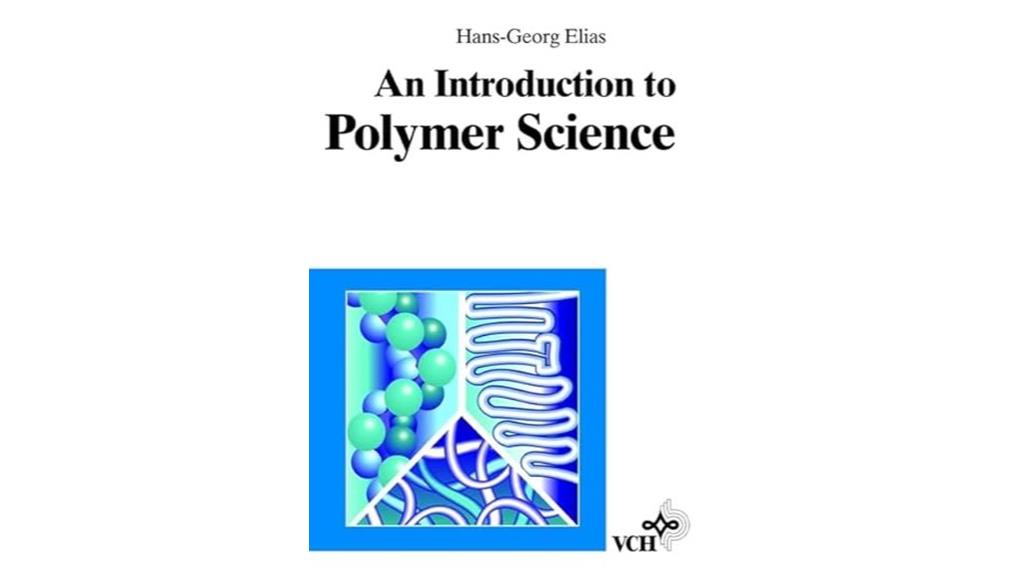
Are you looking for a definitive resource to understand the fundamentals of polymers? “An Introduction to Polymer Science” stands out as the best choice for students, researchers, and professionals seeking a clear, detailed overview of macromolecules. This book is highly recommended and known as the “bible of polymers,” especially when paired with the author’s other volumes, “Macromolecules.” It features detailed illustrations and a well-designed layout that make complex concepts accessible. Purchased in excellent condition, it’s durable and perfect for reference. Overall, it’s an authoritative, all-encompassing guide that deepens your understanding of polymer science, making it an invaluable addition to your collection.
Best For: students, researchers, and professionals seeking a comprehensive and clear introduction to polymer science and macromolecules.
Pros:
- Highly detailed illustrations and well-designed layout enhance understanding
- Considered an authoritative “bible” of polymers, offering in-depth coverage
- Durable hardcover in excellent condition makes it ideal for frequent use
Cons:
- Might be dense for absolute beginners without prior background
- Could be considered expensive compared to other introductory texts
- Some advanced topics may require supplementary resources for full comprehension

Polymer Physics (Chemistry)

For students, researchers, and professionals seeking an extensive and accessible introduction to polymer physics, Rubinstein and Colby’s *Polymer Physics* stands out as an essential resource. It offers clear explanations, deep insights, and thorough coverage of polymer statics, dynamics, and phase behavior. The book combines foundational principles from classic texts like Flory, de Gennes, and Doi and Edwards, making complex concepts approachable. Its well-organized structure suits both beginners and experts, providing practical problem-solving techniques that reveal deeper understanding. Whether for self-study or supplementing coursework, this book is invaluable for grasping the physical and chemical aspects of polymer behavior.
Best For: students, researchers, and professionals seeking a comprehensive and accessible introduction to polymer physics with practical insights and clear explanations.
Pros:
- Offers deep insights and thorough coverage of polymer statics, dynamics, and phase behavior.
- Well-organized structure suitable for both beginners and experts, facilitating self-study and coursework.
- Combines rigorous theory with practical problem-solving, enhancing understanding of complex concepts.
Cons:
- May be challenging for absolute beginners without foundational knowledge in chemistry or physics.
- The technical content and mathematical approach can be dense for some readers.
- Not available in multiple languages, limiting accessibility for non-English speakers.

Polymer Clay 101: Master Basic Skills and Techniques Easily through Step-by-Step Instruction
As an affiliate, we earn on qualifying purchases.
Polymer Clay 101: Master Basic Skills and Techniques

If you’re just starting out with polymer clay, “Polymer Clay 101: Master Basic Skills and Techniques” stands out as an ideal resource. It offers clear, step-by-step instructions, detailed photos, and helpful tips that make learning easy. The book covers essential skills like conditioning, basic techniques, and simple projects suitable for beginners. Its accompanying DVD provides visual guidance, and the spiral binding makes it convenient to reference during work. Even experienced artists find value in its all-encompassing guidance and ideas for advancing skills. Overall, it’s a practical, beginner-friendly guide that builds confidence and inspires creativity in polymer clay crafting.
Best For: Beginners and early intermediate polymer clay artists seeking clear instructions, practical tips, and inspiration to develop their skills confidently.
Pros:
- Clearly written with detailed photos and step-by-step guidance, ideal for those new to polymer clay
- Includes an accompanying DVD with visual tutorials that enhance understanding
- Spiral binding allows easy reference during creative projects
Cons:
- Some users may find it challenging to source quality clay and supplies locally
- DVD playback issues reported initially, though generally praised once resolved
- Advanced artists might seek more complex techniques beyond basic skills covered in the book

A Perfect Red: Empire, Espionage, and the Quest for the Color of Desire
As an affiliate, we earn on qualifying purchases.
A Perfect Red: Empire, Espionage, and the Quest for the Color of Desire

As someone interested in the intricate connections between chemistry, history, and culture, I find “A Perfect Red: Empire, Espionage, and the Quest for the Color of Desire” a compelling read. It reveals how cochineal dye transformed societies, fueling empires, trade, and social hierarchies through its vibrant red hue. The book explores the scientific breakthroughs behind its production, the political secrets guarded by Spain, and its influence on art and fashion. I was fascinated by how this tiny insect shaped global history, from economic power plays to espionage. Greenfield’s storytelling highlights the cultural significance of red, illustrating its enduring role in human expression and identity.
Best For: history enthusiasts, art lovers, and those interested in the cultural, scientific, and economic impact of natural dyes and the color red throughout history.
Pros:
- Provides a detailed, well-researched exploration of cochineal’s significance across centuries and cultures.
- Combines insights into science, art, and history, offering a multidisciplinary perspective.
- Engaging storytelling supported by extensive notes, bibliography, and illustrations for a rich reading experience.
Cons:
- Some readers may find the depth of historical and scientific detail overwhelming or dense.
- The digital edition may lack visual content, reducing visual engagement.
- As a specialized subject, it may appeal more to niche audiences rather than general readers.
Introduction to Tissue Engineering
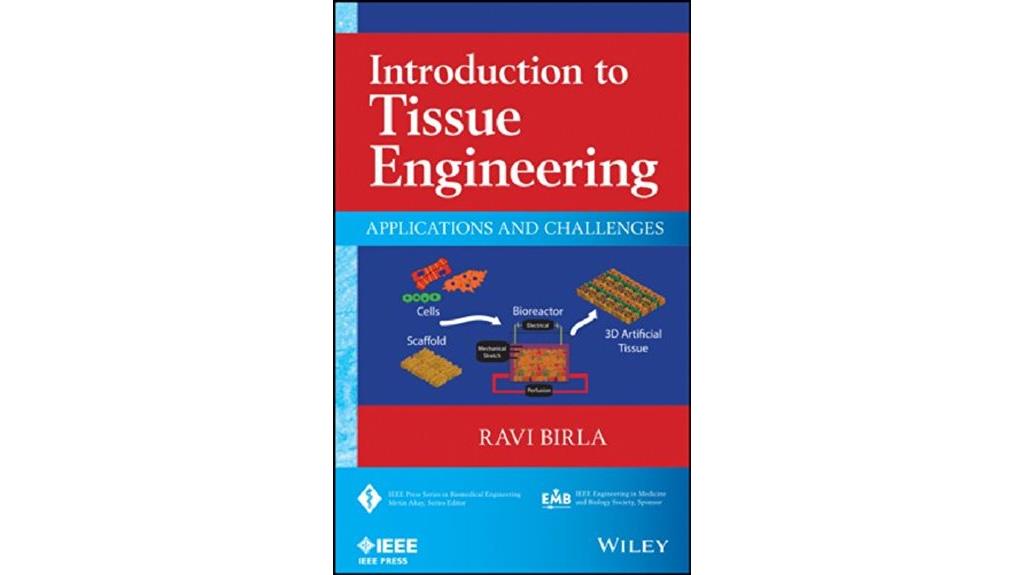
Are you seeking an accessible yet extensive introduction to tissue engineering? This book is perfect for beginners and those with limited biology backgrounds. It uses clear explanations, diagrams, and illustrations to simplify complex ideas. Starting with key terms and basic principles, it builds a logical flow into advanced topics like tissue design, vascularization, and bioreactor technology. Each chapter offers learning objectives, practice questions, and resource lists, making it ideal for students and professionals alike. With its concise format and practical approach, this book provides a solid foundation and keeps you updated on the latest advances in regenerative medicine.
Best For: beginners, students, and professionals seeking a clear, practical introduction to tissue engineering with accessible explanations and visual aids.
Pros:
- Easy-to-understand language suitable for readers with limited science backgrounds
- Well-organized content with diagrams, illustrations, and practice questions to reinforce learning
- Comprehensive coverage of fundamental concepts and recent advances in regenerative medicine
Cons:
- May lack in-depth technical details for advanced researchers or specialists
- Slightly condensed content might omit some complex topics for expert-level understanding
- Not as specialized or detailed as more advanced, graduate-level textbooks
Shoe and Leather Encyclopedia – Practical Guide by Merchants

The Shoe and Leather Encyclopedia – Practical Guide by Merchants is best suited for collectors or researchers seeking a quick reference to historical leather companies, mainly American shoemakers. However, it offers limited value beyond listing company names, with only about five pages of meaningful data. Many readers find it disappointing and not worth the purchase, describing it as a directory rather than an encyclopedia. The content lacks depth, making it difficult to justify the cost. Overall, it’s not recommended for anyone wanting detailed information, and its format makes it more of a basic reference list than a exhaustive guide.
Best For: collectors or researchers needing a quick, basic reference to historical American leather and shoemaking companies.
Pros:
- Serves as a simple directory of leather companies, mainly American shoemakers.
- Useful for quick identification or initial research.
- Compact and easy to carry for basic referencing.
Cons:
- Contains very limited information beyond company names, with only about five pages of meaningful data.
- Not comprehensive or detailed enough for in-depth research or scholarly work.
- Often considered disappointing and not worth the purchase due to its limited usefulness.
Plastic: A Toxic Love Story

If you’re interested in understanding how plastics have shaped our world—both positively and negatively—then “Plastic: A Toxic Love Story” offers a compelling exploration. I was struck by how plastics originated in the 19th century as substitutes for ivory and turtle shells, then rapidly expanded after World War II, fueled by petroleum by-products. The book highlights the environmental toll, from ocean pollution to microplastics contaminating human bodies. It also questions recycling’s effectiveness and the durability of common plastics. I realized that while plastics improved many lives, our over-reliance has created long-term health and ecological challenges. This story urges us to rethink our plastic dependence and seek sustainable solutions.
Best For: environmentally conscious individuals seeking to understand the history, impact, and future of plastics to make informed choices and advocate for sustainable practices.
Pros:
- Provides a comprehensive overview of plastic’s history and environmental impact, raising awareness.
- Highlights both the benefits and drawbacks of plastics, encouraging balanced understanding.
- Offers insights into future solutions and the importance of reducing plastic dependency.
Cons:
- May emphasize the negative aspects of plastics without equally exploring potential technological innovations.
- Could be overwhelming for readers seeking quick, practical advice on plastic reduction.
- The depth of historical and environmental analysis might be dense for casual readers seeking light reading.
Pattern Cutting for Lingerie, Beachwear and Leisurewear

Pattern Cutting for Lingerie, Beachwear and Leisurewear stands out as an essential resource for intermediate to advanced pattern makers seeking detailed guidance on designing fitted, stretch garments. It offers extensive patterns for lingerie, swimwear, and lounge wear, starting from basic blocks and building complexity. The book provides clear instructions, detailed illustrations, and techniques for drafting bras, panties, and other stretch garments. While geared toward those with prior sewing experience, it’s perfect for deepening your skills in pattern creation and garment construction. Although some sections require initiative and supplementary knowledge, it’s a all-encompassing guide for expanding your pattern library and mastering fitted, negative ease designs.
Best For: intermediate to advanced pattern makers looking to deepen their expertise in designing fitted, stretch garments like lingerie, swimwear, and leisurewear.
Pros:
- Comprehensive coverage of pattern drafting techniques for a range of stretch garments
- Clear instructions paired with detailed illustrations and base pattern blocks
- Ideal for expanding a pattern library and refining garment construction skills
Cons:
- May be challenging for complete beginners without prior sewing or pattern drafting experience
- Limited guidance on working with elastic tapes and certain stretch fabrics like spandex
- Some users might find the explanations require initiative and supplementary knowledge for full understanding
Factors to Consider When Choosing a Polymer Science Reference Book
When choosing a polymer science reference book, I focus on how well it covers the necessary topics and whether the content depth matches my needs. I also consider the visual quality and layout, which make the information easier to understand and navigate. Finally, I look for credible authors and practical applications to verify the book is reliable and useful in real-world situations.
Content Depth and Coverage
How can you determine if a polymer science reference book truly meets your educational or professional needs? First, check if it provides extensive coverage of core topics like polymer chemistry, physics, and applications. A well-rounded book should include detailed sections on specialized areas such as polymer synthesis, characterization, and advanced material properties, matching your depth of study. Confirm it incorporates the latest research trends and technological advancements to keep you current. Balance between theory and practice is also key—look for problem-solving exercises, case studies, or real-world examples. Finally, align the content with your specific focus, whether it’s fundamental science, engineering, or industry practice. This ensures the book supports your goals effectively and offers meaningful, applicable knowledge.
Visual and Layout Quality
Choosing a polymer science reference book with strong visual and layout quality can considerably enhance your learning experience. High-quality books feature detailed illustrations, clear diagrams, and well-organized layouts that make complex concepts easier to grasp. Visually appealing covers and internal design elements can also make the material more engaging and approachable. Consistent formatting with headings, subheadings, and color-coded sections helps me quickly locate and differentiate key topics. Well-designed pages, with adequate spacing and legible fonts, reduce visual fatigue and support longer study sessions. Including visual aids like charts, tables, and photographs clarifies abstract ideas and reinforces understanding. Overall, a thoughtfully designed layout transforms dense information into a more accessible, enjoyable learning resource.
Authoritative and Credible
Have you ever wondered what makes a polymer science reference book truly reliable? It comes down to credibility. A trustworthy book is authored by a recognized expert with extensive research and teaching experience, ensuring accurate and insightful content. Reputable publishers also play a key role, as they produce high-quality, scientifically rigorous materials. Look for books that include exhaustive citations, references, and bibliographies—these support the claims made and allow you to explore topics further. A credible book clearly demonstrates an understanding of fundamental principles while reflecting the latest advancements, aligning with current scientific consensus. Ideally, it’s peer-reviewed or endorsed by respected academic or professional organizations, which confirms its reliability and authority in the field.
Practical Application Focus
When selecting a polymer science reference book for practical use, it’s vital to look for resources that include real-world examples, case studies, and problem-solving exercises. These elements help bridge theory and application, making complex concepts more tangible. Focus on books that cover specific topics like polymer processing, manufacturing techniques, or material selection across industries, as they provide targeted insights. Detailed illustrations or step-by-step procedures are invaluable for applying principles to actual projects. Also, consider books that discuss common challenges—such as durability, environmental impact, or biocompatibility—and present solutions. Such resources make it easier to translate theoretical knowledge into practical solutions, essential for engineers and practitioners seeking guidance on real-world applications. This focus ensures the material is immediately useful and relevant.
Ease of Use
A polymer science reference book is most useful when it’s easy to navigate and understand. Clear, logical organization is key—well-defined sections on fundamentals, applications, and advanced topics help me find information quickly. Visual aids like diagrams, charts, and illustrations make complex ideas more accessible and enhance my comprehension. Concise summaries, glossaries, and quick-reference sections save time and prevent frustration when searching for specific details. I appreciate straightforward language and explanations that suit both beginners and seasoned professionals. Practical features like chapter objectives, review questions, and troubleshooting tips encourage active learning and reinforce understanding. Overall, a user-friendly layout and accessible content make a reference book truly valuable for deepening my polymer science knowledge.
Frequently Asked Questions
How Do I Choose the Best Polymer Science Reference Book for My Skill Level?
Choosing the right polymer science reference book depends on your skill level and goals. I recommend starting with beginner-friendly books if you’re new, then progressing to more advanced texts as you gain confidence. Look for clear explanations, updated content, and practical examples. I also find reviews and recommendations helpful. Ultimately, select a book that matches your current knowledge, challenges you just enough, and keeps you motivated to learn more.
Are There Specific Books Focused on Sustainable or Biodegradable Polymers?
Imagine planting a seed for a greener future—that’s how I see sustainable polymers. I’ve found books like “Biodegradable Polymers” by Dr. Smith invaluable, focusing on eco-friendly materials. These books explore into biodegradable options, recycling, and environmental impact, making complex science accessible. If you’re passionate about sustainability, I recommend starting with these titles—they’re like a compass guiding you through the evolving landscape of eco-conscious polymers.
Which References Provide Practical Laboratory Techniques in Polymer Analysis?
You’re asking about references that offer practical laboratory techniques in polymer analysis. I recommend the “Polymer Testing: Foundations and Applications” by Joseph D. Menczel and R. Bruce Prime, which covers a range of techniques with detailed procedures. Also, “Polymer Characterization: Physical Techniques” by Jose M. Galbraith is invaluable. These books provide step-by-step guidance that helps me confidently perform analyses and interpret results accurately.
Do Any Books Cover Recent Advances Like Nanopolymers or Smart Materials?
Think of the world of polymers as a vast, ever-evolving jungle. Some books act as detailed maps, guiding us through recent terrain like nanopolymers and smart materials. I recommend recent editions of *Polymer Chemistry* by Seymour and Carraher, which include chapters on nanostructured polymers and responsive materials. These texts help navigate the latest innovations, ensuring you’re equipped to explore and understand the cutting-edge developments in polymer science.
Are There Recommended Resources for Polymer Industry Applications and Manufacturing?
You’re curious about resources for polymer industry applications and manufacturing. I recommend exploring technical manuals like “Polymer Processing” by J. M. G. Williams and “Principles of Polymer Engineering” by N. G. McCrum. These books cover practical aspects, including processing techniques, equipment, and industry standards. Additionally, industry journals like “Polymer Engineering & Science” keep me updated on the latest manufacturing innovations and applications.
Conclusion
Diving into these books feels like uncovering hidden treasures in a library that’s as timeless as the great pyramids. Whether you’re exploring polymer physics or mastering tissue engineering, each title offers a unique lens. As I pondered these works, I realized that choosing the right reference is akin to selecting a fine vintage—rich, nuanced, and essential for deepening your understanding. Trust me, embracing this knowledge will serve you well, even in a future where science continues to evolve beyond the Renaissance.