

If you want to capture stunning Milky Way scenes in 2025, I recommend trying the AstrHori 6mm F2.8 fisheye for its ultra-wide coverage, the VILTROX 75mm f/1.2 XF Pro for sharp low-light shots on Fuji X-mount, the Sony E 16mm F2.8 for a compact and bright option, and the VILTROX 75mm f/1.2 PRO E for detailed images on Sony APS-C cameras. Stick with me, and I’ll show you how to choose the perfect lens for your night sky adventures.
Key Takeaways
- Prioritize lenses with ultra-wide FOV (14-24mm) and large apertures (f/2.8 or wider) for optimal low-light Milky Way capture.
- Choose lenses with high optical quality, multiple lens elements, and minimal distortion to ensure sharp, clear star images.
- Consider portability and weight—compact, lightweight lenses facilitate outdoor astrophotography and quick setup.
- Look for models with advanced autofocus and manual focus options to maximize control and image precision.
- Ensure lens compatibility with your camera system and opt for durable, weather-sealed designs suited for outdoor conditions.
AstrHori 6mm F2.8 Circular Fisheye Lens for Nikon Z Mount
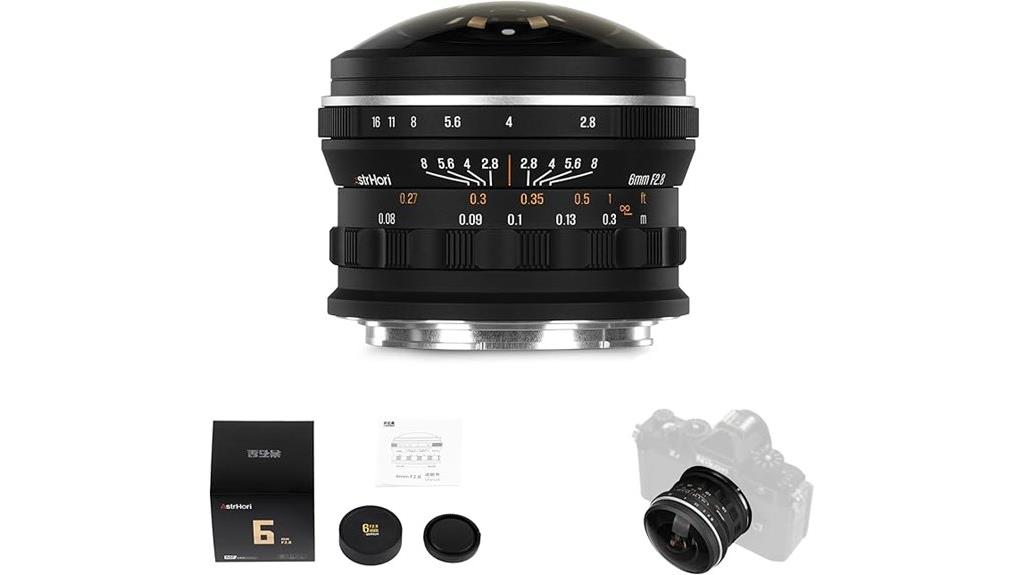
If you’re looking to capture stunning Milky Way shots with a dramatic, immersive perspective, the AstrHori 6mm F2.8 Circular Fisheye Lens is an excellent choice. It offers a 220° ultra-wide field of view, perfect for capturing the entire night sky in a single, striking image. The bright F2.8 aperture ensures sharpness even in low-light conditions, making it ideal for astrophotography. Its true circular fisheye effect adds bold distortion for creative storytelling. Built with a durable all-metal body and manual focus, it’s portable and adaptable for outdoor adventures. This lens truly combines artistic flexibility with professional performance for capturing the cosmos.
Best For: photographers and astrophotographers seeking immersive, artistic fisheye images and stunning night sky captures with a compact, durable lens.
Pros:
- Offers a 220° ultra-wide field of view for dramatic and immersive shots
- Bright F2.8 aperture provides excellent low-light performance, ideal for astrophotography
- Durable all-metal construction ensures portability and resilience in outdoor environments
Cons:
- Manual focus may require some practice for precise sharpness
- Compatibility limited exclusively to Nikon Z mount full-frame mirrorless cameras
- Larger dimensions (approximately 61 x 64.8 x 64.8 inches) may be less convenient for tight travel spaces
VILTROX 75mm f/1.2 XF Pro Lens for Fuji X-Mount Cameras
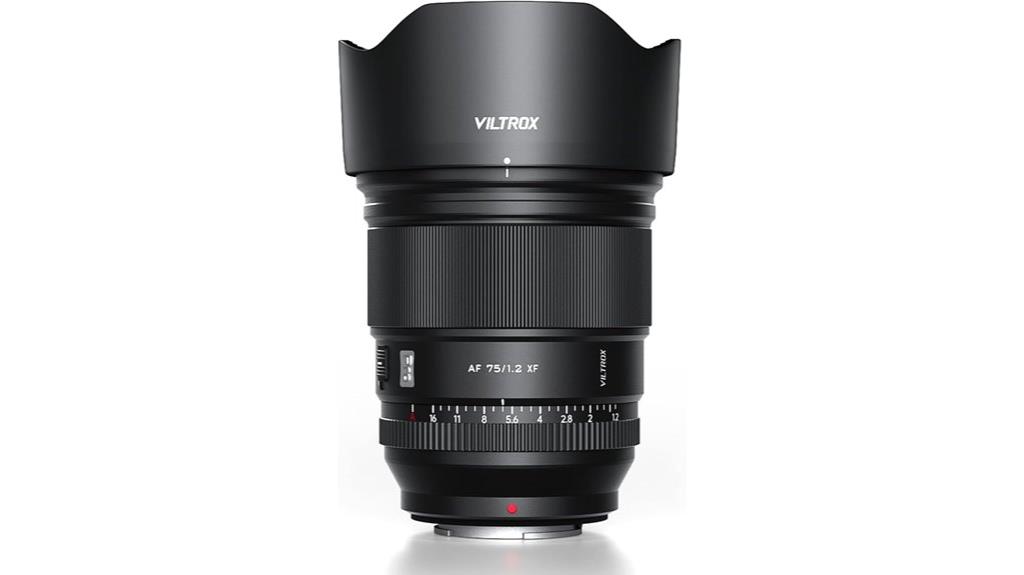
The VILTROX 75mm f/1.2 XF Pro Lens is an excellent choice for astrophotographers using Fuji X-mount cameras who want sharp, detailed images of the Milky Way in low-light conditions. Its large f/1.2 aperture captures more light, making it ideal for night sky photography, portraits, and landscapes. With 16 lens elements in 11 groups, including high-refractive index lenses, it delivers exceptional resolution and clarity. The advanced STM autofocus is quiet and fast, perfect for both stills and video. Built with durability in mind, it’s a versatile lens that elevates your astrophotography experience.
Best For: astrophotographers and low-light photography enthusiasts using Fuji X-mount cameras seeking sharp, detailed images of the night sky, portraits, and landscapes.
Pros:
- Large f/1.2 aperture allows excellent light-gathering for low-light conditions and astrophotography
- High-quality optical design with 16 elements in 11 groups ensures sharp, detailed images with minimal aberrations
- Fast, quiet autofocus with advanced STM motor is ideal for both stills and video shooting
Cons:
- Hefty weight of 2.82 pounds may be less portable for some users
- Larger dimensions (3.94 x 3.43 x 3.43 inches) could be cumbersome for compact camera bags
- Premium build quality and features may come with a higher price point compared to standard lenses
Sony E 16mm F2.8 Wide-Angle Prime Lens (SEL16F28)
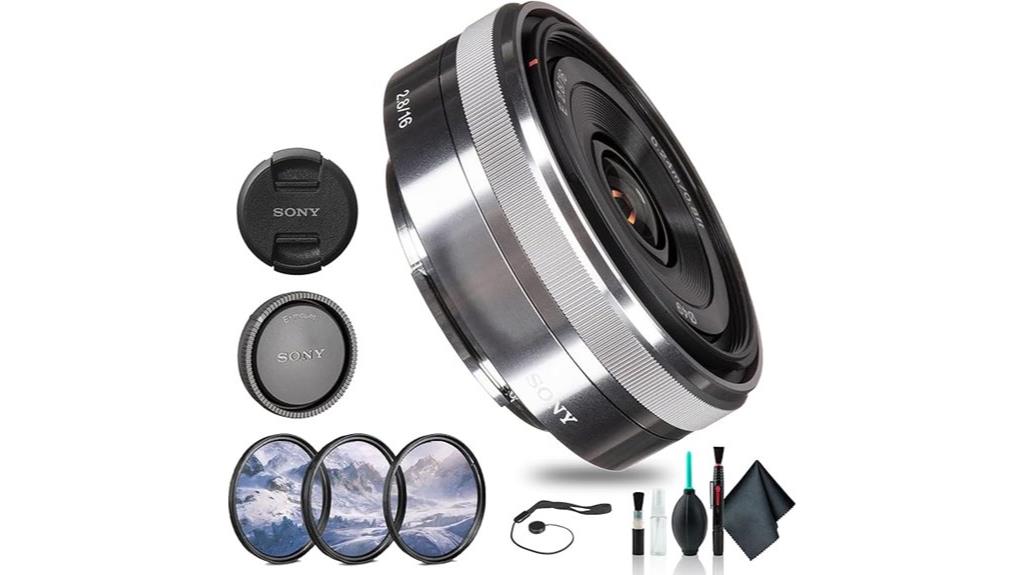
For astrophotographers seeking a lightweight, wide-angle lens that doesn’t compromise on image quality, the Sony E 16mm F2.8 (SEL16F28) is an excellent choice. Its compact pancake design weighs just 67 grams, making it perfect for travel and handheld shooting under the stars. The lens features aspherical elements that reduce distortion and spherical aberrations, ensuring sharp, contrasty images with natural colors. Its responsive autofocus and short 0.24-meter minimum focus distance enable close-up shots and versatile compositions. Plus, with compatible conversion lenses, you can expand your perspective without adding bulk. It’s an ideal, portable option for capturing stunning Milky Way shots on the go.
Best For: astrophotographers and travelers seeking a lightweight, high-quality wide-angle lens for capturing landscapes, interiors, and stunning night sky shots on APS-C E-mount cameras.
Pros:
- Compact pancake design weighing only 67 grams, ideal for portability and travel.
- Sharp, contrasty images with natural colors thanks to aspherical elements reducing distortion.
- Responsive autofocus and a short 0.24-meter minimum focus distance for versatile close-up and wide-angle shots.
Cons:
- Fixed focal length of 16mm may limit framing flexibility without additional lenses.
- No optical image stabilization, which might affect handheld shooting in low light.
- Compatible only with APS-C E-mount cameras and optional conversion lenses for expanded perspectives.
VILTROX 75mm f/1.2 PRO E Lens for Sony APS-C Cameras
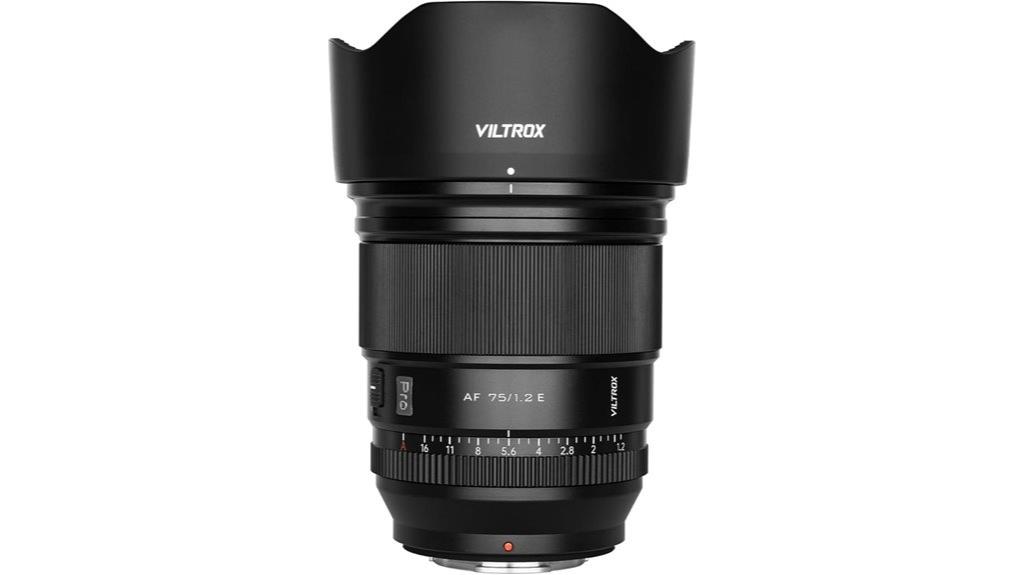
Photographers seeking stunning Milky Way shots on Sony APS-C cameras will appreciate the VILTROX 75mm f/1.2 PRO E Lens’s bright f/1.2 aperture, which allows for exceptional low-light performance and beautiful bokeh. Its 75mm focal length offers a tight, detailed view of the night sky, perfect for capturing star clusters and the Milky Way’s core. With 16 lens elements, including high-refractive index glass, it delivers sharp, high-resolution images even at wide apertures. The lens’s fast autofocus, minimal breathing, and manual/auto switching make it versatile for both photography and videography. Weighing just under 3 pounds, it balances quality with portability.
Best For: astrophotographers and videographers using Sony APS-C mirrorless cameras who want excellent low-light performance and beautiful bokeh in their images.
Pros:
- Bright f/1.2 aperture provides superior low-light capabilities and stunning background blur.
- Sharp, high-resolution images with 16-element lens design, including high-refractive index glass.
- Fast, precise autofocus with minimal breathing, suitable for both photography and videography.
Cons:
- Weighs nearly 3 pounds, which may be less portable for extended handheld shooting.
- Higher price point compared to standard zoom lenses, making it a significant investment.
- Designed specifically for APS-C cameras, limiting compatibility with full-frame Sony models.
Factors to Consider When Choosing Wide-Field Lenses for Milky Way Photography
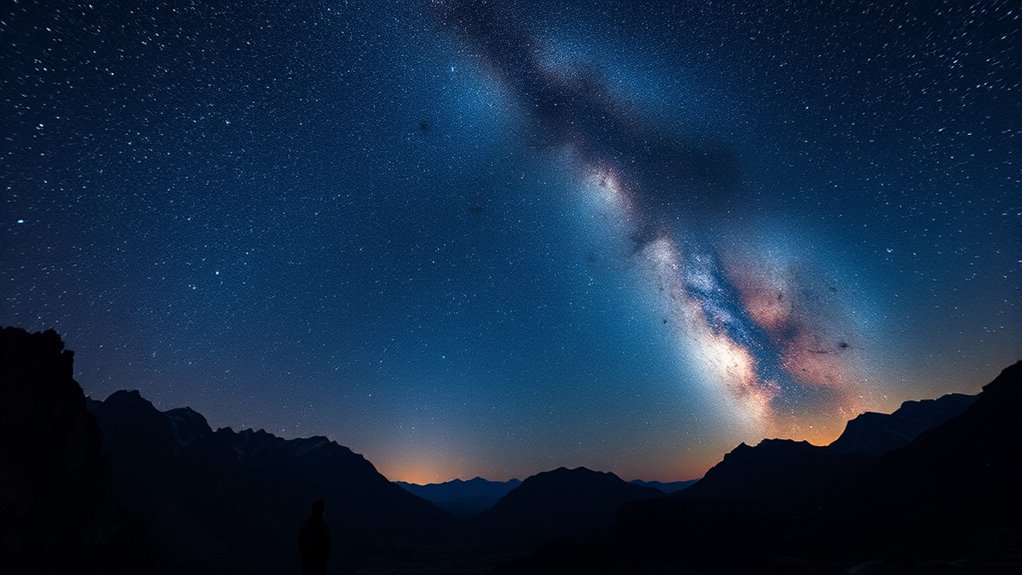
When choosing a wide-field lens for Milky Way photography, I consider factors like the field of view and aperture size to capture more sky with less exposure time. Low-light performance and distortion effects also matter because they impact image quality in dark conditions. Additionally, I weigh portability and size, since traveling with gear means balancing performance with convenience.
Field of View
A wide field of view (FOV) is essential for capturing the grandeur of the Milky Way in a single shot. It allows more of the night sky and galaxy to be included, making your images more immersive. Lenses with ultra-wide angles, typically between 14mm and 24mm on full-frame cameras, provide the expansive coverage needed for stunning astrophotography. The angle of view directly affects how much sky you capture—some lenses, like fisheyes, can cover nearly 180°, showing the entire celestial dome. A broader FOV helps you compose images that include both the Milky Way and foreground elements, enhancing storytelling. Keep in mind, larger FOVs can introduce distortion at the edges, so balancing coverage with image quality is key.
Aperture Size
Choosing a lens with a large aperture is vital for capturing the faint details of the Milky Way, especially in low-light conditions. A wider aperture (smaller f-number) allows more light to reach the sensor, which is essential for revealing the intricate structures of the night sky. I recommend an aperture of at least f/2.8 to guarantee enough brightness and to keep exposure times manageable. Ultra-wide lenses with fast apertures not only help gather more light but also enable you to include larger portions of the sky and landscape in a single shot. Additionally, lenses with wide apertures help reduce the effects of atmospheric turbulence and camera shake during long exposures, resulting in sharper, more detailed images of the Milky Way.
Low-Light Performance
To excel in low-light conditions, a wide-field lens with a large maximum aperture—such as f/1.2 or f/2.8—can make a significant difference in astrophotography. These bright lenses allow more light to reach the sensor, enabling shorter exposure times that reduce star trails and motion blur. High-quality optics with minimal aberrations preserve sharpness and contrast, ensuring detailed captures of the Milky Way. They also help bring out subtle colors and fine details of the night sky without adding noise or grain. Additionally, lenses with superior light transmission and effective coatings enhance overall brightness and clarity during nighttime shooting. Choosing a lens with excellent low-light performance makes a noticeable difference in the quality and clarity of your astrophotography images.
Distortion Effects
Since distortion can be vital to the accuracy and aesthetic of Milky Way photos, it’s important to select a wide-field lens that minimizes these effects. Wide-angle lenses with minimal distortion help preserve the natural appearance of the night sky, ensuring stars remain sharp and correctly shaped. Fisheye lenses, while creating stunning circular images, introduce pronounced edge distortion that can warp star shapes and curved horizons—compromising realism. Correcting such distortion in post-processing is often challenging and may reduce image quality. Lenses designed specifically to reduce distortion often incorporate aspherical elements, helping maintain straight lines and natural star patterns. Avoiding lenses with excessive distortion ensures your Milky Way photos look both authentic and visually appealing, capturing the sky’s beauty without unwanted warping.
Portability and Size
When photographing the Milky Way outdoors, portability and size become important considerations. Compact, lightweight lenses are much easier to carry and handle during night shoots, reducing fatigue over long periods. Smaller lenses take up less space in your camera bag, making transportation and storage more convenient, especially when traveling to remote locations. Portable wide-field lenses allow for quick setup and adjustments, which is vital when capturing fleeting sky conditions. Their lightweight design also helps minimize camera shake, improving stability whether shooting handheld or with minimal support. Additionally, reduced size and weight make it feasible to hike or trek to high-altitude or remote sites, enabling better vantage points for stunning Milky Way shots. Overall, choosing a portable lens enhances flexibility and comfort during your astrophotography adventures.
Frequently Asked Questions
How Do Lens Coatings Affect Low-Light Astrophotography Performance?
Lens coatings are essential for low-light astrophotography because they reduce reflections and glare, allowing more light to pass through the lens. This results in sharper, clearer images with less haze and flare. When I shoot the Milky Way, I look for lenses with multi-coatings or anti-reflective coatings, as they improve contrast and brightness, helping me capture more detail in the dark sky without unwanted reflections ruining the shot.
Can These Lenses Be Used Effectively With Star Trackers?
Absolutely, these lenses work great with star trackers! I’ve used my wide-field lens on a star tracker, and the results are breathtaking—stars streaking smoothly across the sky like a cosmic ballet. The combination stabilizes your shot, reducing star trails and capturing crisp, stunning images. Just make certain your lens is lightweight enough for your tracker’s mount, and you’ll be amazed at the clarity and detail you can achieve.
What Is the Impact of Lens Flare on Milky Way Images?
Lens flare can really impact my Milky Way images by creating unwanted streaks and bright spots that distract from the night sky’s beauty. It often occurs when strong light sources, like streetlights or the moon, hit the lens at certain angles. To minimize flare, I use lens hoods, avoid direct light, and shoot with high-quality lenses that have multiple coatings. This helps keep my images clear and sharp.
Are There Specific Lens Maintenance Tips for Astrophotography?
Think of your lens as a telescope peering into the universe—keeping it pristine is key. I regularly clean the glass with a blower and lens cloth to prevent dust clouds from obscuring celestial views. I also check for scratches and smudges before each shoot. Storing my gear in a dry, padded case prevents damage and mold. Proper maintenance keeps my lens sharp as the stars themselves.
How Do Weather Conditions Influence Lens Choice for Night Sky Photography?
Weather conditions heavily influence my lens choices for night sky photography. I always opt for weather-sealed lenses in damp or humid conditions to prevent moisture damage. On windy nights, I prefer sturdy, fast lenses to minimize camera shake. Clear, stable weather lets me use slower lenses with narrower apertures, while cold temperatures make me choose lenses with better cold resistance. Adaptability is key to capturing stunning Milky Way shots in any weather.
Conclusion
Choosing the right wide-field lens can feel overwhelming, like finding a needle in a haystack. But remember, the perfect lens blends sharpness with the ability to capture the vastness of the night sky—much like a painter capturing both detail and grandeur. Whether you prefer the immersive fisheye or the precise prime, each option offers a unique way to turn the cosmos into your canvas. Your perfect shot is just a lens away.