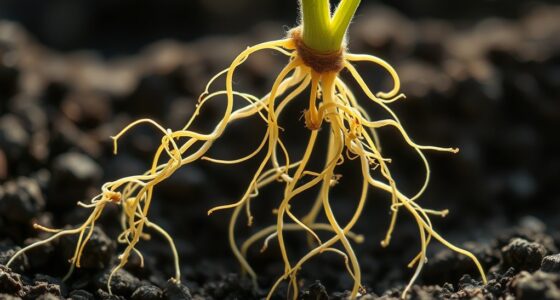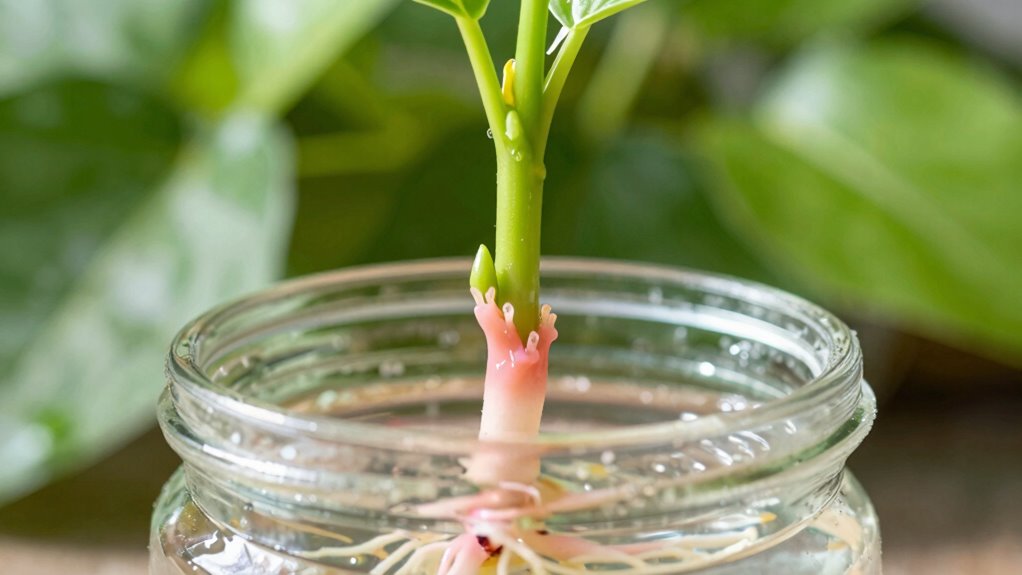
Rooting hormones help your cuttings establish faster by stimulating root development right at the cut site. They contain plant growth regulators, mainly auxins, that promote cell division and encourage quicker root formation. When you dip your cuttings into hormone powders, gels, or liquids, you give them a boost to root more efficiently. Proper application techniques and environmental conditions also matter, making the process more successful. Keep exploring to discover all the tips for better rooting success.
Key Takeaways
- Rooting hormones stimulate root cell development at the cut site, speeding up root formation.
- They enhance cell division, leading to quicker establishment in soil or medium.
- Proper application ensures the cutting develops a strong root system faster.
- Hormones improve success rates, reducing the time needed for cuttings to become independent plants.
- Using rooting hormones creates optimal conditions for faster and more reliable plant establishment.
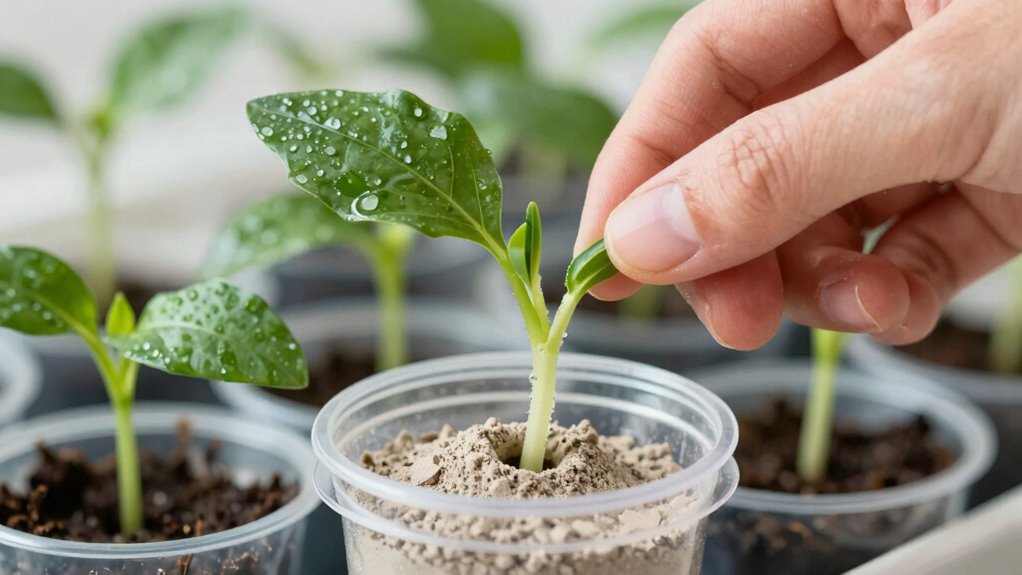
When propagating cuttings, using rooting hormones can greatly improve your success rate. These hormones stimulate root development, making it easier for your cuttings to establish themselves in new soil or growing medium. If you’re serious about plant propagation, understanding how to apply these hormones correctly can save you time and increase your chances of success. They are especially useful for woody plants, flowering shrubs, and plants that are typically slow to root. Rooting hormones contain plant growth regulators, mainly auxins, which promote cell division and root formation at the cut site. Applying the right hormone at the right time can turn a simple cutting into a thriving new plant faster than relying on natural rooting processes alone. Proper hormone application techniques are essential for successful propagation, and the adaptable, long-term structure of digital content can help gardeners access up-to-date guidance and techniques.
Hormone application techniques are straightforward but require some attention to detail. First, you need to choose the right form of hormone—powder, liquid, or gel—depending on the plant type and your preference. Powdered hormones are easy to use; you simply dip the cut end of your stem directly into the powder, tapping off any excess. Liquid hormones often come in bottles with applicator tips, allowing for precise application, especially when you’re dealing with multiple cuttings. Gels are thick and cling well to the cut surface, providing a controlled release of hormones. Regardless of the form, the key is to guarantee the hormone contacts the freshly cut surface without contaminating the rest of the plant or your workspace. Additionally, understanding the plant hormone composition can help optimize your propagation success. Using the correct concentration of auxins ensures that your cuttings root effectively without causing tissue damage.
In plant propagation, hormone application techniques also involve proper timing and preparation. Always make your cuttings in clean, sharp scissors or pruning shears to prevent infection. Dip the freshly cut end into your chosen hormone, and then plant it immediately into your rooting medium. Keep in mind that excessive hormone application isn’t beneficial; a light coating is sufficient and prevents wastage. Some growers prefer to dip and then lightly dust off excess powder, ensuring only a thin layer remains. Proper hormone application techniques, combined with the right environmental conditions like humidity and warmth, considerably boost the chances of root formation. With patience and practice, you’ll notice your cuttings developing roots more quickly, leading to healthier, more vigorous new plants. Using rooting hormones thoughtfully is a vital step in efficient plant propagation, helping even novice gardeners succeed in expanding their garden with minimal fuss.

Bonide Bontone II Rooting Powder, 1.25 oz Ready-to-Use Dust for Houseplants and Transplants Speeds Root Development
Quick Root Development: Bontone rooting powder from Bonide promotes quick root development from cuttings once applied; to apply,…
As an affiliate, we earn on qualifying purchases.
As an affiliate, we earn on qualifying purchases.
Frequently Asked Questions
Can Rooting Hormones Be Used on All Plant Types?
No, rooting hormones can’t be used on all plant species. Different plants respond uniquely to hormone concentration, so it’s essential to select the right type for your specific plant species. Some plants require higher hormone levels, while others need lower doses. Always research your plant’s needs before applying rooting hormones to avoid damage and guarantee successful rooting. Proper use maximizes growth and helps cuttings establish faster.
Are There Natural Alternatives to Commercial Rooting Hormones?
Your garden’s secret weapon isn’t just a myth—natural alternatives like organic solutions and plant-specific formulas can work wonders. You can use honey, cinnamon, willow water, or aloe vera as natural rooting agents. These options boost root growth by mimicking commercial hormones, making them the superheroes of plant propagation. Embrace these eco-friendly choices, and you’ll find your cuttings establishing faster while nourishing your garden’s health and robustness.
How Long Should Cuttings Stay in Rooting Hormone?
You should dip your cuttings in rooting hormone for about 10 to 15 seconds, following the timing guidelines. Use the recommended hormone concentration for the specific plant type, as too much can hinder root development. After dipping, gently shake off excess hormone and plant the cuttings promptly. This guarantees the hormone is effective without overwhelming the plant, promoting faster and stronger root growth.
Do Rooting Hormones Affect Flower or Fruit Production?
Like a gentle whisper guiding growth, rooting hormones mainly focus on establishing roots, so they don’t directly influence flower production or fruit development. Instead, they serve as the seed of strength for cuttings. When plants are healthy and rooted well, they can then channel energy into flowering and fruiting. So, while rooting hormones don’t affect these processes directly, they set the foundation for vibrant flower production and fruitful yields.
Are There Any Safety Concerns When Handling Rooting Hormones?
Yes, there are safety concerns when handling rooting hormones. You should handle them with care to avoid chemical exposure, which can cause skin irritation or respiratory issues. Always wear gloves and eye protection, and work in a well-ventilated area. Follow the manufacturer’s instructions carefully, and wash your hands thoroughly afterward. Proper handling safety guarantees you protect yourself from potential hazards associated with these chemicals.
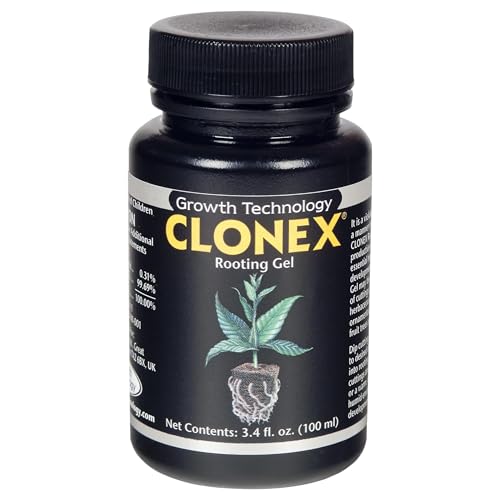
Clonex Rooting Gel – High-Performance Rooting Compound for Plant Cuttings, Contains IBA, Promotes Root Initiation & Development – 100ml
HIGH-PERFORMANCE ROOTING GEL – Clonex Rooting Gel is a water-based formula with the ideal level of IBA. Trusted…
As an affiliate, we earn on qualifying purchases.
As an affiliate, we earn on qualifying purchases.
Conclusion
Using rooting hormones can considerably boost your cuttings’ chances of success, helping them establish roots faster and stronger. Did you know that cuttings treated with rooting hormones are 50% more likely to develop healthy roots compared to untreated ones? This simple step can save you time, effort, and frustration, turning your gardening dreams into reality. So next time, don’t forget to use rooting hormones—you’ll be amazed at how quickly your plants flourish.

Root Drops – Liquid Rooting Hormone for Cuttings | Fast Propagation Drops, Stronger Roots, Less Shock | Works in Water, Soil, Leca, Moss| For all Indoor Houseplants like Pothos, Monstera, Philodendron
THE ULTIMATE ROOTING BOOSTER: Specially formulated with all-natural rooting hormone and vitamins, our propagation drops dramatically speed up…
As an affiliate, we earn on qualifying purchases.
As an affiliate, we earn on qualifying purchases.
Root Drops – Liquid Rooting Hormone for Cuttings | Fast Propagation Drops, Stronger Roots, Less Shock | Works in Water, Soil, Leca, Moss| For all Indoor Houseplants like Pothos, Monstera, Philodendron
THE ULTIMATE ROOTING BOOSTER: Specially formulated with all-natural rooting hormone and vitamins, our propagation drops dramatically speed up…
As an affiliate, we earn on qualifying purchases.
As an affiliate, we earn on qualifying purchases.