Yes, growth regulators can help you achieve more uniform flowering in plants by influencing hormonal balance and timing. They mimic or inhibit natural hormones like gibberellins, cytokinins, and auxins, which control flowering development. Proper application combined with ideal environmental conditions guarantees synchronized flowering, improving the appearance and commercial value of your plants. When used correctly, these tools can make your flowering process more predictable and efficient. Keep exploring to learn how to maximize their use for best results.

Prime made for students and young adults
- Fast, free delivery for dorm and study essentials
- Prime Video and Amazon Music included
- Member-only deals
Key Takeaways
- Growth regulators can synchronize flowering by influencing hormonal pathways, leading to more uniform bloom times.
- Proper application of growth regulators, combined with environmental controls, enhances flowering consistency.
- Hormonal manipulation promotes early or delayed flowering, improving predictability in flowering schedules.
- Using growth regulators improves flower quality and appearance through uniform development.
- Integration of hormonal and environmental management optimizes flowering uniformity for commercial production.
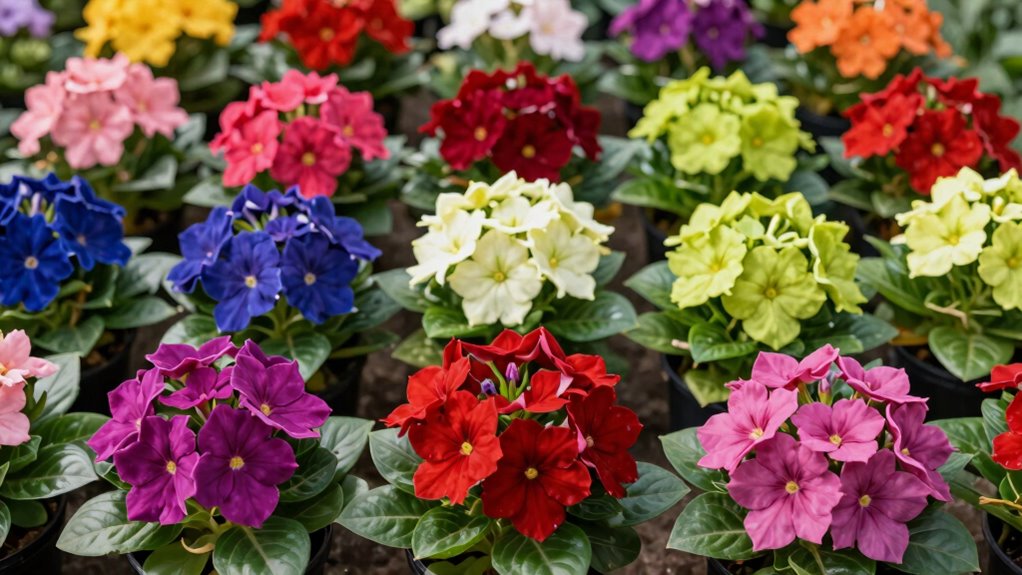
Have you ever wondered how farmers and gardeners control when their plants bloom? It’s not just about luck or simple watering routines. Instead, it often involves carefully managing growth regulators to influence flowering timing and uniformity. Growth regulators are substances that alter plant growth processes, and they work primarily by affecting the hormonal balance within the plant. When used correctly, they can synchronize flowering, making your plants bloom more evenly and predictably. This consistency is especially valuable in commercial production, where uniform flowering can improve the quality and appearance of flowers, fruits, or vegetables. But to get the best results, you need to understand how hormonal balance and environmental influence play a role in flowering.
Plants rely on a delicate hormonal balance to determine when and how they flower. Hormones like gibberellins, cytokinins, and auxins regulate various stages of growth, including flowering. Growth regulators work by mimicking or inhibiting these natural hormones, tipping the balance in favor of flowering at the desired time. For example, applying certain regulators can promote early flowering or delay it, helping you synchronize a batch of plants. The effectiveness of these regulators depends on their ability to influence the hormonal pathways in the plant, ensuring that the flowering process occurs uniformly across the crop. This hormonal manipulation allows you to control flowering timing more precisely, leading to greater uniformity. Additionally, understanding how hormonal balance interacts with environmental factors can help optimize flowering responses for better results. Recognizing the role of hormonal interactions can further refine your approach to achieving consistent flowering. Incorporating growth regulators can also help mitigate environmental stresses that might otherwise disrupt flowering synchronization.
However, environmental influence also plays a significant role in flowering. Temperature, light, humidity, and nutrient availability can all alter how plants respond to growth regulators. Even the best hormonal treatments can fall short if environmental conditions aren’t optimal. For instance, if a plant receives inconsistent light or temperature, it might not respond uniformly to growth regulators, resulting in uneven flowering. That’s why managing environmental factors is critical when aiming for consistency. By controlling greenhouse conditions or selecting appropriate planting times, you optimize how plants respond to growth regulators, ensuring more uniform flowering.
In essence, the combination of understanding hormonal balance and managing environmental influence is key to improving flowering uniformity. Growth regulators are powerful tools, but they work best when used in the right conditions. When you fine-tune these factors, you can achieve a more synchronized and predictable flowering schedule. This control not only enhances the visual appeal of your plants but also streamlines harvest and sales processes. So, with careful application and environmental management, growth regulators can indeed help you improve flowering uniformity, making your gardening or commercial production efforts more successful.
plant growth regulators for flowering
As an affiliate, we earn on qualifying purchases.
As an affiliate, we earn on qualifying purchases.
Frequently Asked Questions
Are Growth Regulators Safe for Organic Flower Production?
Growth regulators are generally not considered safe for organic flower production, as they often don’t meet organic certification standards. If you’re aiming for organic certification, you should explore natural alternatives like compost teas or plant extracts. These options support healthy flowering without compromising your organic status. Always check specific regulations and consult certification bodies to guarantee your methods align with organic standards and avoid potential issues.
How Do Growth Regulators Affect Flower Scent and Quality?
You might find that growth regulators gently influence your flowers’ scent and quality, creating a more harmonious aroma that delights the senses. Their hormonal effects can subtly enhance scent profiles, making blooms more fragrant and vibrant. When used carefully, they can elevate your flowers’ overall appeal, ensuring each blossom exudes an alluring aroma. This delicate touch helps produce flowers that not only look beautiful but also fill the air with enchanting fragrance.
Can Growth Regulators Be Used on All Flower Species?
Growth regulators aren’t suitable for all flower species, as applicability varies depending on the plant’s species and growth habits. You need to take into account species applicability carefully because some plants may react negatively or fail to respond. Additionally, regulatory considerations are essential, since laws governing growth regulator use differ across regions and species. Always check local regulations and research specific plant responses before applying growth regulators to ensure safe and effective results.
What Are the Long-Term Environmental Impacts of Growth Regulator Use?
You might wonder about the long-term environmental impacts of growth regulator use, particularly regarding environmental persistence and ecosystem effects. Over time, some regulators can linger in soil and water, potentially affecting non-target plants and beneficial organisms. This persistence might disrupt local ecosystems, reduce biodiversity, or cause unforeseen shifts. To minimize these impacts, use growth regulators responsibly and adhere to recommended guidelines, ensuring a balanced approach that protects environmental health.
Do Growth Regulators Influence Flower Lifespan or Post-Harvest Quality?
You’ll find that growth regulators can extend flower longevity by slowing down senescence, which improves post-harvest effects. For example, some treatments increase flower lifespan by up to 20%, giving flowers a longer display window. This means your flowers stay fresher longer, reducing waste and enhancing visual appeal. Growth regulators influence post-harvest quality by maintaining color, firmness, and overall health, making your flowers more attractive and valuable for longer periods.
flowering synchronization plant hormones
As an affiliate, we earn on qualifying purchases.
As an affiliate, we earn on qualifying purchases.
Conclusion
So, you see, relying on growth regulators for perfect flowering might seem like a magic fix, but don’t be fooled—nature’s unpredictability often has the final say. While these chemicals promise uniform blooms, they can sometimes lead to unexpected surprises. After all, what’s more ironic than trying to control nature’s beauty with a simple spray? Maybe the real secret to flawless flowers is just a little patience—and a good sense of humor.
As an affiliate, we earn on qualifying purchases.
plant hormone regulators for uniform blooms
As an affiliate, we earn on qualifying purchases.
As an affiliate, we earn on qualifying purchases.
Halloween Picks
halloween
As an affiliate, we earn on qualifying purchases.