Activated carbon removes impurities by attracting and trapping contaminants on its large surface area through molecular interactions. It uses tiny pores to hold molecules from liquids or gases, relying on forces like Van der Waals, hydrogen bonds, and electrostatic attractions. Its surface chemistry and pore size are key to targeting specific impurities. As the surface fills up, its capacity decreases, so understanding its structure helps improve effectiveness. Keep exploring to uncover more about how this process works in detail.
Key Takeaways
- Activated carbon attracts impurities through adsorption, where molecules adhere to its surface pores.
- Its extensive surface area provides numerous sites for molecules to bind and be removed.
- Interactions such as Van der Waals forces, hydrogen bonding, and electrostatic attractions facilitate impurity capture.
- Surface chemistry and pore size determine the types and sizes of impurities effectively adsorbed.
- Regeneration processes remove accumulated impurities, restoring activated carbon’s adsorption capacity.
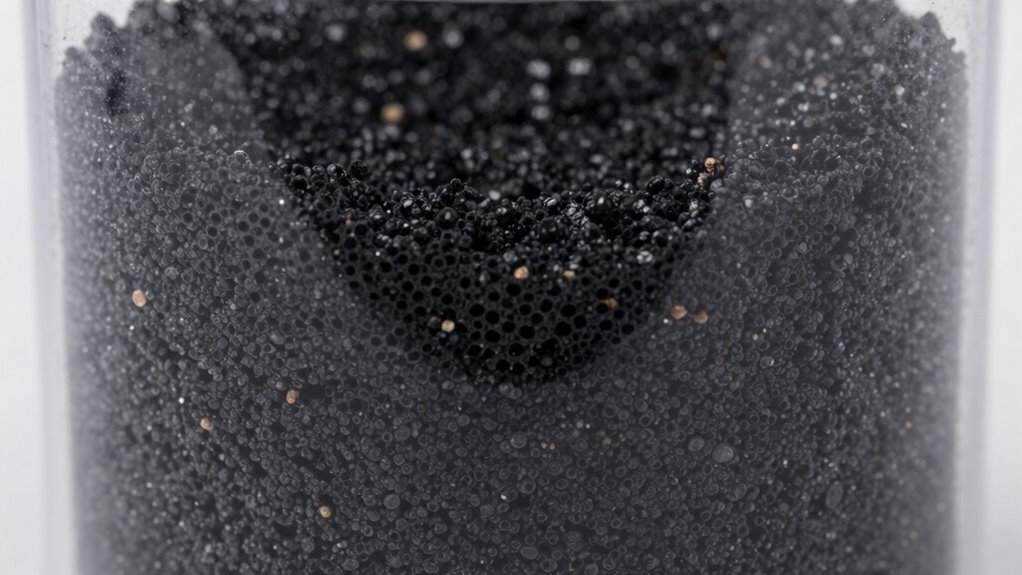
Have you ever wondered how activated carbon effectively removes impurities from liquids and gases? The answer lies in its unique ability to attract and hold contaminants through processes driven by adsorption mechanisms. Unlike filtration that traps particles physically, adsorption involves molecules from the impurities attaching to the surface of the activated carbon. This process is highly efficient because activated carbon boasts an extensive surface area filled with tiny pores, providing countless sites for impurities to adhere to. When you pass contaminated water or air through activated carbon, these molecules are drawn to and stick to the surface, effectively cleansing the substance.
Activated carbon cleanses liquids and gases by attracting and trapping impurities on its vast porous surface through adsorption.
Understanding surface chemistry is key to grasping how activated carbon works. The surface of activated carbon is rich in functional groups, such as carboxyl, hydroxyl, and carbonyl groups, which influence how molecules interact with it. These groups create a variety of chemical interactions, including Van der Waals forces, hydrogen bonding, and electrostatic attractions. Depending on the nature of the impurities—whether they are organic compounds, chlorine, or other chemicals—the surface chemistry determines how strongly they bind to the carbon. For instance, non-polar organic molecules are attracted through dispersion forces, while polar molecules might form specific interactions with functional groups on the carbon surface. This versatility makes activated carbon effective against a wide range of impurities.
The adsorption process is dynamic and depends on factors like temperature, pH, and the concentration of impurities. Typically, as the activated carbon’s surface sites become occupied, its capacity to adsorb additional contaminants diminishes. That’s why mediums like activated carbon filters need regular replacement or regeneration to maintain their effectiveness. The porous structure of activated carbon also plays a critical role; the size and distribution of pores determine which molecules can be adsorbed efficiently. Smaller pores are better suited for adsorbing tiny molecules, while larger pores can trap bigger contaminants. Additionally, the surface chemistry of activated carbon can be modified or enhanced to target specific impurities more effectively. Understanding the pore structure is crucial for optimizing the performance of activated carbon in different applications. Furthermore, the regeneration process allows for the removal of accumulated impurities, extending the lifespan of activated carbon.
In essence, you can think of activated carbon as a magnetic sponge on a molecular level, selectively attracting and holding impurities based on surface chemistry and adsorption mechanisms. This synergy makes it a widely used, reliable method for water purification, air filtration, and many industrial processes. The effectiveness of activated carbon hinges on its surface properties, pore structure, and the nature of the impurities involved. When you understand these fundamentals, you see how activated carbon serves as a powerful tool in removing unwanted substances, ensuring cleaner liquids and gases.

ICEPURE 10" x 4.5" Whole House Sediment Activated Carbon Water Filter 3Pack
- Certifications and Water Quality: Certified to NSF/ANSI 42, BPA free, improves taste
- Filtration Lifetime: Lasts 6 months or 30,000 gallons
- Filter Dimensions: 10 x 4.5 inches fits standard housings
As an affiliate, we earn on qualifying purchases.
As an affiliate, we earn on qualifying purchases.
Frequently Asked Questions
Can Activated Carbon Remove Viruses From Water?
Activated carbon isn’t reliable for virus removal from water. While it excels at microbial filtration and reducing chemicals, viruses are too small to be effectively captured by activated carbon alone. For virus removal, you need advanced methods like UV sterilization or specific membrane filters. So, don’t depend solely on activated carbon if your goal is thorough virus removal; use it alongside other purification techniques for safe drinking water.
How Long Does Activated Carbon Filtration Last?
Did you know that activated carbon filters typically last between 6 to 12 months? The filter lifespan depends on your water usage and the level of impurities. You should check your filter regularly, as increased clogging indicates the need for replacement. Maintenance frequency is key to ensuring peak performance. Replacing the filter on time prevents bacteria buildup and maintains water quality, keeping your system efficient and safe.
Does Activated Carbon Remove Beneficial Minerals?
Activated carbon primarily targets impurities and contaminants, but it doesn’t substantially remove beneficial minerals. You retain essential minerals like calcium and magnesium, which aid in nutrient preservation and mineral retention. While some mineral loss may occur in rare cases, activated carbon filters generally preserve your water’s nutritional value. So, you can enjoy purified water without worrying about losing crucial nutrients, ensuring your drinking water remains both clean and beneficial.
Is Activated Carbon Effective Against All Types of Impurities?
Activated carbon is highly effective against many impurities because of its large surface area, which allows for extensive chemical adsorption. However, it doesn’t remove all types of contaminants, especially those that require specific chemical reactions or are dissolved substances. For best results, consider combining it with other treatment methods. Its effectiveness depends on the impurity’s nature and whether it can be adsorbed onto the carbon’s surface.
How Is Activated Carbon Regenerated or Recycled?
Think of activated carbon’s life cycle as a phoenix rising from ashes. You regenerate it mainly through chemical regeneration, where chemicals remove trapped impurities, restoring its adsorption capacity. Recycling minimizes environmental impact by reducing waste and conserving resources. This process keeps activated carbon effective and sustainable, ensuring you get the most out of your filtration systems while protecting the environment. Proper regeneration is key to maintaining its efficiency and eco-friendliness.

MOOKA Air Purifiers for Home Large Room up to 1076ft², H13 True HEPA Air Filter Cleaner, Odor Eliminator, Remove Smoke Dust Pollen Pet Dander, Night Light, B-D02L White
- Large Coverage Area: Covers up to 1076 ft² with 6 air changes/hr
- Effective Filtration System: Captures pet hair, dander, smoke, odors, dust
- True HEPA Filter: Removes airborne particles as small as 0.3 microns
As an affiliate, we earn on qualifying purchases.
As an affiliate, we earn on qualifying purchases.
Conclusion
So, next time you use activated carbon, realize you’re wielding a superpower capable of vanquishing impurities that threaten your health and well-being. It’s not just filtering; it’s a mighty fortress defending your water and air from the tiniest, most dangerous invaders. Imagine your life transformed, every sip and breath pure and pristine—thanks to this tiny, but mighty hero. Activated carbon isn’t just a filter; it’s your ultimate protector against the chaos of impurities!

Bagean Cut to Fit Activated Carbon Filter Sheet 16” x 48” Carbon Air Filter
- Freshens Air: Removes odors for a clean environment
- Highly Absorbent: Made from coconut shell carbon
- Superior Odor Removal: Enhanced with extra carbon for better performance
As an affiliate, we earn on qualifying purchases.
As an affiliate, we earn on qualifying purchases.

Sukh 410g Activated Carbon Pellets – Acid Free Aquarium Charcoal Filter
- Water Odor Removal: Purifies water by removing odors and impurities
- Air Purification: Removes harmful substances and odors from air
- Multi-Purpose Use: Suitable for tanks, pools, kitchens, and more
As an affiliate, we earn on qualifying purchases.
As an affiliate, we earn on qualifying purchases.