You can perform simple evaporation experiments using small, identical dishes in different environments to see how temperature, surface area, and humidity affect water loss. Place one dish in the sun and another in the shade, or compare drying times in humid and dry air. These experiments help you understand how environmental factors influence evaporation and everyday phenomena like drying clothes or puddles. Keep exploring, and you’ll discover even more about how natural conditions shape our world.
Key Takeaways
- Use small, identical dishes in different environments to compare how temperature and sunlight affect evaporation rates.
- Vary surface area by changing dish shapes to demonstrate its impact on evaporation speed.
- Place water in humid and dry conditions to observe how humidity influences water vaporization.
- Measure water loss over time to illustrate how environmental factors like airflow and temperature affect evaporation.
- Combine variables such as temperature, humidity, and surface area in experiments to show their interactive effects on evaporation.
Have you ever wondered how water disappears from a puddle or a drying cloth? It’s a simple process called evaporation, and understanding it can reveal a lot about how the world around you works. When water turns into vapor and leaves a surface, it’s influenced by factors like evaporation rates and humidity effects. These concepts might seem complex, but you can easily explore them with straightforward experiments.
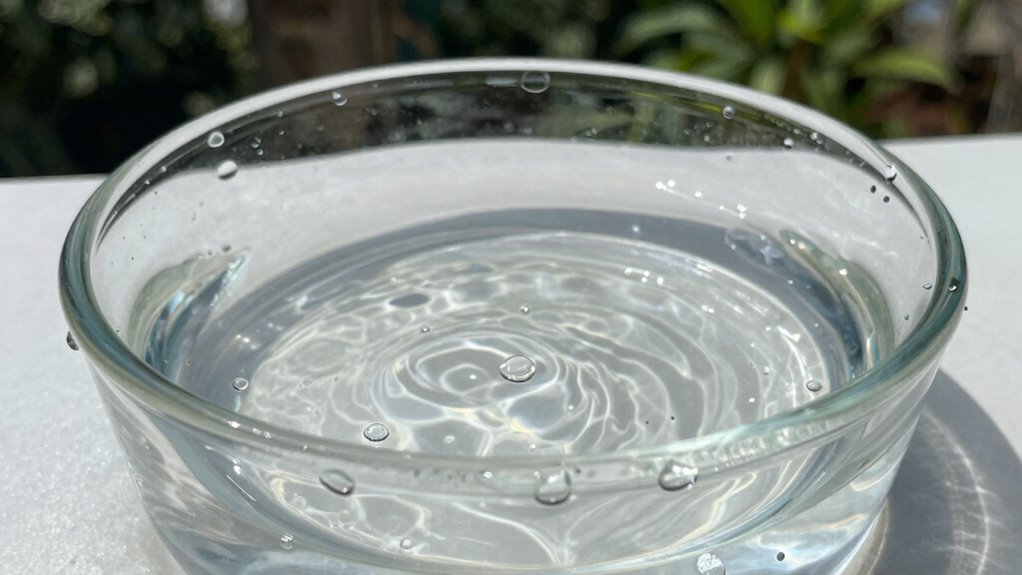
To observe evaporation rates, start by placing small, identical amounts of water in different shallow dishes. Put one dish in a warm, sunny spot and another in a shaded area. Over time, you’ll notice the water in the sunny spot evaporates faster. This happens because higher temperatures increase evaporation rates, causing water molecules to escape more quickly. You can also measure how much water remains at regular intervals to compare the evaporation speeds. This simple experiment demonstrates that temperature is a key factor in evaporation and helps you see how environmental conditions influence the process. Understanding the role of temperature is essential for grasping how evaporation operates in various climates and settings. Additionally, evaporation is directly affected by the surface area of the water, which can be tested by using different dish shapes and sizes to observe how surface exposure influences evaporation speed. Recognizing these factors helps explain everyday phenomena such as drying clothes or evaporating pools.
Warm, sunny spots cause water to evaporate faster, illustrating how temperature influences the drying process.
Another aspect to consider is water vapor pressure, which influences how quickly water molecules escape into the air, and this can be observed indirectly through humidity experiments. To deepen your understanding, it’s helpful to explore how environmental conditions like airflow can also impact evaporation rates by removing water vapor from the surface more efficiently. Next, to explore humidity effects, try a similar experiment but with a twist. Place two dishes of water in different environments—one in a humid room and the other in a dry, well-ventilated space. Over several hours or days, observe how much water evaporates from each dish. You’ll notice that the water in the humid environment evaporates more slowly. This is because high humidity means the air already contains a lot of water vapor, reducing the capacity for more water molecules to escape from the surface. Conversely, dry air promotes faster evaporation since it can absorb more water vapor. This simple setup visually demonstrates the impact of humidity on evaporation rates, emphasizing that moisture levels in the air significantly affect how quickly water disappears. Humidity effects are important to consider in various applications, from weather prediction to household humidity control.
You can take these experiments further by combining variables—like testing evaporation in different temperatures and humidity levels simultaneously. Keeping detailed notes helps you understand the interplay of these factors. These experiments aren’t just about water—they’re about understanding how natural processes work and how environmental conditions shape our daily lives. Whether you’re drying clothes, observing puddles, or watching plants transpire, the principles of evaporation, evaporation rates, and humidity effects are always at play. By exploring these concepts through simple experiments, you gain a clearer picture of the science behind everyday phenomena, making the invisible process of evaporation both tangible and fascinating.

UNGLINGA 150 Experiments Science Kits for Kids Chemistry Lab S.T.E.MToys
- Number of Experiments: 150 science experiments for kids
- Educational Topics: Earth, surface tension, chemistry, physics
- Instructional Manual: Well-illustrated, step-by-step guide
As an affiliate, we earn on qualifying purchases.
As an affiliate, we earn on qualifying purchases.
Frequently Asked Questions
How Does Temperature Affect Evaporation Rates?
Higher temperatures increase evaporation rates because temperature fluctuations boost evaporation dynamics. When you heat a liquid, molecules gain energy, move faster, and escape more easily into the air. Conversely, cooler temperatures slow down these molecules, reducing evaporation. By observing how temperature changes influence evaporation, you see firsthand how heat affects the process, helping you understand the underlying principles of evaporation dynamics and the role temperature plays in it.
Can Evaporation Occur in a Vacuum?
Yes, evaporation can occur in a vacuum. Think of it as a dance where molecules break free more easily without air resistance. In a vacuum, the vacuum effects reduce pressure around the liquid, speeding up the evaporation mechanisms. Without atmospheric pressure, molecules escape more readily into the empty space, making evaporation happen even faster than in normal conditions. So, in a vacuum, evaporation isn’t just possible—it’s accelerated.
What Materials Are Best for Evaporation Experiments?
You should choose materials with high surface area and favorable material properties for evaporation experiments. Thin, flat surfaces like glass slides or aluminum foil work well because they maximize exposure to air, speeding up evaporation. Lightweight fabrics or porous materials are also effective, as their increased surface area enhances evaporation rates. Make sure the materials are non-reactive and safe to handle, making your experiments both effective and safe.
How Does Humidity Influence Evaporation Speed?
Higher humidity levels slow down evaporation because the air already contains more moisture, reducing the evaporation dynamics. When the air is dry, evaporation speeds up since the air can absorb more water vapor. You’ll notice that in humid environments, liquids take longer to evaporate, while in dry conditions, they evaporate faster. Understanding these effects helps you grasp how humidity influences the evaporation process in various real-world situations.
Can Evaporation Be Used for Water Purification?
Yes, evaporation can be used for water purification. When you heat water, the process leaves behind salt and other contaminants, effectively removing them through salt removal and contaminant separation. This method, called solar distillation, is simple and effective for purifying water, especially in remote areas. By capturing the evaporated water and condensing it, you get clean, drinkable water, free from impurities and salts.
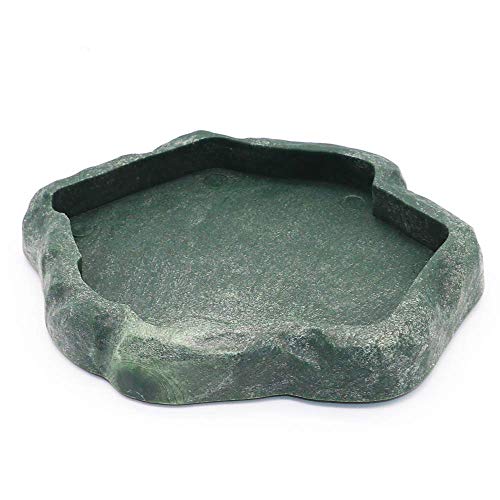
SLSON Small Reptile Feeder Terraium Bowl Plastic Shallow Reptile Feeder for Food and Water Feeding Dish for Lizard Gecko Junior Bearded Dragon,Small Green
- Size: 4.9 x 5.5 x 0.7 inches
- Easy to Clean: Wash or wipe with water or rag
- Natural Design: Green, habitat-like appearance
As an affiliate, we earn on qualifying purchases.
As an affiliate, we earn on qualifying purchases.
Conclusion
With simple setups and swift observations, you’ll see how evaporation effortlessly evolves everyday experiences. These experiments empower your exploration, encouraging curiosity and creativity. By understanding evaporation’s essential essence, you enhance your educational expertise and ignite a passion for scientific pursuits. So, step into the world of wonder, witness water’s whimsical wand, and watch your knowledge grow. Embrace these easy experiments to elevate understanding, energize enthusiasm, and encourage endless exploration!

HT607 Temperature Humidity Meter – Large LCD Backlight with Cover Protector
- High-precision digital hygrometer: Accurate temperature and humidity readings
- Multiple measurement modes: Ambient, humidity, dew point, wet bulb
- Comprehensive functions: Data hold, unit conversion, backlight, auto shutdown
As an affiliate, we earn on qualifying purchases.
As an affiliate, we earn on qualifying purchases.
science experiment supplies for evaporation
As an affiliate, we earn on qualifying purchases.
As an affiliate, we earn on qualifying purchases.