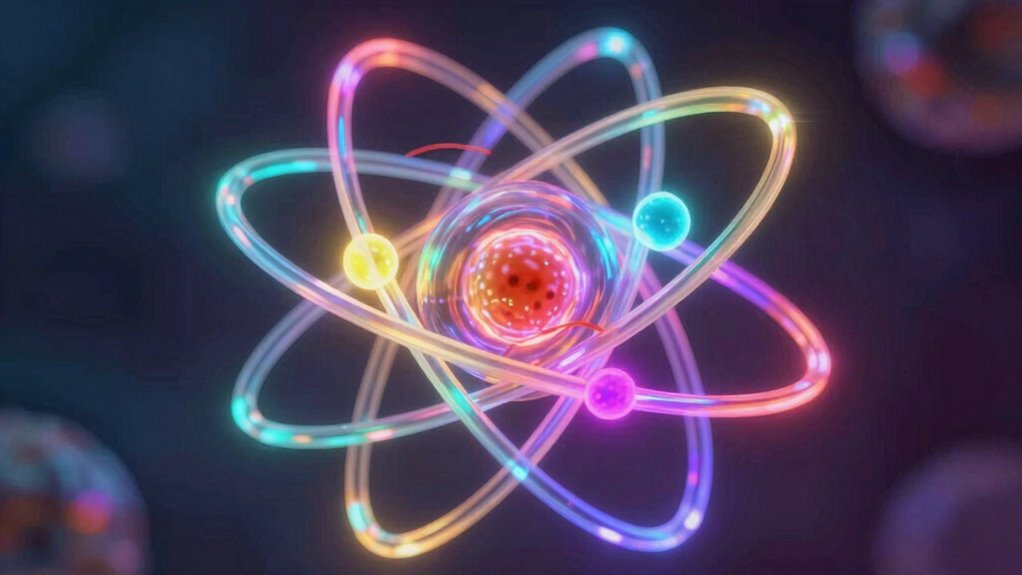

Valence electrons are the key players in chemistry because they are the outermost electrons that determine how atoms bond, react, and seek stability. They influence whether an atom gains, loses, or shares electrons during reactions. Their arrangement and energy levels guide predictable patterns of behavior across elements. By understanding valence electrons, you get a clearer picture of chemical reactivity and bonding. Keep exploring to uncover how these electrons shape the entire world of chemistry.

Prime made for students and young adults
- Fast, free delivery for dorm and study essentials
- Prime Video and Amazon Music included
- Member-only deals
Key Takeaways
- Valence electrons determine an atom’s ability to form bonds, directly influencing chemical reactions and compound formation.
- They control an element’s reactivity by seeking to achieve stable electron configurations, like full outer shells.
- Orbital configurations of valence electrons explain patterns of element behavior and periodic trends.
- Gaining, losing, or sharing valence electrons enables atoms to reach more stable states, driving chemical processes.
- The energy levels and number of valence electrons influence how readily atoms participate in chemical reactions.
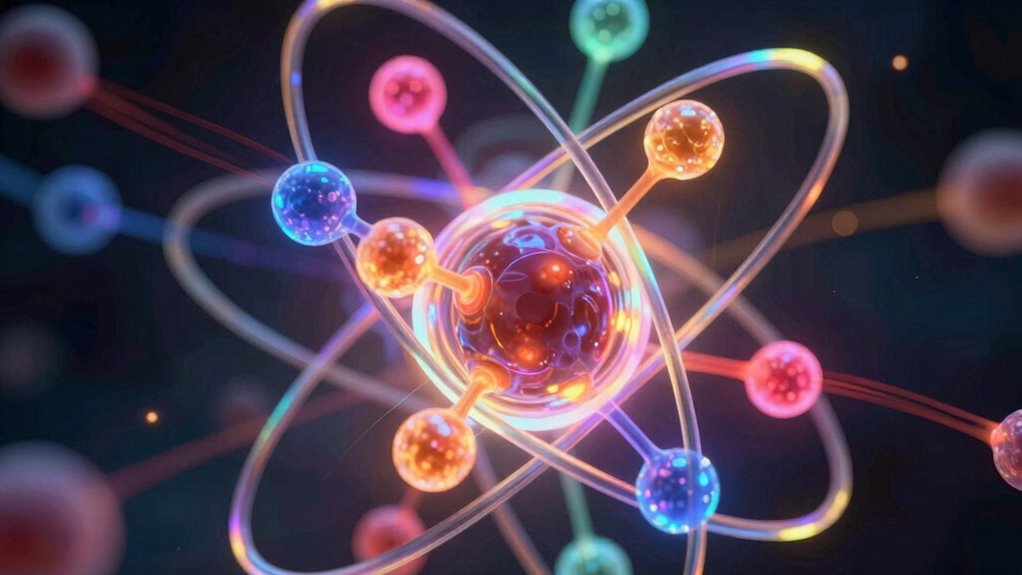
Have you ever wondered what determines how elements interact and bond with each other? The answer lies in their valence electrons, which are the outermost electrons that orbit around an atom’s nucleus. These electrons are crucial because they directly influence an element’s chemical behavior. When you understand valence electrons, you unlock the key to predicting how atoms will react, form bonds, or even stay inert. It all comes down to orbital configurations—the specific arrangement of electrons in different energy levels and orbitals—and how these configurations affect an element’s chemical reactivity.
Orbital configurations tell you where an atom’s electrons are likely to be found and how they’re arranged around the nucleus. This arrangement determines the atom’s stability and its tendency to gain, lose, or share electrons during reactions. For example, atoms with full outer shells, like the noble gases, are generally very stable and tend not to react much. In contrast, elements with incomplete outer shells are more eager to reach a stable state, making them highly reactive. This eagerness is driven by their orbital configurations, which set the stage for how they interact with others. Additionally, electron affinity explains how some atoms readily attract additional electrons to complete their outer shells, further influencing their reactivity. Understanding orbital energy levels is also critical because they determine how easily electrons can be gained or lost during chemical reactions.
Orbital configurations determine an atom’s stability and reactivity, influencing whether it gains, loses, or shares electrons during reactions.
Furthermore, atomic size influences how an atom interacts with other elements, especially in terms of how easily electrons are exchanged or shared. The periodic table provides valuable insight into these trends and helps predict an element’s reactivity based on its position. Your understanding of chemical reactivity hinges on these orbital configurations because they govern how easily an atom can participate in chemical bonds. When an atom has a nearly full or nearly empty valence shell, it becomes highly reactive because it can either accept or donate electrons readily. This is why alkali metals, with just one electron in their outermost shell, are so eager to lose it and form positive ions. Conversely, halogens, with seven valence electrons, are quick to gain one to complete their octet. These tendencies are direct results of their orbital configurations and how they influence the energy needed for an atom to change its electron count. Recognizing these patterns helps explain why specific elements tend to behave in predictable ways during chemical reactions.
As an affiliate, we earn on qualifying purchases.
Frequently Asked Questions
How Do Valence Electrons Influence Chemical Bonding Types?
Valence electrons influence chemical bonding types by determining how atoms interact through their electron cloud and orbital shapes. When atoms share, donate, or accept electrons, their valence electrons dictate whether they form covalent, ionic, or metallic bonds. The orbital shapes help predict how these electrons overlap or transfer, guiding the bonding process. Your understanding of valence electrons reveals how atoms achieve stability and how different bond types form.
Can Valence Electrons Predict an Element’s Reactivity?
Surprisingly, your element’s reactivity often hinges on its valence electron configurations—those outermost electrons that seem to hold the key to chemical behavior. With a keen eye on electron cloud interactions, you can predict whether an element is enthusiastic to bond or quite inert. Fundamentally, the more accessible valence electrons are, the more reactive the element; a simple yet elegant rule of chemistry’s dance.
How Do Valence Electrons Relate to Atomic Size?
Valence electrons influence atomic size because they determine the electron cloud‘s extent. As you move across a period, additional electrons are added to the same energy level, but the nucleus’s positive charge pulls the electron cloud closer, reducing the atomic radius. Conversely, moving down a group adds electrons to higher energy levels, expanding the electron cloud and increasing the atomic size. Therefore, valence electrons play a vital role in shaping atomic size.
Are Valence Electrons Involved in Chemical Reactions?
Yes, valence electrons are actively involved in chemical reactions. You can see this through their valence electron configurations and how they influence electron cloud distribution around atoms. During reactions, atoms often share, lose, or gain these electrons to achieve more stable configurations. This process drives bonding and chemical change, making valence electrons central to understanding how and why reactions happen.
How Do Valence Electrons Vary Across Periods and Groups?
Think of the periodic table as a grand dance, with valence electrons as dancers twirling across the stage. As you move across a period, electron configuration fills the outermost atomic orbital shapes, increasing valence electrons and making elements more reactive. Down a group, valence electrons stay the same, but atomic size grows, like dancers stretching their arms wider, influencing how elements interact and bond in chemistry’s intricate ballet.
As an affiliate, we earn on qualifying purchases.
Conclusion
Understanding valence electrons is key to mastering chemistry because they determine how atoms interact and bond. Did you know that out of over 118 elements, only a handful can form stable compounds without losing or gaining electrons? This highlights just how essential valence electrons are—they’re the driving force behind chemical behavior and reactions. So, next time you think about atoms, remember: it’s those outermost electrons that really shape the world of chemistry around us.
As an affiliate, we earn on qualifying purchases.
Periodic Table with Electron Configuration
As an affiliate, we earn on qualifying purchases.
As an affiliate, we earn on qualifying purchases.
Fall Picks
fall essentials
As an affiliate, we earn on qualifying purchases.