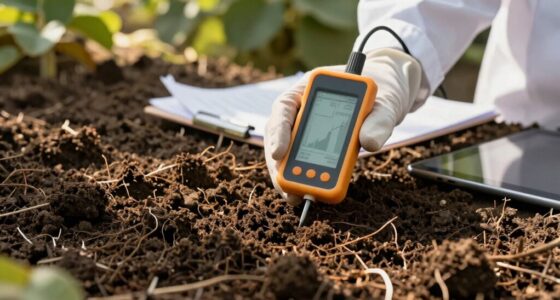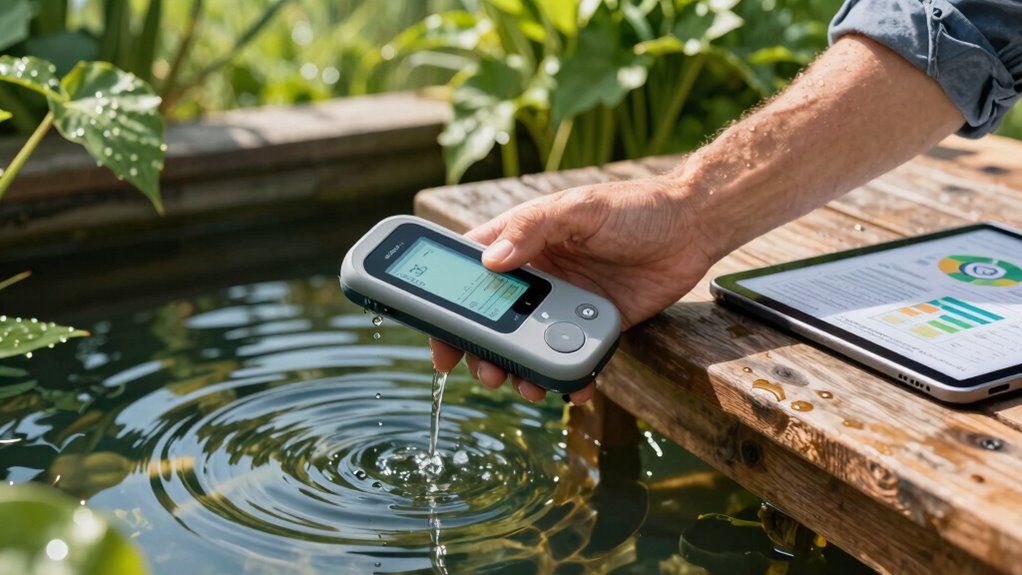
Water testing equipment helps you make smarter farming decisions by providing quick, reliable data on water quality. With accurate information, you can adjust fertilization, optimize irrigation, and prevent issues like salinity or pollution. This reduces waste, saves money, and improves crop yields. Using these tools supports sustainable practices and protects your soil and water sources. If you keep exploring, you’ll discover more ways these innovations can transform your farm’s efficiency and sustainability.
Key Takeaways
- Enables rapid, accurate assessment of water quality for informed irrigation and fertilization decisions.
- Detects contaminants and nutrient levels to prevent soil degradation and crop stress.
- Facilitates timely adjustments in water management, reducing waste and operational costs.
- Supports sustainable practices by minimizing overuse of water and chemicals.
- Enhances overall farm productivity through precise, data-driven resource management.
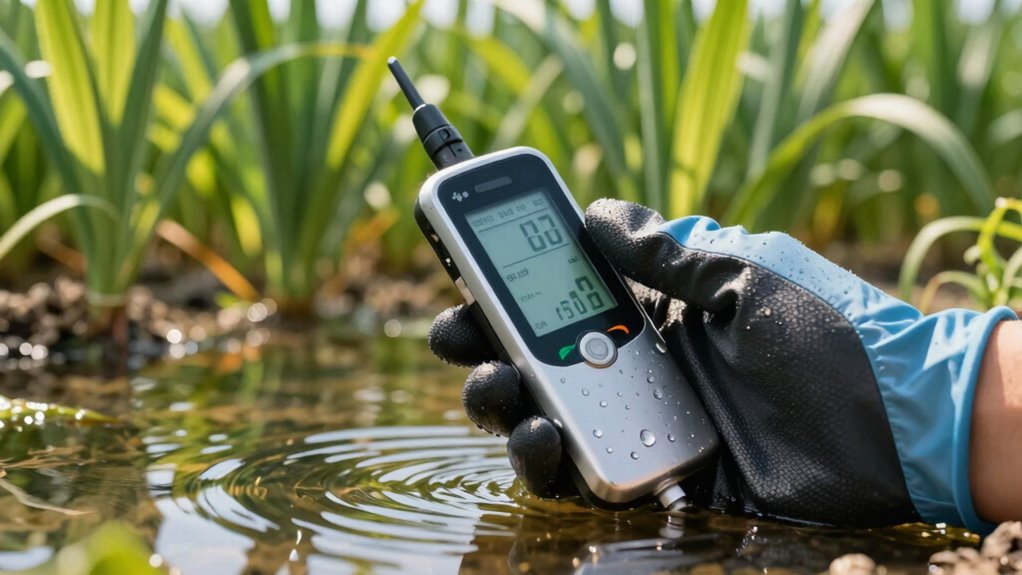
In modern farming, water quality plays a essential role in ensuring healthy crops and livestock, which is why smarter water testing equipment has become crucial. With precise data, you can make informed decisions that improve overall farm productivity. One key aspect of this is soil nutrient analysis, which helps you understand the mineral and nutrient content in your soil. By regularly testing soil, you can identify deficiencies or excesses that might hinder plant growth. This knowledge allows you to supplement nutrients accurately, avoiding over-fertilization that can harm the environment and under-fertilization that stunts crop development. Smarter water testing tools provide quick, reliable readings, enabling you to adjust your fertilization strategies promptly. This not only boosts crop yields but also reduces waste and costs associated with improper nutrient management.
Another significant benefit of advanced water testing equipment is irrigation system optimization. Proper irrigation is key to delivering water efficiently, especially when water quality varies across your fields. Testing water sources regularly ensures you understand their composition, including pH levels, salinity, and contaminant presence. If your water has high salinity or certain pollutants, it could cause soil degradation or crop stress if used improperly. With this information, you can fine-tune your irrigation practices—adjusting timing, volume, or applying treatments to improve water quality before it reaches your plants. This targeted approach minimizes water waste and prevents issues like root rot or nutrient leaching. Over time, optimizing your irrigation based on real-time water test results enhances crop health, conserves resources, and maximizes yields.
Smarter water testing equipment also supports sustainable farming practices. By accurately monitoring water and soil conditions, you reduce reliance on guesswork and prevent over-application of water and fertilizers. This careful management protects local water sources from pollution and helps you meet environmental regulations. Additionally, the quick turnaround of modern testing devices means you can respond swiftly to changes in water quality, avoiding potential crop damage or losses. You gain better control over your farm’s health, making your operation more resilient and adaptive to environmental challenges.
water testing equipment for farming
As an affiliate, we earn on qualifying purchases.
As an affiliate, we earn on qualifying purchases.
Frequently Asked Questions
How Often Should Water Testing Be Conducted on a Farm?
You should conduct water testing frequently, ideally every few weeks, to guarantee water quality stays ideal for your farm. Regular testing helps you catch issues early and maintain safe, healthy water for crops and livestock. The testing frequency depends on factors like water source, usage, and previous results. Staying consistent with water quality checks ensures you can promptly address any contamination or nutrient imbalances, supporting healthier farm operations.
What Are the Costs Associated With Water Testing Equipment?
Water testing equipment costs vary widely, from $200 for basic kits to over $10,000 for advanced analyzers. You’ll want to compare costs carefully, considering both the initial investment and ongoing maintenance requirements. A cost comparison reveals that investing in higher-quality equipment can save you money long-term by reducing repairs and providing more accurate results, helping you make smarter, cost-effective farming decisions.
Can Water Testing Equipment Be Used for Organic Farming?
Yes, water testing equipment can be used for organic farming. It helps you guarantee your water meets organic certification standards by monitoring nutrients and contaminants. You can also assess soil compatibility to avoid chemical buildup, maintaining soil health naturally. Regular testing supports sustainable practices, helps you comply with organic regulations, and keeps your crops healthy without relying on synthetic chemicals. This way, your farm stays eco-friendly and certified.
How Durable Is Water Testing Equipment in Harsh Field Conditions?
Water testing equipment is designed to withstand harsh field conditions, but its durability depends on proper equipment maintenance and understanding durability factors. Regular cleaning, calibration, and storage in protective cases help prevent damage. Choose equipment built with rugged materials like stainless steel or high-grade plastics. By paying attention to these durability factors, you guarantee your testing tools stay accurate and reliable, even in tough outdoor environments.
Are There Portable Water Testing Options for Remote Farms?
You’ll be surprised how mobile labs make testing water on remote farms effortless. These portable options allow you to analyze water quality and soil compatibility right in the field, saving time and reducing the need for lab visits. With user-friendly designs, you can quickly get accurate results, ensuring your crops get the best water possible. This flexibility helps you make smarter farming decisions, even in the most isolated locations.
As an affiliate, we earn on qualifying purchases.
Conclusion
By using water testing equipment, you’re planting the seeds for a smarter, more sustainable farm. It’s like having a trusted compass guiding your decisions, ensuring your crops get exactly what they need and preventing costly mistakes. With accurate data at your fingertips, you can navigate challenges with confidence, optimizing water use and boosting yields. In the journey of farming, this technology is your steady lighthouse, steering you toward healthier crops and a more prosperous future.
As an affiliate, we earn on qualifying purchases.
digital water quality meter for agriculture
As an affiliate, we earn on qualifying purchases.
As an affiliate, we earn on qualifying purchases.