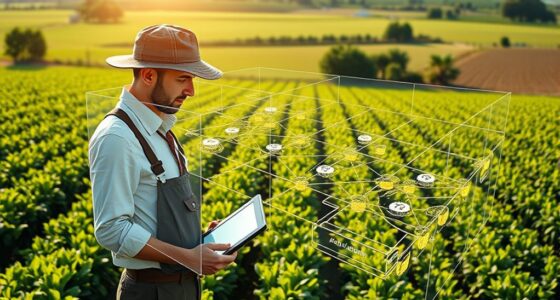
Access to soil health data gives you a clear edge in optimizing your farming practices. By understanding microbial diversity and soil nutrient levels, you can target interventions, reduce waste, and boost crop yields. This data helps you build resilient soils, cut costs, and meet environmental standards. Using this info demonstrates innovation and positions you as a forward-thinking leader. To discover how to harness this advantage for sustained success, keep exploring the key strategies behind soil health insights.
Listen free for 30 days with Audible
Thousands of audiobooks and originals — cancel anytime.
As an affiliate, we earn on qualifying purchases.
Key Takeaways
- Enables precision nutrient management, reducing waste and environmental impact.
- Enhances crop yields and quality through targeted soil health improvements.
- Supports sustainable practices that improve long-term soil vitality and resilience.
- Differentiates products by demonstrating environmental responsibility and innovative farming.
- Facilitates adaptation to future agricultural challenges with real-time microbial data.
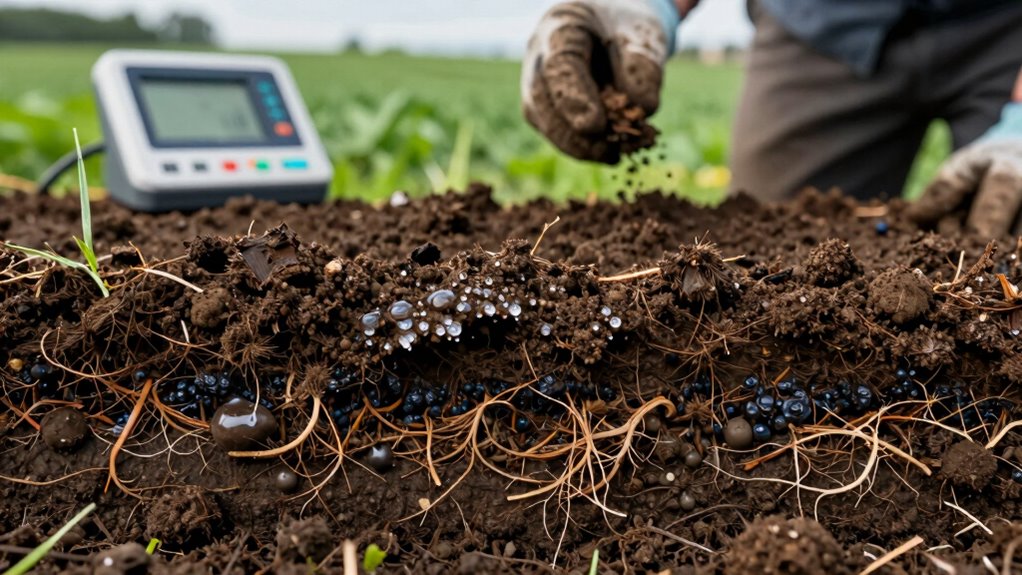
Understanding soil health has become essential for gaining a competitive edge in agriculture. When you pay close attention to the soil microbiome, you access a powerful tool that can transform your farming practices. The soil microbiome, composed of countless microorganisms like bacteria, fungi, and protozoa, plays a vital role in nutrient cycling. This natural process involves the breakdown of organic matter and the release of nutrients that plants need to grow. By monitoring and managing the health of your soil microbiome, you can enhance nutrient availability, improve crop yields, and reduce reliance on chemical fertilizers. Soil health data provides detailed insights into these microbial communities, allowing you to identify deficiencies or imbalances early on, so you can take targeted action before problems develop.
With access to extensive soil health data, you gain the ability to optimize nutrient cycling in your fields. Instead of applying blanket fertilizer treatments, you can tailor inputs based on real-time soil conditions, ensuring your plants receive exactly what they need when they need it. This precision approach not only boosts productivity but also minimizes waste and environmental impact. You’ll find that understanding the intricacies of nutrient cycling through data helps you improve soil structure, boost organic matter, and foster a resilient ecosystem within your fields. As a result, your crops become more resilient to pests, diseases, and weather fluctuations, giving you a significant advantage over competitors who rely on conventional methods. Additionally, understanding the role of the soil microbiome in soil health allows for more targeted and sustainable management practices. Developing a comprehensive understanding of soil microbiome diversity enables more precise interventions that support long-term sustainability. Recognizing the importance of microbial communities can lead to innovative strategies for boosting soil vitality. A deeper knowledge of microbial functions can also help in designing more effective soil amendments and treatments.
Furthermore, soil health data empowers you to make informed decisions that align with sustainable farming practices. By tracking changes in the soil microbiome over time, you can evaluate the effectiveness of your interventions, whether it’s cover cropping, reduced tillage, or organic amendments. This ongoing feedback loop helps you refine your strategies, ensuring your soil remains fertile and productive for years to come. Embracing microbial diversity as a key indicator can further optimize your soil management approach. Ultimately, investing in soil health data positions you as a forward-thinking farmer who understands the importance of a healthy soil ecosystem. You’re able to improve crop quality, increase yields, and lower input costs—all while demonstrating environmental stewardship. In a competitive market, this knowledge becomes your differentiator, allowing you to produce higher-quality crops more sustainably and efficiently. The more you understand and leverage soil health data, the better equipped you are to meet future challenges and capitalize on emerging opportunities in agriculture.
As an affiliate, we earn on qualifying purchases.
Frequently Asked Questions
How Is Soil Health Data Collected Accurately at Scale?
You collect soil health data accurately at scale through remote sensing technologies like drones and satellites, which provide extensive, real-time imagery. By combining this with advanced data analytics, you can interpret soil conditions efficiently across large areas. This approach guarantees precise, consistent measurements, enabling you to monitor soil health trends, identify issues early, and make data-driven decisions to improve agricultural productivity and sustainability.
What Are the Costs Associated With Implementing Soil Health Data Systems?
Investing in soil health data systems is like planting seeds for future success, but it comes with costs. Market adoption can be pricey, requiring new equipment and training, while ensuring data accuracy demands ongoing calibration and expert analysis. You’ll face initial setup expenses, technology upgrades, and data management tools. However, these investments can pay off through better yields, sustainable practices, and a competitive edge in the market.
How Can Small Farms Leverage Soil Health Data Effectively?
You can leverage soil health data effectively by focusing on soil nutrient insights and performing data analysis regularly. Use affordable testing tools to monitor nutrient levels and identify deficiencies. Apply this data to optimize fertilizer use, improve crop yields, and reduce costs. Collaborate with local experts or online platforms to interpret your data accurately. This strategic approach helps you make informed decisions, boosting productivity and sustainability on your small farm.
What Privacy Concerns Exist With Soil Health Data Sharing?
Think of soil health data as your farm’s secret recipe—valuable and personal. You might worry about data ownership and how sharing could lead to misuse. Privacy policies help protect your information, ensuring it isn’t exploited without your consent. Always review these policies before sharing data, and stay aware of who has access. Staying cautious keeps your farm’s secrets safe while harnessing the benefits of soil health insights.
How Does Soil Health Data Impact Long-Term Crop Yields?
Soil health data directly impacts your long-term crop yields by guiding better crop rotation practices and pest management strategies. When you analyze soil data, you identify nutrient deficiencies and pest vulnerabilities early, allowing you to adapt your methods proactively. This leads to healthier soil, improved plant growth, and increased yields over time. Using this data effectively guarantees sustainable farming and maximizes productivity, giving you a competitive edge in the market.
As an affiliate, we earn on qualifying purchases.
Conclusion
By now, you see how soil health data can set you apart in the competitive landscape. Embracing this information isn’t just about staying ahead; it’s about making smarter, sustainable decisions. Remember, “A wise man learns more from his enemies than a fool from his friends.” Use soil health data as your secret weapon—turn insights into action, and watch your farm thrive like never before. The future favors the informed.
As an affiliate, we earn on qualifying purchases.
As an affiliate, we earn on qualifying purchases.
Fall Picks
fall essentials
As an affiliate, we earn on qualifying purchases.