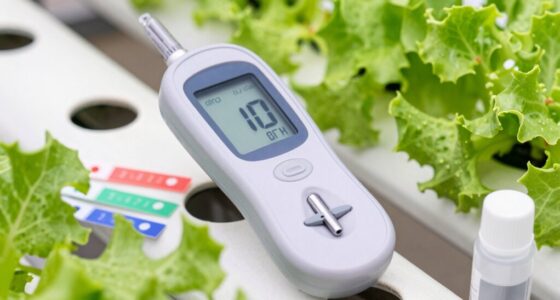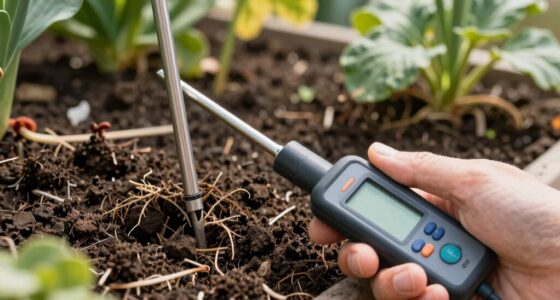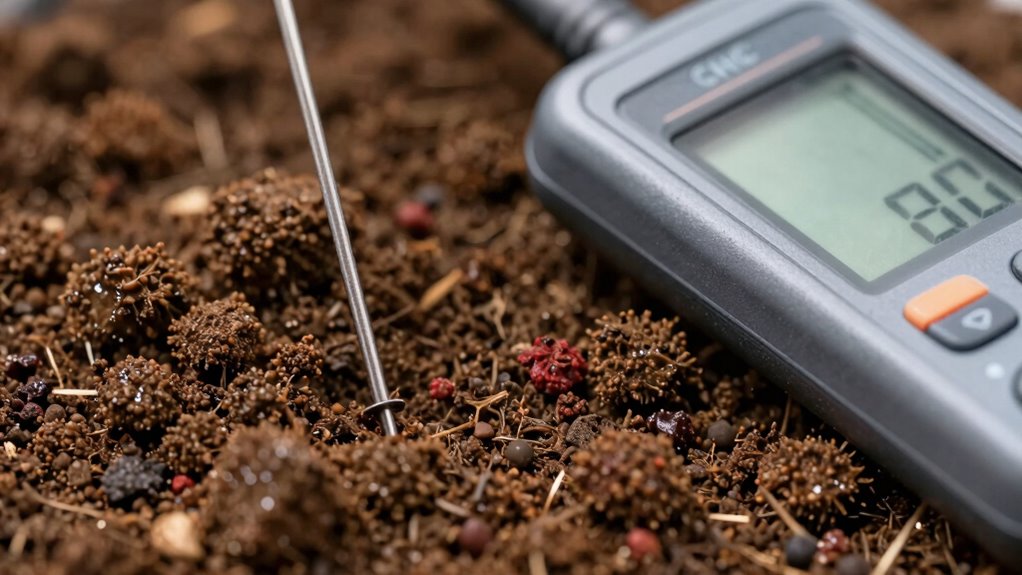

Soil EC levels show you how much nutrients and salts are in your soil, directly impacting fertility. High EC indicates plenty of dissolved nutrients but also salt buildup, which can harm plants. Low EC suggests nutrient deficiencies that can limit growth. By understanding these levels, you can better adjust your fertilization and soil management strategies. Keep exploring to discover how monitoring EC helps maintain healthy, productive soil for your plants.

Prime made for students and young adults
- Fast, free delivery for dorm and study essentials
- Prime Video and Amazon Music included
- Member-only deals
Key Takeaways
- High EC indicates abundant soluble nutrients but risks salt toxicity, affecting plant health.
- Low EC suggests nutrient deficiencies, requiring fertilization to improve soil fertility.
- Steady EC levels reflect balanced nutrient availability, supporting optimal plant growth.
- Sudden changes in EC reveal nutrient imbalances or soil salinity issues needing management.
- Monitoring EC helps tailor fertilization and amendment strategies to maintain soil fertility.
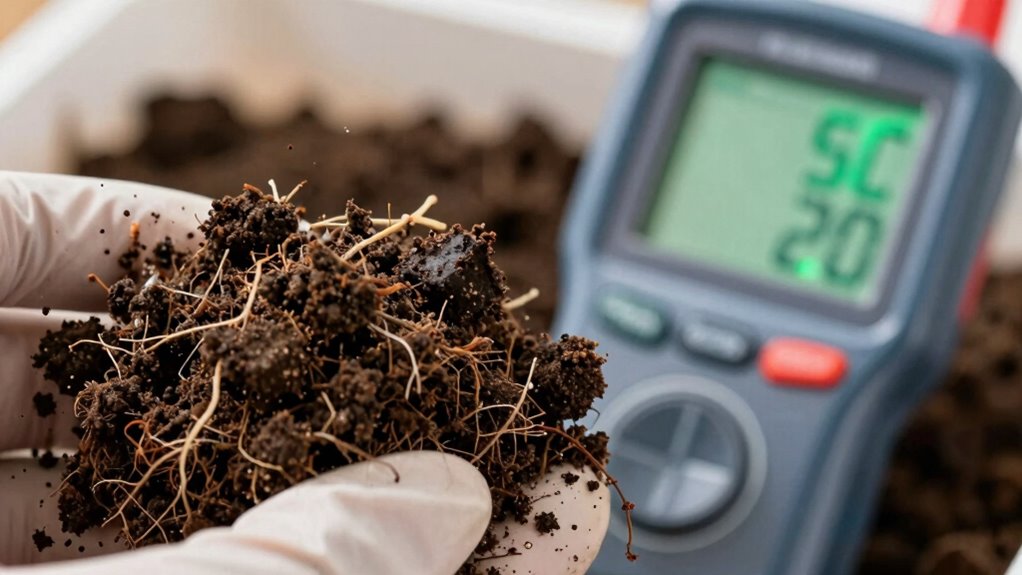
Understanding soil electrical conductivity (EC) is crucial for evaluating soil fertility because it provides a quick, accurate measure of the soil’s ability to conduct electrical current, which correlates with its nutrient content and salt levels. When you measure EC, you’re fundamentally gauging how much dissolved salts and nutrients are present in the soil solution. A higher EC typically indicates more salts, which can influence plant nutrient uptake—either positively if nutrients are available or negatively if salt levels become too high, leading to potential toxicity or osmotic stress for plants.
Soil EC measures nutrient and salt levels, guiding effective fertilization and preventing toxicity for healthier plant growth.
By monitoring EC levels, you gain insight into how well your soil can support healthy plant growth. For example, if your readings are low, it suggests a scarcity of soluble nutrients, and you might need to contemplate soil amendment strategies like adding compost, organic matter, or fertilizers to boost nutrient availability. Conversely, high EC readings could signal excessive salts, requiring you to flush the soil with water or apply specific amendments to reduce salt concentration. Adjusting your soil based on EC readings guarantees your plants receive the right balance of nutrients without the adverse effects of salt buildup.
Understanding these readings helps you fine-tune your plant nutrient uptake. When salts are too concentrated, roots struggle to absorb water and nutrients, which can stunt growth or cause nutrient deficiencies despite the presence of essential elements. By managing EC levels, you promote ideal conditions for roots to take up nutrients efficiently. This knowledge allows you to implement precise soil amendment strategies, such as incorporating organic acids or gypsum to displace sodium and other problematic ions, or applying leaching practices to wash out excess salts. Additionally, monitoring soil salinity can help prevent long-term soil degradation caused by salt accumulation. Regular testing also provides valuable feedback on the effectiveness of your soil management practices. Moreover, understanding salinity’s impact on plants helps you develop comprehensive strategies for maintaining healthy soil-plant relationships over time.
Furthermore, consistent EC monitoring can help identify trends that indicate worsening soil conditions early on, allowing for proactive management before significant damage occurs. It guides you in selecting the appropriate fertilizers, adjusting application rates, and timing interventions to prevent nutrient imbalances. For instance, if you notice EC rising after fertilization, you might need to modify your fertilization plan or improve drainage to avoid salt accumulation. Through consistent monitoring, you can maintain soil conditions that favor healthy nutrient cycling and plant growth, ultimately leading to more productive and resilient crops or garden plants. Understanding the relationship between salinity and plant health is essential for sustainable soil management.
As an affiliate, we earn on qualifying purchases.
Frequently Asked Questions
How Often Should I Test My Soil’s EC Levels?
You should test your soil’s EC levels at least once every season or after major weather changes. Regular testing helps you monitor soil moisture and guarantee your plant root health isn’t compromised by salt buildup. If you’re growing sensitive plants or dealing with high salinity, test more frequently—every 1-2 months. This way, you stay informed and can adjust watering and fertilization to keep your soil balanced.
What Is Considered a Healthy Soil EC Range?
Think of healthy soil EC as a well-tuned orchestra, harmonizing all elements. A good range is typically between 1.0 to 2.0 decisiemens per meter (dS/m). If readings are too high, it signals soil compaction or excess salts, which hinder root growth. Low EC suggests limited nutrients, possibly due to low organic matter. Maintaining this balance helps guarantee your soil nurtures strong, healthy plants.
Can High EC Readings Indicate Specific Nutrient Deficiencies?
High EC readings can indicate nutrient imbalance or salinity concerns, but they don’t directly point to specific deficiencies. Instead, excessive salts may hinder nutrient uptake, leading to deficiencies over time. If your soil EC is high, you should test for individual nutrients to identify deficiencies accurately. Addressing nutrient imbalance and managing salinity helps improve soil health and promotes better plant growth, ensuring your plants access essential nutrients effectively.
How Do Soil Amendments Affect EC Levels Over Time?
Amendments alter EC levels, influencing your soil’s electrical conductivity. When you add organic matter or fertilizers, they boost nutrient levels but can cause EC to climb. Over time, amendments impact nutrient balance, either enhancing fertility or risking salt buildup. By monitoring EC regularly, you track these changes, ensuring your soil remains balanced. Adjust amendments carefully to prevent excessive EC increases, maintaining ideal conditions for healthy, thriving plants.
Is Soil EC Testing Suitable for All Crop Types?
Soil EC testing is suitable for most crop types, but you should consider crop-specific nutrient needs and soil type considerations. Different crops have unique nutrient demands, which influence acceptable EC levels. Soil texture and composition also affect EC readings, so interpreting results within the context of these factors guarantees more accurate assessments. Regular testing helps tailor fertilization strategies, optimizing crop growth and avoiding nutrient imbalances across diverse crop types.
As an affiliate, we earn on qualifying purchases.
Conclusion
By paying close attention to soil EC readings, you can reveal secrets about your soil’s fertility that might otherwise go unnoticed. But what if a simple test could reveal hidden potential—or lurking problems—just beneath the surface? The truth is, understanding these readings could be your key to healthier, more productive crops. Are you ready to dig deeper and discover what your soil is really telling you? The next step could change your entire approach.
As an affiliate, we earn on qualifying purchases.
electrical conductivity soil probe
As an affiliate, we earn on qualifying purchases.
As an affiliate, we earn on qualifying purchases.
Fall Picks
fall essentials
As an affiliate, we earn on qualifying purchases.