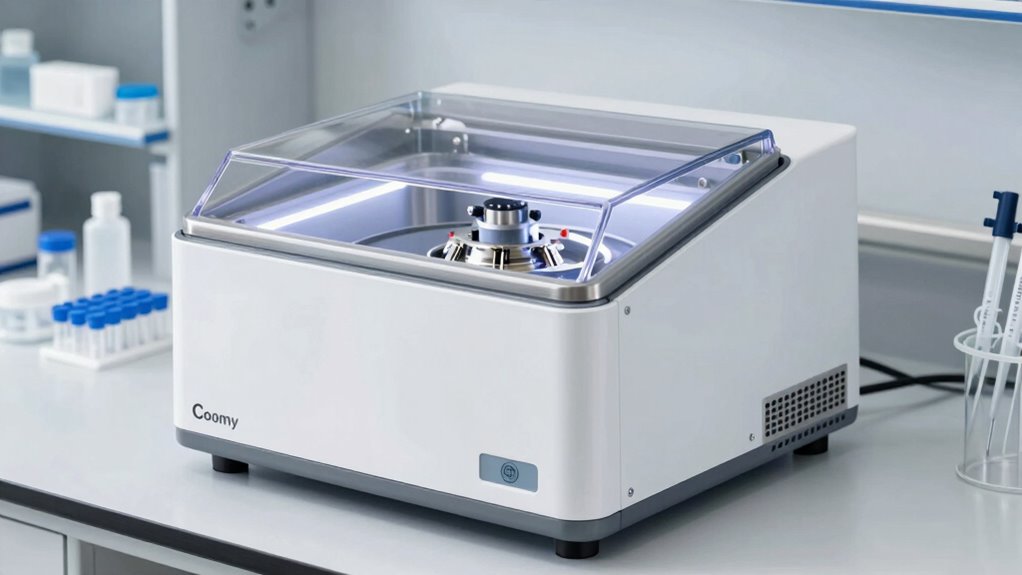

Refrigerated centrifuges protect your samples better than standard units by actively maintaining precise internal temperatures throughout operation. This prevents degradation, denaturation, or alterations of sensitive biological materials like proteins, nucleic acids, and cell cultures. They guarantee consistency and reproducibility across experiments, minimizing variables that could skew results. Their cooling systems support long runs and temperature-specific protocols, providing enhanced sample preservation. To discover how these features can improve your work, continue exploring the advantages they offer.

Prime made for students and young adults
- Fast, free delivery for dorm and study essentials
- Prime Video and Amazon Music included
- Member-only deals
Key Takeaways
- Preserve sample integrity by preventing thermal degradation of sensitive biological materials.
- Maintain consistent temperature conditions for reproducible experimental results.
- Minimize enzymatic activity and microbial growth during centrifugation.
- Protect fragile samples like proteins, nucleic acids, and cell cultures from heat-induced damage.
- Ensure regulatory compliance through precise temperature control and stability.
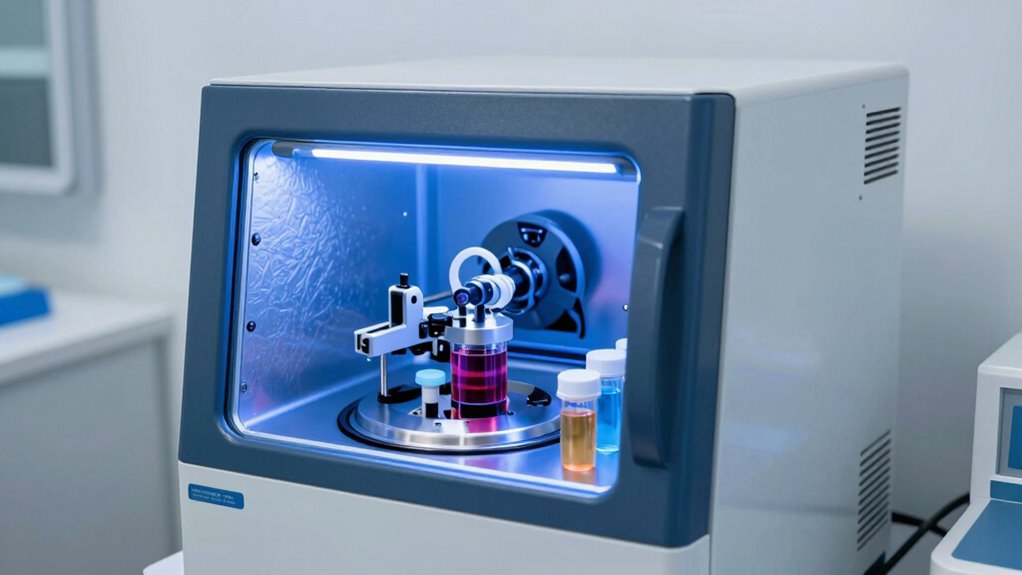
Refrigerated centrifuges offer superior protection for sensitive samples compared to standard units, making them indispensable for many laboratory applications. When working with biological specimens, chemicals, or other temperature-sensitive materials, maintaining precise temperature regulation is essential. Unlike standard centrifuges, which often lack temperature control, refrigerated models actively monitor and adjust internal temperatures, guaranteeing samples stay within a defined range. This consistent temperature regulation prevents degradation, denaturation, or other alterations that can compromise sample integrity.
As you operate a refrigerated centrifuge, you’ll notice how critical temperature control becomes during high-speed spins. Elevated speeds generate heat, which can accelerate sample deterioration if not properly managed. The built-in cooling systems in refrigerated units absorb this heat, maintaining a stable environment regardless of the centrifuge’s operating conditions. This stability is especially important when working with proteins, nucleic acids, or cell cultures that are highly sensitive to temperature fluctuations. By protecting these materials from thermal stress, refrigerated centrifuges help preserve their biological activity and structural integrity. Additionally, temperature stability can be crucial for meeting strict regulatory standards in clinical and research settings. Proper temperature management also contributes to sample reproducibility, ensuring consistent results across multiple experiments.
Sample integrity is at the heart of your scientific outcomes, and refrigeration plays a key role in safeguarding it. When samples are kept at ideal temperatures, you minimize risks like enzymatic activity, microbial growth, or chemical reactions that could alter your results. This is particularly critical during long centrifugation processes or when preparing samples for downstream analysis, such as PCR, sequencing, or cell culture. The ability to maintain a consistent temperature throughout the process means you can trust that your samples remain as close to their original state as possible, leading to more reliable data and reproducible experiments.
Furthermore, refrigerated centrifuges offer flexibility for various applications that demand precise temperature management. Whether you’re isolating plasma from blood, purifying proteins, or separating cell components, maintaining the correct temperature ensures you don’t inadvertently introduce variables that could skew your results. With temperature regulation features, you can set specific parameters tailored to your samples’ needs, giving you confidence that your protocols are executed under ideal conditions. Temperature regulation is a critical feature that distinguishes refrigerated units from standard centrifuges, ensuring optimal sample preservation.
refrigerated centrifuge for biological samples
As an affiliate, we earn on qualifying purchases.
As an affiliate, we earn on qualifying purchases.
Frequently Asked Questions
How Do Refrigerated Centrifuges Maintain Temperature Stability During Operation?
Refrigerated centrifuges maintain temperature stability through advanced sample cooling and precise temperature regulation systems. During operation, they use built-in compressors and thermoelectric modules to actively control the chamber’s temperature, preventing heat buildup. You’ll notice consistent sample cooling even during prolonged runs, which protects sensitive samples from degradation. This active temperature regulation guarantees reliable results and preserves sample integrity, making refrigerated centrifuges superior to standard units for temperature-sensitive applications.
Are Refrigerated Centrifuges More Energy-Efficient Than Standard Units?
Is energy efficiency a shining star guiding your choice? Refrigerated centrifuges often use less energy than standard units, thanks to advanced insulation and precise temperature control, which reduces unnecessary power consumption. Their optimized design enhances power efficiency, saving you money over time. While they might have higher initial costs, their energy savings and consistent temperature stability make them a smarter, more sustainable choice for your lab needs.
What Is the Typical Lifespan of a Refrigerated Centrifuge?
You can expect a refrigerated centrifuge to last around 10 to 15 years with proper maintenance. Its design for sample preservation and temperature regulation helps extend its lifespan by preventing sample degradation and reducing wear on components. Regular servicing ensures peak performance, and investing in quality units can even push the longevity closer to the upper end of that range. Proper care keeps your equipment reliable for years to come.
Can Refrigerated Centrifuges Handle Larger Sample Volumes?
Imagine your samples swirling smoothly in a larger, more spacious chamber—refrigerated centrifuges can indeed handle bigger sample volumes. With advanced cooling mechanisms, they maintain consistent temperatures even during extended runs, accommodating increased sample capacity without risking overheating. This means you can process more at once, making your work more efficient. Their robust design guarantees your larger samples stay protected, giving you confidence in accurate, reliable results every time.
What Maintenance Is Required for Optimal Refrigerated Centrifuge Performance?
To keep your refrigerated centrifuge performing at its best, you should regularly follow calibration protocols and cleaning procedures. Calibrate the device periodically to guarantee accurate results, and clean the rotor, chamber, and seals after each use to prevent contamination and maintain efficiency. Check for any signs of wear or damage, and lubricate moving parts as recommended. Proper maintenance helps extend the lifespan of your centrifuge and ensures reliable, consistent performance.
temperature-controlled laboratory centrifuge
As an affiliate, we earn on qualifying purchases.
As an affiliate, we earn on qualifying purchases.
Conclusion
Think of refrigerated centrifuges as guardians of your samples’ integrity, shielding them like a fortress against heat and degradation. Unlike standard units, they keep your work cool under pressure, preserving precious materials just like a lighthouse guides ships safely through storms. When precision and protection matter, choosing a refrigerated centrifuge isn’t just a decision—it’s a safeguard. Trust in its silent vigil, and let your research shine with the clarity of a perfectly kept secret.
high-speed refrigerated centrifuge
As an affiliate, we earn on qualifying purchases.
As an affiliate, we earn on qualifying purchases.
clinical research refrigerated centrifuge
As an affiliate, we earn on qualifying purchases.
As an affiliate, we earn on qualifying purchases.
Fall Picks
fall essentials
As an affiliate, we earn on qualifying purchases.