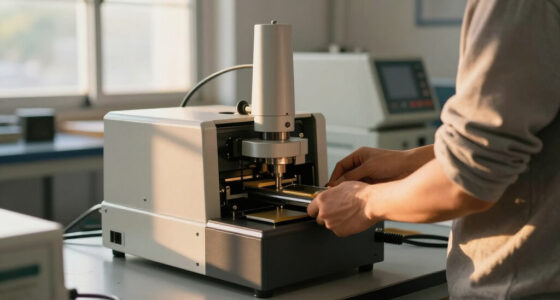
You might not expect a muffle furnace to be used in environmental testing, where it analyzes material stability under extreme heat or simulates pollutant behavior. It’s also essential in ceramic firing, ensuring precise temperature control for high-quality finishes. In industry, it helps with metal annealing, impurity removal, and preparing samples for analysis. These versatile tools support research, waste management, and safety testing—discover more surprising ways muffle furnaces make a difference beyond what you thought possible.
Key Takeaways
- Utilized in environmental testing to simulate pollutant behavior under extreme heat, ensuring compliance with safety standards.
- Employed in advanced ceramic processing to fire delicate or complex pieces with uniform heat distribution.
- Supports metallurgical research by facilitating impurity removal and precise heat treatment of metals.
- Used for organic material pyrolysis, aiding in material analysis and energy research.
- Applied in long-term scientific experiments requiring durable, stable high-temperature conditions across industries.

A muffle furnace is a versatile tool used across various industries and laboratories for high-temperature applications. While it’s commonly associated with ceramic firing and environmental testing, its capabilities stretch far beyond those tasks. You might be surprised to learn how adaptable this equipment can be, especially when you explore its less obvious uses.
Discover the surprising versatility of muffle furnaces across industries and scientific applications.
In environmental testing, a muffle furnace plays a critical role in analyzing the stability and composition of materials under extreme heat. You can use it to simulate high-temperature conditions to study how pollutants behave or to determine the thermal stability of substances. For example, you might subject soil or waste samples to high temperatures to assess their potential for hazardous emissions or to evaluate contamination levels. This process helps guarantee safety standards are met and environmental regulations are followed, making the muffle furnace an essential tool in environmental science. Its precise temperature control ensures accurate and repeatable results, which are vital in research and regulatory compliance. Additionally, the thermal analysis capabilities of muffle furnaces are crucial for understanding material behaviors under stress.
Ceramic firing is perhaps the most well-known application, but within that domain, the precision control of temperature and atmosphere is key. You use the muffle furnace to fire ceramics, glazes, and porcelain, ensuring even heat distribution for a flawless finish. Its enclosed design prevents contamination from external factors, giving you consistent results every time. This controlled environment also allows for the firing of delicate or complex ceramic pieces without risk of oxidation or other reactions that could compromise quality.
Beyond these, you can utilize a muffle furnace for metallurgical processes. For instance, it’s useful for annealing metals, removing impurities, or preparing samples for analysis. Its ability to reach and maintain high temperatures with stability makes it ideal for such tasks. Additionally, in the electronics industry, a muffle furnace can be employed for heat-treating components, enhancing their durability and performance.
Another surprising use is in research laboratories, where scientists might use it for pyrolysis—decomposing organic materials at high temperatures to analyze their structure or composition. This application is especially relevant in fields like energy research, waste management, or materials science. Understanding high-temperature processes can help optimize these applications and improve safety protocols. Moreover, the durability and reliability of muffle furnaces make them suitable for continuous or long-term experimental setups.

High-Temperature Jewelry Casting Burnout Furnace 1150℃, Electric Muffle Kiln for Jewelry Making, Labora Sample Testing, Closed Labora Design for Optimal Results
- High-Temperature Capacity: 1150℃ for jewelry casting and more
- Stable Heating Conditions: Ensures efficient dewaxing and melting
- Precise Temperature Control: Digital control with adjustable range
As an affiliate, we earn on qualifying purchases.
As an affiliate, we earn on qualifying purchases.
Frequently Asked Questions
Can Muffle Furnaces Be Used for Food Processing?
Muffle furnaces aren’t typically used for food processing, as they’re designed for high-temperature applications like food sterilization and certain baking processes. They provide a controlled, enclosed environment that prevents contamination, making them ideal for sterilizing equipment or materials. However, for direct baking or cooking, traditional ovens are safer and more suitable. So, while they serve specific roles in food safety, muffle furnaces aren’t practical for everyday food preparation.
What Safety Precautions Are Essential When Operating a Muffle Furnace?
When operating a muffle furnace, you must prioritize safety by wearing appropriate gear like heat-resistant gloves, safety goggles, and a lab apron. Make certain proper thermal insulation around the furnace to prevent heat loss and accidental burns. Always follow manufacturer instructions, work in a well-ventilated area, and avoid opening the furnace while it’s hot. Regularly inspect your safety gear and insulation to maintain a safe working environment.
Are Muffle Furnaces Suitable for Use in Home Laboratories?
Sure, muffle furnaces are perfect for home labs—if you enjoy risking your safety and your equipment. While they can handle specialized tasks, they require strict home safety measures and meticulous equipment maintenance. Operating such a high-temperature device without proper training or safety gear isn’t advisable. So, unless you’re a seasoned professional, it’s best to think twice before using a muffle furnace at home, prioritizing safety over convenience.
How Energy-Efficient Are Modern Muffle Furnace Models?
Modern muffle furnaces are quite energy-efficient, thanks to advanced insulation and smarter power management features. You’ll notice lower energy consumption because they minimize heat loss and optimize power efficiency during operation. These improvements help reduce your energy bills and environmental impact. If you’re considering a new model, look for ones with energy-saving modes and high thermal insulation, ensuring you get the best power efficiency for your laboratory needs.
Can Muffle Furnaces Be Customized for Specific Industrial Applications?
Yes, muffle furnaces can be customized for specific industrial applications. You can tailor customization options like temperature ranges, chamber sizes, and heating elements to meet your unique needs. These modifications enhance performance, improve safety, and optimize results. Whether you require precise temperature control, specialized atmospheres, or unique chamber configurations, customization options empower you to adapt the furnace to your industrial applications effectively and efficiently.

TozMvi Electric Kiln for Jewelry Making, Metal Casting, Pottery Glazing,2000w Electric Ceramic Laboratory Muffle Furnace,Maximum Temperature 1150℃
- Precise Temperature Control: Range from 0 to 1150℃ with even heating
- Rapid Heating Performance: 2000W element for quick heat-up
- Energy-Efficient Design: Sealed door reduces heat loss
As an affiliate, we earn on qualifying purchases.
As an affiliate, we earn on qualifying purchases.
Conclusion
So, surprise yourself with the splendid, surprising, and often overlooked uses of a muffle furnace. From forging fragile ceramics to facilitating fiery fusions, this fiery fixture offers fantastic functions beyond the familiar. Don’t dismiss its dynamic deeds—delve into its diverse duties and discover a device that’s more than meets the eye. Embrace its versatility, release your curiosity, and open new, unexpected potentials in your projects with this fiery, functional furnace!

DIUNAOZI Laboratory Muffle Furnace,1150℃ High Temp Electric Kiln, Digital Heat Treat Oven for Metal Annealing, Sintering, Ceramic Firing & Industrial Thermal Treatment
- Precise Temperature Control: Adjustable up to 1150°C with PID control
- Uniform Heat Distribution: Full-sided surround heating technology
- Real-Time Temperature Monitoring: Digital display with high-precision sensor
As an affiliate, we earn on qualifying purchases.
As an affiliate, we earn on qualifying purchases.

Pyrolysis–Gas Chromatography/Mass Spectrometry of Polymeric Materials
As an affiliate, we earn on qualifying purchases.
As an affiliate, we earn on qualifying purchases.