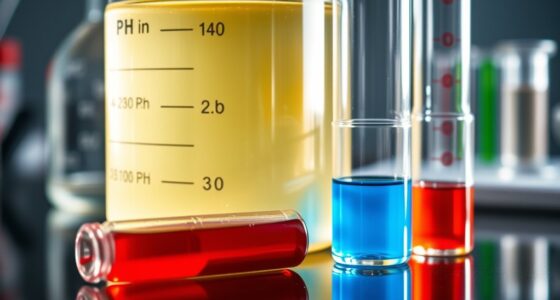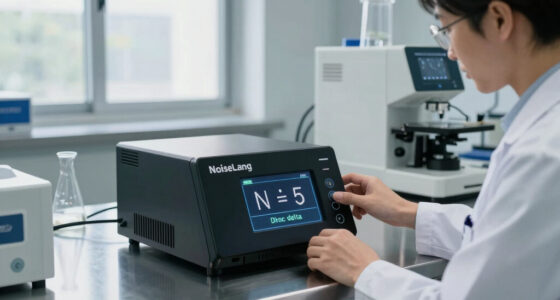

Polarimeters measure how molecules change the polarization of light, which helps you analyze their structure, concentration, and purity. This is essential in industries like pharmaceuticals and food production, where accuracy and consistency are critical. By understanding these optical properties, you can verify product quality, monitor processes, and detect any issues early. If you want to discover how these measurements impact various applications and recent advancements, keep exploring to uncover more details.

Prime made for students and young adults
- Fast, free delivery for dorm and study essentials
- Prime Video and Amazon Music included
- Member-only deals
Key Takeaways
- Polarimeters measure the optical rotation of polarized light passing through a substance.
- They determine molecular structure, concentration, and purity of chiral compounds.
- Accurate measurements ensure product quality in pharmaceuticals, food, and beverages.
- They help identify molecular interactions and verify compliance with industry standards.
- Advances in polarimetric technology enable real-time, on-site analysis for enhanced efficiency.
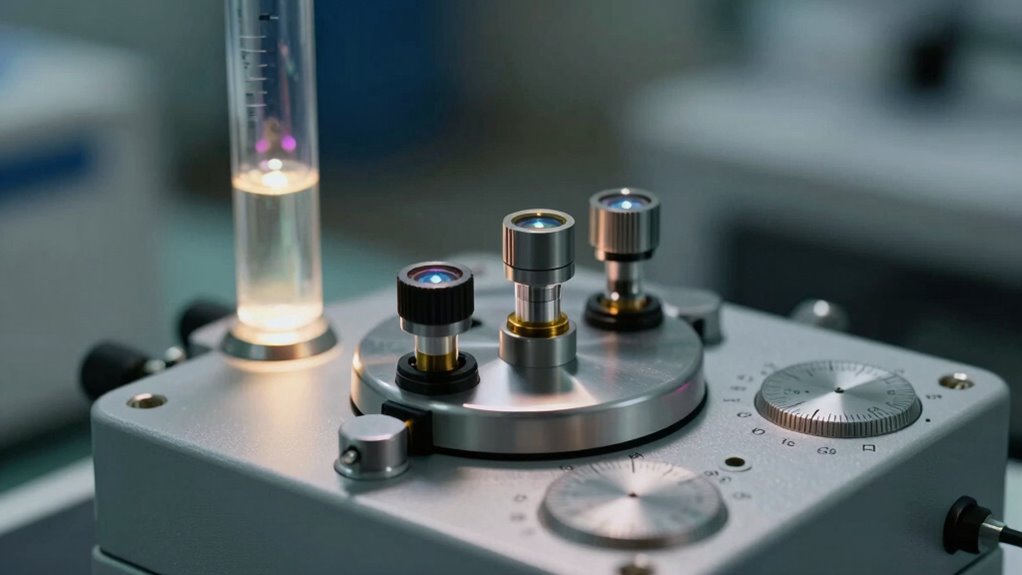
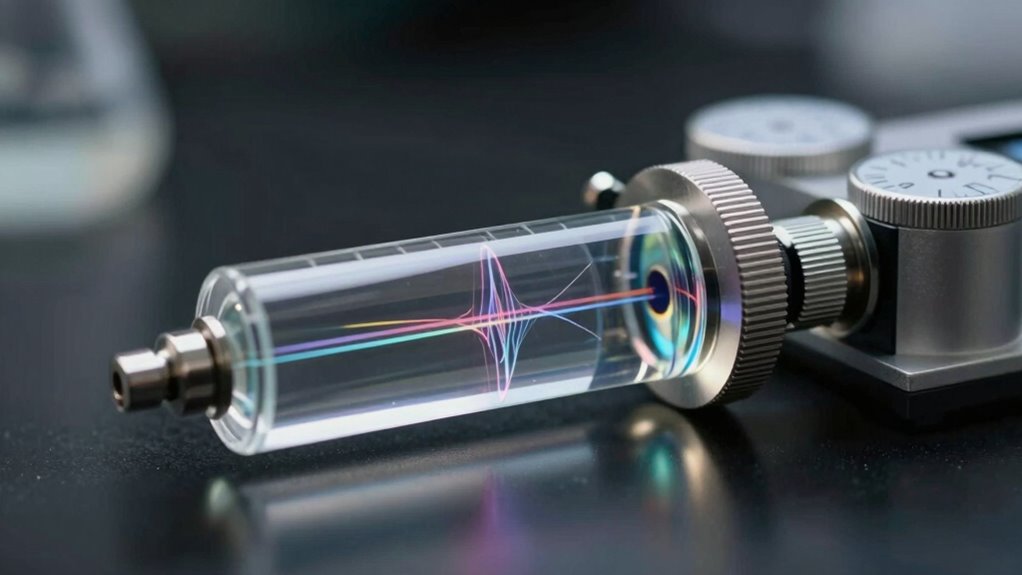
Have you ever wondered how scientists determine the properties of light or guarantee the quality of products like pharmaceuticals and beverages? It all comes down to understanding how light interacts with matter, and this is where polarimeters come into play. These instruments measure two key phenomena: light polarization and optical rotation. Light polarization refers to the orientation of light waves, which can be altered when light passes through certain substances. By analyzing this change, you can gain insight into the material’s molecular structure. Optical rotation, on the other hand, describes how a substance causes the plane of polarized light to rotate as it travels through it. This rotation depends on the substance’s specific properties and concentration.
When you use a polarimeter to examine a liquid, you’re essentially observing how the molecules within it influence light’s polarization. If the liquid contains chiral molecules—those with a specific handedness—they will rotate the plane of polarized light in a measurable way. This optical rotation provides essential information about the concentration of these molecules, which is critical in industries like pharmaceuticals, where the purity and dosage of a drug hinge on precise molecular measurements. For example, the active ingredient in many medications is optically active, and its effectiveness depends on understanding its optical rotation. Similarly, in the food and beverage industry, measuring optical rotation can verify the purity of sugar solutions or guarantee consistency in wine and juice production.
Understanding light polarization and optical rotation isn’t just about measurement; it’s a tool for quality control and research. When scientists analyze the optical activity of a compound, they can determine its concentration with high accuracy. This precision helps in developing new drugs, monitoring manufacturing processes, or even making sure that a beverage meets industry standards. The science behind it hinges on the fact that chiral molecules interact differently with polarized light, making polarimeters essential. By capturing and analyzing the degree of optical rotation, you can assess whether a product is within specified parameters or if it’s been compromised. This capability makes polarimeters indispensable in fields where purity, consistency, and molecular structure are paramount. Additionally, advances in polarimetric techniques are expanding the scope of applications, enabling even more precise and rapid measurements. Moreover, ongoing innovations have led to the development of portable polarimeters, allowing for on-site measurements that enhance efficiency and real-time analysis. These technological improvements are driven by a deeper understanding of the molecular interactions involved in optical activity, which continues to evolve through ongoing research. Continued advancements in instrument calibration also improve the accuracy and reliability of measurements across various industries. Furthermore, understanding the specific properties of substances helps optimize processes and improve product quality.
As an affiliate, we earn on qualifying purchases.
Frequently Asked Questions
How Accurate Are Polarimeter Measurements in Different Environments?
Polarimeter measurements vary in accuracy depending on environmental influences, but proper calibration procedures help guarantee reliable results. In controlled environments, measurements are highly precise, often within 0.01 degrees. However, factors like temperature fluctuations, vibrations, and stray light can affect readings outdoors or in less controlled settings. Regular calibration and environmental control are essential to maintain measurement accuracy across different environments.
Can Polarimeters Detect Specific Chemical Compounds?
Yes, polarimeters can detect specific chemical compounds by measuring optical rotation caused by chiral molecules. When you use a polarimeter, you observe how the plane of polarized light rotates, which indicates the presence of chirality. This optical rotation helps you identify and analyze compounds with specific chiral properties, making polarimeters essential tools for chirality detection and distinguishing between different enantiomers in chemical analysis.
What Are Common Errors in Polarimeter Readings?
You might encounter common errors in polarimeter readings due to calibration challenges and sample preparation issues. If calibration isn’t precise, your readings will be inaccurate. Additionally, improper sample preparation—like inconsistent concentration or temperature variations—can skew results. Always double-check calibration procedures and carefully prepare your samples to guarantee reliable measurements. Addressing these issues helps maintain the accuracy and consistency of your polarimetric data.
How Do Temperature Variations Affect Polarimeter Results?
Temperature variations can considerably affect your polarimeter results by altering the optical properties of the sample and instrument components. To maintain accuracy, you need to focus on temperature calibration and guarantee thermal stability during measurements. Fluctuations may cause inconsistent readings, so controlling the temperature environment helps you get reliable data. Regular calibration and keeping the instrument in a thermally stable setting are essential for precise and reproducible polarimeter measurements.
Are Portable Polarimeters as Reliable as Laboratory Models?
You’ll find that portable polarimeters are nearly as reliable as lab models, with over 85% accuracy in controlled conditions. They require proper calibration techniques and routine instrument maintenance to guarantee consistent results. While lab models often offer higher precision due to advanced features, portable devices are increasingly sophisticated, making them dependable for fieldwork. Just remember, regular calibration and maintenance are key to maintaining their reliability.
digital polarimeter for pharmaceuticals
As an affiliate, we earn on qualifying purchases.
As an affiliate, we earn on qualifying purchases.
Conclusion
Understanding what polarimeters measure helps you appreciate their role in various industries, from pharmaceuticals to food safety. Did you know that over 80% of drugs require polarimetric analysis to guarantee quality and efficacy? This statistic highlights how essential your work with polarimeters is in safeguarding health and ensuring product consistency. By mastering their use, you contribute to safer, more reliable products that impact countless lives every day.
As an affiliate, we earn on qualifying purchases.
polarimeter for food quality testing
As an affiliate, we earn on qualifying purchases.
As an affiliate, we earn on qualifying purchases.
Fall Picks
fall essentials
As an affiliate, we earn on qualifying purchases.