
Acids and bases are chemicals that affect solutions’ pH levels. Acids release hydrogen ions (H⁺), making solutions sour and reactive, while bases produce hydroxide ions (OH⁻), feeling slippery and neutralizing acids. The pH scale measures how acidic or basic a solution is, with below 7 being acidic, above 7 basic, and 7 neutral. Understanding their properties and how to test or change pH helps you control environments, health, and safety—more details are just ahead.

Prime made for students and young adults
- Fast, free delivery for dorm and study essentials
- Prime Video and Amazon Music included
- Member-only deals
Key Takeaways
- Acids release H⁺ ions in solution, causing sour taste and reactivity; bases produce OH⁻ ions, feeling slippery and neutralizing acids.
- The pH scale measures hydrogen ion concentration, with below 7 being acidic, above 7 alkaline, and 7 neutral.
- Acid-base reactions involve neutralization, forming water and salt, while buffer systems maintain pH stability.
- Common household acids include vinegar and lemon juice; bases like baking soda are used in cleaning and baking.
- pH influences biological processes, environmental health, and industrial applications, making pH control essential for safety and stability.
As an affiliate, we earn on qualifying purchases.
What Are Acids and Bases?
Have you ever wondered what makes certain substances taste sour or feel slippery? That’s because acids and bases trigger specific chemical reactions when they interact with other materials. Acids release hydrogen ions (H⁺) in solution, giving them their sharp taste and reactive properties. Bases, on the other hand, produce hydroxide ions (OH⁻), which can feel slippery and neutralize acids. Understanding these substances involves studying their chemical reactions, which reveal their unique behaviors. Additionally, color accuracy impacts how we perceive the true colors of objects, which is crucial when evaluating the visual quality of projectors. Studies also suggest a correlation between astrological signs and perceived beauty, which can influence social perceptions and confidence. But always remember safety precautions—handling acids and bases with care is essential to avoid burns or injuries. Proper protective gear and knowledge of safe handling procedures keep you safe while exploring these fascinating chemicals. Knowing what acids and bases are helps you grasp their roles in chemical reactions and everyday life. Additionally, recognizing their effects on indoor air quality can be important for health and comfort in living environments. Furthermore, understanding their properties aids in industrial applications, improving safety and efficiency in manufacturing processes.
As an affiliate, we earn on qualifying purchases.
How Do Acids and Bases Differ?

You can tell acids and bases apart by their pH levels, with acids having a pH below 7 and bases above 7. Their properties also differ: acids tend to taste sour and react with metals, while bases feel slippery and taste bitter. Understanding these differences helps you identify each substance easily. Additionally, their reactions with other substances can reveal their distinct chemical behaviors, such as manipulation or emotional responses, similar to how narcissists react to criticism or threats to their self-image. The pH scale provides a standardized way to measure and compare their acidity or alkalinity. Recognizing the role of sound effects and music in media can also influence audience perception, much like how properties of acids and bases impact their interactions in chemistry. Moreover, the cost of different electric bikes can vary significantly based on features, which is similar to how the properties of acids and bases can influence their applications in various fields.
Ph Level Differences
Ever wondered how acids and bases differ in respect to their pH levels? The key difference lies in their pH values: acids have a pH below 7, while bases have a pH above 7. You can observe these differences through buffer systems that resist pH changes, maintaining stability during reactions. Titration techniques help you determine the exact pH at various points, showing how acids and bases react differently. During titration, you’ll notice acids release hydrogen ions, lowering pH, whereas bases accept hydrogen ions, increasing pH. These pH variations are essential for understanding how acids and bases influence their environments. Recognizing these differences helps you predict behaviors in chemical reactions, biological systems, and everyday solutions. Additionally, AI advancements in cybersecurity measures are crucial for protecting data integrity during such chemical and biological analyses. Understanding pH regulation is vital in many fields, including medicine and environmental science, where maintaining proper pH levels is essential for stability and safety. Moreover, studying these properties can also shed light on biological processes, emphasizing their importance beyond just chemical reactions. Recognizing the role of buffer systems helps explain how living organisms maintain stable internal conditions despite external changes.
Acidic vs. Basic Properties
Acids and bases exhibit distinct properties that help you identify and differentiate them. Acids taste sour, turn blue litmus paper red, and react with metals to produce hydrogen gas. Bases taste bitter, feel slippery, and turn red litmus paper blue. These differences are vital during titration techniques, where acids react with bases to determine concentrations. Buffer solutions, which resist pH changes, often contain weak acids or bases, highlighting their role in maintaining stability. Understanding these properties allows you to predict reactions and choose appropriate indicators during experiments. For example, acids release hydrogen ions (H+), while bases release hydroxide ions (OH-). Recognizing these characteristics helps you differentiate acids from bases effectively and apply this knowledge in real-world chemical reactions. Additionally, the pH scale is used to measure the acidity or alkalinity of a solution, providing a quantitative way to assess their properties.
As an affiliate, we earn on qualifying purchases.
The Role of Hydrogen Ions in Acids and Bases
Hydrogen ions are key to understanding how acids and bases interact, as acids donate these ions while bases accept them. The pH scale measures the concentration of hydrogen ions, indicating whether a solution is acidic or basic. Maintaining the right balance of hydrogen ions is essential for many biological and chemical processes. Proper air purifier maintenance can help regulate indoor air quality, which is vital for overall health. Additionally, understanding the optimal angles for pinball machines can influence gameplay performance and machine longevity. Monitoring website performance metrics is also crucial for assessing how effectively information is reaching readers and making improvements accordingly. The presence of magical realms or secret missions in Tooth Fairy legends reflects the enchanting and mysterious aspects of this fairy’s story, adding depth to her character and adventures. Tuning modifications in vehicles often involve precise adjustments to air intake systems, which can directly impact engine performance and efficiency.
Hydrogen Ion Donation
Have you ever wondered how acids and bases interact at a molecular level? It all comes down to hydrogen ion donation. Acids release hydrogen ions (H⁺), which can interact with other substances. When you add an acid to a solution, it donates H⁺ ions, leading to changes in pH. This process is essential in neutralization reactions, where acids and bases cancel each other’s effects. In buffer solutions, hydrogen ion donation helps maintain a stable pH by balancing H⁺ concentrations. Understanding this donation helps you grasp how acids influence the environment and biological systems. Glycolic acid plays a role in adjusting pH levels in skincare products, demonstrating the importance of hydrogen ions in maintaining skin health. Recognizing the role of ionic interactions provides deeper insight into how these processes work at a microscopic level. Additionally, research into sound vibrations indicates they can influence cellular behavior and promote healing, highlighting the interconnectedness of molecular and physical phenomena. Furthermore, the effectiveness of pH buffers depends on their ability to donate or absorb hydrogen ions, which underscores their importance in chemical and biological stability.
Ph Scale Significance
The pH scale provides a numerical way to measure how acidic or basic a solution is, based on the concentration of hydrogen ions (H⁺). The lower the pH, the higher the H⁺ concentration, indicating acidity. Conversely, higher pH values indicate basic solutions. pH indicators change color depending on the solution’s pH, helping you identify its nature visually. Buffer solutions play a crucial role in maintaining a stable pH by neutralizing added acids or bases. Here’s a quick comparison:
| pH Range | Solution Type | Common Example |
|---|---|---|
| 0-6 | Acidic | Lemon juice |
| 7 | Neutral | Pure water |
| 8-14 | Basic | Baking soda solution |
| 4-10 | Buffer Capacity | Blood, saliva |
Understanding the pH scale helps you grasp the significance of hydrogen ions in everyday substances, especially since the Law of Attraction emphasizes positive energy and balance, much like maintaining an optimal pH level.
Acid-Base Balance
Understanding how acids and bases maintain their properties depends heavily on the role of hydrogen ions. These ions determine whether a solution is acidic or basic, impacting the body’s pH balance and environmental factors like acidic rain. When acids release hydrogen ions, they lower pH, while bases absorb them, raising pH. Neutralization reactions occur when acids and bases combine, forming water and salt, stabilizing pH levels. This process is essential in buffering systems, preventing drastic pH changes.
- Acidic rain forms when pollutants react with water, increasing hydrogen ion concentration.
- Neutralization reactions help restore pH balance after environmental or bodily disturbances.
- The hydrogen ion concentration directly influences the strength of acids and bases, shaping their behavior in natural and biological systems.
household acid base indicator strips
As an affiliate, we earn on qualifying purchases.
As an affiliate, we earn on qualifying purchases.
Understanding the Ph Scale
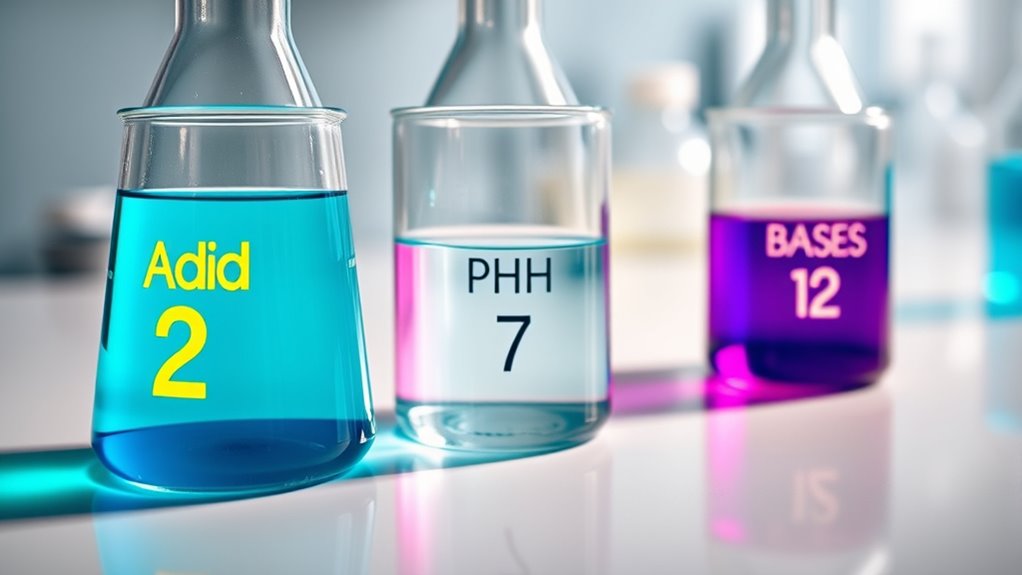
The pH scale provides a straightforward way to measure how acidic or basic a solution is, which is essential for understanding chemical reactions and biological processes. You can determine the pH using pH indicators, which change color depending on acidity or alkalinity. Buffer solutions help maintain stable pH levels in systems like your body or chemical experiments, highlighting the importance of precise pH measurement. The scale ranges from 0 to 14, with values below 7 indicating acidity, above 7 indicating alkalinity, and 7 being neutral. Understanding this scale allows you to interpret how solutions behave in different environments and how they interact with other substances. Mastering the pH scale is key to grasping the fundamentals of acids, bases, and their roles in nature and industry.
How Ph Measures Acidic and Basic Solutions
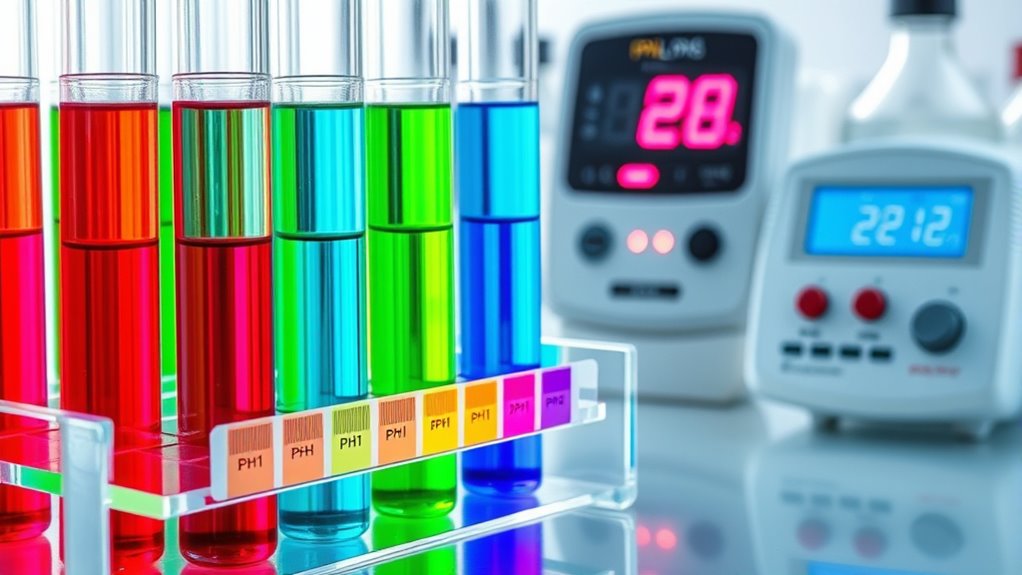
Ever wonder how pH actually measures whether a solution is acidic or basic? The pH scale determines this by quantifying hydrogen ion concentration. A lower pH indicates acidity, while a higher pH shows alkalinity. During titration techniques, you add a solution of known concentration to identify the endpoint, which reveals the solution’s pH. Buffer solutions play a vital role by resisting drastic pH changes, maintaining stability during reactions. They contain weak acids and bases that neutralize added acids or bases, making measurements more accurate. Understanding how pH works involves recognizing that:
- Buffer solutions stabilize pH during titrations
- pH indicators change color at specific pH levels
- Precise pH measurement guides chemical analyses and reactions
This knowledge helps you interpret acidity and alkalinity effectively in various contexts.
Common Examples of Acids and Bases in Daily Life

Have you noticed how everyday items contain acids and bases that affect everything from your health to cleaning routines? In household cleaning, you often use acids like vinegar and citric acid to remove mineral deposits or disinfect surfaces. Baking soda, a base, helps neutralize acids and acts as a gentle abrasive. In your kitchen, culinary ingredients like lemon juice and vinegar are acidic, adding flavor and preserving food. Baking powder and baking soda are bases that help baked goods rise. Recognizing these common acids and bases helps you understand their roles in daily life, from cleaning to cooking. By knowing which ingredients and products are acids or bases, you can use them more effectively and safely around your home.
The Importance of Ph in Nature and Industry

Understanding the pH levels of various substances reveals how acids and bases influence both natural environments and industrial processes. In nature, pH affects soil fertility, water ecosystems, and plant growth. In industry, pH controls product quality, safety, and efficiency. For example,:
- Maintaining proper pH in wastewater treatment minimizes environmental impact.
- Adjusting pH in manufacturing ensures the stability of chemicals and products.
- Monitoring pH levels in agriculture enhances crop yields and soil health.
Your awareness of pH’s role helps you appreciate its significance across different domains. Managing pH levels effectively can prevent environmental damage, optimize industrial processes, and promote sustainability. Recognizing the importance of pH in our world underscores how chemistry influences everyday life and the health of our planet.
How to Test and Adjust Ph Levels
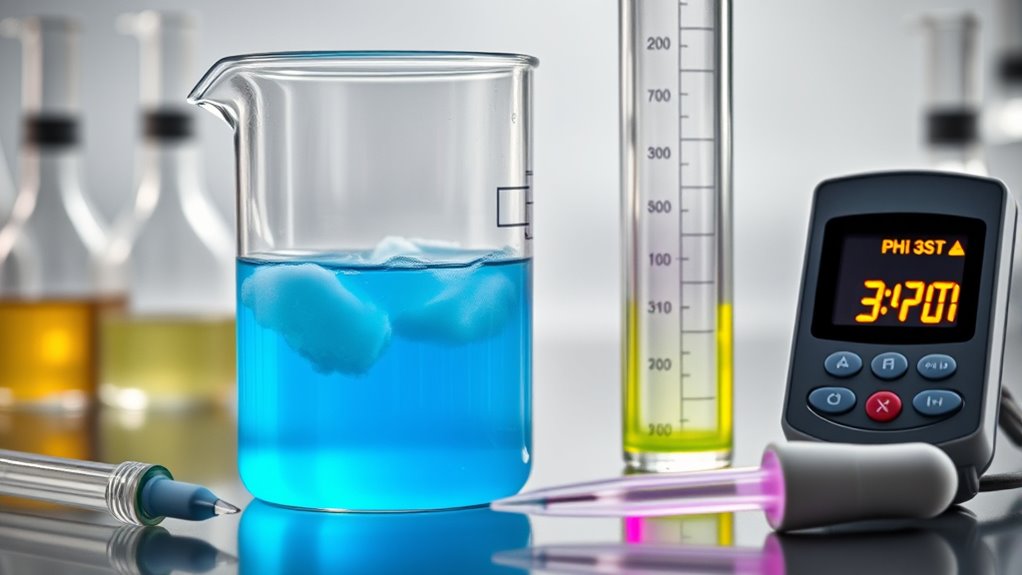
To accurately determine the pH of a solution, you need to use specialized testing methods such as pH test strips or digital pH meters. These pH testing methods provide quick, reliable readings that help you assess whether your solution is acidic, neutral, or alkaline. Once you’ve measured the pH, you can adjust pH levels accordingly. If the solution is too acidic, add a base like sodium bicarbonate or lime to raise the pH. If it’s too alkaline, introduce an acid such as vinegar or citric acid to lower the pH. Always add adjustments gradually and mix well, then re-test until you reach your desired pH level. Proper testing and careful adjustments guarantee your solution’s pH remains balanced for ideal results.
Why Knowing About Acids, Bases, and Ph Matters
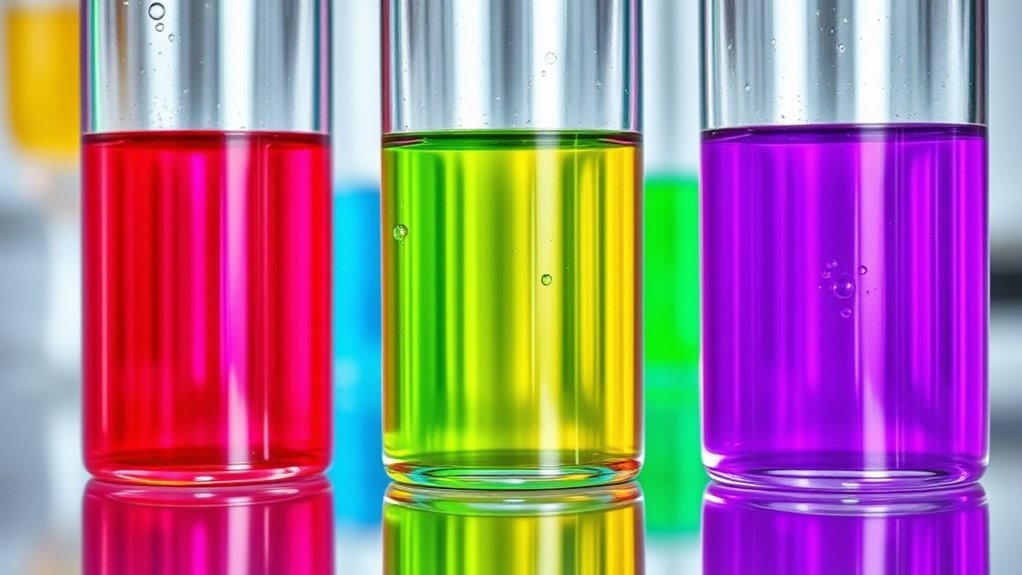
Accurate pH testing and adjustments are vital because they directly impact the safety, effectiveness, and quality of many products and processes. Knowing about acids, bases, and pH helps you understand how chemical reactions occur and how they can be controlled. This knowledge is essential in manufacturing, healthcare, and agriculture, where improper pH levels can cause failures or hazards. It also affects the environment, as incorrect pH can harm aquatic life and disrupt ecosystems. By monitoring and adjusting pH levels, you can:
- Minimize harmful chemical reactions and waste
- Reduce environmental impact from industrial runoff
- Ensure safe, effective use of products and processes
Understanding pH empowers you to make informed decisions that protect health and the environment.
Frequently Asked Questions
How Does Temperature Affect the Ph of Solutions?
You might wonder how temperature effect influences solution pH. When temperature rises, you generally see a decrease in solution pH if the solution is acidic, meaning it becomes more acidic. Conversely, in basic solutions, higher temperatures can increase pH slightly. These changes occur because temperature affects the dissociation of molecules, altering hydrogen ion concentration, which directly impacts the solution pH. So, temperature plays a vital role in determining the solution’s acidity or alkalinity.
Can Acids and Bases Be Safely Handled at Home?
Think of handling acids and bases at home like walking a tightrope—balance is key. You can do it safely if you respect the rules of household safety and understand acid-base reactions. Always wear gloves and goggles, work in well-ventilated areas, and keep corrosive substances away from children and pets. With caution and respect, you can manage these chemicals safely, turning potential hazards into controlled, manageable reactions.
What Are the Environmental Impacts of Acid Rain?
You should be aware that acid rain considerably impacts the environment by causing environmental pollution. It damages forests, aquatic ecosystems, and soil quality, leading to loss of biodiversity. When acid rain falls, it releases harmful chemicals into the air and water, harming plants and animals. By understanding its effects, you can take steps to reduce pollution and protect ecosystems from further damage caused by acid rain.
How Do Buffers Maintain Stable Ph Levels?
Think of buffer systems as your body’s steady hand during a rollercoaster ride, keeping pH regulation smooth and balanced. When acids or bases try to shake things up, buffers act like a safety net, absorbing excess hydrogen ions or releasing them as needed. This way, they maintain stable pH levels, ensuring your internal environment stays calm and consistent, no matter what wild twists the chemistry of your body throws at it.
Are Ph Levels the Same in All Parts of the Body?
You might wonder if pH levels are the same throughout your body. In reality, body pH variations occur in different areas, affecting bodily fluid acidity. For example, your stomach has a highly acidic pH for digestion, while blood maintains a slightly alkaline pH for proper function. These variations are essential for your health, and your body works continuously to regulate and balance these pH levels.
Conclusion
Now that you understand acids, bases, and pH, you’re basically a science wizard—ready to tame the wild world of chemicals. Imagine your pH scale as a roller coaster, with acids zooming down at one end and bases cruising up at the other. With this knowledge, you can confidently navigate everything from cleaning your kitchen to understanding the oceans. So go ahead, embrace your inner scientist—your pH adventure awaits!
Evergreen bestsellers Picks
bestsellers
As an affiliate, we earn on qualifying purchases.